The Best Power Stations for a Camping Fridge
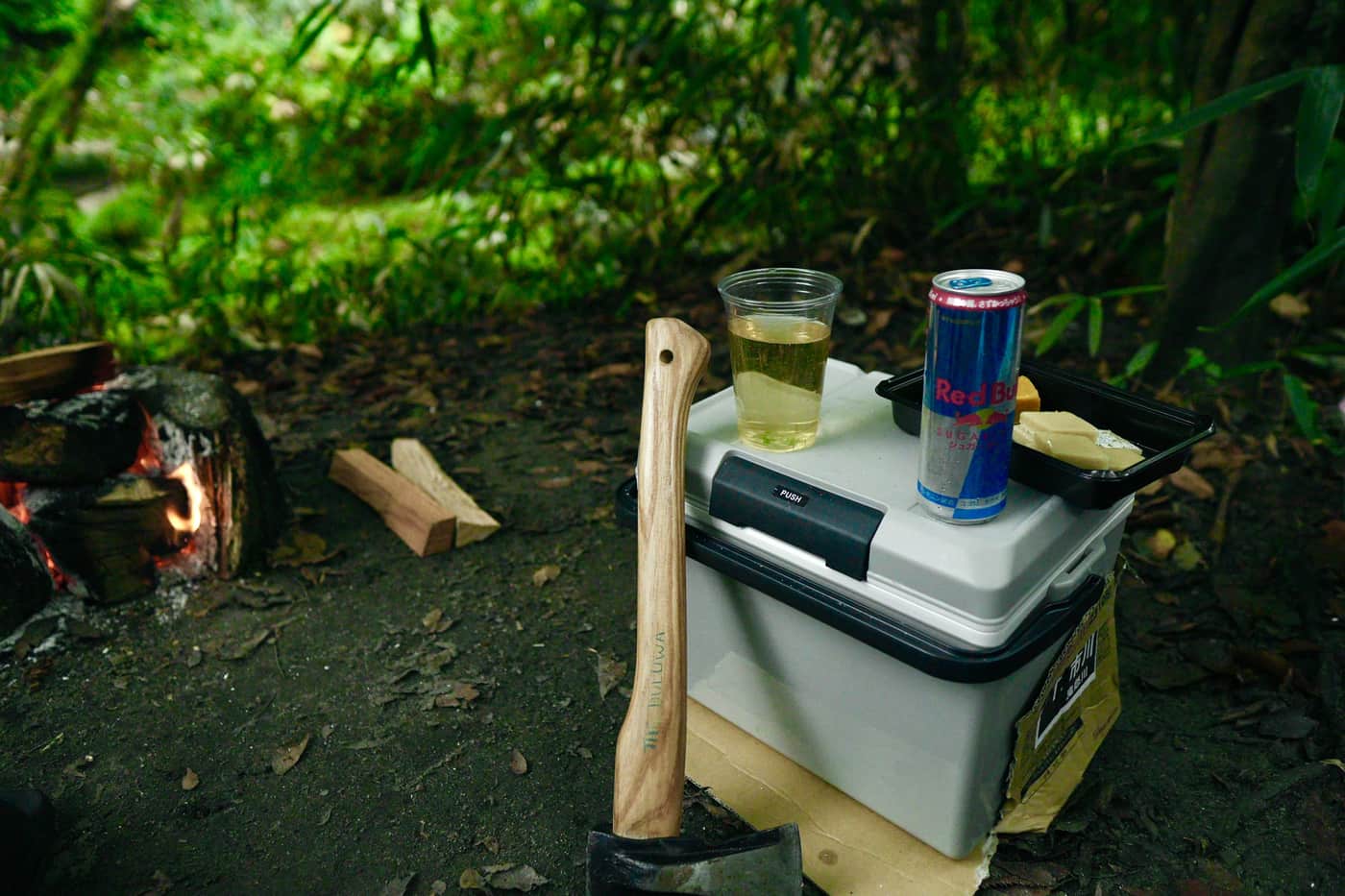
A 12V fridge does not draw its rated wattage. Understanding that one fact is the difference between buying the right unit and buying twice as much as you need.
At a glance
Quick picks
Tap any row to jump to the full write-up. Weight is a column here because it is the spec that decides whether you actually carry the thing.
| # | Product | Best for | Capacity · Weight | Price |
|---|---|---|---|---|
| 1 |  Jackery Explorer 1000 v2 Jackery Explorer 1000 v2 | Best for a two-night fridge trip | 1,070Wh 23.8 lb | Check price |
| 2 |  EcoFlow DELTA 3 Plus EcoFlow DELTA 3 Plus | Best for a fridge on a trip longer than three nights | 1,024Wh 27.6 lb | Check price |
| 3 |  BLUETTI AC180 BLUETTI AC180 | Most fridge-hours if you are not carrying it | 1,152Wh 35.27 lb | Check price |
| 4 |  EcoFlow DELTA 2 Max EcoFlow DELTA 2 Max | Best for a week with a fridge | 2,048Wh Weight n/p | Check price |
The camping fridge is the single load that turns a power station from a nice-to-have into a purchase. It is also the load people most often size wrong, in both directions — and the reason is that its rated wattage tells you almost nothing about its consumption.
Duty cycle: the number that actually matters
A 12V compressor fridge rated at 45W does not draw 45W continuously. It draws 45W while the compressor runs, and the compressor only runs when the interior needs cooling — typically 30-50% of the time in shade at moderate ambient temperature. That fraction is the duty cycle, and it turns a frightening number into a manageable one.
Two practical conclusions fall out of that. First, run the fridge from the 12V socket rather than an AC outlet if your fridge supports it — you skip the inverter conversion entirely and save 10-15%, and the power station's inverter stays off, which also removes its idle draw. Second, the duty cycle is not fixed, and everything you do to reduce it buys you hours.
What changes the duty cycle
- Shade. A fridge in direct sun can easily double its duty cycle. This is the single biggest variable and it is free to fix.
- Ambient temperature. A 95F afternoon is far harder work than a 70F one. Desert camping costs more than forest camping.
- Set temperature. Running at 38F instead of 32F is a meaningful saving, and fine for most food.
- How full it is. A full fridge holds temperature better. Pre-chill contents at home before you leave — cooling warm food from ambient is expensive.
- Lid openings. Chest-style units lose much less than front-opening ones because cold air sinks.
- Airflow around the compressor. Do not bury it under bags. The compressor vents heat and gets less efficient when it cannot.
How many nights each capacity buys
| Capacity | Fridge only | Fridge plus devices and lights |
|---|---|---|
| 286Wh | About 15 hours | About 12 hours |
| 288Wh | About 16 hours | About 13 hours |
| 1,024Wh | About 2.3 days | About 2 days |
| 1,070Wh | About 2.5 days | About 2 days |
| 1,152Wh | About 2.6 days | About 2.2 days |
| 2,048Wh | About 4.7 days | About 4 days |
That table is why the honest answer to 'what size for a fridge' is almost always 1,000Wh for a weekend and 2,000Wh or solar for anything longer. And note what it implies about the small units: a 286Wh battery is a long day of fridge, not a trip.
The picks in full
1. Best for a two-night fridge trip
Jackery Explorer 1000 v2
- 1,070Wh
- LiFePO4 (LFP)
- 1,500W continuous / 3,000W surge
- 23.8 lb
- 400W
- 4,000 cycles to 70% capacity
- 1.7 hr wall; 1 hr emergency charge via app
- 5 years (with registration)
This is the size and shape the camping-fridge problem is asking for. 1,070Wh covers a 45W 12V fridge for roughly two and a half days at a realistic duty cycle, which comfortably clears a Friday-to-Sunday trip with the devices and lights that come with it.
The 12V car socket rated at 10A is the port that matters here, because running the fridge on DC rather than through the inverter saves the conversion loss and keeps the inverter — and its fan — switched off. Over two nights that is worth roughly 100Wh and a quieter campsite.
At 23.8 lb it is also the lightest way to carry two days of fridge, which matters if the pitch is any distance from the car. The 3,000W surge clears a 12V compressor start several times over.
Reasons to buy
- 1,070Wh — about 2.5 days of a typical 12V fridge
- 12V/10A car socket lets the fridge bypass the inverter
- 23.8 lb, the lightest 1kWh unit here
- 1.7-hour wall recharge to top up between trips
- Below 22 dB in silent mode
Reasons to avoid
- 400W solar input limits how much you can claw back on a long trip
- Two AC outlets only
- Cycle rating quoted to 70% rather than 80%
- Not expandable, so a longer trip means a second unit
Buy it if: weekend trips with a 12V fridge, and you want the lightest unit that does the job.
Skip it if: you are out for four nights or more. You want 2kWh or a serious panel.
2. Best for a fridge on a trip longer than three nights
EcoFlow DELTA 3 Plus
- 1,024Wh
- LFP (LiFePO4)
- 1,800W continuous / 3,600W surge
- 27.6 lb
- 1000W
- 4,000 cycles to 80%+ capacity
- Full in 56 min (1,500W AC input)
- 5 years
Past about three nights, the question stops being capacity and becomes recharge rate — and this unit has the highest solar ceiling in the class at up to 1,000W across two MPPT inputs. A fridge uses roughly 430Wh a day; a 400W array in decent conditions puts back considerably more than that, which turns a finite battery into an indefinite one.
1,024Wh of base capacity is two days of fridge on its own, and the 5kWh expansion ceiling means you can add battery rather than add units if the trips get longer still.
The caveat worth stating: the 1,000W input figure requires two separate panel arrays. A single array caps you at 500W, which is still the joint-highest single-input figure here but half the headline number.
Reasons to buy
- Up to 1,000W solar input — the highest here by a distance
- Expandable to 5kWh
- 1,024Wh base is about two days of fridge
- IP65 rated, which matters for a unit left out with panels
- 4,000 cycles to 80%+, 5-year warranty
Reasons to avoid
- 27.6 lb for 1,024Wh
- Realizing 1,000W input needs two panel arrays
- Expansion batteries are expensive
- More unit than a two-night fridge trip requires
Buy it if: trips run three nights or more and you will actually deploy panels.
Skip it if: your camping is weekends. You are buying input headroom you will never reach.
3. Most fridge-hours if you are not carrying it
BLUETTI AC180
- 1,152Wh
- LiFePO4
- 1,800W continuous / 2,700W surge
- 35.27 lb
- 500W
- 3,500+ cycles to 80% original capacity
- 1.3-1.8 hr full (1,440W max AC input)
- 5 years
1,152Wh is the biggest battery in the 1kWh class, which translates to about 2.6 days of a typical 12V fridge — a useful few hours more than anything else here. If the unit lives beside the vehicle, that extra margin is free.
Four AC outlets and a 12V/10A DC socket means the fridge can run on DC while three other things run on AC without a power strip in the dirt. For a fridge-centered setup that runs all weekend alongside lights and chargers, that is genuinely the most practical layout here.
3,500+ cycles to 80% is the longest published cycle rating in our registry, which matters for a unit that will get cycled every trip for years. The cost is 35.27 lb, and there is no getting around it.
Reasons to buy
- 1,152Wh — the largest battery in the class
- Four AC outlets plus a 12V/10A DC socket
- 3,500+ cycles to 80%, the longest rating here
- 1,440W AC input refills it in 1.3-1.8 hours
- 5-year warranty
Reasons to avoid
- 35.27 lb — the heaviest unit in the class
- 500W solar input is mid-pack
- Not expandable
- Worst watt-hours per pound of the 1kWh units
Buy it if: the fridge and the power station both live at the tailgate all weekend.
Skip it if: you carry it. The extra 82Wh over the Jackery costs you 11.5 lb.
4. Best for a week with a fridge
EcoFlow DELTA 2 Max
- 2,048Wh
- LFP (LiFePO4)
- 2,400W continuous
- 1000W
- 3,000+ cycles
- 2.3 hr
- 5 years
At 2,048Wh this is the first unit that runs a 12V fridge for the best part of five days with nothing else required. For a long trip where solar is unreliable — forest camping, winter, the Pacific Northwest in spring — that raw capacity is the simplest answer available.
It also expands from 2kWh to 6kWh with up to two extra batteries, and takes up to 1,000W of solar, so it scales in both directions. The 2,400W continuous output with 3,400W via X-Boost handles a fridge and a kettle and a fan simultaneously without thinking about it.
Two honest gaps: EcoFlow does not publish a weight or a surge figure on the DELTA 2 Max product page, so we cannot tell you what it weighs from a manufacturer source and have left both blank rather than filling them from a retailer listing. Expect something in the 50-60 lb range for this capacity class, and treat it as a unit that stays in the vehicle.
Reasons to buy
- 2,048Wh — roughly 4.7 days of a 12V fridge
- Expandable from 2kWh to 6kWh
- Up to 1,000W solar input
- 2,400W continuous, 3,400W with X-Boost
- 3,000+ cycles, 5-year warranty
Reasons to avoid
- EcoFlow does not publish a weight on the product page
- No published surge figure either
- This capacity class is not something you carry
- Substantially more expensive than the 1kWh units
Buy it if: long trips, a fridge, and no confidence in the weather for solar.
Skip it if: you camp weekends. This is twice the battery a two-night fridge trip needs.
Questions