The Best Power Stations for Tailgating
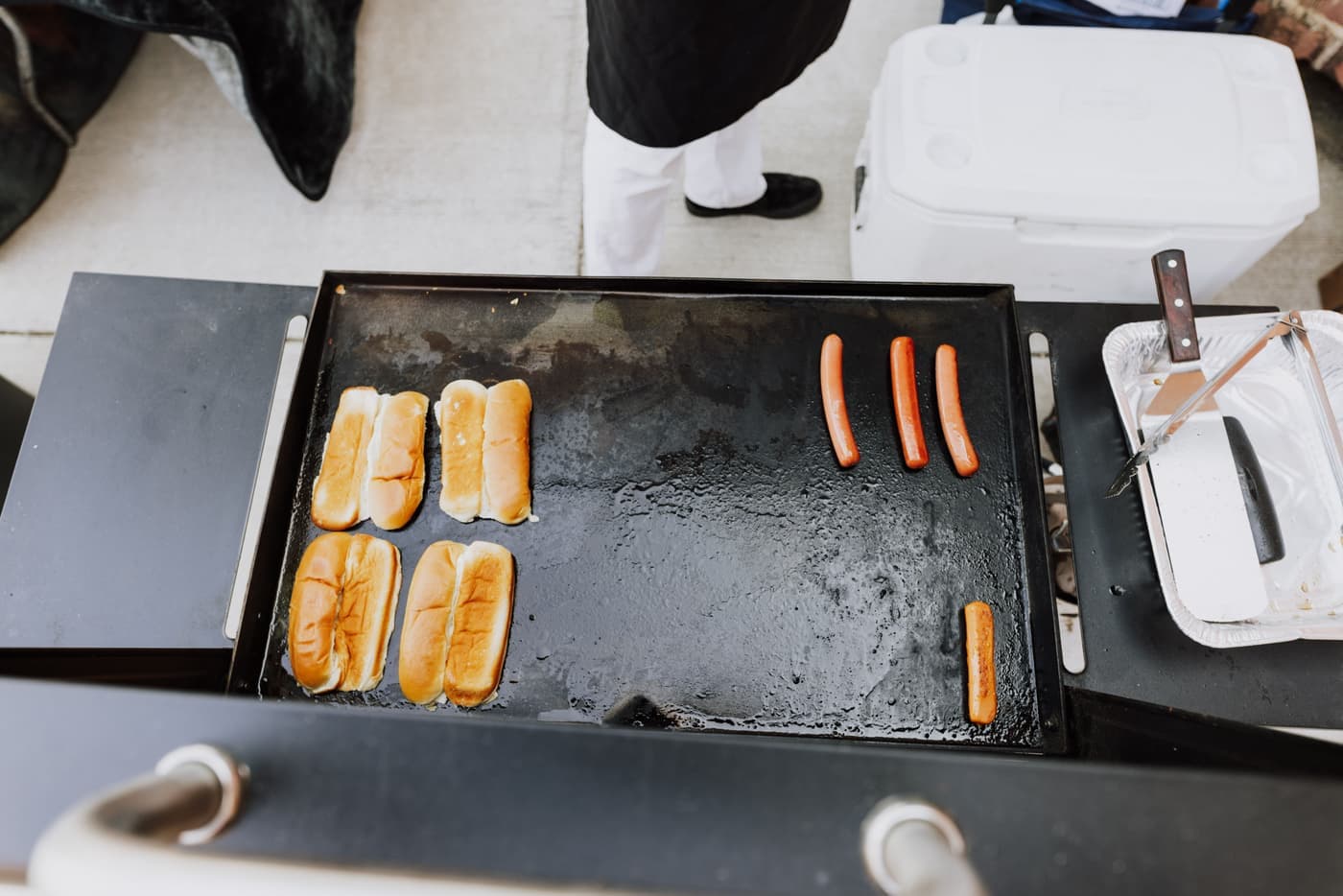
Four hours rarely drains a kilowatt-hour. What it does do is ask for 1,500W at one particular moment, which is where the wrong unit shuts off.
At a glance
Quick picks
Tap any row to jump to the full write-up. Weight is a column here because it is the spec that decides whether you actually carry the thing.
| # | Product | Best for | Capacity · Weight | Price |
|---|---|---|---|---|
| 1 |  Anker SOLIX C1000 Gen 2 Anker SOLIX C1000 Gen 2 | Best overall for tailgating | 1,024Wh 24.9 lb | Check price |
| 2 |  BLUETTI AC180 BLUETTI AC180 | Best for a long day with lots plugged in | 1,152Wh 35.27 lb | Check price |
| 3 |  Jackery Explorer 1000 v2 Jackery Explorer 1000 v2 | Best if it doubles as a camping unit | 1,070Wh 23.8 lb | Check price |
| 4 |  EcoFlow RIVER 3 Plus EcoFlow RIVER 3 Plus | Best if your cooking is propane | 286Wh 10.4 lb | Check price |
Tailgating inverts the usual buying advice. For camping you optimize for watt-hours per pound because the trip is long and the loads are small. In a parking lot the trip is four hours and the loads are enormous but brief — so you optimize for watts, and capacity comes second.
It is also the situation where a battery beats a generator outright rather than on a technicality. Most stadium lots ban fuel generators over noise and exhaust, and nobody wants to stand next to a running engine for four hours. A battery is silent, produces nothing you can smell, and is allowed where the alternative is not.
What a tailgate actually draws
| Appliance | Running watts | 4-hour energy |
|---|---|---|
| Electric griddle | 1,200-1,500W | 600-900Wh at 50% on-time |
| Slow cooker | 200-300W | 800-1,200Wh |
| Blender | 300-600W | Under 20Wh — it runs for seconds |
| 65-inch TV | 80-150W | 320-600Wh |
| Bluetooth speaker or small PA | 20-80W | 80-320Wh |
| Electric cooler | 45-60W cycling | About 100Wh |
| String lights | 10-20W | 40-80Wh |
| Phone charging, several | 10-30W | 60-120Wh |
Two observations. First, the total energy for a realistic tailgate — griddle, TV, speaker, cooler, lights, phones — lands somewhere around 1,200-1,800Wh, which several units here cover. Second, the instantaneous demand when the griddle and the blender coincide is 1,800-2,100W, and that is what eliminates most of the market.
The griddle rule
If you cook on electricity at a tailgate, you need 1,800W or more of continuous output, full stop. A 1,500W griddle on a 1,500W unit leaves nothing for anything else and will trip the moment someone plugs in a blender. If your cooking is propane and the battery only runs the TV, the speaker and the chargers, a much smaller unit is fine — and you should buy one, because it is lighter and cheaper.
What else matters in a parking lot
- Outlet count. Four beats two when the griddle, the slow cooker, the speaker and someone's charger all want a socket at once.
- Recharge speed. You are driving there and back. A unit that refills in under an hour can be topped up at home between games rather than left overnight.
- Weight, moderately. It travels from the boot to a folding table. 35 lb is fine; 130 lb is not.
- UPS mode, incidentally. A tailgate unit spends most of the year at home, and one that doubles as a router backup is being useful all season rather than six Saturdays.
The picks in full
1. Best overall for tailgating
Anker SOLIX C1000 Gen 2
- 1,024Wh
- LiFePO4 (InfiniPower LFP)
- 2,000W continuous / 3,000W surge
- 24.9 lb
- 600W
- 80% capacity after 4,000 cycles
- Full in 49 min (UltraFast, 1,600W max input)
- 5 years
2,000W continuous is the number that matters here, and it is the highest sustained output of any unit at this weight. A 1,500W griddle plus a 400W blend plus a speaker is inside the envelope with room to spare — no rationing, no sequencing, no one asking whether they can plug something in.
The 49-minute full recharge is the second reason. A tailgate unit lives in a garage between games; being able to bring it back to full in under an hour the night before, rather than remembering to plug it in two days out, is the difference between using it and finding it at 40%.
Two AC outlets is the weak spot for this use case specifically, and you will want a short strip. The 10 ms UPS switchover means the unit earns its keep at home for the other 51 weeks, sitting inline with a router.
Reasons to buy
- 2,000W continuous, 3,000W peak — handles a griddle plus anything else
- 49-minute full recharge between games
- 24.9 lb, easy from boot to table
- 10 ms UPS makes it useful at home all year
- 80% after 4,000 cycles; 5-year warranty
Reasons to avoid
- Only two AC outlets — you will want a power strip
- Not expandable
- 1,024Wh is a moderate rather than generous energy budget
- More unit than needed if your cooking is propane
Buy it if: you cook on electricity and want no thinking about what can run.
Skip it if: you need four sockets and only run modest loads. The BLUETTI is the better shape.
2. Best for a long day with lots plugged in
BLUETTI AC180
- 1,152Wh
- LiFePO4
- 1,800W continuous / 2,700W surge
- 35.27 lb
- 500W
- 3,500+ cycles to 80% original capacity
- 1.3-1.8 hr full (1,440W max AC input)
- 5 years
Four AC outlets, a 12V socket and a 15W wireless charging pad is the most practical connector layout here for a tailgate, where the problem is rarely one big load and usually five medium ones arriving at once.
1,152Wh is also the largest battery in the class, which covers a full day of TV, speaker, cooler and lights without a thought, plus griddle time. 1,800W continuous with 2,700W Power Lifting handles a griddle, though not a griddle plus a second heating appliance.
35.27 lb is the heaviest unit here, and for a boot-to-table trip that is genuinely fine. It is the only real cost of choosing it over the Anker, and in this specific use case it buys you two more outlets and 128Wh more battery.
Reasons to buy
- Four AC outlets plus 12V and a wireless pad
- 1,152Wh — the largest battery in the class
- 1,800W continuous, 2,700W Power Lifting
- 20 ms UPS switchover; 3,500+ cycles to 80%
- 1,440W AC input, full in 1.3-1.8 hours
Reasons to avoid
- 35.27 lb — heaviest here, though rarely carried far
- 1,800W is tight if a griddle and a second heater coincide
- Not expandable
- 500W solar input, irrelevant here but relevant if it doubles for camping
Buy it if: several things plugged in at once, all day, and the unit never leaves the tailgate.
Skip it if: you run a high-wattage griddle alongside other cooking. Buy the 2,000W Anker.
3. Best if it doubles as a camping unit
Jackery Explorer 1000 v2
- 1,070Wh
- LiFePO4 (LFP)
- 1,500W continuous / 3,000W surge
- 23.8 lb
- 400W
- 4,000 cycles to 70% capacity
- 1.7 hr wall; 1 hr emergency charge via app
- 5 years (with registration)
Most people do not buy a tailgating power station; they buy a power station and take it tailgating. If that is you, this is the one, because 23.8 lb for 1,070Wh makes it the best camping unit in the class and 1,500W is enough for a single griddle.
The foldable handle and the sub-22 dB silent mode are both camping features that happen to be pleasant in a parking lot too. And the 1.7-hour recharge with a one-hour emergency charge via the app means you can rescue a half-charged unit on the morning of a game.
1,500W is the constraint. It runs a griddle. It does not run a griddle and a 400W blender simultaneously without tripping, and that is a real limitation if your tailgate is ambitious.
Reasons to buy
- 1,070Wh at 23.8 lb — the best dual-purpose unit here
- 1,500W continuous, 3,000W surge
- Foldable handle; below 22 dB in silent mode
- 1.7-hour recharge, 1-hour emergency charge
- 5-year warranty with registration
Reasons to avoid
- 1,500W is tight for simultaneous cooking loads
- Two AC outlets
- 400W solar input, low if you also camp off-grid
- Not expandable
Buy it if: the unit does camping duty most of the year and tailgating a few times.
Skip it if: tailgating is the main use and you cook seriously. Buy for watts.
4. Best if your cooking is propane
EcoFlow RIVER 3 Plus
- 286Wh
- LiFePO4
- 600W continuous / 1,200W surge
- 10.4 lb
- 220W
- 3,000 cycles to 80% capacity
- 0-100% in 60 min
- Not published on the US product page
If the grill runs on gas and the battery is only there for the TV, the speaker, the lights and everyone's phones, all the units above are two or three times more than you need. 286Wh at 10.4 lb covers that list for a full afternoon and costs and weighs a fraction as much.
600W of output runs a 150W TV and an 80W speaker together comfortably, with plenty left for chargers. The 60-minute recharge means it is always ready, and at 10.4 lb it comes out of the boot in one hand along with the chairs.
It will not cook. Be honest about whether you need it to before spending three times as much on a unit that can.
Reasons to buy
- 10.4 lb — the easiest thing here to bring
- 600W covers a TV, a speaker, lights and chargers
- 60-minute full recharge
- Expands to 858Wh if the setup grows
- 3,000 cycles to 80% LiFePO4
Reasons to avoid
- No electric cooking at all
- 286Wh is a few hours of a TV, not a full day of everything
- No published warranty term on EcoFlow's US page
- Three AC outlets at modest wattage
Buy it if: gas grill, and the battery runs entertainment and charging only.
Skip it if: there is a griddle, a kettle or an air fryer in the plan.
Questions