Best Small Generator for Tailgating
Every unit here weighs under eleven pounds and makes no noise, no exhaust and no case for the gate steward to argue with. What they will and will not run.

At a glance
Quick picks
Tap any row to jump to the full write-up. Weight is a column here because it is the spec that decides whether you actually carry the thing.
| # | Product | Best for | Capacity · Weight | Price |
|---|---|---|---|---|
| 1 | 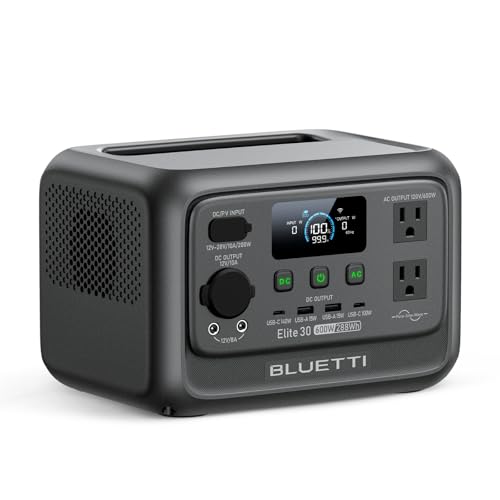 BLUETTI Elite 30 V2 | Most output in the compact class | 288Wh 9.5 lb | $289.99 · View on Amazon |
| 2 | 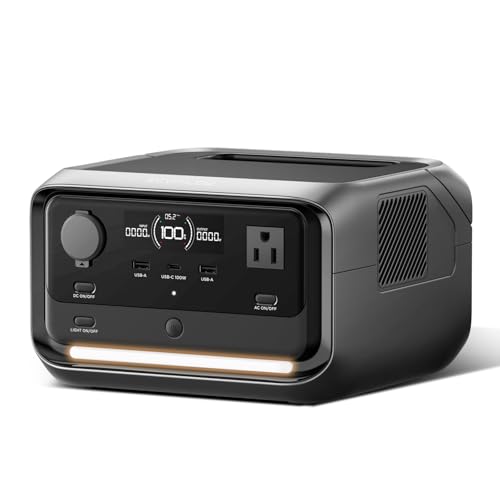 EcoFlow RIVER 3 Plus | The small one that grows | 286Wh 10.4 lb | Check price on Amazon |
| 3 |  Anker SOLIX C300 | Fastest to recharge between games | 288Wh 9.1 lb | Check price on Amazon |
| 4 | 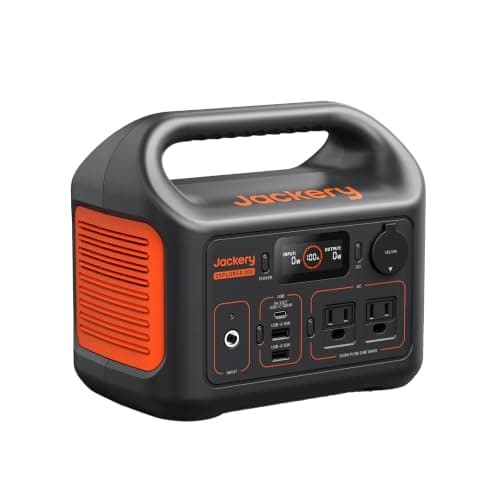 Jackery Explorer 300 | Lightest unit with real outlets | 293Wh 7.1 lb | $289.00 · View on Amazon |
In the compact class the honest answer is that 288Wh runs the electronics at a tailgate and nothing else, and what separates these four units is not capacity - they are all within 7Wh of each other - but output, recharge speed and weight. The short version: buy the BLUETTI Elite 30 V2 for its 600W inverter, the EcoFlow RIVER 3 Plus if you want a path to 858Wh, the Anker SOLIX C300 for the 50-minute top-up, and the Jackery Explorer 300 only if the two pounds it saves genuinely matters.
Why 'small generator' means a battery at a lot
There is no small petrol generator. The quietest inverter generators on the market start heavier than every unit on this page, they produce carbon monoxide so they cannot be used near a tent or inside a vehicle, and the venues people search this query about are precisely the ones that ban them. The smallest useful fuel-burning machine is bigger, louder and less welcome than a 9 lb battery, which is why the compact class in this category is entirely electric.
If you want that argument made properly rather than asserted, portable power station vs inverter generator is the fair head-to-head - and it is honest about the two things a generator still wins outright.
The four units, side by side
| Unit | Wh | Continuous W | Weight lb | Recharge | Cycles |
|---|---|---|---|---|---|
| BLUETTI Elite 30 V2 | 288 | 600 | 9.5 | 70 min full | 3,000+ |
| EcoFlow RIVER 3 Plus | 286 | 600 | 10.4 | 60 min full | 3,000 to 80% |
| Anker SOLIX C300 | 288 | 300 | 9.1 | 80% in 50 min | Not published |
| Jackery Explorer 300 | 293 | 300 | 7.1 | About 2.5 hr | 500 to 80%+ |
The cycle-life column is the one worth staring at. A 500-cycle rating and a 3,000-cycle rating on units of the same capacity is a six-fold difference in how many tailgates the box survives, and it is the clearest reason the three LiFePO4 units cost what they cost. LiFePO4 vs NMC power station batteries explains what the chemistry change actually buys.
What 288Wh runs at a lot
- Yes: phones, tablets, a laptop, a powered speaker, string lights, a camera battery charger, a tyre inflator for a few minutes, and a pellet grill's igniter and auger on the 600W units.
- Marginal: a 24-32 inch television for an hour or two; a blender in short bursts on a 600W unit; a small 12V cooler on a short game.
- No: anything that heats. A coffee maker, a hot plate, a griddle, a kettle or a deep fryer is 1,000-1,800W and all four of these units are 300-600W. The inverter stops long before the battery does.
If this class is too small
The step up is not a bigger small unit - it is the 1kWh class, where a television for a full game and a blender on the side both become unremarkable. Best power stations for tailgating ranks that field, and best power station for a tailgate TV is the version of this page written around the screen rather than around the weight.
The picks in full
1. Most output in the compact class
BLUETTI Elite 30 V2
- 288Wh
- LiFePO4 (automotive-grade)
- 600W continuous / 1,500W surge
- 9.5 lb
- 200W
- Over 3,000 cycles; 10-year lifespan
- Full in 70 min
- 5 years
600W continuous with a 1,500W surge, from 288Wh and 9.5 lb. That 2.5x surge ratio is the highest in our whole registry, and in the compact class the output rating is what decides whether a unit is useful or ornamental: 300W runs phones and lights, 600W runs a blender.
BLUETTI publishes a 70-minute full recharge, a UPS switchover of 10 ms or less, 200W of maximum solar input, nine output ports including USB-C PD 3.1 up to 140W, over 3,000 cycles with a stated 10-year lifespan and a 5-year warranty. Nine ports on a unit this size covers a whole table of phones without an adapter.
288Wh is the ceiling and it is a hard one - about 245Wh usable at the 85% convention this site uses. BLUETTI publishes no dimensions and no AC outlet count for this model, which are the two things you most want to know when it is going in a cooler bag.
Reasons to buy
- 600W continuous, 1,500W surge - class-leading
- 9.5 lb; nine output ports
- Full recharge in 70 minutes
- 10 ms or less switchover
- Over 3,000 cycles; 5-year warranty
Reasons to avoid
- 288Wh total
- No published dimensions or AC outlet count
- Not expandable
- 200W solar input
Buy it if: a small lot setup that still needs real AC output.
Skip it if: you want a television running all afternoon.
2. The small one that grows
EcoFlow RIVER 3 Plus
- 286Wh
- LiFePO4
- 600W continuous / 1,200W surge
- 10.4 lb
- 220W
- 3,000 cycles to 80% capacity
- 0-100% in 60 min
- Not published on the US product page
286Wh and 10.4 lb, 600W continuous with a 1,200W surge, and the only unit under eleven pounds in our registry that expands - to 858Wh with a wire-free second battery. For tailgating that is a useful shape: start with one box for a short game, add the pack for an all-day lot, and never carry both when you do not need them.
EcoFlow publishes three AC outlets, a 0-100% recharge in 60 minutes, 220W of maximum solar input, a 100W USB-C port, two 12W USB-A ports, 3,000 cycles to 80% capacity and dimensions of 9.2 x 9.1 x 5.8 in. Three AC outlets at this size is the best socket-to-weight ratio on this page.
EcoFlow publishes no warranty term for this model on its US product page and no UPS switchover figure. The expansion battery is a separate purchase, so the 858Wh headline is a two-box number.
Reasons to buy
- Expands to 858Wh
- Three AC outlets at 10.4 lb
- 600W continuous, 1,200W surge
- Full in 60 minutes
- Published dimensions; 3,000 cycles
Reasons to avoid
- 286Wh as a single box
- No published warranty term
- Heaviest unit on this page
Buy it if: buying in stages, or lots of different lengths.
Skip it if: you want the whole battery in one trip.
3. Fastest to recharge between games
Anker SOLIX C300
- 288Wh
- LFP (LiFePO4)
- 300W continuous / 600W surge
- 9.1 lb
- 100W
- 80% in 50 min
- 5 years
288Wh at 9.1 lb with 300W of AC output and a 600W SurgePad peak, and the fastest turnaround in the class: Anker publishes 80% charge in 50 minutes. For back-to-back weekends, or for topping up in the car between a morning game and an evening one, that figure beats everything else on this page.
Anker publishes a 10 ms UPS switchover, 100W of maximum solar input, seven device ports - four USB-C at 140W, 100W, 20W and 15W, two 12W USB-A and a 120W car socket - 25dB at 3.3 ft, and a 5-year warranty. The 140W USB-C port charges a laptop at full speed without touching the inverter.
300W of AC is the limitation and it is a real one: no blender, no coffee maker, no griddle. Anker publishes no cycle-life rating, no dimensions, no AC outlet count and no expansion option for this model, which is four blanks and the most of any unit on this page.
Reasons to buy
- 80% charge in 50 minutes
- 9.1 lb; 10 ms switchover
- USB-C at 140W for a laptop
- 25dB at 3.3 ft published
- 5-year warranty
Reasons to avoid
- 300W AC output only
- No published cycle life or dimensions
- 100W solar input - the lowest here
Buy it if: phones, lights, a laptop, and a fast turnaround.
Skip it if: anything with a motor or a heating element in it.
4. Lightest unit with real outlets
Jackery Explorer 300
- 293Wh
- Lithium-ion (Jackery does not publish the cell type)
- 300W continuous / 500W surge
- 7.1 lb
- 500 cycles to 80%+ capacity
- About 2.5 hr full, using the 90W wall charger and a 60W USB-C PD charger together
- 2 years
7.1 lb, which is the lightest thing in our registry with actual AC sockets on it, and 293Wh behind 300W of output with a 500W peak. For a tailgate where the walk from the car to the spot is long, or where the unit shares a bag with the chairs, two pounds matters more than it sounds.
Jackery publishes two AC outlets, a USB-C PD port at 60W that works as input or output, a USB-A QC3.0, a second USB-A, a 12V car port, and a full recharge in about 2.5 hours using the 90W wall charger alongside a 60W USB-C charger. The bidirectional USB-C port means one cable does both jobs.
This is the oldest design on the page and the specification shows it: Jackery publishes 500 cycles to 80%+ capacity against 3,000+ for the LiFePO4 units above, a 2-year warranty rather than 5, and no cell chemistry, maximum solar input or dimensions at all. If the unit will be used fifty times a year, buy one of the others; if it will be used five times and carried a long way, this is the one.
Reasons to buy
- 7.1 lb - the lightest here
- Two AC outlets, 300W with a 500W peak
- Bidirectional 60W USB-C port
- Recharges in about 2.5 hr
Reasons to avoid
- 500 cycles to 80% - a sixth of the class
- 2-year warranty
- No published chemistry, solar input or dimensions
Buy it if: a long carry and occasional use.
Skip it if: frequent use, where cycle life decides the cost.
Questions