Power Station vs a 12V House Battery
One is a product you buy. The other is a system you build. The right answer depends far more on you than on the hardware.
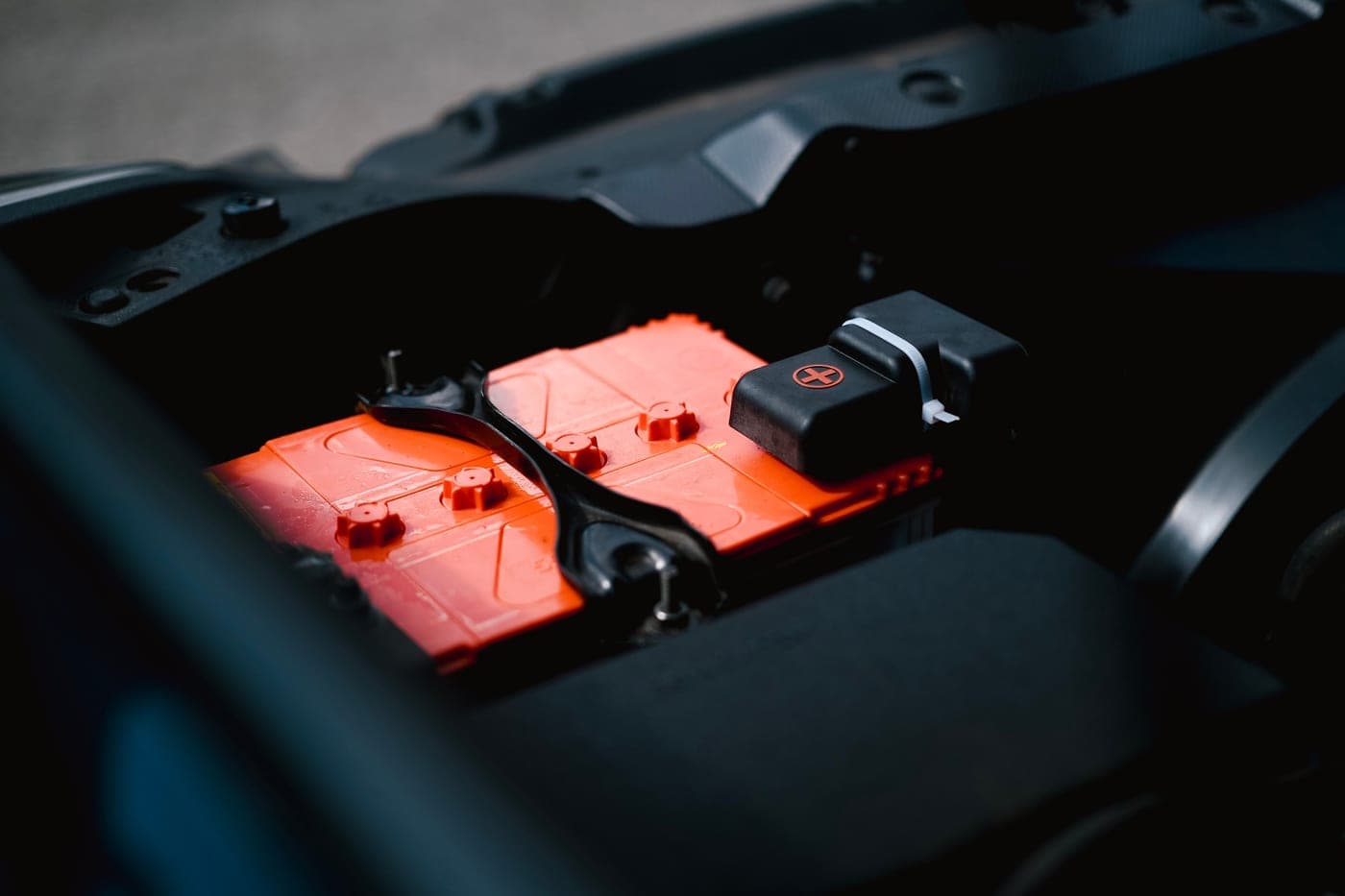
The short verdict: buy a power station if you value portability, want no electrical work, or the vehicle is rented, leased or temporary. Build a 12V system if you are living in the van long-term, want the best cost per usable watt-hour, or need it integrated with the vehicle's existing loads.
Both are correct answers for different people, and the rest of this page is about working out which one you are.
The decision table
| Power station | Wired 12V system | |
|---|---|---|
| Installation | None — plug things in | Cables, fuses, bus bars, a shunt, a charge controller |
| Cost per usable watt-hour | Higher | Lower, often substantially |
| Efficiency running 12V loads | Lower — DC to AC to DC on some loads | Higher — native 12V throughout |
| Portability | Take it anywhere | Bolted in |
| Expandability | Brand-locked expansion packs | Add any compatible battery |
| Vehicle integration | None | Runs the lights, pump, fan and fridge natively |
| Resale / moving on | Sell it or take it with you | Adds value to the van, stays with it |
| Time to working | Same day | A weekend to several, or a professional install |
| Repairability | Replace the whole unit | Replace the failed component |
| Risk of getting it wrong | Essentially none | Real — bad wiring is a fire risk |
Where the power station genuinely wins
No electrical work. This is not a small thing. A 12V build means understanding cable gauge for current and run length, fusing at both ends of every run, protecting against the vehicle's chassis ground, and installing a charge controller that suits your panels. Done badly it is a fire in a metal box you sleep in. A power station removes that entire category of risk.
It leaves with you. Take it to a picnic table, a beach, a friend's place, the next van. Sell the van and keep the battery. If the vehicle is rented or leased, this is not a preference, it is the only option.
It is already a complete system. Inverter, MPPT charge controller, battery management, display, AC outlets, USB-C and a 12V socket, in one box with a five-year warranty and one phone number to call. Assembling the equivalent from components means five purchases and five warranties.
Charging speed from shore power. A power station refilling in 49-60 minutes from an outlet is genuinely faster than most van converter setups, and it reframes an hour at a cafe as a full recharge.
Where the 12V system genuinely wins
Cost per usable watt-hour. A bare 100Ah LiFePO4 battery is 1,200Wh of storage, and you can add several. Getting to 4kWh of storage in bare batteries costs substantially less than getting there with power-station expansion packs, which are priced as accessories rather than as commodities.
Efficiency on 12V loads, and this is the underappreciated one. Van lights, the water pump, the roof fan and a 12V compressor fridge are all natively 12V. In a wired system they draw straight from the battery. Through a power station, if you use the AC outlets, the energy goes DC to AC in the inverter and back to DC in each device's adapter — paying twice, typically 10-20% overall. A fridge running 24 hours a day makes that a real annual cost.
You can mitigate this by using the power station's own 12V socket rather than the AC outlets, and you should. But the socket is usually fused around 10A, so it will not carry the whole 12V side of a build.
Integration. A wired system powers the van's existing circuits. A power station sits alongside them, which means extension cords, and extension cords in a small living space are a daily irritation rather than an abstraction.
The hybrid that most people actually end up with
In practice a lot of builds run both, and it works well. A modest wired 12V system handles the always-on native loads — lights, pump, fan, fridge — at maximum efficiency. A power station covers AC appliances, doubles as the portable battery for outside the van, and provides redundancy if something in the wired system fails.
If you are starting out and unsure, this is also the lowest-regret path: buy the power station first, live with it for a season, and you will know exactly what a wired system would need to do before you build one.
Pick a power station if
- The vehicle is rented, leased, borrowed, or you plan to sell within a couple of years.
- You do not want to do electrical work and do not want to pay someone to.
- You want the battery to leave the van with you.
- Your AC loads are significant — laptop, induction hob, tools.
- You want it working today rather than after a project.
Build a 12V system if
- You are living in the van long-term and the cost per watt-hour will compound.
- Most of your loads are native 12V and run continuously.
- You want more than about 4kWh, where expansion-pack pricing becomes painful.
- You are comfortable with, or willing to pay for, proper electrical work.
- You want the system to add value to the vehicle.
If you land on the power-station side, the van life roundup ranks units on the criteria that matter for this use, and what size for van life works out the capacity. If you are somewhere in between, buy the expandable unit — it is the option that keeps both doors open.
The picks in full
1. The power station that behaves most like a wired system
EcoFlow DELTA 3 Plus
- 1,024Wh
- LFP (LiFePO4)
- 1,800W continuous / 3,600W surge
- 27.6 lb
- 1000W
- 4,000 cycles to 80%+ capacity
- Full in 56 min (1,500W AC input)
- 5 years
If you choose the box over the build, this is the one that narrows the gap. Two MPPT solar inputs taking up to 1,000W combined means your roof array is not wasted, which is the main efficiency complaint against power stations in a van.
Expansion to 5kWh addresses the other one: you are not locked to a single unit's capacity, so the cost curve is less brutal than on non-expandable models. And under-10 ms UPS switchover means it can sit inline with a critical load and hand over invisibly.
It does not solve the DC-to-AC-to-DC efficiency loss on native 12V loads — nothing in a box does, beyond using the 12V socket where you can. That remains the wired system's structural advantage.
Reasons to buy
- Up to 1,000W solar input across two MPPT channels
- Expandable to 5kWh, softening the cost-per-watt-hour gap
- 1,800W continuous, 3,600W surge for AC loads
- 800W car charging and a 56-minute AC recharge
- IP65 rated; 4,000 cycles to 80%+; 5-year warranty
Reasons to avoid
- Still pays a conversion penalty on native 12V loads through the AC side
- Expansion packs cost far more per watt-hour than bare batteries
- Takes floor space a wired system would not
- Brand-locked expansion
Buy it if: you have chosen the box and want the version that scales and harvests like a build.
Skip it if: your loads are overwhelmingly native 12V and continuous. That is the wired system's case.
2. Best for a hybrid setup
Anker SOLIX C1000

- 1,056Wh
- LiFePO4
- 1,800W continuous / 2,400W surge
- 28.44 lb
- 600W
- 3,000 cycles to 80% capacity
- 80% in 43 min; full under 1 hr (1,300W max input)
- 5 years
For the build that runs a small wired 12V system alongside a portable unit, this is a good complement. Six AC outlets is the most of anything we cover, which means the power station handles the entire AC side without a strip while the wired system handles native 12V natively.
Expansion to 2,112Wh gives it room to grow into the role, and the 43-minute charge to 80% means it recovers fast whenever you find shore power.
At 28.44 lb it is heavier than the newer Gen 2 for less output, which is the trade for the outlets and the expandability. In a van, where nothing is carried far, that is the right trade.
Reasons to buy
- Six AC outlets — covers the whole AC side without extension strips
- Expandable to 2,112Wh
- 1,056Wh base; 1,800W continuous, 2,400W surge
- 80% in 43 minutes; 600W MPPT solar input
- 5-year warranty
Reasons to avoid
- 28.44 lb and 3,000 cycles rather than the Gen 2's 4,000
- Previous generation — expect eventual phase-out
- 1,800W will not run a large induction hob at full power
- Expansion caps at 2,112Wh
Buy it if: you are running a small wired system and want the box to cover AC cleanly.
Skip it if: the power station is your only electrical system and you need it to scale past 2kWh.
Questions