Best Power Station for Overlanding
You are never plugged in and you are always driving. That makes charging speed the spec that decides it, not watt-hours.

At a glance
Quick picks
Tap any row to jump to the full write-up. Weight is a column here because it is the spec that decides whether you actually carry the thing.
| # | Product | Best for | Capacity · Weight | Price |
|---|---|---|---|---|
| 1 | 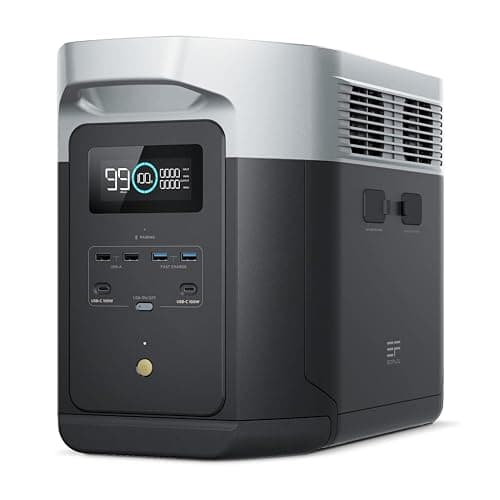 EcoFlow DELTA 2 Max | Best for a long route with no shore power | 2,048Wh 50.7 lb | $1,028.99 · View on Amazon |
| 2 | 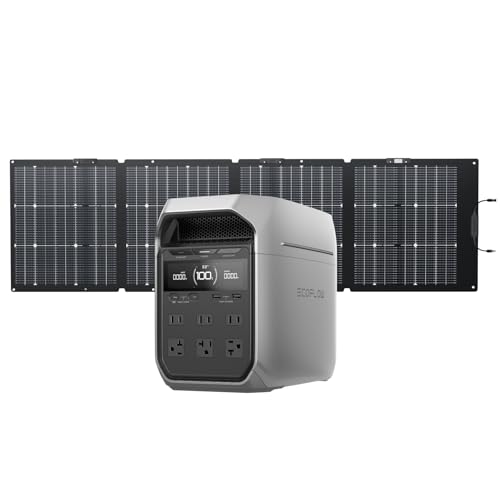 EcoFlow DELTA 3 Plus | Best solar ceiling per pound | 1,024Wh 27.6 lb | Check price on Amazon |
| 3 | 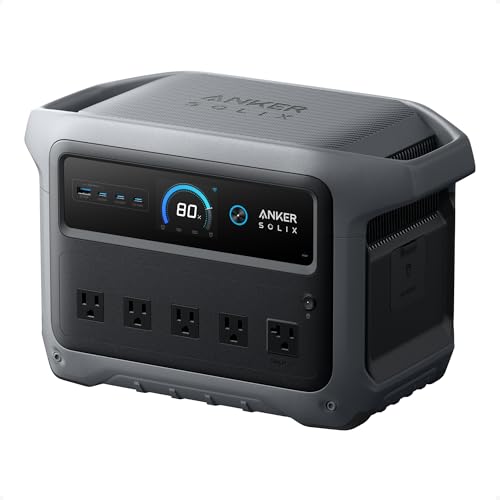 Anker SOLIX C1000 Gen 2 | Best output in the smallest package | 1,024Wh 24.9 lb | $529.99 · View on Amazon |
| 4 | 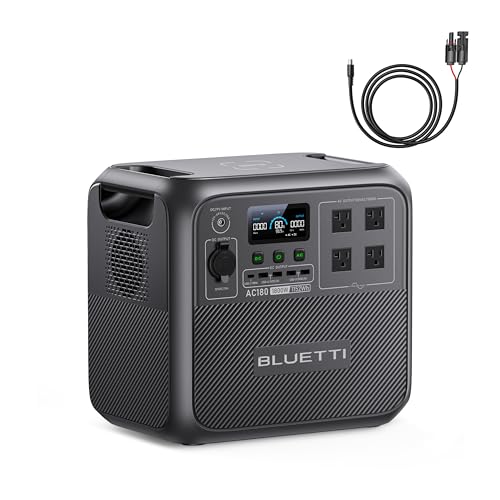 BLUETTI AC180 | Most battery in the smallest footprint | 1,152Wh 35.27 lb | $499.00 · View on Amazon |
Overlanding is not van life with worse roads, and the power problem is genuinely different. A van lives at campgrounds and plugs in sometimes. An overland rig is remote by design, moves most days, and is sized around a 12V fridge that never switches off. That combination makes charging input the specification that decides your purchase — how fast the unit takes power from the alternator while you drive, and how much solar it accepts when you are parked. Capacity is the thing people shop on and the thing that matters third.
Appliance figures below are nameplate bands; read the plate on your own fridge and lights. The spread between a 40-liter compressor fridge in spring and the same fridge in 100F desert heat is larger than the spread between any two units on this page.
A realistic overland day
The two inputs that decide it
| Unit | Battery | Car / alternator in | Solar in | Rough daily replacement |
|---|---|---|---|---|
| EcoFlow DELTA 2 Max | 2,048Wh | 800W | 1,000W | Well over 900Wh |
| EcoFlow DELTA 3 Plus | 1,024Wh | Not published | 1,000W | Solar-dependent |
| Anker SOLIX C1000 Gen 2 | 1,024Wh | Not published | 600W | Solar-dependent |
| BLUETTI AC180 | 1,152Wh | Not published | 500W | Solar-dependent |
That table is the honest state of the published data, and the 'not published' entries are not us being coy — three of these four brands do not state a car-charging wattage for these models on their own product pages. All four accept 12V car charging; only EcoFlow publishes how fast. If alternator charging is central to your build, that asymmetry is the finding.
Charging a power station from your alternator covers the wiring side properly — why the cigarette socket is a 10A dead end, what a DC-DC charger does, and why a modern smart alternator changes the calculation.
What overlanding does to a power station that camping does not
- Dust. Washboard roads put fine dust into every fan intake. No unit in this site's registry publishes an ingress-protection rating — that is a genuine gap across the whole category, and it means dust management is a build problem: a closed drawer or a case with a filtered vent, not a spec you can buy.
- Vibration. A 35-50 lb lithium box loose in the back of a vehicle on a rough track is a hazard to the box and to you. Strap it down or build it in. None of these units is sold as a crash-rated component.
- Heat. Lithium cells charge slowly or refuse to charge when hot, and a closed vehicle in the sun is the hottest place on the trip. Keep the unit out of direct sun and give the fan air.
- Cold. The same problem from the other end: below freezing, charging is restricted or blocked on most units and usable capacity drops. Power stations in cold weather has the derate arithmetic and the warm-it-first routine.
- No shore power, ever. A unit with a 49-minute wall recharge is irrelevant if you never see a wall. Judge these on DC and solar input only.
Power station or a built-in 12V system?
This is the real fork in an overland build, and the honest answer is that a built-in lithium bank with a DC-DC charger and a proper solar controller is the better engineering for a permanent rig: more capacity per dollar, no inverter losses on 12V loads, and nothing to strap down. A power station wins on being a single purchase you can carry into a cabin, lend to a friend, or move to the next vehicle.
Power station vs 12V house battery argues both sides at length. If your rig is a vehicle you also use daily and do not want to modify, the portable unit is usually the right call. If it is a dedicated build, read that page before you spend.
Sizing up, and the fridge question
The fridge is more than half the daily draw in the arithmetic above, so it is where sizing decisions get made. What size power station for a 12V fridge has the duty-cycle numbers and the single most useful tip in overlanding: run the fridge from the 12V socket rather than through the AC inverter, which saves the inverter's standby overhead and is worth real hours per kilowatt-hour.
For the rest of the build, what size power station for van life totals a full list, and best power stations for van life is the adjacent shortlist for a rig that spends more time parked than driving. If a diesel heater is in the plan, best power station for a diesel heater explains why it costs far less electrically than people assume.
The picks in full
1. Best for a long route with no shore power
EcoFlow DELTA 2 Max
- 2,048Wh
- LFP (LiFePO4)
- 2,400W continuous
- 50.7 lb
- 1000W
- 3,000 cycles to 80% capacity
- 2.3 hr; 800W car/alternator charging
- 5 years
800W of car and alternator charging is the overlanding specification, and EcoFlow is the only brand on this page that publishes a figure that high. On a route where your vehicle is the grid, two hours of driving puts something in the region of 1.5kWh back into the battery — which is more than most overland days consume.
EcoFlow publishes 2,048Wh, 2,400W continuous, fifteen outputs including six AC, 1,000W of solar input, a 2.3-hour wall recharge, a switchover under 20 ms, 3,000 cycles to 80% capacity, a 5-year warranty, and expansion from 2 kWh to 6 kWh with up to two extra batteries. Two charging paths that fast means the battery is almost never the limiting factor.
50.7 lb, which in a vehicle-based build is acceptable but needs strapping down properly. EcoFlow publishes no surge figure and no dimensions for this model, and like every unit in this site's registry it publishes no ingress-protection rating — so dust and water sealing is on you and your build, not the product.
Reasons to buy
- 800W car and alternator charging
- 1,000W solar input
- 2,048Wh, expandable to 6 kWh
- 2,400W continuous; six AC outlets
- 5-year warranty
Reasons to avoid
- 50.7 lb — needs real mounting
- No surge figure published
- No ingress-protection rating published
- No published dimensions
Buy it if: a multi-day route where the vehicle does the charging.
Skip it if: weight or footprint is tight in the build.
2. Best solar ceiling per pound
EcoFlow DELTA 3 Plus
- 1,024Wh
- LFP (LiFePO4)
- 1,800W continuous / 3,600W surge
- 27.6 lb
- 1000W
- 4,000 cycles to 80%+ capacity
- Full in 56 min (1,500W AC input)
- 5 years
1,000W of solar input across two 500W MPPT inputs, out of a 27.6 lb box. For overlanding that is the specification that matters most after DC charging, because on a basecamp day the vehicle is parked and the panels are the only input you have. Two separate inputs also means you can run a roof panel and a folding panel at the same time without a combiner.
EcoFlow publishes 1,024Wh, 1,800W continuous, a 3,600W surge, six AC outlets, two 140W USB-C ports, a 56-minute wall recharge, a switchover under 10 ms, 4,000 cycles to 80%+ capacity, expansion to 5 kWh and a 5-year warranty. The 3,600W surge is the highest in the 1kWh class, which covers a compressor fridge's inrush with room spare.
1,024Wh is a tight single day with a fridge running, which is why the expansion path matters. 37.1Wh per pound is unremarkable, and no ingress rating is published. The plain DELTA 3 is the same box at 500W of solar input, which is the wrong trade for this use case.
Reasons to buy
- 1,000W solar across two MPPT inputs
- 3,600W surge — highest in the class
- Expands to 5 kWh
- Six AC outlets, two 140W USB-C
- Switchover under 10 ms
Reasons to avoid
- 1,024Wh is a tight day with a fridge
- 27.6 lb for 1,024Wh
- No ingress-protection rating published
Buy it if: basecamp days where panels are the only input.
Skip it if: you need two days of fridge from one charge.
3. Best output in the smallest package
Anker SOLIX C1000 Gen 2
- 1,024Wh
- LiFePO4 (InfiniPower LFP)
- 2,000W continuous / 3,000W surge
- 24.9 lb
- 600W
- 80% capacity after 4,000 cycles
- Full in 49 min (UltraFast, 1,600W max input)
- 5 years
2,000W continuous and a 3,000W surge from a 24.9 lb box measuring 15.12 x 8.19 x 9.61 in. In an overland build where every inch is contested, published dimensions are worth more than they sound — this is the only unit on the page where you can plan the mount before the box arrives.
Anker publishes 1,024Wh, a full recharge in 49 minutes at 1,600W input, a 10 ms UPS switchover, 600W of solar input, 80% capacity after 4,000 cycles, a 140W USB-C port and a 5-year warranty. The 2,000W output covers a compressor fridge, a tyre inflator and an induction hob one at a time, which is a wider envelope than most builds need.
600W of solar input is behind EcoFlow, two AC outlets is genuinely tight in a vehicle, and it does not expand — so 1,024Wh is the ceiling. Anker publishes no car-charging wattage for this unit, which is the gap that costs it the top spot here.
Reasons to buy
- 2,000W continuous, 3,000W surge
- Published dimensions for planning a mount
- Full recharge in 49 minutes
- 80% capacity after 4,000 cycles
- 24.9 lb
Reasons to avoid
- No car-charging wattage published
- Only two AC outlets
- Not expandable
- 600W solar input
Buy it if: a tight build where the mount has to be planned to the inch.
Skip it if: DC charging from the alternator is the main input.
4. Most battery in the smallest footprint
BLUETTI AC180
- 1,152Wh
- LiFePO4
- 1,800W continuous / 2,700W surge
- 35.27 lb
- 500W
- 3,500+ cycles to 80% original capacity
- 1.3-1.8 hr full (1,440W max AC input)
- 5 years
1,152Wh in a box measuring 13.39 x 9.72 x 12.48 in is the best capacity-per-footprint figure here, and in a vehicle footprint is usually the binding constraint rather than weight. BLUETTI also publishes the longest cycle rating on the page at 3,500+ cycles to 80% of original capacity, which for a rig that gets cycled daily is a meaningful difference.
BLUETTI publishes 1,800W continuous, a 2,700W surge, four AC outlets, a 1.3-1.8 hour full recharge at up to 1,440W, a 20 ms switchover, a 15W wireless charging pad and a 5-year warranty. Four AC outlets is twice the Anker, which matters when the fridge, the lights and a charger all want mains.
35.27 lb is 32.7Wh per pound, the worst ratio here. 500W of solar input is the lowest, it does not expand, and BLUETTI publishes no car-charging figure. Our BLUETTI AC180 review has the complete sheet.
Reasons to buy
- 1,152Wh in a 13.39 x 9.72 in footprint
- 3,500+ cycles to 80% capacity
- Four AC outlets
- 15W wireless charging pad
- 5-year warranty
Reasons to avoid
- 35.27 lb — 32.7Wh per pound
- 500W solar input
- No car-charging figure published
- Not expandable
Buy it if: a fixed mount where footprint beats weight.
Skip it if: you want fast DC or solar charging.
Questions