The Best Portable Power Stations for Home Backup
It will not run your house. It will keep the food cold and the internet up, silently and indoors, which is most of what an outage actually costs you.

At a glance
Quick picks
Tap any row to jump to the full write-up. Weight is a column here because it is the spec that decides whether you actually carry the thing.
| # | Product | Best for | Capacity · Weight | Price |
|---|---|---|---|---|
| 1 | 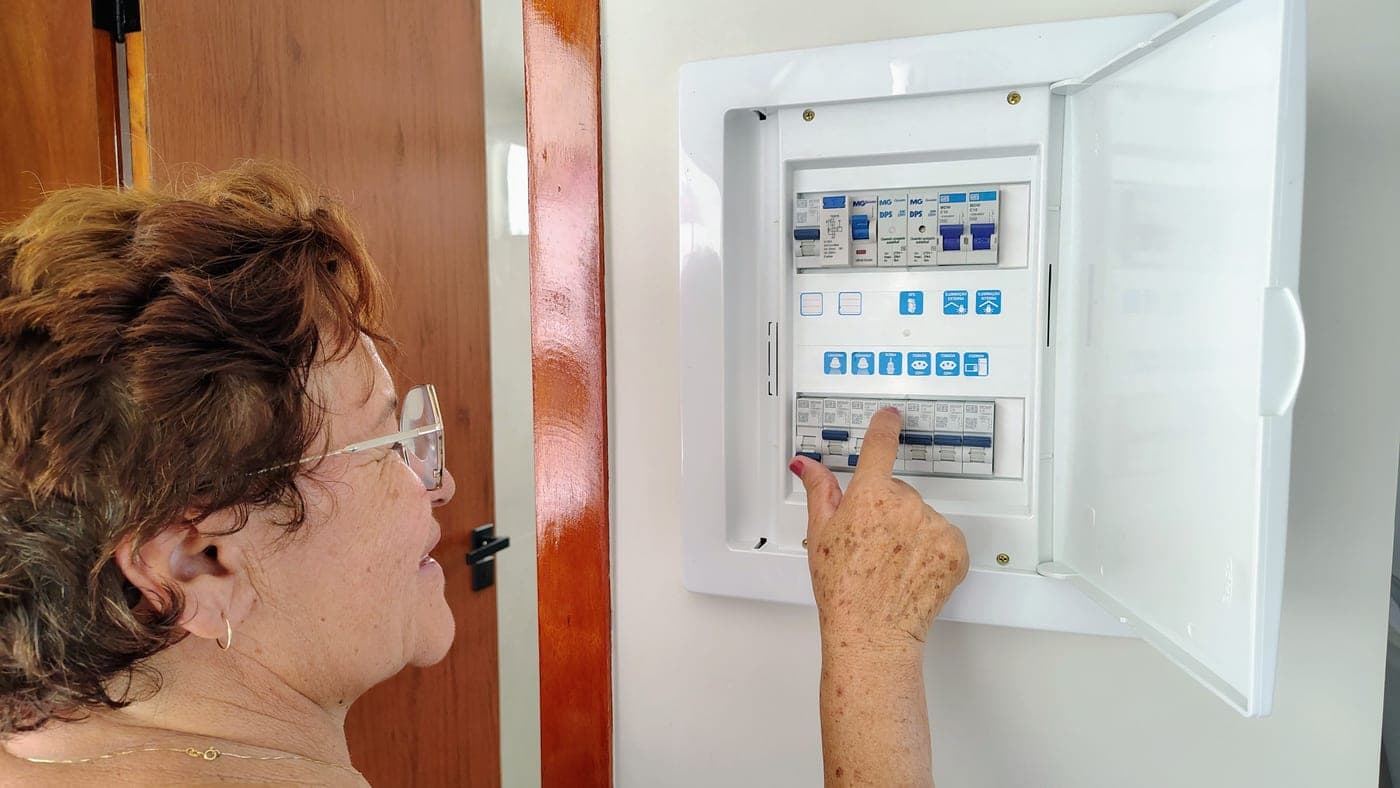 Anker SOLIX F3800 Anker SOLIX F3800 | Best for a multi-day outage | 3,840Wh 132.3 lb | Check price |
| 2 |  EcoFlow DELTA 2 Max EcoFlow DELTA 2 Max | Best for a full day, at a sane size | 2,048Wh Weight n/p | Check price |
| 3 |  BLUETTI AC180 BLUETTI AC180 | Best 1kWh unit for an overnight outage | 1,152Wh 35.27 lb | Check price |
| 4 |  Anker SOLIX C1000 Gen 2 Anker SOLIX C1000 Gen 2 | Best for high-draw appliances during an outage | 1,024Wh 24.9 lb | Check price |
| 5 |  EcoFlow DELTA 3 Plus EcoFlow DELTA 3 Plus | Best if outages might outlast the battery | 1,024Wh 27.6 lb | Check price |
Start with what these cannot do, because every brand page buries it. A portable power station will not run central air conditioning, an electric range, an electric water heater, or a well pump for any useful length of time. Nothing in the 1kWh class will power a house. If you want whole-home backup through a multi-day outage, you want a standby generator or a fixed battery installation, and this is the wrong page.
What these do — quietly, indoors, with no fuel and no carbon monoxide — is keep the small number of things that actually matter running for one to three days. And for most households that list is short enough to be surprising.
What an outage actually costs you
That is the honest headline: 1kWh is a long evening and an overnight fridge. 2kWh is a comfortable full day. Three to four kWh is a genuine multi-day answer, and that is where wheels become standard. What size power station for a power outage breaks it down by household.
The fridge is almost always the real question
Nearly every home-backup search is a refrigerator search with extra words. Fridges are awkward because the two numbers that matter are not on the label: the compressor's start-up surge, often three to six times its running draw, and its duty cycle, typically around 30%. Size for the surge, budget for the duty cycle. Can a power station run a refrigerator does the arithmetic properly.
UPS mode is the feature nobody shops for and everybody uses
Every unit here passes grid power through and switches to battery in 10-20 milliseconds when the grid drops. Leave the unit plugged in with the modem and router on it and a brownout stops being a twenty-minute reboot. It costs nothing extra, it works 365 days a year rather than during outages, and it is the single most-used feature on a home unit. Using a power station as a UPS covers the limits.
Why a battery rather than a generator
Not runtime — a generator wins runtime easily as long as you can buy fuel. It is that a battery runs indoors: no exhaust, no carbon monoxide risk, no 60-70 dB in the yard at 2am, no fuel cans in the garage, no starting a cold engine in a storm. If your outages are short and frequent, the battery is decisively better. If they are long and rare, the generator may be. Both sides, properly argued.
Charge it before you need it
A backup unit at 40% when the lights go out is a much smaller unit. LiFePO4 tolerates sitting at full charge far better than older chemistries did, so leaving it plugged in is reasonable — check it quarterly and keep it somewhere cool rather than in a hot garage, since heat ages batteries faster than anything else. If outages where you live run beyond a day, pair it with a panel: solar generators.
The picks in full
1. Best for a multi-day outage
Anker SOLIX F3800
- 3,840Wh
- LiFePO4 (LFP)
- 6,000W continuous / 9,000W surge
- 132.3 lb
- 2400W
- 3,000+ cycles
- 1,800W max AC input
- 5 years
This is the only unit here that answers the question most people are actually asking. 3,840Wh covers the realistic 2.8kWh day above with margin, and 6,000W continuous at both 120V and 240V means it runs things the others cannot touch — a well pump, a 240V appliance, or a genuinely large fraction of a house.
The NEMA 14-50 and L14-30 outlets are what make whole-circuit backup possible rather than theoretical: with a properly installed transfer switch it feeds the panel rather than powering appliances one extension cord at a time. That is electrical work and worth having done by an electrician, but it is the difference between a backup battery and a backup system.
Expansion to 53.8kWh across six batteries, and 2,400W of solar input across two channels, means it scales into genuine multi-day independence. It weighs 132.3 lb including wheels that work on a driveway and not on grass. This is a fixed installation that happens to roll.
Reasons to buy
- 3,840Wh with 120V and 240V output
- 6,000W continuous, 9,000W surge — appliance-circuit capable
- NEMA 14-50 and L14-30 outlets
- 2,400W solar input across two channels
- Expandable to 53.8kWh; 5-year warranty
Reasons to avoid
- 132.3 lb — a permanent placement decision
- Realizing the 240V capability usually needs an electrician
- Considerably more unit and cost than most households need
- Wheels are no help on anything but hard flat surfaces
Buy it if: outages run days rather than hours, or you have 240V loads you need covered.
Skip it if: your outages are a few hours and the fridge is the only worry.
2. Best for a full day, at a sane size
EcoFlow DELTA 2 Max
- 2,048Wh
- LFP (LiFePO4)
- 2,400W continuous
- 1000W
- 3,000+ cycles
- 2.3 hr
- 5 years
2,048Wh is the sweet spot for household backup: enough for a refrigerator, the internet, phones, lamps and a CPAP through a full 24 hours without the cost, mass or installation of a 4kWh unit.
2,400W continuous with 3,400W through X-Boost handles a fridge compressor start, a microwave in bursts and a gas furnace's blower — which in winter is often the load that matters most. Expansion from 2kWh to 6kWh means a longer outage is purchasable later rather than at the outset.
Up to 1,000W of solar input at 99% MPPT efficiency makes it viable for outages that outlast the battery, which is the scenario nobody plans for and everybody eventually has. EcoFlow does not publish a weight or a surge figure on the product page and we have left both blank rather than sourcing them elsewhere.
Reasons to buy
- 2,048Wh — a comfortable full day of household essentials
- Expandable from 2kWh to 6kWh
- 2,400W continuous, 3,400W with X-Boost
- Up to 1,000W solar input at 99% MPPT efficiency
- 3,000+ cycles; 5-year warranty
Reasons to avoid
- EcoFlow publishes neither a weight nor a surge figure
- No 240V output
- Will not run central air conditioning or an electric range
- Significantly more expensive than the 1kWh units
Buy it if: you want the fridge, the internet and the bedroom covered for a full day without a 130 lb unit.
Skip it if: you need 240V or multi-day capacity. That is the F3800.
3. Best 1kWh unit for an overnight outage
BLUETTI AC180
- 1,152Wh
- LiFePO4
- 1,800W continuous / 2,700W surge
- 35.27 lb
- 500W
- 3,500+ cycles to 80% original capacity
- 1.3-1.8 hr full (1,440W max AC input)
- 5 years
1,152Wh is the largest battery in the 1kWh class and it is the right size for the most common real scenario: the power goes out in the evening and comes back sometime the next day. That covers the fridge overnight, the router the whole time, phones, a couple of lamps and a CPAP.
Four AC outlets is the practical advantage over every rival in this class. During an outage you are not powering one thing, you are powering the fridge plus the router plus a lamp plus a charging hub, and doing that without a power strip trailing across a dark kitchen is worth more than a spec-sheet difference.
20 ms UPS switchover, 3,500+ cycles to 80% and a 5-year warranty make it a sensible thing to leave plugged in permanently — which is exactly what a backup unit should be. 35.27 lb is irrelevant when it never leaves the house.
Reasons to buy
- 1,152Wh — the largest battery in the 1kWh class
- Four AC outlets plus a 12V socket and a wireless pad
- 20 ms UPS switchover for always-on protection
- 3,500+ cycles to 80%, the longest rating we found
- 1,440W AC input, full in 1.3-1.8 hours
Reasons to avoid
- An overnight, not a full day with a normal fridge
- 500W solar input is modest if outages run long
- Not expandable
- 35.27 lb, though it rarely moves
Buy it if: typical evening-to-morning outages, and you want the unit permanently inline.
Skip it if: outages where you live regularly exceed a day.
4. Best for high-draw appliances during an outage
Anker SOLIX C1000 Gen 2
- 1,024Wh
- LiFePO4 (InfiniPower LFP)
- 2,000W continuous / 3,000W surge
- 24.9 lb
- 600W
- 80% capacity after 4,000 cycles
- Full in 49 min (UltraFast, 1,600W max input)
- 5 years
2,000W continuous with a 3,000W peak is the most output of any 1kWh-class unit here, and during an outage that translates into a specific advantage: it starts things the others might not, and it runs a microwave or a coffee maker without negotiation.
The 10 ms UPS switchover is the fastest here, which matters if you have anything sensitive inline — a desktop computer, a network-attached drive, an aquarium pump. And the 49-minute recharge means that when the power does come back, or when a generator runs for an hour, the battery is full again almost immediately.
1,024Wh is less battery than the BLUETTI above and it has only two AC outlets, which during an outage is the constraint you notice. It is the better unit if your worry is what you can run; the BLUETTI is the better one if your worry is how long.
Reasons to buy
- 2,000W continuous, 3,000W peak — starts high-surge appliances
- 10 ms UPS switchover, the fastest here
- 49-minute full recharge at 1,600W input
- 600W solar input; 24.9 lb if it needs moving
- 80% after 4,000 cycles; 5-year warranty
Reasons to avoid
- Two AC outlets — restrictive during an outage
- 1,024Wh is less than the BLUETTI for similar money
- Not expandable
- Fast charging runs it warm, which is not free over years
Buy it if: you want to run a microwave, a coffee maker or a sump-adjacent load during an outage.
Skip it if: you need several things plugged in for a long time. Buy outlets and capacity.
5. Best if outages might outlast the battery
EcoFlow DELTA 3 Plus
- 1,024Wh
- LFP (LiFePO4)
- 1,800W continuous / 3,600W surge
- 27.6 lb
- 1000W
- 4,000 cycles to 80%+ capacity
- Full in 56 min (1,500W AC input)
- 5 years
The scenario nobody plans for is the outage that goes past 24 hours, and the only real answer to it is recharging. Up to 1,000W of solar input across two MPPT channels is the highest ceiling in this class and turns a one-day battery into a sustainable supply if you have panels and daylight.
1,024Wh with 1,800W continuous covers the household essentials overnight, and expansion to 5kWh means you can add buffer in stages rather than choosing your worst case at purchase time. Under-10 ms UPS switchover puts it alongside the Anker for always-inline use.
IP65 rating is unusual in this class and genuinely relevant here: a backup unit that spends an outage on a porch with a panel run out to the lawn is exposed in a way an indoor unit is not.
Reasons to buy
- Up to 1,000W solar input across two MPPT channels
- Expandable to 5kWh in stages
- 1,800W continuous, 3,600W surge; under 10 ms UPS
- IP65 rated for outdoor deployment during an outage
- 56-minute AC recharge; 4,000 cycles to 80%+
Reasons to avoid
- 1,024Wh alone is an overnight, not a day
- The 1,000W input needs two panel arrays
- Panels are a substantial additional purchase
- 27.6 lb and a large footprint for the capacity
Buy it if: storm-season outages that can run long, and you are willing to own panels.
Skip it if: you want a plug-in-and-forget box. Buy capacity instead of harvest.
Questions