Portable Power Station vs Power Bank
Nearly four times the energy, real AC outlets, and it cannot fly. Two of those three are advantages.
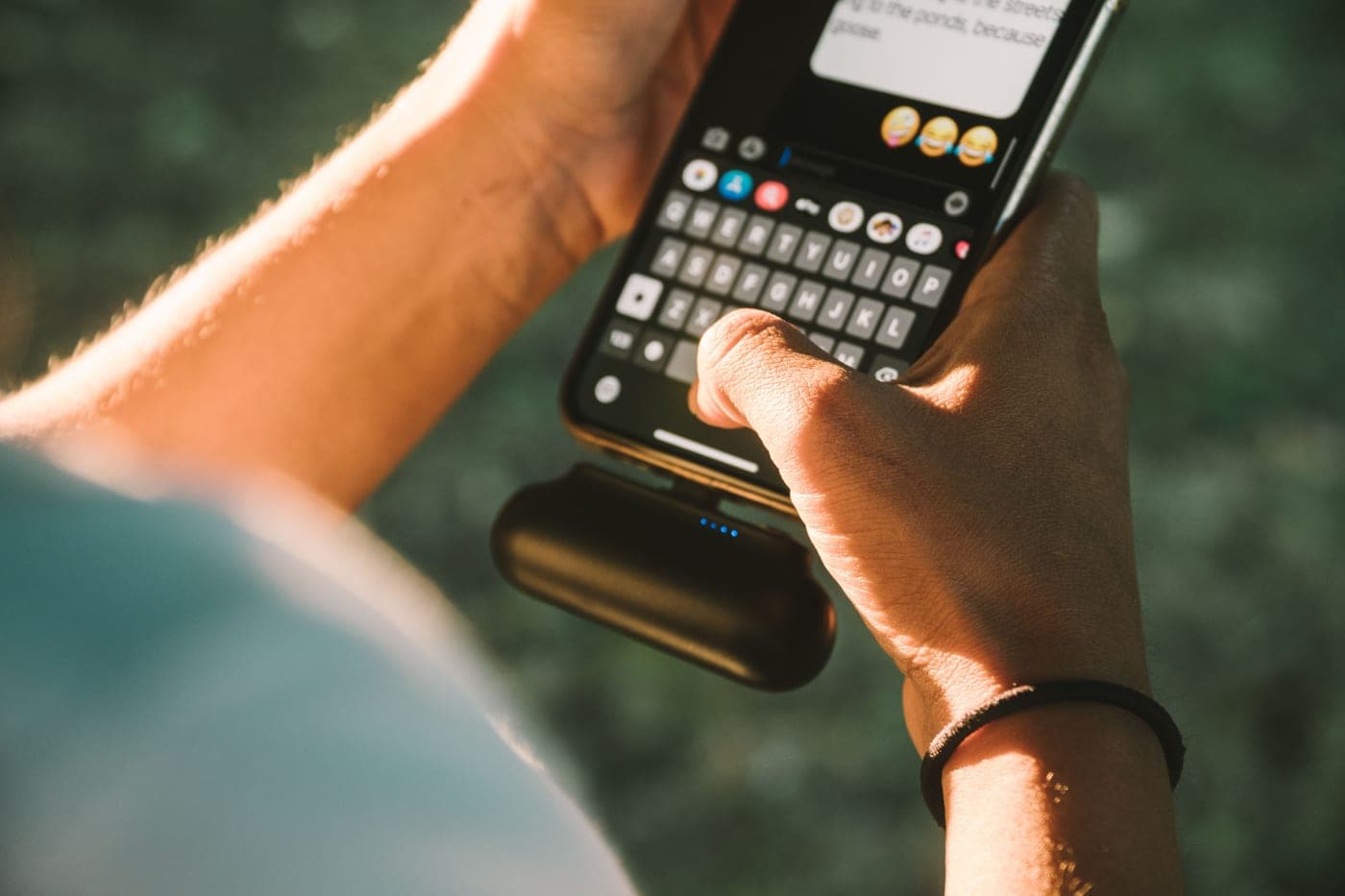
The verdict: buy a power bank if you only charge USB devices and you fly. Buy a power station if anything on your list has a wall plug. That is the line, and it is sharper than most comparisons on this site.
A surprising number of people arrive at a power station roundup when a power bank would serve them better and cost a tenth as much. This page exists to save those people money.
The size difference, in one calculation
That conversion catches people out constantly, because 20,000 is a much bigger-looking number than 286. They are not measuring the same thing — mAh measures charge and only means something alongside a voltage. Watt-hours explained covers it in two minutes and makes the whole category legible.
The decision table
| Power bank | Portable power station | |
|---|---|---|
| Typical capacity | 37-100Wh | 286-3,840Wh |
| AC outlets | No | Yes, pure sine wave |
| Can run a laptop via AC | No | Yes |
| Can run a fridge | No | Yes, from 1kWh up |
| Weight | 0.5-1.5 lb | 8-132 lb |
| Flies on a plane | Yes, under 100Wh | No, never |
| Solar recharging | Some, slowly | Yes, 100-2,400W input |
| Cost | Low | Several times to hundreds of times more |
| Fits in a pocket | Yes | No |
| Charges a phone | 4-5 times (74Wh) | 20+ times (286Wh) |
Buy a power bank if
- Everything on your list charges over USB. Phones, earbuds, a tablet, a headlamp, a camera battery, even many modern laptops over USB-C.
- You fly. This is the decisive one. A sub-100Wh bank goes in carry-on without approval; a power station is forbidden outright. The rules, sourced.
- Pocket size matters. A day hike, a commute, a festival, a long flight.
- Budget is genuinely tight and your needs are modest.
Buy a power station if
- Anything on your list has a wall plug. A CPAP, a fan, a projector, a TV, a coffee grinder, a power tool, a 12V fridge.
- You camp for more than a night. 74Wh is a couple of phone charges; 286Wh is a weekend of devices and lights.
- You want outage backup. A power bank keeps a phone alive. A power station keeps the fridge cold and the router up.
- You need to run something continuously — a CPAP overnight, a fridge, a satellite terminal.
- You will recharge from solar. Power banks accept trickle solar at best; stations take 100-2,400W.
The case for owning both
Genuinely common, and sensible. The power bank lives in a bag permanently and handles the day: a phone top-up at an airport, a tablet on a train, a camera battery on a walk. The power station stays in the car or the house and handles the trip or the outage.
They are not competing for the same job. A power bank is a convenience item you carry without noticing; a power station is equipment you deploy. Owning one does not make the other redundant.
The picks in full
1. The smallest step up that actually changes things
EcoFlow RIVER 3 Plus
- 286Wh
- LiFePO4
- 600W continuous / 1,200W surge
- 10.4 lb
- 220W
- 3,000 cycles to 80% capacity
- 0-100% in 60 min
- Not published on the US product page
286Wh is nearly four times the biggest power bank you can fly with, and crucially it has three real AC outlets. That is the whole difference: a power bank charges things, and this runs things.
600W of continuous output covers a laptop through an AC adapter, a box fan, a TV, a small projector, most hand tools and a CPAP for a night. X-Boost lifts resistive loads to 1,200W. None of that is possible with any power bank at any capacity.
At 10.4 lb it is not pocketable and it cannot fly, and both of those are real costs against a power bank. If your honest list is phones and earbuds, save your money — this is the wrong purchase and the bank is the right one.
Reasons to buy
- 286Wh — nearly four times a 100Wh power bank
- Three real AC outlets, pure sine wave
- 600W continuous, 1,200W with X-Boost
- 220W solar input; expands to 858Wh
- 60-minute full recharge; 3,000 cycles to 80%
Reasons to avoid
- Cannot fly — 286Wh is well over the 160Wh limit
- 10.4 lb against a power bank's half a pound
- Costs many times what a large power bank costs
- Overkill if everything you own charges over USB
Buy it if: something on your list has a wall plug, and you are not flying with it.
Skip it if: everything charges over USB and you fly. A power bank is the right tool.
2. Lightest unit with real AC outlets
Jackery Explorer 300 v2

- 288Wh
- LiFePO4 (LFP)
- 300W continuous / 600W surge
- 8.2 lb
- 100W
- 4,000+ cycles
- 80% in about 1 hr
- 5 years (with registration)
About 8.2 lb with 288Wh and two AC outlets is the lightest way to get genuine mains power away from a wall, and for many people stepping up from a power bank it is the right amount of step.
The 100W USB-C port is the bridge between the two worlds: it charges a modern laptop as fast as a good power bank would, without running the inverter, while the AC outlets handle anything the bank could not touch.
300W of output and 100W of solar input are hard ceilings. This is a devices unit with mains sockets, not a small version of a 1kWh station, and buying it expecting the latter leads to disappointment.
Reasons to buy
- About 8.2 lb — the lightest unit we cover
- Two real AC outlets plus a 100W USB-C
- 288Wh — about 20 phone charges
- 4,000+ cycles and a published 5-year warranty
- 80% charge in about an hour
Reasons to avoid
- Cannot fly, like every power station
- 300W output rules out anything that heats
- 100W solar input — a panel is a trickle
- No expansion path
Buy it if: you want AC outlets at the lowest possible weight and cost.
Skip it if: you need more than 300W, or you need it to fly.
Questions