The Best Solar Generators
The marketing is about the panel. The ceiling is set by the power station's input port, and that is where these are ranked.
At a glance
Quick picks
Tap any row to jump to the full write-up. Weight is a column here because it is the spec that decides whether you actually carry the thing.
| # | Product | Best for | Capacity · Weight | Price |
|---|---|---|---|---|
| 1 |  EcoFlow DELTA 3 Plus EcoFlow DELTA 3 Plus | Best solar generator overall | 1,024Wh 27.6 lb | Check price |
| 2 |  Anker SOLIX F3800 Anker SOLIX F3800 | Best for a house-scale solar setup | 3,840Wh 132.3 lb | Check price |
| 3 |  Anker SOLIX C1000 Gen 2 Anker SOLIX C1000 Gen 2 | Best mid-size solar pairing | 1,024Wh 24.9 lb | Check price |
| 4 |  Jackery Explorer 1000 v2 Jackery Explorer 1000 v2 | Best lightweight solar pairing | 1,070Wh 23.8 lb | Check price |
| 5 |  EcoFlow RIVER 3 Plus EcoFlow RIVER 3 Plus | Best small solar kit | 286Wh 10.4 lb | Check price |
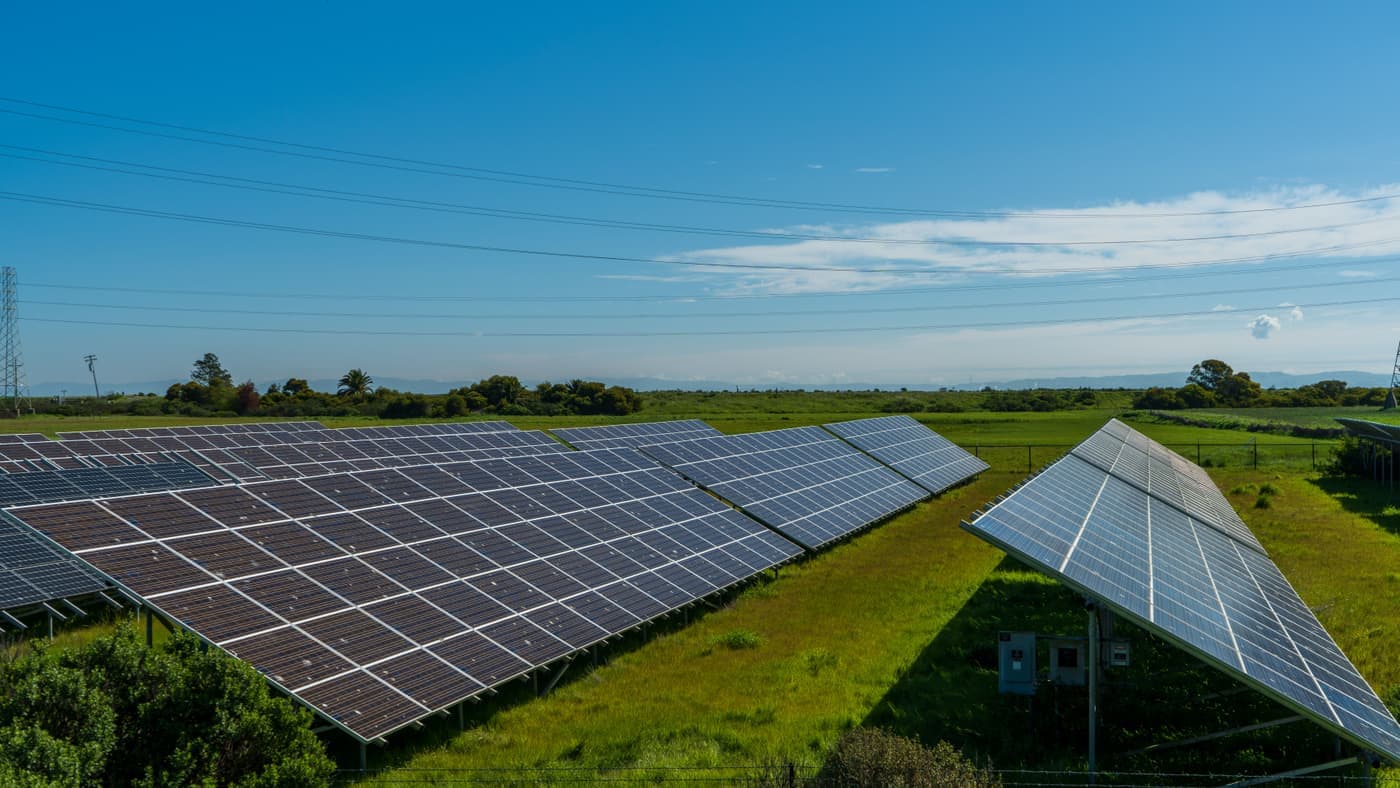
There is no such thing as a solar generator as a distinct product. It is a portable power station sold in a box with a folding panel, and the term exists because it sells better than 'battery'. That is not a criticism — the bundles are usually decent value — but it matters, because it means every solar generator decision is two decisions: is the battery right, and can it actually use the panel?
The second question has a counter-intuitive answer. The limiting spec is the power station's maximum solar input, not the panel's rating. Attach a 400W array to a unit capped at 100W and you have bought 300W of shade. Input ceilings among the units here range from 100W to 2,400W, which is a twenty-four-fold spread.
What a panel actually returns
A 200W panel does not produce 200W. That rating is measured under standard test conditions — roughly 1,000W/m2 of irradiance at 25C cell temperature with the panel square to the sun — and real deployment loses to angle, haze, panel temperature, cable length and the charge controller. Plan on roughly half to two-thirds of the rating across a good day for a fixed, unattended panel, and far less on overcast.
| Array | Rated | Good day | Overcast day |
|---|---|---|---|
| One 100W panel | 100W | 350-450Wh | 80-150Wh |
| One 200W panel | 200W | 700-900Wh | 150-300Wh |
| Two 200W panels | 400W | 1.4-1.8kWh | 300-600Wh |
| Four 200W panels | 800W | 2.8-3.6kWh | 600-1,200Wh |
Set that against a typical daily draw. Camping with a fridge is roughly 520Wh a day, which one 200W panel covers on a good day. Full-time van life is around 1,100Wh, which needs 400W of panel. A satellite terminal running continuously is about 1,440Wh, which wants 400-600W. How long solar charging takes works the arithmetic in the other direction.
What to look for in a pairing
- Input ceiling above your intended array. Buying a 400W array for a 400W-capped unit leaves no headroom for a future panel.
- MPPT, and a wide voltage window. Every unit here uses MPPT rather than PWM. A wide input voltage range means more flexibility in how you wire panels in series.
- Two inputs, if you want the headline figures. The units publishing 1,000W and 2,400W do it across two channels, not one.
- Pass-through. All of these charge while supplying loads, which is what makes a solar generator work at all during daylight.
- Weather rating on the station, if it will sit outside with the panel. IP65 on the DELTA 3 Plus is unusual and useful.
The picks in full
1. Best solar generator overall
EcoFlow DELTA 3 Plus
- 1,024Wh
- LFP (LiFePO4)
- 1,800W continuous / 3,600W surge
- 27.6 lb
- 1000W
- 4,000 cycles to 80%+ capacity
- Full in 56 min (1,500W AC input)
- 5 years
Up to 1,000W of solar input across two MPPT channels is the highest ceiling in the 1kWh class and the reason this leads. With 800W of panel deployed, a good day returns 2.8-3.6kWh into a 1,024Wh battery — meaning you fill it and keep running loads all day, which is what solar independence actually looks like.
Expansion to 5kWh means the harvest has somewhere to go on long summer days rather than being wasted once the battery fills. That pairing of high input and big storage is the whole argument for this unit.
IP65 rating matters more here than on most pages: a solar setup means the station often sits outside near the panels rather than inside a tent. Worth noting that the 1,000W figure requires two arrays — each MPPT input caps at 500W.
Reasons to buy
- Up to 1,000W solar across two MPPT channels
- Expandable to 5kWh so the harvest has somewhere to go
- IP65 rated for outdoor deployment
- 1,800W continuous, 3,600W surge
- 4,000 cycles to 80%+; 5-year warranty
Reasons to avoid
- The 1,000W figure needs two separate arrays; one caps at 500W
- 27.6 lb for 1,024Wh
- A full 800W array is a substantial purchase and a lot to transport
- Over-specified if you only ever run one 200W panel
Buy it if: you intend to run a real array and want the station to use all of it.
Skip it if: one folding panel is your plan. A 400-600W ceiling is plenty for that.
2. Best for a house-scale solar setup
Anker SOLIX F3800
- 3,840Wh
- LiFePO4 (LFP)
- 6,000W continuous / 9,000W surge
- 132.3 lb
- 2400W
- 3,000+ cycles
- 1,800W max AC input
- 5 years
2,400W of solar input across two 1,200W channels is in a different league from everything else here, and it is what makes a genuinely self-sufficient home or RV installation possible. A roof array that would overwhelm any other unit here feeds this one at full rate.
3,840Wh of base storage expanding to 53.8kWh means multi-day autonomy is a purchasing decision rather than a hope, and the 120/240V output means the harvest can run real household circuits rather than extension cords.
132.3 lb, and a serious cost. This is a home energy system in a wheeled box, and it should be evaluated against fixed battery installations rather than against camping gear.
Reasons to buy
- 2,400W solar input across two 1,200W channels
- 3,840Wh expandable to 53.8kWh
- 120V and 240V output; 6,000W continuous
- NEMA 14-50 and L14-30 outlets
- 3,000+ cycles; 5-year warranty
Reasons to avoid
- 132.3 lb — effectively a fixed installation
- Far beyond what a camping or van setup needs
- Realizing the output capability usually needs an electrician
- A 2,400W array is a roof-scale purchase
Buy it if: a house or a large RV with roof space and a genuine multi-day requirement.
Skip it if: you are pairing a folding panel with a camping battery.
3. Best mid-size solar pairing
Anker SOLIX C1000 Gen 2
- 1,024Wh
- LiFePO4 (InfiniPower LFP)
- 2,000W continuous / 3,000W surge
- 24.9 lb
- 600W
- 80% capacity after 4,000 cycles
- Full in 49 min (UltraFast, 1,600W max input)
- 5 years
600W of solar input with a 60V ceiling is comfortably more than a single folding panel delivers and enough for a two- or three-panel array — which is the realistic setup for most people who say they want a solar generator.
Paired with 1,024Wh of storage and 2,000W of output, it is the most capable mid-size combination here: a good day on a 400W array returns 1.4-1.8kWh, which fills the battery and runs loads. The 49-minute AC recharge means you are never stuck waiting for sun if an outlet exists.
No expansion is the limitation. On a long sunny day you will fill 1,024Wh and then waste the rest of the harvest, where the expandable units would keep banking it.
Reasons to buy
- 600W solar input with a wide 60V ceiling
- 2,000W continuous output — runs loads while charging
- 49-minute AC recharge as a backstop
- 24.9 lb, portable for a solar setup
- 80% after 4,000 cycles; 5-year warranty
Reasons to avoid
- Not expandable — surplus harvest is wasted once full
- Two AC outlets
- 600W ceiling caps the array you can grow into
- No IP rating published for outdoor use
Buy it if: a two- or three-panel array and a single battery you do not intend to grow.
Skip it if: you want to bank a long summer day's harvest. Buy expandable.
4. Best lightweight solar pairing
Jackery Explorer 1000 v2
- 1,070Wh
- LiFePO4 (LFP)
- 1,500W continuous / 3,000W surge
- 23.8 lb
- 400W
- 4,000 cycles to 70% capacity
- 1.7 hr wall; 1 hr emergency charge via app
- 5 years (with registration)
400W of input is the lowest of the 1kWh units here and it is still enough to refill the 1,070Wh battery in a single good day from a two-panel array. For camping — which is what this unit is best at — that is the whole requirement.
At 23.8 lb it is the lightest 1kWh station, which matters for a solar setup because you are already carrying panels. Adding 11 lb of station weight on top of an array is how a solar kit stops leaving the house.
Jackery publishes 7.5 hours to full from two 100W panels, which is an honest figure rather than a best case, and it squares with the planning arithmetic above. If your ambitions grow past 400W of panel, this is the wrong station.
Reasons to buy
- 23.8 lb — lightest 1kWh station to carry alongside panels
- 1,070Wh, the largest battery of the three 1kWh units bar the BLUETTI
- Jackery publishes 7.5 hours to full on 2 x 100W
- 1,500W continuous, 3,000W surge
- 5-year warranty with registration
Reasons to avoid
- 400W input is the lowest ceiling of the 1kWh units here
- Not expandable
- Two AC outlets
- Cycle rating quoted to 70%, not 80%
Buy it if: camping solar with one or two panels, where total carried weight matters.
Skip it if: you want to grow past 400W of array. The ceiling will bite.
5. Best small solar kit
EcoFlow RIVER 3 Plus
- 286Wh
- LiFePO4
- 600W continuous / 1,200W surge
- 10.4 lb
- 220W
- 3,000 cycles to 80% capacity
- 0-100% in 60 min
- Not published on the US product page
220W of solar input into a 286Wh battery is a well-matched small kit: one folding panel refills it comfortably within a good day, which means indefinite operation for a devices-and-lights load list.
At 10.4 lb the station is light enough that the panel becomes the heavy part of the kit, which is the right way round for anything you carry. Expansion to 858Wh gives it somewhere to put surplus harvest on long days.
It is not a serious solar setup and it does not pretend to be. As the lightest way to stay charged indefinitely off-grid with modest loads, it is very good.
Reasons to buy
- 220W input is generous relative to 286Wh of storage
- 10.4 lb — the panel becomes the heavy part
- Expands to 858Wh to bank surplus harvest
- 60-minute AC recharge as a backstop
- 3,000 cycles to 80% LiFePO4
Reasons to avoid
- 286Wh base is a very small buffer for bad weather
- No published warranty term on EcoFlow's US page
- 600W output rules out heating loads entirely
- Not a setup that scales to a fridge
Buy it if: indefinite off-grid operation for phones, lights, a laptop and a CPAP.
Skip it if: a fridge is on the list. The buffer is too small.
Questions