The Best Solar Generator for an RV
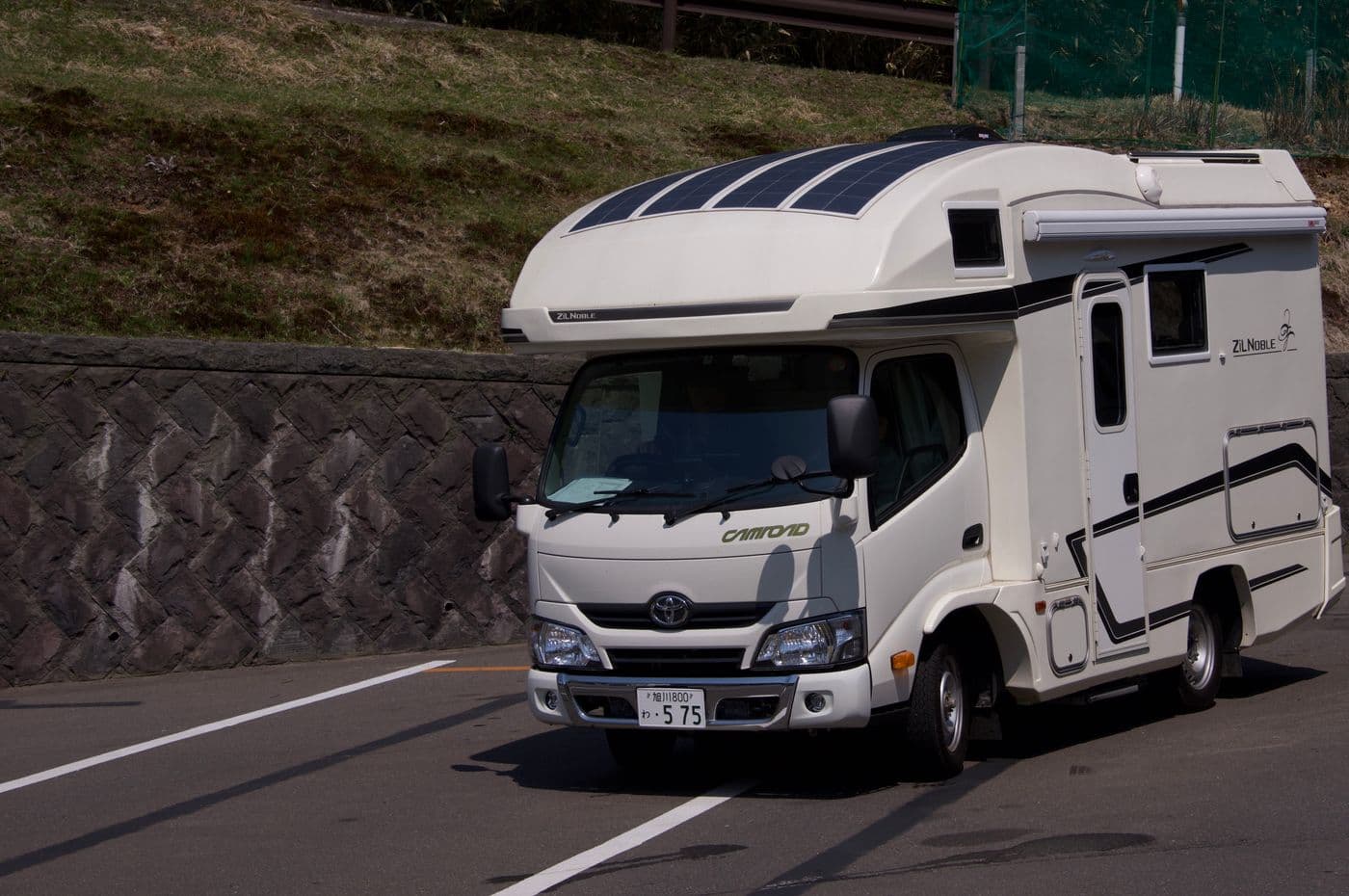
In an RV the binding spec is not the battery, it is how fast the battery refills. These four are ranked on solar input first.
At a glance
Quick picks
Tap any row to jump to the full write-up. Weight is a column here because it is the spec that decides whether you actually carry the thing.
| # | Product | Best for | Capacity · Weight | Price |
|---|---|---|---|---|
| 1 |  EcoFlow DELTA 2 Max EcoFlow DELTA 2 Max | Best overall for an RV | 2,048Wh 50.7 lb | Check price |
| 2 | 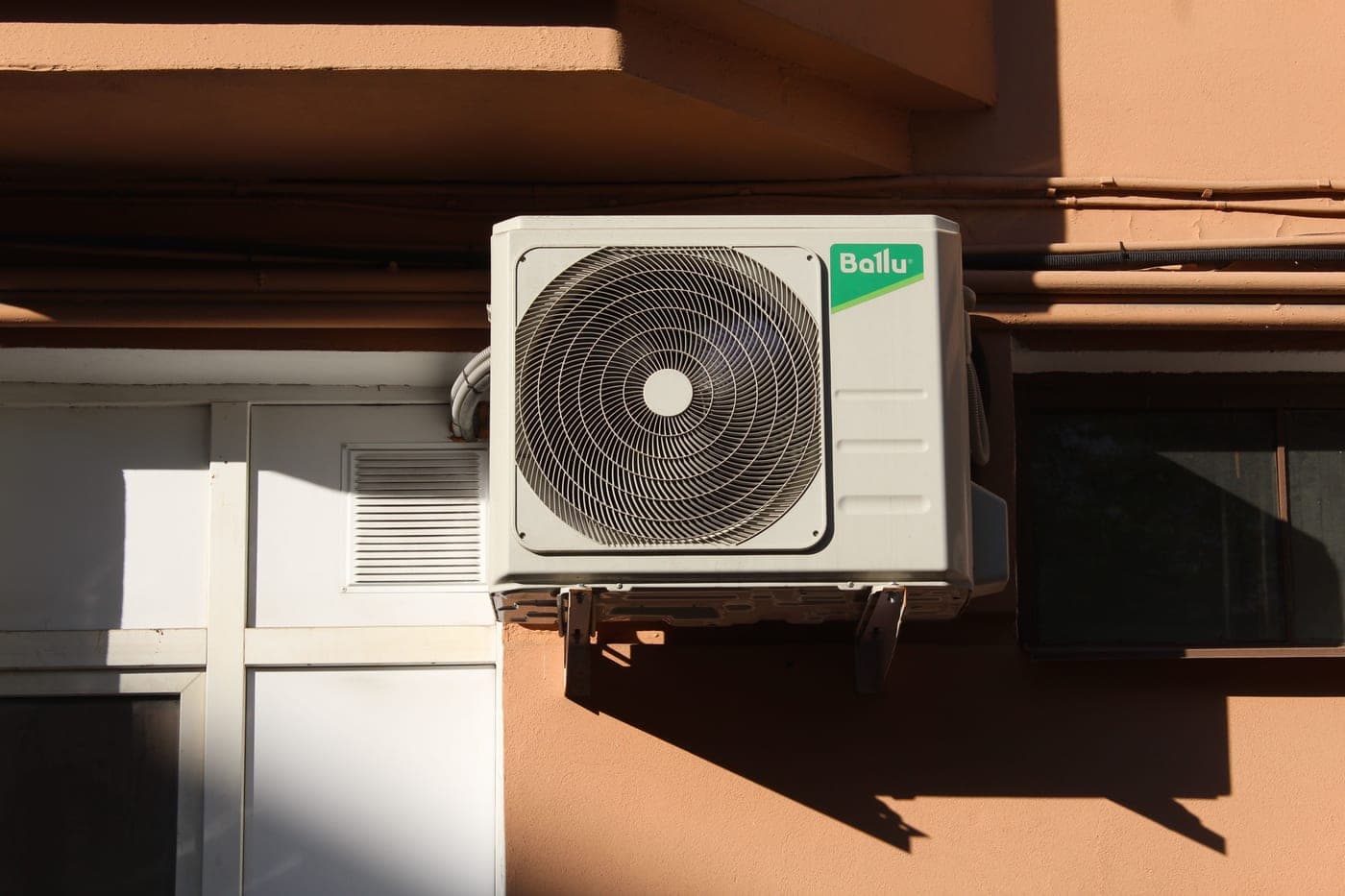 EcoFlow DELTA Pro 3 EcoFlow DELTA Pro 3 | Best if the rooftop air conditioner is on the list | 4,096Wh Weight n/p | Check price |
| 3 |  EcoFlow DELTA 3 Plus EcoFlow DELTA 3 Plus | Best lightweight RV solar generator | 1,024Wh 27.6 lb | Check price |
| 4 |  Anker SOLIX F3800 Anker SOLIX F3800 | Best for a 30A hookup and 240V loads | 3,840Wh 132.3 lb | Check price |
For most RVs the best solar generator is the [EcoFlow DELTA 2 Max](/reviews/ecoflow-delta-2-max): 2,048Wh of battery, a 1,000W solar input ceiling, 2,400W of continuous output and up to 800W of alternator charging while you drive. It wins because an RV is a refill problem rather than a storage problem — you are parked in the same spot for days, drawing continuously, and the question is whether the sun and the engine can put back what you took out.
If a rooftop air conditioner is on the list, nothing here but the EcoFlow DELTA Pro 3 and its 4,000W at 120/240V will start it — see the RV air conditioner page for why that is a separate problem. If you want the lightest unit that still takes a serious array, the DELTA 3 Plus is 1,024Wh with the same 1,000W ceiling. And if your rig has a 30A hookup you want to back up wholesale, the Anker SOLIX F3800 is the 240V answer with 2,400W of solar input.
Why solar input decides this, not capacity
A solar generator is a power station bundled with a panel; the term exists because it sells better. That matters here because the marketing emphasizes the battery, and in an RV the battery is the less interesting half of the equation.
Work it from the daily draw. A 12V compressor fridge at a realistic duty cycle is around 430-550Wh a day. Add lights, a laptop, phones, a water pump and a fan and a modest RV day lands between 800Wh and 1,200Wh. Add a Starlink terminal and it climbs past 2kWh. Whatever the number, you need to put it back the same day or you are on a countdown.
A portable panel rated 200W does not deliver 200W. Real-world output depends on angle, haze, heat and time of day, and a sensible planning figure is a good deal below the sticker. That is why the input ceiling on the box matters so much: if the unit caps at 400W you cannot buy your way out of a shortfall by adding more panels. How much solar input you need does this arithmetic properly, and how long solar charging takes applies it to real days.
The comparison table
| Unit | Capacity | Max solar in | AC continuous | Weight |
|---|---|---|---|---|
| EcoFlow DELTA 2 Max | 2,048Wh | 1,000W | 2,400W | 50.7 lb |
| EcoFlow DELTA Pro 3 | 4,096Wh | Not published | 4,000W | Not published |
| EcoFlow DELTA 3 Plus | 1,024Wh | 1,000W | 1,800W | 27.6 lb |
| Anker SOLIX F3800 | 3,840Wh | 2,400W | 6,000W | 132.3 lb |
What to look for in an RV solar generator
A solar ceiling of at least 500W, and 1,000W if you intend to be self-sufficient. This is the one number you cannot upgrade later without replacing the whole unit.
An expansion path. All four units here accept extra batteries, from the DELTA 3 Plus at 5kWh to the F3800 at 53.8 kWh. In an RV your needs grow as you discover what you actually run, and a fixed-capacity unit becomes the bottleneck within a season.
Published alternator or car-charging wattage. A 12V socket trickle is not the same thing as an 800W DC input. If the maker does not publish a figure, assume the trickle.
Output that clears your biggest appliance, including surge. A microwave wants 1,500W. A rooftop air conditioner wants 1,200-1,800W running and 3,000W or more to start its compressor, which is why the RV air conditioner page exists as a separate problem.
Weight you can actually position. 50.7 lb is a two-handed lift into a storage bay. 132.3 lb rolls but does not climb steps. This decides where the unit lives, which decides how you cable it.
How these were chosen
Every figure above was read from the manufacturer's own published page on the dates logged in our sources. We do not run a test lab and we have not had these units in an RV; where EcoFlow does not publish a weight or a solar figure for the DELTA Pro 3, this page says so rather than inventing one. How we choose sets out the method, and there are no prices anywhere on this site because we have no live feed — every button opens the current Amazon listing.
If you are deciding between a solar generator and the RV's own house battery bank, power station vs 12V house battery is the page for that, and the RV roundup covers the non-solar case.
The picks in full
1. Best overall for an RV
EcoFlow DELTA 2 Max
- 2,048Wh
- LFP (LiFePO4)
- 2,400W continuous
- 50.7 lb
- 1000W
- 3,000 cycles to 80% capacity
- 2.3 hr; 800W car/alternator charging
- 5 years
2,048Wh is roughly two days of a realistic RV draw, and the 1,000W solar ceiling is what makes those two days repeatable. That combination — enough storage to absorb a cloudy day plus enough input to refill from a full array — is the specific thing an RV needs and the reason this is the pick.
The 800W car-charging figure is the quiet headline. Two hours of driving between campgrounds returns about 1.6kWh, which in practice means the panels only have to cover the days you stay put. Add 2,400W of continuous output, 3,400W available through X-Boost, 15 outputs including six AC sockets, and expansion from 2kWh to 6kWh, and the unit grows with the rig.
The drawbacks are real. 50.7 lb is a two-handed lift and it will live wherever you first put it. EcoFlow publishes no surge figure and no dimensions for this model on either its shop page or ecoflow.com/us, and its cycle rating of 3,000 to 80% is the shortest of the EcoFlows here.
Reasons to buy
- 2,048Wh with expansion to 6kWh
- 1,000W solar input ceiling
- Up to 800W alternator and car charging
- 2,400W continuous, 3,400W through X-Boost
- Under-20 ms UPS switchover and a 2.3-hour wall recharge
Reasons to avoid
- 50.7 lb — positioned once, not carried
- No surge figure or dimensions published by EcoFlow for this model
- 3,000 cycles to 80%, the shortest rating of the EcoFlows here
- Will not start a rooftop air conditioner
Buy it if: a travel trailer or motorhome running a fridge, devices and lights, with panels on the ground and driving days in between.
Skip it if: the air conditioner is the reason you are shopping. Go up a tier.
2. Best if the rooftop air conditioner is on the list
EcoFlow DELTA Pro 3
- 4,096Wh
- LFP (EV-grade)
- 4,000W continuous / 6,000W surge
- 80% capacity after 4,000 cycles
- 80% in 50 min
- 5 years (3-year standard plus 2-year extended)
4,096Wh and 4,000W of continuous output at 120/240V is the only specification here that takes a rooftop RV air conditioner seriously. A 13,500 BTU unit draws 1,200-1,800W running and demands 3,000W or more to start its compressor; 4,000W continuous with a 6,000W surge clears that without a soft-start kit.
EcoFlow publishes seven charging methods and 80% in 50 minutes from the wall, plus an expansion path from 4kWh to 48kWh. For a rig that runs air conditioning off-grid, the expansion path is not a luxury — an air conditioner is a 10kWh-a-day appliance and the head unit alone will not cover a full day of it.
Be clear about what EcoFlow does not publish: there is no weight figure and no maximum solar input figure in its DELTA Pro 3 overview. We leave both blank rather than guess, which means you should confirm the solar ceiling against the spec sheet before buying an array for it. It is also, visibly, a wheeled unit — this is equipment you position, not equipment you carry.
Reasons to buy
- 4,096Wh, expandable to 48kWh
- 4,000W continuous and 6,000W surge at 120V and 240V
- The only unit here that starts a rooftop air conditioner unaided
- 80% charge in 50 minutes; seven charging methods
- 80% capacity after 4,000 cycles; 5-year total warranty
Reasons to avoid
- EcoFlow publishes no weight figure for this model
- EcoFlow publishes no maximum solar input figure in its overview
- Wheeled, not carried
- Far more unit than a fridge-and-devices RV needs
Buy it if: air conditioning, an induction hob, or 240V tools off-grid in a large rig.
Skip it if: your draw is a fridge and some lights. You are buying capacity you will tow and never use.
3. Best lightweight RV solar generator
EcoFlow DELTA 3 Plus
- 1,024Wh
- LFP (LiFePO4)
- 1,800W continuous / 3,600W surge
- 27.6 lb
- 1000W
- 4,000 cycles to 80%+ capacity
- Full in 56 min (1,500W AC input)
- 5 years
1,024Wh at 27.6 lb with the same 1,000W solar ceiling as the DELTA 2 Max is the interesting trade on this page. You give up half the battery and keep all of the refill rate, which for a small camper van parked in good sun is the better bargain — the panels do the storing, not the box.
Two separate 500W MPPT inputs is the mechanism, and it is worth understanding: the 1,000W figure needs two arrays, not one big one. EcoFlow also publishes 800W of alternator charging, a 56-minute wall recharge, an IP65 rating for the unit sitting outside with panels, and expansion to 5kWh if the van build grows.
The limit is the battery. 1,024Wh is one realistic RV day, so a run of grey days will put you on rationing where 2,048Wh would not. 1,800W of continuous output also rules out the microwave-and-kettle-at-once scenario.
Reasons to buy
- 27.6 lb for 1,024Wh — the only unit here one person repositions easily
- 1,000W solar input across two MPPT channels
- Up to 800W alternator charging; 56-minute wall recharge
- IP65 rated, which matters sitting outside with an array
- Expandable to 5kWh; 4,000 cycles to 80%+
Reasons to avoid
- 1,024Wh is a single realistic RV day with no buffer
- The 1,000W figure needs two separate panel arrays
- 1,800W continuous rules out running two heating appliances
- Expansion batteries are priced as accessories
Buy it if: a camper van or small trailer in reliable sun, where weight and placement matter more than reserve.
Skip it if: you park for a week in variable weather. Buy the bigger battery.
4. Best for a 30A hookup and 240V loads
Anker SOLIX F3800
- 3,840Wh
- LiFePO4 (LFP)
- 6,000W continuous / 9,000W surge
- 132.3 lb
- 2400W
- 3,000+ cycles
- 1,800W max AC input
- 5 years
3,840Wh, 6,000W continuous and a 2,400W solar input ceiling is the most solar any unit here will accept, and the NEMA 14-50 and L14-30 outlets mean it can feed an RV through its own shore-power inlet rather than through extension cords to individual appliances. For a large fifth-wheel that is a completely different ownership experience.
The expansion path runs to six batteries and 53.8 kWh, which is genuinely house-scale, and 2,400W of solar input means a roof array can keep pace with real consumption rather than just slowing the decline. Anker publishes 3,000+ cycles and a 5-year warranty.
132.3 lb including wheels is the cost, and it is a serious one. This unit does not go up steps, it does not get lifted into a storage bay, and it needs a flat place to live. It is also far more unit than a fridge-and-lights rig will ever use.
Reasons to buy
- 2,400W solar input, the highest ceiling here
- 3,840Wh, expandable to 53.8 kWh
- 6,000W continuous and 9,000W surge with 240V NEMA 14-50 and L14-30
- Six 20A NEMA 5-20 sockets and three 100W USB-C ports
- 3,000+ cycles and a 5-year warranty
Reasons to avoid
- 132.3 lb — rolls, but does not climb
- Needs a flat permanent position, not a storage bay
- Vastly over-specified for a fridge-and-devices draw
- 1,800W maximum AC input is modest relative to its battery
Buy it if: a large rig you want to feed through its shore-power inlet, with a roof array and 240V loads.
Skip it if: the unit has to move between the RV and the house. It is a fixture.
Questions