Portable Power Station vs Solar Generator
These are the same product. One of them comes with a panel in the box and a better name.

The verdict: there is no difference. A solar generator is a portable power station bundled with one or more solar panels. Every power station with a solar input becomes a solar generator the moment you attach a panel. The term persists because 'generator' sounds like something that makes power and 'battery' sounds like something that stores it — which is a marketing distinction, not a technical one.
The useful version of this question is not which to buy, but whether to buy the bundle or the pieces separately, and that has a real answer.
What the terms actually mean
| Term | What it actually is |
|---|---|
| Portable power station | A battery, an inverter, a charge controller and ports, in one box |
| Solar generator | The same box, sold with one or more solar panels |
| Solar panel (portable) | The panel on its own, bought to add to a station you own |
| Generator | A genuinely different product — an engine that burns fuel. That comparison |
Note the last row, because it is where the confusion actually causes harm. A 'solar generator' and a 'generator' have almost nothing in common: one is a silent battery that can be recharged from the sun, the other is a fuel-burning engine that must run outdoors. Conflating them leads people to expect unlimited runtime from a battery, or to think a battery is unsafe indoors.
Bundle or separately?
Buy the bundle if
- You are starting from nothing and want it to work out of the box.
- You want the connector and voltage matched without reading two spec sheets.
- The bundle price is genuinely lower than the parts — it often is.
- The bundled panel is sized sensibly for the station's input ceiling.
Buy separately if
- You already own a station and only need the panel.
- The bundled panel is undersized — a 100W panel bundled with a 1kWh station is a trickle, not a charger.
- You want more panel than the bundle includes, and the station's input ceiling allows it.
- You are willing to check voltage compatibility yourself and want a cheaper third-party panel.
The spec that actually decides it
Whatever you call it and however you buy it, the number that governs the whole system is the station's maximum solar input. Input ceilings among the units we cover range from 100W to 2,400W. A 400W array into a 100W-capped station delivers 100W, and no amount of panel buying changes that.
| Unit | Max solar input | Realistic array |
|---|---|---|
| Jackery Explorer 300 v2 | 100W | One small panel |
| EcoFlow RIVER 3 Plus | 220W | One panel |
| Jackery Explorer 1000 v2 | 400W | Two panels |
| BLUETTI AC180 | 500W | Two to three panels |
| Anker SOLIX C1000 Gen 2 | 600W | Three panels |
| EcoFlow DELTA 3 Plus | 1,000W | Two arrays |
| Anker SOLIX F3800 | 2,400W | A roof array |
Work out your daily draw, size the array to cover it, then choose a station whose ceiling accepts that array. Doing it in that order is the whole method — how much solar input you need walks through it.
So which should you search for?
Both, honestly. Retailers use the terms interchangeably and you will find the same physical product listed under either. Search for the station model you want and check whether a panel bundle exists at a better price than the parts. Best solar generators ranks the pairings; best portable solar panels covers buying the panel alone.
The picks in full
1. Best station to build a solar generator around
EcoFlow DELTA 3 Plus
- 1,024Wh
- LFP (LiFePO4)
- 1,800W continuous / 3,600W surge
- 27.6 lb
- 1000W
- 4,000 cycles to 80%+ capacity
- Full in 56 min (1,500W AC input)
- 5 years
Whatever the box is labeled, this is the unit to build around if solar is the point. Up to 1,000W of input across two MPPT channels is the highest ceiling in its class and means the array you buy is not wasted — which is the failure mode of every undersized bundle.
Two independent MPPT trackers also handle mismatched arrays properly: if one panel is shaded and the other is not, they are optimized separately rather than the shaded one dragging the system down. In real deployment, where shadows move across a day, that is worth more than the headline number.
Expansion to 5kWh means a long summer day's surplus has somewhere to go instead of being wasted once 1,024Wh fills, and IP65 makes leaving the unit outside with the panels reasonable rather than a gamble.
Reasons to buy
- 1,000W solar input across two independent MPPT channels
- Expandable to 5kWh so surplus harvest is banked
- IP65 rated for outdoor deployment
- 1,800W continuous, 3,600W surge
- 4,000 cycles to 80%+; 5-year warranty
Reasons to avoid
- The 1,000W figure needs two arrays; one input caps at 500W
- 27.6 lb for 1,024Wh
- Bundles at this level are a significant purchase
- Over-specified if you will only ever run one panel
Buy it if: solar is the actual plan, not a bundled accessory you may never deploy.
Skip it if: you want a small bundle to keep phones charged. Buy something smaller.
2. Best if you already own the station
Jackery SolarSaga 200W
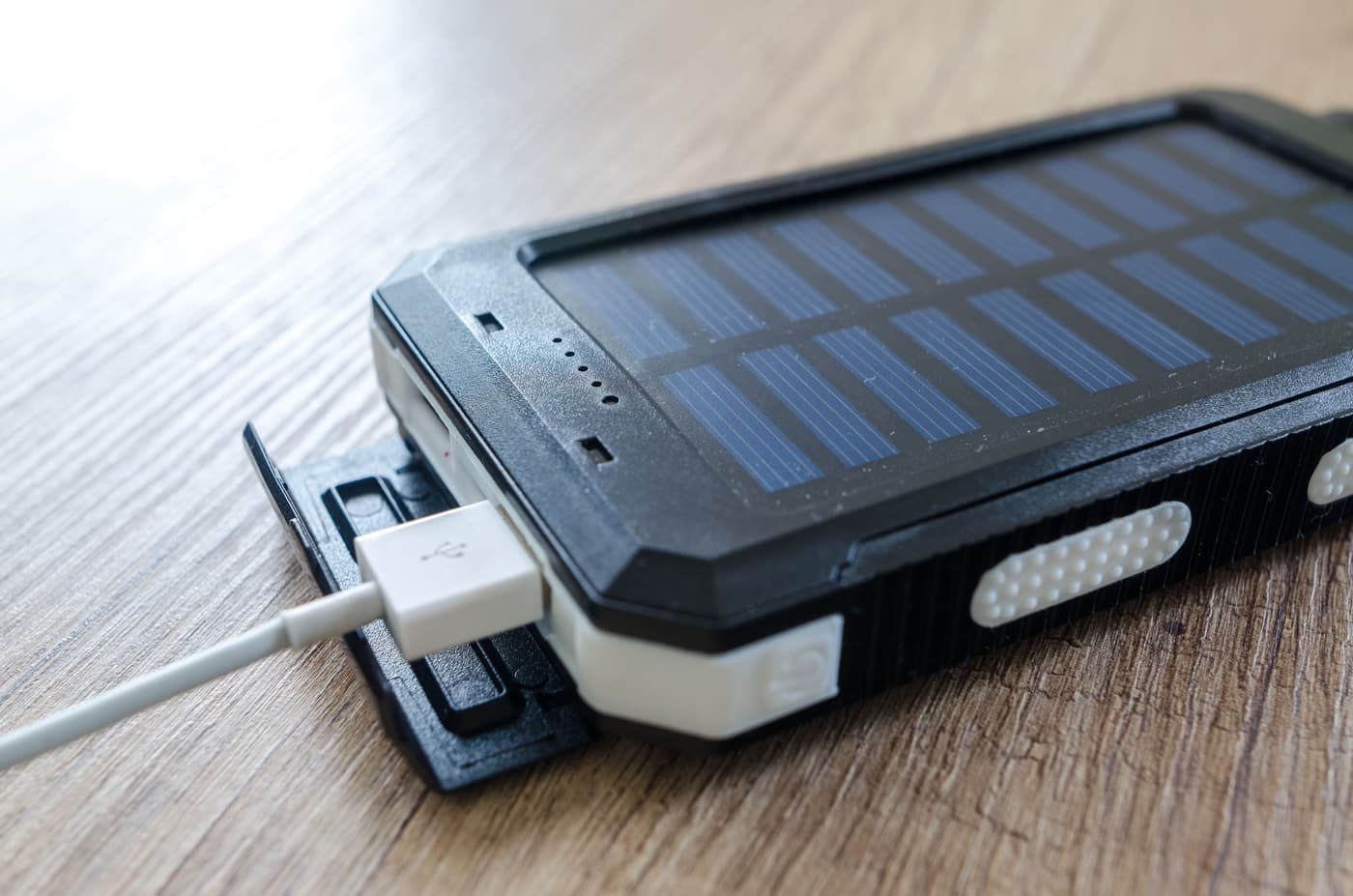
- 200W
- Not published on the current product listing
- IP68
If you already have a power station, you do not need a solar generator — you need a panel, and buying it separately is usually cheaper than rebuying the whole bundle.
Two 200W panels take a Jackery Explorer 1000 v2 to its 400W input ceiling exactly, which is the tidy in-brand answer: connector matched, voltage matched, nothing to read. Jackery publishes the 200W rating, bifacial construction and an IP68 rating for the current model.
Jackery does not publish a weight or an efficiency figure for this panel on its listing, so neither is stated here. That is a real gap if carried weight is one of your criteria, and it is why we have not printed a number.
Reasons to buy
- In-brand: connector and voltage matched with no research
- Two panels reach the Explorer 1000 v2's 400W ceiling exactly
- Bifacial construction; IP68 rated
- Current model, not a discontinued one
- Cheaper than rebuying a bundled station
Reasons to avoid
- Jackery publishes no weight or efficiency figure for this listing
- No published warranty term on the listing either
- Bifacial gains depend entirely on the ground beneath it
- In-brand pairing means less price flexibility
Buy it if: you own a station and just need the solar half of the equation.
Skip it if: you are starting from nothing. A bundle may price better.
Questions