The Best Power Stations for a Refrigerator
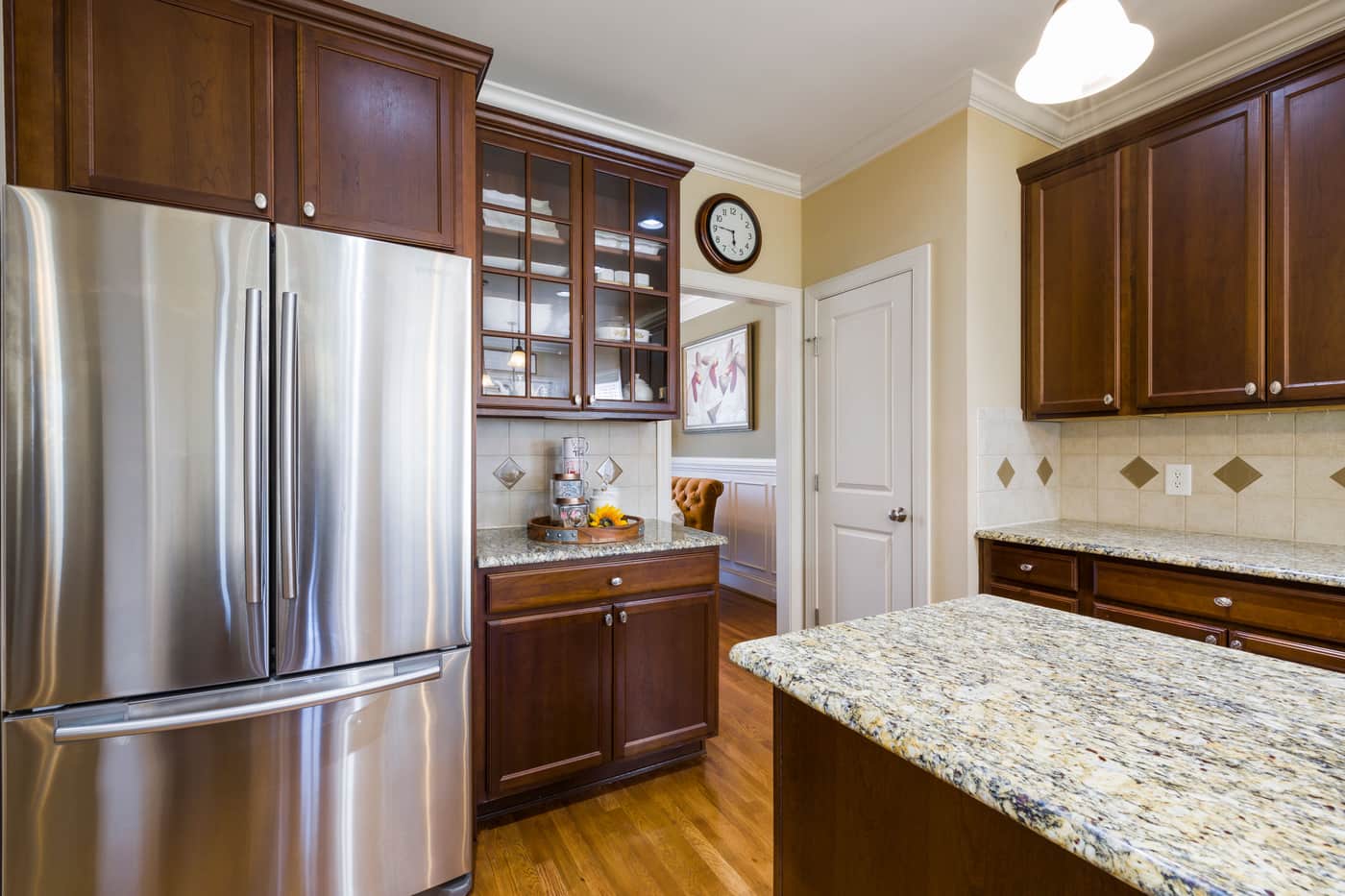
Two numbers decide this and neither is printed on the fridge: the compressor's start-up surge and how much of the day it actually runs.
At a glance
Quick picks
Tap any row to jump to the full write-up. Weight is a column here because it is the spec that decides whether you actually carry the thing.
| # | Product | Best for | Capacity · Weight | Price |
|---|---|---|---|---|
| 1 |  EcoFlow DELTA 2 Max EcoFlow DELTA 2 Max | Best for a full 24 hours of fridge | 2,048Wh Weight n/p | Check price |
| 2 |  Anker SOLIX C1000 Gen 2 Anker SOLIX C1000 Gen 2 | Best surge headroom in the 1kWh class | 1,024Wh 24.9 lb | Check price |
| 3 |  BLUETTI AC180 BLUETTI AC180 | Most fridge-hours in the 1kWh class | 1,152Wh 35.27 lb | Check price |
| 4 |  Anker SOLIX F3800 Anker SOLIX F3800 | Best if the fridge is one of many things | 3,840Wh 132.3 lb | Check price |
Keeping the food cold is the reason most people buy a home backup battery, and it is the load people most often size wrong — in both directions. Some buy 500Wh and discover the compressor will not even start. Others buy 4kWh for a fridge that needs 1.2kWh a day.
The surge problem
A refrigerator compressor is an induction motor. When it starts, it draws several times its running current for a fraction of a second — commonly three to six times. A fridge running at 150W can therefore demand 600-1,200W for an instant, and a power station that cannot supply that instant will trip rather than start it.
You almost never get a published surge figure for a domestic fridge, so work backwards: assume six times the running draw as a safe worst case. A 150W fridge means planning for around 900W of surge headroom. Current 1kWh-class units publish 2,400-3,600W of surge, so they clear that comfortably. It is the small units — 300W continuous with 600W surge — that will fail, and they will fail on a full-size fridge while running a camping fridge fine.
The duty-cycle arithmetic
Your own fridge's figure is easy to get and worth having: the yellow EnergyGuide label gives an annual kWh figure you can divide by 365, or a plug-in energy meter will tell you exactly in a day. Most full-size fridges made in the last decade land between 1.0 and 1.5kWh a day.
You do not have to run it continuously
This is the practical insight that changes the purchase. An unopened, full refrigerator holds safe temperature for roughly four hours on its own; a full freezer for around 48. So a realistic outage strategy is to cycle the power station — run the fridge for a couple of hours, switch it off, let the thermal mass carry it, repeat.
Done that way, a 1,000Wh unit stretches across a day and a half rather than eighteen hours. Add the obvious discipline — decide what you want before opening the door — and a modest battery goes a surprisingly long way. What size power station for a power outage works through the full household picture.
Pure sine wave, non-negotiable
A compressor motor runs hot and inefficiently on a modified sine wave inverter and can be damaged over time. Every unit in our registry is pure sine wave, which is now standard in this class — but it is worth confirming on anything cheaper you might be tempted by.
The picks in full
1. Best for a full 24 hours of fridge
EcoFlow DELTA 2 Max
- 2,048Wh
- LFP (LiFePO4)
- 2,400W continuous
- 1000W
- 3,000+ cycles
- 2.3 hr
- 5 years
2,048Wh against a fridge's roughly 1,200Wh daily draw is the first comfortable answer here: a genuine full day with the router, phones and a couple of lamps alongside, without cycling the fridge on and off or thinking about it.
2,400W continuous clears any domestic compressor's start with a wide margin, and 3,400W is available through X-Boost for resistive loads such as a microwave. Expansion from 2kWh to 6kWh means a longer outage is a later purchase rather than a decision you have to make now.
Up to 1,000W of solar input at 99% MPPT efficiency matters for the outage that goes past a day. EcoFlow does not publish a weight or a surge figure on the product page and we have not filled either in from a retailer listing.
Reasons to buy
- 2,048Wh — a full day of fridge plus essentials
- 2,400W continuous, comfortably clears a compressor start
- Expandable from 2kWh to 6kWh
- Up to 1,000W solar input for outages that run long
- 3,000+ cycles; 5-year warranty
Reasons to avoid
- EcoFlow publishes neither a weight nor a surge figure
- No 240V output
- Substantially more expensive than the 1kWh units
- Too large to be a camping unit as well
Buy it if: you want the fridge covered for a full day without managing it.
Skip it if: your outages are overnight. A 1kWh unit plus thermal mass does that.
2. Best surge headroom in the 1kWh class
Anker SOLIX C1000 Gen 2
- 1,024Wh
- LiFePO4 (InfiniPower LFP)
- 2,000W continuous / 3,000W surge
- 24.9 lb
- 600W
- 80% capacity after 4,000 cycles
- Full in 49 min (UltraFast, 1,600W max input)
- 5 years
A 3,000W peak against a domestic compressor's 600-1,200W demand is the widest margin available at this size, which means this unit will start a fridge that others might struggle with — an older, larger or harder-starting unit in particular.
1,024Wh is roughly 18-20 hours of fridge on the arithmetic above, so an overnight with room, or a day and a half if you cycle it. The 49-minute recharge is the best here: whenever the power flickers back or a generator runs, you are full again almost immediately.
Two AC outlets is the limitation during an outage, since you will want the fridge plus the router plus a lamp. A short strip solves it, but the BLUETTI's four outlets solve it better.
Reasons to buy
- 3,000W peak — the widest surge margin in its class
- 2,000W continuous for microwaves and coffee makers
- 49-minute full recharge
- 10 ms UPS switchover
- 80% after 4,000 cycles; 5-year warranty
Reasons to avoid
- Two AC outlets during an outage is restrictive
- 1,024Wh is an overnight of fridge, not a day
- Not expandable
- 600W solar input is mid-pack
Buy it if: an older or harder-starting fridge, where surge margin is the worry.
Skip it if: you need a full 24 hours. Buy capacity, not headroom.
3. Most fridge-hours in the 1kWh class
BLUETTI AC180
- 1,152Wh
- LiFePO4
- 1,800W continuous / 2,700W surge
- 35.27 lb
- 500W
- 3,500+ cycles to 80% original capacity
- 1.3-1.8 hr full (1,440W max AC input)
- 5 years
1,152Wh is the largest battery in the class, giving roughly 20-22 hours of a typical fridge — the most single-charge fridge time you will get without stepping up to 2kWh.
2,700W Power Lifting covers a compressor start, and four AC outlets means the fridge, the router, a lamp and a charging hub all plug in directly. In a dark kitchen during an outage, not needing a power strip is a genuinely useful thing.
The 20 ms UPS switchover means the unit can live permanently between the wall and the fridge, so an outage does not even interrupt the compressor cycle. 3,500+ cycles to 80% makes that permanent-installation use sensible rather than wasteful.
Reasons to buy
- 1,152Wh — about 20-22 hours of a typical fridge
- Four AC outlets plus a 12V socket
- 2,700W Power Lifting clears a compressor start
- 20 ms UPS allows permanent inline installation
- 3,500+ cycles to 80%; 5-year warranty
Reasons to avoid
- Still short of a full 24 hours with other loads
- 500W solar input
- Not expandable
- 35.27 lb, though it will not move
Buy it if: an overnight outage with several things to keep running, permanently inline.
Skip it if: outages regularly run a full day or longer.
4. Best if the fridge is one of many things
Anker SOLIX F3800
- 3,840Wh
- LiFePO4 (LFP)
- 6,000W continuous / 9,000W surge
- 132.3 lb
- 2400W
- 3,000+ cycles
- 1,800W max AC input
- 5 years
3,840Wh runs a full-size refrigerator for roughly three days on its own, or a fridge, a freezer, the internet, lighting and a furnace blower through a genuine multi-day outage. 6,000W continuous with a 9,000W surge means nothing in a normal house gives it trouble.
The 240V outlets and NEMA 14-50 connector are what separate this from everything above: with a transfer switch it feeds circuits rather than appliances, which is the difference between running a fridge on an extension cord and having the kitchen work.
It is 132.3 lb, it is far more unit than a fridge needs, and it usually involves an electrician to realize its capability. Buy it because you want multi-day whole-circuit backup, not because you want the fridge to survive the night.
Reasons to buy
- 3,840Wh — roughly three days of a fridge alone
- 6,000W continuous, 9,000W surge; 120V and 240V
- NEMA 14-50 and L14-30 outlets for circuit-level backup
- 2,400W solar input; expandable to 53.8kWh
- 5-year warranty
Reasons to avoid
- 132.3 lb and a permanent placement decision
- Enormous overkill for a fridge alone
- Circuit-level backup needs a transfer switch and an electrician
- Wheels only work on hard flat surfaces
Buy it if: multi-day outages where the fridge is one item on a longer list.
Skip it if: the fridge is the whole concern. Two kWh does that for a fraction of the cost.
Questions