Best Power Station for a Freezer
The freezer is the appliance with the most money inside it, and the one people size most badly. Cycling it beats running it.
At a glance
Quick picks
Tap any row to jump to the full write-up. Weight is a column here because it is the spec that decides whether you actually carry the thing.
| # | Product | Best for | Capacity · Weight | Price |
|---|---|---|---|---|
| 1 | 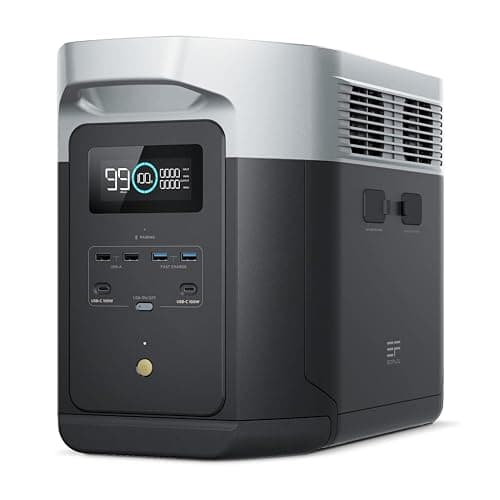 EcoFlow DELTA 2 Max | Best for a full chest freezer | 2,048Wh 50.7 lb | $1,028.99 · View on Amazon |
| 2 | 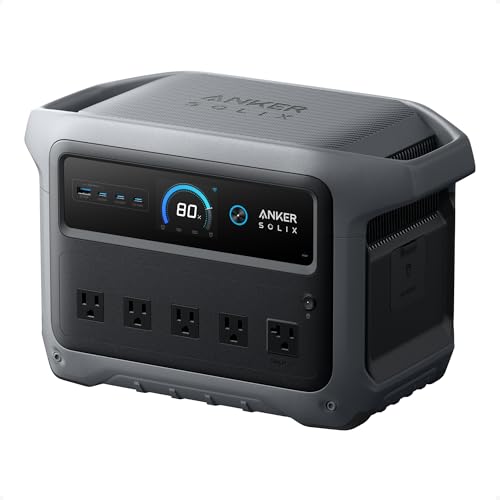 Anker SOLIX C1000 Gen 2 | Best surge headroom per pound | 1,024Wh 24.9 lb | $529.99 · View on Amazon |
| 3 | 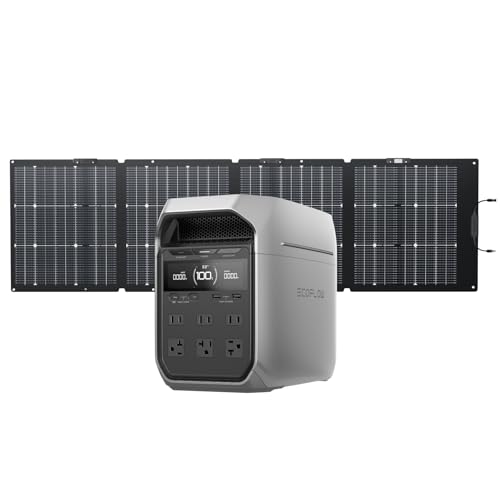 EcoFlow DELTA 3 Plus | Best if the outage outlasts the battery | 1,024Wh 27.6 lb | Check price on Amazon |
| 4 | 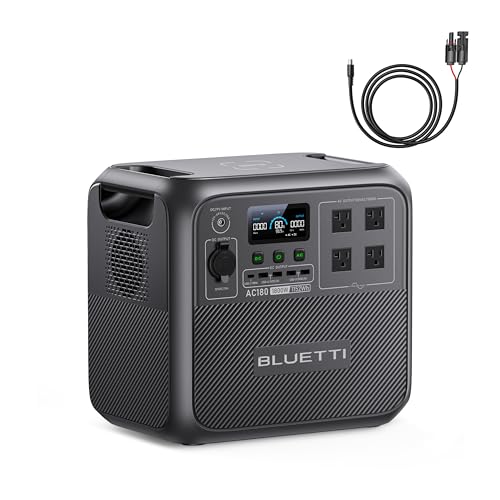 BLUETTI AC180 | Best capacity under 40 lb | 1,152Wh 35.27 lb | $499.00 · View on Amazon |
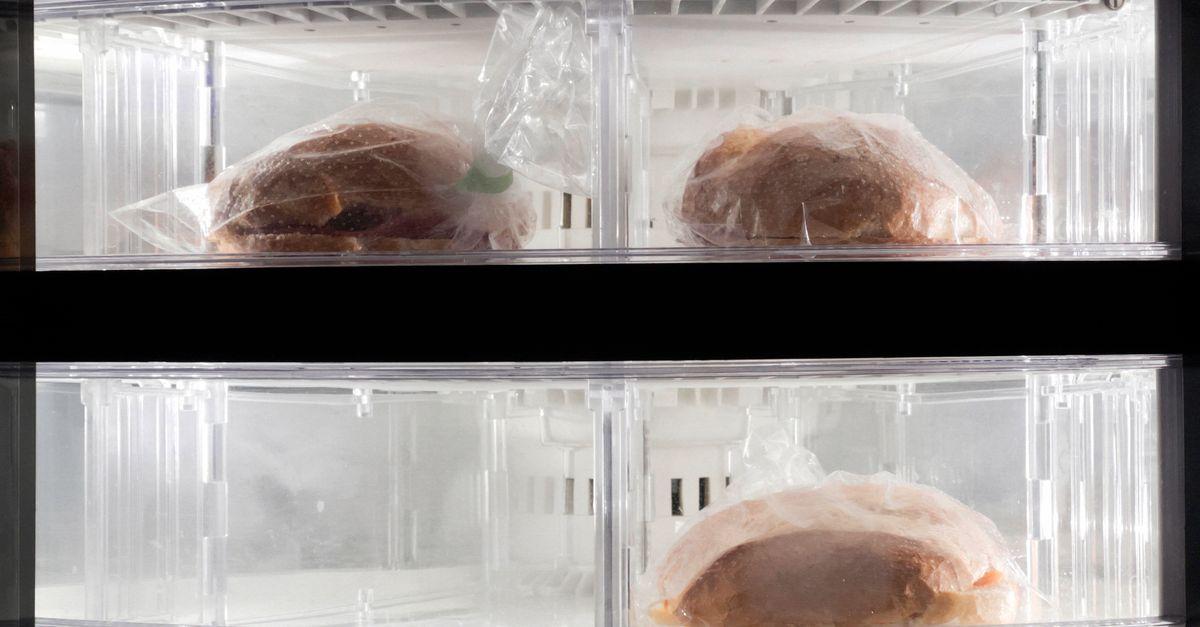
The single most useful fact about powering a freezer in an outage: a full chest freezer, kept closed, holds food frozen for about 48 hours on its own. The US Food Safety and Inspection Service publishes that figure — 48 hours for a full freezer, 24 hours for a half-full one. Which means the job is not to run the freezer continuously. It is to put cold back into it a few times a day, at intervals, from a battery that would never survive running it round the clock.
That changes the sizing arithmetic completely, and it is why people who size a freezer like a fridge end up buying twice as much battery as they need.
What a freezer actually costs per day
Freezer figures below are nameplate bands. Read the plate on your own unit — on a chest freezer it is usually inside the lid or on the back — or better, put a plug-in energy meter on it for a day and use the real number. The spread between a modern 5 cu ft upright and an old 20 cu ft chest freezer is larger than the spread between any two units on this page.
| Freezer | Running draw | Duty cycle | Per day | Days from 2,048Wh |
|---|---|---|---|---|
| Small upright, 3-7 cu ft | 80-120W | 25-35% | 500-900Wh | 2-3 |
| Chest freezer, 7-15 cu ft | 100-150W | 20-30% | 500-1,000Wh | 2-3 |
| Large chest freezer, 15-25 cu ft | 150-200W | 25-35% | 900-1,700Wh | 1-2 |
| Garage freezer in summer heat | 150-250W | 35-50% | 1,300-3,000Wh | Under 1 |
Now apply the 48-hour rule and those numbers get much friendlier, because you are not paying for the whole day.
The surge problem, which is the real one
A freezer compressor is an induction motor, and an induction motor draws several times its running current for a fraction of a second at startup — the locked-rotor inrush. A 150W freezer can ask for 600-1,200W for that instant, and a unit whose inverter cannot supply it will simply refuse, usually with an overload light rather than an explanation.
- Check the surge figure, not the continuous figure. Every unit on this page publishes one except the DELTA 2 Max, where EcoFlow does not publish a surge rating at all.
- Older compressors pull harder. If the freezer predates about 2010, bias towards the 3,000W-plus surge ratings.
- Do not plug the freezer in through a long thin extension cord. Voltage drop makes the inrush worse and can turn a load that works into one that trips.
- Let it settle before adding anything else. Start the freezer, wait for the compressor to be running steadily, then plug in the second thing.
A freezer is not a fridge
They look like the same problem and they are not. A fridge is opened constantly, holds cold for four hours rather than forty-eight, and has to run on a thermostat you cannot cheat. A freezer is a thermal battery you can coast on. If it is the fridge you are sizing for, best power station for a refrigerator is the right page, and how many watt-hours does a refrigerator use has the duty-cycle arithmetic in full.
If both appliances are in the plan — and in a real outage they usually are — size for the fridge and treat the freezer as the thing you cycle around it. What size power station for a power outage puts the whole-house list together, and best portable power stations for home backup is the broader shortlist.
Why solar input matters more here than anywhere
A freezer is one of the few loads where a panel's daily harvest is in the same order of magnitude as the daily demand. A 2,048Wh unit accepting 1,000W of solar can reasonably put several hundred watt-hours back in across a sunny day, which against a 500-800Wh daily freezer draw is most or all of it. That is the difference between a battery that lasts two days and a system that lasts until the grid returns.
Best solar generator for a refrigerator works through the realistic-harvest side of this properly — the same arithmetic applies to a freezer with a lower daily number — and how much solar input do you need explains why a panel's rating and its actual output are two different things.
The picks in full
1. Best for a full chest freezer
EcoFlow DELTA 2 Max
- 2,048Wh
- LFP (LiFePO4)
- 2,400W continuous
- 50.7 lb
- 1000W
- 3,000 cycles to 80% capacity
- 2.3 hr; 800W car/alternator charging
- 5 years
2,048Wh is the capacity at which a freezer stops being a worry. A chest freezer in the 300-600Wh-per-day band runs three to five days from this unit on the cycling strategy below, and it expands from 2kWh to 6kWh with up to two extra batteries if your outages run longer than that.
EcoFlow publishes 2,400W continuous, fifteen outputs including six AC, 1,000W of solar input, 800W of car and alternator charging, a 2.3-hour wall recharge, a switchover under 20 ms and 3,000 cycles to 80% capacity. The 1,000W solar ceiling is what makes multi-day outages survivable rather than merely survivable-once.
50.7 lb, and EcoFlow publishes neither a surge figure nor dimensions for this model — the missing surge number is the one real gap, because freezer compressors are a surge load. 40.4Wh per pound is good for the capacity but this is not a unit you carry anywhere.
Reasons to buy
- 2,048Wh — three to five freezer-days
- Expands from 2kWh to 6kWh
- 1,000W solar input; 800W car charging
- 2,400W continuous; six AC outlets
- 5-year warranty
Reasons to avoid
- 50.7 lb
- No surge figure published by EcoFlow
- No published dimensions
- Switchover is 20 ms, not 10 ms
Buy it if: a full chest freezer and an outage measured in days.
Skip it if: you need to move it, or the freezer is a small upright.
2. Best surge headroom per pound
Anker SOLIX C1000 Gen 2
- 1,024Wh
- LiFePO4 (InfiniPower LFP)
- 2,000W continuous / 3,000W surge
- 24.9 lb
- 600W
- 80% capacity after 4,000 cycles
- Full in 49 min (UltraFast, 1,600W max input)
- 5 years
A freezer compressor's locked-rotor inrush is the spec that trips power stations, and this unit publishes the most headroom per pound in the registry: 2,000W continuous with a 3,000W surge from 24.9 lb. If your freezer is older — and older compressors pull harder on start — this is the margin you want.
Anker publishes 1,024Wh, a full recharge in 49 minutes at 1,600W, a 10 ms UPS switchover, 80% capacity after 4,000 cycles, a 5-year warranty and dimensions of 15.12 x 8.19 x 9.61 in. The 10 ms switchover means the freezer never knows the power went out, which avoids a compressor restart you did not budget for.
1,024Wh is one to two freezer-days on the cycling strategy, not three. It does not expand, 600W is the solar ceiling, and two AC outlets means the freezer gets one and you get one. Our Anker SOLIX C1000 Gen 2 review has the full sheet.
Reasons to buy
- 3,000W surge — most headroom per pound here
- 10 ms UPS switchover
- Full recharge in 49 minutes
- 80% capacity after 4,000 cycles
- 24.9 lb for 1,024Wh
Reasons to avoid
- 1,024Wh is one to two freezer-days
- Not expandable
- Two AC outlets
- 600W solar input
Buy it if: an older freezer, or a short outage you want handled invisibly.
Skip it if: the outage runs past about two days.
3. Best if the outage outlasts the battery
EcoFlow DELTA 3 Plus
- 1,024Wh
- LFP (LiFePO4)
- 1,800W continuous / 3,600W surge
- 27.6 lb
- 1000W
- 4,000 cycles to 80%+ capacity
- Full in 56 min (1,500W AC input)
- 5 years
1,024Wh, 1,800W continuous, a 3,600W surge — the highest surge figure in the 1kWh class — and 1,000W of solar input across two MPPT inputs. For a freezer that combination matters more than capacity, because a panel that can put 600-800Wh into the unit during a sunny day roughly matches a chest freezer's whole daily demand.
EcoFlow publishes a 56-minute wall recharge, a switchover under 10 ms, 4,000 cycles to 80%+ capacity, six AC outlets, two 140W USB-C ports, expansion to 5 kWh and a 5-year warranty. With one expansion battery and a panel this becomes an indefinite-freezer setup rather than a stopgap.
27.6 lb for 1,024Wh is 37.1Wh per pound, which is unremarkable, and the 1,000W solar input is money wasted if you will never buy a panel. On its own the battery is the same one-to-two freezer-days as the Anker.
Reasons to buy
- 3,600W surge — highest in the 1kWh class
- 1,000W solar input across two inputs
- Expands to 5 kWh
- Six AC outlets
- Switchover under 10 ms
Reasons to avoid
- 1,024Wh alone is one to two freezer-days
- 27.6 lb — 37.1Wh per pound
- The solar ceiling is wasted without panels
Buy it if: you will pair it with a panel and want the freezer to run indefinitely.
Skip it if: panels are not happening.
4. Best capacity under 40 lb
BLUETTI AC180
- 1,152Wh
- LiFePO4
- 1,800W continuous / 2,700W surge
- 35.27 lb
- 500W
- 3,500+ cycles to 80% original capacity
- 1.3-1.8 hr full (1,440W max AC input)
- 5 years
1,152Wh is the biggest battery here under 40 lb, and against a freezer that extra 128Wh over the 1kWh units is roughly another three to five hours of cold. 1,800W continuous with a 2,700W surge handles a modern compressor's inrush, and BLUETTI's 3,500+ cycles to 80% is the longest cycle rating on this page.
BLUETTI publishes a 1.3-1.8 hour full recharge at up to 1,440W, a 20 ms switchover, four AC outlets, a 15W wireless pad, a 5-year warranty and dimensions of 13.39 x 9.72 x 12.48 in. The compact footprint is a genuine advantage when the unit has to live beside the freezer in a utility room or a garage.
35.27 lb is 32.7Wh per pound, the worst ratio on this page, and 500W of solar input is the lowest. It does not expand, and the 20 ms switchover is slower than the Anker and EcoFlow — enough that a compressor mid-cycle will restart rather than carry on.
Reasons to buy
- 1,152Wh — biggest battery under 40 lb
- 3,500+ cycles to 80% capacity
- Four AC outlets
- Compact: 13.39 x 9.72 x 12.48 in
- 5-year warranty
Reasons to avoid
- 35.27 lb — 32.7Wh per pound
- 500W solar input
- Not expandable
- 20 ms switchover
Buy it if: a tight utility space and the most battery you can fit in it.
Skip it if: you want expansion or fast solar.
Questions