Best Power Station for High-Surge, Hard-Start Loads
Ranked on published surge rating rather than capacity, because the spec that decides whether a compressor starts at all is the one most roundups bury.
At a glance
Quick picks
Tap any row to jump to the full write-up. Weight is a column here because it is the spec that decides whether you actually carry the thing.
| # | Product | Best for | Capacity · Weight | Price |
|---|---|---|---|---|
| 1 | 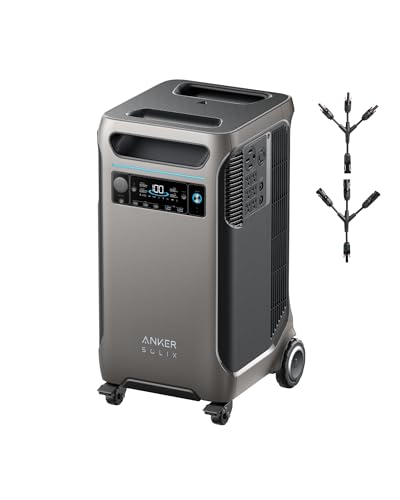 Anker SOLIX F3800 | Highest published surge in the registry | 3,840Wh 132.3 lb | Check price on Amazon |
| 2 | 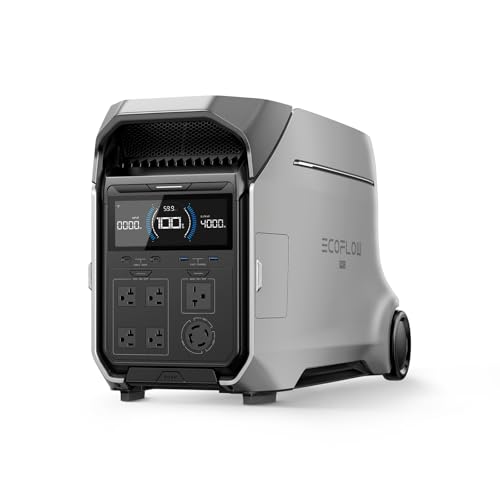 EcoFlow DELTA Pro 3 | Best surge-to-runtime balance | 4,096Wh Weight n/p | Check price on Amazon |
| 3 | 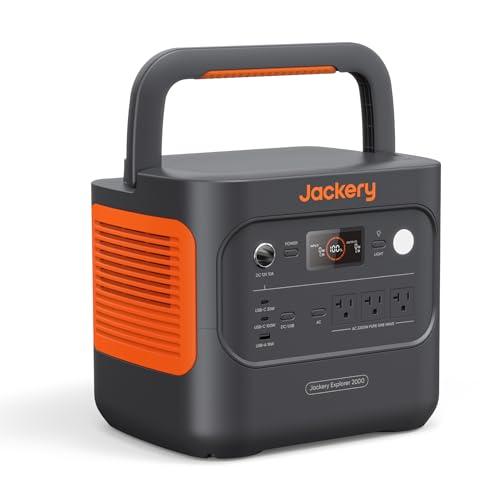 Jackery Explorer 2000 v2 | Best surge per pound | 2,042Wh 39.5 lb | $999.00 · View on Amazon |
| 4 | 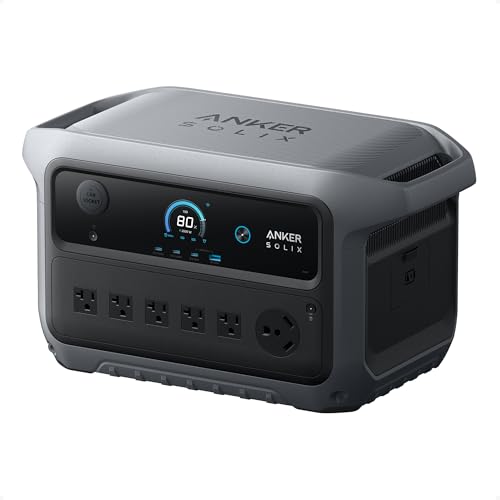 Anker SOLIX C2000 Gen 2 | Best hard-start unit with a published switchover | 2,048Wh 41.7 lb | $1,499.00 · View on Amazon |
If the load you are worried about has a motor or a compressor in it, surge rating decides whether it runs and capacity only decides how long. The order matters: a 4,096Wh unit with too little surge will refuse to start a fridge it could then have run for two days, while a 2,048Wh unit with a 4,000W peak will start it and run it through most of one. Buy the starting margin first.
Why a hard start is hard
An induction motor at rest has almost no back-EMF opposing the supply, so the current it draws in the instant before the rotor turns is set by the winding resistance rather than by the work it is doing. That inrush is commonly several times the running current, and for a sealed compressor - a fridge, a freezer, a dehumidifier, a window air conditioner - it arrives under load, because the compressor is trying to turn against the pressure already in the system. That is what 'hard start' means: the motor has to break free against a head of refrigerant.
The inrush lasts a fraction of a second. A wall circuit shrugs it off because the grid behind it is effectively infinite. A battery inverter cannot shrug: it has a current limit, and when demand crosses that limit the protection cuts in. You do not get a slow start or a dim light. You get a click, an error, and an appliance that never ran.
The surge ratings in our registry, ranked
| Unit | Continuous W | Surge W | Ratio | Capacity Wh |
|---|---|---|---|---|
| Anker SOLIX F3800 | 6,000 | 9,000 | 1.5x | 3,840 |
| EcoFlow DELTA Pro 3 | 4,000 | 6,000 | 1.5x | 4,096 |
| Jackery Explorer 2000 v2 | 2,200 | 4,400 | 2.0x | 2,042 |
| Anker SOLIX C2000 Gen 2 | 2,400 | 4,000 | 1.7x | 2,048 |
| BLUETTI Elite 200 V2 | 2,600 | 3,900 | 1.5x | 2,074 |
| EcoFlow DELTA 3 Plus | 1,800 | 3,600 | 2.0x | 1,024 |
| EcoFlow DELTA 3 | 1,800 | 3,600 | 2.0x | 1,024 |
| Jackery Explorer 1000 v2 | 1,500 | 3,000 | 2.0x | 1,070 |
| Anker SOLIX C1000 Gen 2 | 2,000 | 3,000 | 1.5x | 1,024 |
| BLUETTI AC180 | 1,800 | 2,700 | 1.5x | 1,152 |
| Anker SOLIX C1000 | 1,800 | 2,400 | 1.3x | 1,056 |
| BLUETTI Elite 30 V2 | 600 | 1,500 | 2.5x | 288 |
| EcoFlow RIVER 3 Plus | 600 | 1,200 | 2.0x | 286 |
| Anker SOLIX C300 | 300 | 600 | 2.0x | 288 |
| Jackery Explorer 300 | 300 | 500 | 1.7x | 293 |
| EcoFlow DELTA 2 Max | 2,400 | Not published | n/a | 2,048 |
Two rows in that table are worth reading twice. The highest ratio belongs to a 288Wh unit: the BLUETTI Elite 30 V2 publishes a 1,500W peak over 600W continuous, which is 2.5x and genuinely unusual at that size. And the EcoFlow DELTA 2 Max publishes no surge figure at all. That is a blank in EcoFlow's own specification rather than an omission here, and on a page about starting margin it keeps the unit out of the picks however good the rest of its specification is.
What the surge number does not tell you
How long the surge is available. None of the manufacturers in our registry publishes the duration its peak rating is held for, and that duration is the difference between a figure that starts compressors and a figure that looks good on a box. We will not rank on a specification nobody publishes, so read every surge number here as a ceiling rather than a promise.
Whether the peak is a real inverter peak or a software trick. Several brands publish a voltage-shaping boost mode - EcoFlow calls its version X-Boost - which runs a resistive load at reduced voltage so a 1,800W inverter can feed a 2,200W kettle. That works on things that only heat. It is the wrong setting for anything with a motor in it, because a motor fed reduced voltage draws more current, not less, and runs hotter for it. Pure sine wave vs modified sine wave covers why waveform and voltage shaping both matter more to a motor than to an element.
What your appliance actually needs. The nameplate on a fridge or a pump publishes the figures that matter, usually as RLA (rated load amps) and LRA (locked rotor amps), and LRA multiplied by your supply voltage is the honest worst case for starting. Read the plate rather than a wattage from a web page, including ours - compressor sizes vary by a factor of five across the appliances people all call 'a fridge'. Surge watts vs running watts walks through the whole specification in one page.
The order to buy in
- Read the nameplate on every hard-start appliance you intend to back up, and take the largest LRA figure as your surge requirement.
- Pick units whose published surge clears that figure with margin, using the table above. Discard anything that publishes no surge figure at all.
- Then check that the capacity covers the daily watt-hours of the loads you are keeping alive. What size power station for a power outage does that arithmetic properly.
- Check the switchover time only if the load must not drop out - a freezer does not care about a two-second gap, a desktop PC does.
- Check the socket if anything is 240V or 30A. Only the F3800 and the DELTA Pro 3 in our registry publish 240V output.
For the appliance-by-appliance versions of this question: best power station for a refrigerator and best power station for a freezer cover the two commonest compressors, and best power station for a sump pump covers the one where a failure floods a basement rather than spoiling food.
Surge is the specification that decides a trading pitch too, and it decides it several times an hour. Best power station for a food truck applies the same ranking to stalls and vendor booths - a drinks cooler compressor starting while a blender is already running is the failure mode - and adds the criterion that only matters commercially, which is how many cycles the battery is rated for when you empty it every working day.
The picks in full
1. Highest published surge in the registry
Anker SOLIX F3800
- 3,840Wh
- LiFePO4 (LFP)
- 6,000W continuous / 9,000W surge
- 132.3 lb
- 2400W
- 3,000+ cycles
- 1,800W max AC input
- 5 years
9,000W of surge behind 6,000W continuous. Nothing else on this site is close, and for hard-start loads that headroom is the entire point: a compressor or a well pump draws several times its running current for a fraction of a second as the rotor breaks free, and an inverter that cannot supply it does not run the appliance slowly - it trips and shuts off.
Anker publishes 3,840Wh of LiFePO4, 2,400W of maximum solar input, 1,800W of AC input, 3,000+ cycles, a 5-year warranty, and the socket list that matters here: six NEMA 5-20 20A outlets, one NEMA 14-50 rated at 6,000W and one NEMA L14-30 also rated at 6,000W. That last pair is what lets this unit feed a 240V load or a generator inlet rather than a single appliance cord.
132.3 lb on wheels, and 27.6 x 15.3 x 15.6 in with those wheels included. This is house-backup equipment that rolls, not something you lift into a car. Anker publishes expansion to 53.8 kWh across six extra batteries, which is a different category of purchase from everything else on this page.
Reasons to buy
- 9,000W surge, 6,000W continuous
- NEMA 14-50 and L14-30 at 6,000W each
- 3,840Wh, expandable to 53.8 kWh
- 2,400W maximum solar input
- 3,000+ cycles; 5-year warranty
Reasons to avoid
- 132.3 lb - wheeled, not carried
- No published UPS switchover time
- Far more unit than a single fridge needs
Buy it if: a well pump, a 240V load, or a whole critical-loads panel.
Skip it if: you want something that leaves the house.
2. Best surge-to-runtime balance
EcoFlow DELTA Pro 3
- 4,096Wh
- LFP (EV-grade)
- 4,000W continuous / 6,000W surge
- 80% capacity after 4,000 cycles
- 80% in 50 min
- 5 years (3-year standard plus 2-year extended)
6,000W of surge over 4,000W continuous, from 4,096Wh. Where the F3800 buys you the largest possible starting margin, this buys a very large margin and the best published cycle retention in our set - EcoFlow states 80% capacity after 4,000 cycles on a pack four times the size of a 1kWh unit.
EcoFlow publishes 120V and 240V output, seven charging methods, 80% charge in 50 minutes, a 5-year term made up of three years standard plus two extended, and expansion from 4 kWh to 48 kWh. The 240V output is the specification that matters for a hard-start load that is not a kitchen appliance: a submersible well pump or a central air handler is a 240V device, and no amount of 120V surge reaches it.
EcoFlow does not publish a weight for this model, and does not publish a maximum solar input figure in its overview either. Both blanks are recorded as blanks in our registry rather than filled from a retailer listing, and on a unit this size the weight gap is a real one - assume a wheeled appliance.
Reasons to buy
- 6,000W surge, 4,000W continuous
- 4,096Wh, expandable to 48 kWh
- 120V and 240V output
- 80% capacity after 4,000 cycles
- 80% charge in 50 minutes
Reasons to avoid
- No published weight or maximum solar input
- No published UPS switchover figure
- Overkill for a single appliance
Buy it if: a 240V hard-start load plus days of runtime.
Skip it if: you want a published weight before you buy.
3. Best surge per pound
Jackery Explorer 2000 v2
- 2,042Wh
- LiFePO4 (LFP)
- 2,200W continuous / 4,400W surge
- 39.5 lb
- 4,000 cycles to 70%+ capacity
- 1.33 hr full with Emergency Super Charge
- 3 years, extendable to 5
4,400W of surge behind 2,200W continuous, from a 39.5 lb box. That is a 2x surge-to-continuous ratio, and it is the best starting margin per pound in our registry - 2,042Wh at 39.5 lb works out to 51.7 watt-hours per pound, the highest figure in the 2 kWh class by a wide margin.
Jackery publishes 4,000 cycles to 70%+ capacity, a 1.33-hour full recharge with its Emergency Super Charge mode, dimensions of 13.2 x 10.4 x 11.5 in, and a 3-year warranty extendable to 5. For a household that wants one unit to cover both a fridge restart and a camping trip, this is the one on this page you can actually carry to the car.
Two AC outlets, which for a backup unit feeding a fridge and a freezer is exactly enough and no more. Jackery publishes neither a maximum solar input figure nor a UPS switchover time for this model, so if you need the unit to catch an outage with no interruption at all, look at the 10 ms units below instead.
Reasons to buy
- 4,400W surge from 2,200W continuous
- 2,042Wh at 39.5 lb - 51.7 Wh per pound
- Full recharge in 1.33 hr
- 4,000 cycles to 70%+ capacity
- Published dimensions
Reasons to avoid
- Only two AC outlets
- No published solar input figure
- No published UPS switchover time
Buy it if: one unit for hard starts at home and trips away.
Skip it if: you need a published switchover time.
4. Best hard-start unit with a published switchover
Anker SOLIX C2000 Gen 2
- 2,048Wh
- LFP (LiFePO4)
- 2,400W continuous / 4,000W surge
- 41.7 lb
- 800W
- 4,000 cycles to 80% capacity
- 100% in 58 min (2,600W AC + solar)
- 5 years
4,000W of surge over 2,400W continuous, and - unlike the three units above - a published 10 ms UPS switchover. That combination is unusual, and it means the unit can sit permanently between the wall and the appliance, catch the cut without the compressor noticing, and still have the starting margin to restart it if the cut arrives mid-cycle.
Anker publishes 2,048Wh of LFP, 41.7 lb, a full recharge in 58 minutes at 2,600W with AC and solar together, 800W of maximum solar input, 4,000 cycles to 80% capacity, dimensions of 18.1 x 9.8 x 10.1 in, and four AC outlets including a NEMA 5-20R and a TT-30R. Expansion runs to 4 kWh with the BP2000 Gen 2 pack.
18.1 inches wide is the specification nobody measures until the box arrives, and under a kitchen counter or beside a utility sink it matters. The 800W solar ceiling is the lowest of the four units here relative to capacity.
Reasons to buy
- 4,000W surge, 2,400W continuous
- 10 ms published UPS switchover
- Four AC outlets including a TT-30R
- Full in 58 minutes
- 4,000 cycles to 80%; 5-year warranty
Reasons to avoid
- 18.1 in wide - measure the gap first
- 800W solar ceiling
- 41.7 lb
Buy it if: a fridge or freezer that must not drop out at all.
Skip it if: you need 240V.
Questions