Pure Sine Wave vs Modified Sine Wave
A spec worth checking once and then forgetting. Here is what it means, what it breaks, and where you still have to look for it.
The short answer
Pure sine wave means the inverter produces the same smooth voltage curve as the grid; modified sine wave means a stepped approximation of it. Anything with a motor, a compressor, a transformer or sensitive electronics wants pure sine wave — on a modified wave those devices run hotter, buzz, lose efficiency, or refuse to work at all. The practical news is that pure sine wave is the standard in the portable power station class: the units on this site are sold on that basis, and modified sine wave survives mainly in cheap 12V car inverters. The one place to still check carefully is a bargain inverter or a very low-cost no-name power station, where the specification is sometimes simply not stated.
At a glance
Quick picks
Tap any row to jump to the full write-up. Weight is a column here because it is the spec that decides whether you actually carry the thing.
| # | Product | Best for | Capacity · Weight | Price |
|---|---|---|---|---|
| 1 | 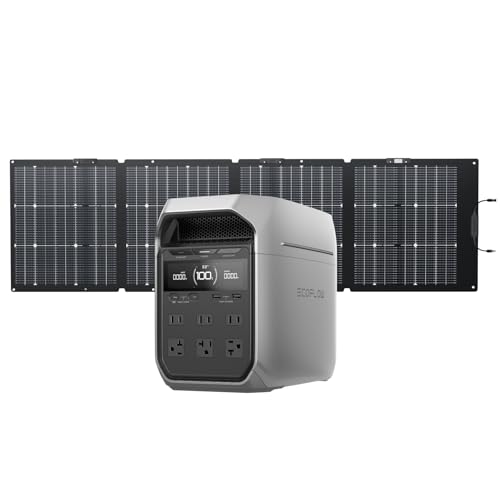 EcoFlow DELTA 3 Plus | Best output stage for motors and compressors | 1,024Wh 27.6 lb | Check price on Amazon |
| 2 | 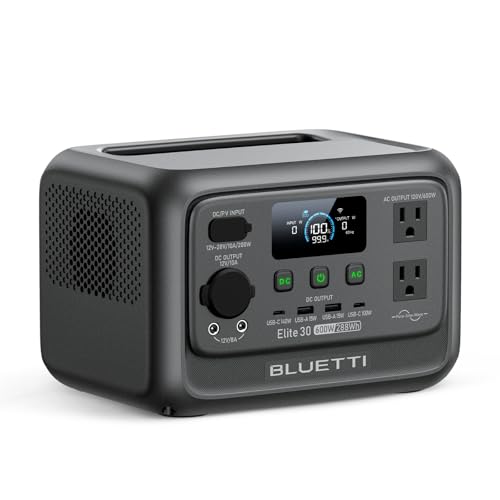 BLUETTI Elite 30 V2 | The one unit here that publishes the waveform as a spec | 288Wh 9.5 lb | $289.99 · View on Amazon |
| 3 | 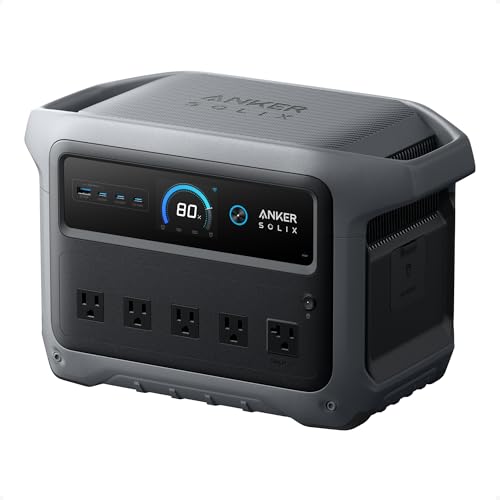 Anker SOLIX C1000 Gen 2 | Most output headroom for hard-starting loads | 1,024Wh 24.9 lb | $529.99 · View on Amazon |
Mains electricity is alternating current, and the voltage follows a smooth sine curve 60 times a second. An inverter's job is to build that curve out of direct current from a battery, and there are two ways to do it: approximate the curve with a few voltage steps, or synthesise something close to the real thing.
- Modified sine wave (sometimes 'modified square wave') is the stepped approximation. It is cheaper to build and perfectly adequate for a resistive load, which does not care about the shape — a filament bulb, a simple heating element, a basic tool with a brushed motor.
- Pure sine wave is the smooth curve. It costs more to produce and it is what everything else wants: motors, compressors, transformers, switched-mode power supplies, medical and sleep equipment, audio gear, and anything with a microcontroller in it.
What actually goes wrong on a modified wave
| Load | Pure sine | Modified sine | What goes wrong |
|---|---|---|---|
| Phone and laptop chargers | Fine | Usually works | Runs warmer; some refuse outright |
| LED lights | Fine | Usually works | Flicker and audible buzz |
| Fridge or freezer compressor | Fine | Poor | Runs hot, draws more, shortens motor life |
| Induction or variable-speed motor | Fine | Poor or refuses | Overheating; controller faults |
| Microwave | Fine | Works badly | Lower effective power, longer cook times |
| CPAP and medical devices | Fine | Not advised | Many manufacturers specify pure sine wave |
| Audio equipment | Fine | Audible hum | Mains buzz injected into the signal |
| Battery chargers for tools | Fine | Mixed | Some chargers reject the waveform entirely |
| Mains clocks and timers | Fine | Unreliable | Timing derived from the waveform drifts |
| Resistive heater or kettle | Fine | Fine | Nothing — resistive loads do not care |
The common thread in the failure column is heat. A stepped waveform contains harmonic content the device was not designed for, and in a motor or a transformer that energy goes into warming the windings instead of doing work. The device usually still runs; it just runs hotter, less efficiently, and for fewer years.
Total harmonic distortion, the number behind the label
'Pure sine wave' is a marketing phrase for a measurable thing: total harmonic distortion, or THD, which expresses how much of the output is not the clean fundamental curve. Grid power typically sits at a low single-digit percentage. A good inverter publishes THD under 3%, which is why its output is indistinguishable from mains to the equipment plugged into it. A modified sine wave inverter has no meaningful THD figure because its output is not attempting to be a sine wave at all.
If a listing quotes a THD figure, that is a strong sign of a real pure sine wave output. If it quotes neither THD nor a waveform type, treat the omission as information.
How to check before you buy
- Look for a named 'inverter type' field in the specification table, not just a phrase in the marketing copy. BLUETTI publishes 'Inverter Type: Pure Sine Wave' on its Elite 30 V2 page; that is the shape of confirmation you want.
- Look for a THD figure. Under 3% is the number to expect from a unit in this class.
- Be suspicious of silence. A reputable inverter manufacturer states the waveform, because pure sine wave costs more to build and is therefore worth advertising. A product that does not mention it is usually not it.
- Watch for the word 'modified' on cheap 12V car inverters especially — this is the product category where modified sine wave is still normal, and where the price difference is large enough to tempt people.
- Ignore the brand assumption. The waveform is a property of the inverter, not the badge. Check it on the model you are buying.
Where modified sine wave is still sold
Almost entirely in low-cost standalone inverters — the 150W to 1,000W boxes that plug into a car's 12V socket or clip onto a vehicle battery. At that price point the saving is meaningful and the typical use (charging a phone, running a laptop brick) is forgiving. It is also where people get caught, because the same box is sometimes pressed into service running a compressor fridge or a tool charger.
If you are weighing an inverter-plus-battery build against a purpose-built unit, portable power station vs inverter and battery works through the whole comparison, and waveform is one of the places the cheap DIY route most often disappoints. Power station vs 12V house battery is the van-specific version of the same decision.
The specification that matters more
Here is the honest framing: in the portable power station class, waveform is a box to tick rather than a differentiator, because the units are all sold on pure sine wave output. What separates them for motor loads is surge rating — the brief overload the inverter will tolerate while a compressor or a saw starts.
| Unit | Continuous | Surge |
|---|---|---|
| EcoFlow DELTA 3 Plus | 1,800W | 3,600W |
| Anker SOLIX C1000 Gen 2 | 2,000W | 3,000W |
| Jackery Explorer 1000 v2 | 1,500W | 3,000W |
| BLUETTI AC180 | 1,800W | 2,700W |
| Anker SOLIX C1000 | 1,800W | 2,400W |
| BLUETTI Elite 30 V2 | 600W | 1,500W |
| EcoFlow RIVER 3 Plus | 600W | 1,200W |
| Anker SOLIX C300 | 300W | 600W |
| Jackery Explorer 300 | 300W | 500W |
| EcoFlow DELTA 2 Max | 2,400W | Not published |
| EcoFlow DELTA Pro 3 | 4,000W | 6,000W |
| Anker SOLIX F3800 | 6,000W | 9,000W |
Read that table alongside the load you care about. Can a power station run a refrigerator and can a power station run a washing machine both turn on the surge column rather than the waveform, and best power station for power tools ranks the registry specifically on starting current.
The picks in full
1. Best output stage for motors and compressors
EcoFlow DELTA 3 Plus
- 1,024Wh
- LFP (LiFePO4)
- 1,800W continuous / 3,600W surge
- 27.6 lb
- 1000W
- 4,000 cycles to 80%+ capacity
- Full in 56 min (1,500W AC input)
- 5 years
A 3,600W surge is the highest published figure in the 1kWh class, and surge headroom is what a motor-start load actually needs once the waveform question is settled. 1,800W continuous, six AC outlets, and EcoFlow's X-Boost mode which makes 2,200W available to resistive loads.
EcoFlow publishes 1,024Wh of LFP chemistry, a 56-minute full recharge, a switchover under 10 ms, two 140W USB-C ports, 1,000W of solar input across two MPPT inputs, 4,000 cycles to 80%+ capacity, expansion to 5 kWh and a 5-year warranty.
27.6 lb for 1,024Wh is 37.1Wh per pound, unremarkable, and the 1,000W solar input is wasted if panels are never part of the plan — the plain DELTA 3 is the same box at half the input. Note too that X-Boost is a feature to use carefully: it works by shaping the output, which is not what you want behind a motor.
Reasons to buy
- 3,600W surge — highest in the 1kWh class
- Six AC outlets
- Switchover under 10 ms
- 4,000 cycles to 80%+ capacity
- Expands to 5 kWh; 5-year warranty
Reasons to avoid
- 27.6 lb
- X-Boost is the wrong mode for motor loads
- The solar ceiling is wasted without panels
Buy it if: pumps, compressors, power tools and anything with a motor.
Skip it if: you only ever charge phones and laptops.
2. The one unit here that publishes the waveform as a spec
BLUETTI Elite 30 V2
- 288Wh
- LiFePO4 (automotive-grade)
- 600W continuous / 1,500W surge
- 9.5 lb
- 200W
- Over 3,000 cycles; 10-year lifespan
- Full in 70 min
- 5 years
This is the model whose specification page states the inverter type outright — BLUETTI lists 'Pure Sine Wave' as a named field on its Elite 30 V2 page, which is exactly the confirmation this page tells you to look for. Most brands in this class assert pure sine wave in their marketing copy rather than as a line in the spec table.
BLUETTI publishes 288Wh of automotive-grade LiFePO4, 600W continuous, a 1,500W surge, a 70-minute full recharge, a switchover of 10 ms or less, 200W of solar input, nine output ports including USB-C PD 3.1 up to 140W, over 3,000 cycles with a stated 10-year lifespan and a 5-year warranty.
600W continuous out of 288Wh is double the output of its capacity class, which combined with a clean waveform makes it capable of more than its size suggests. BLUETTI publishes no dimensions, no AC outlet count and no cycle-retention threshold, and it does not expand.
Reasons to buy
- Inverter type published as Pure Sine Wave
- 600W continuous, 1,500W surge from 288Wh
- 9.5 lb; full recharge in 70 minutes
- 10 ms or less switchover
- Over 3,000 cycles; 5-year warranty
Reasons to avoid
- No dimensions or AC outlet count published
- 288Wh — electronics and light motor loads
- Not expandable
- 200W solar input
Buy it if: you want the waveform stated in the specification, not implied.
Skip it if: you need real capacity.
3. Most output headroom for hard-starting loads
Anker SOLIX C1000 Gen 2
- 1,024Wh
- LiFePO4 (InfiniPower LFP)
- 2,000W continuous / 3,000W surge
- 24.9 lb
- 600W
- 80% capacity after 4,000 cycles
- Full in 49 min (UltraFast, 1,600W max input)
- 5 years
2,000W continuous with a 3,000W surge from 24.9 lb — the widest appliance envelope per pound in this registry. Waveform matters most behind motors, and motors also need surge headroom, so these two specifications travel together: a clean wave with no headroom still trips when the compressor kicks in.
Anker publishes 1,024Wh of LiFePO4 InfiniPower cells, a full recharge in 49 minutes at 1,600W input, a 10 ms UPS switchover, 600W of solar input, 80% capacity after 4,000 cycles, a 5-year warranty and dimensions of 15.12 x 8.19 x 9.61 in.
Two AC outlets, no expansion and 600W of solar input are the honest limits. For the same reasoning applied to tools specifically, best power station for power tools ranks on starting current.
Reasons to buy
- 2,000W continuous, 3,000W surge
- 24.9 lb for 1,024Wh
- Full recharge in 49 minutes
- 80% capacity after 4,000 cycles
- 10 ms UPS switchover
Reasons to avoid
- Only two AC outlets
- Not expandable
- 600W solar input
Buy it if: compressors, saws and pumps that start hard.
Skip it if: the loads are all electronics.
Questions