Portable Power Station vs an Inverter and Battery
A power station is five components in one case with one warranty. A DIY build is the same five parts you choose, wire and fuse yourself.
The verdict: buy a portable power station unless the installation is permanent, you need more than about 2kWh, and you are genuinely competent with DC wiring and fusing. In that case build it. A power station is a battery, an inverter, a solar charge controller, a battery management system and a case, integrated, certified and covered by one warranty. A DIY build is those same parts, chosen by you, wired by you, and your responsibility when something fails.
This page does not argue on price, because we publish no prices anywhere on this site — we have no live feed and a stale price is worse than none. What we can do is set out what each approach actually gives you and where each one fails, which is the part most comparisons skip in favor of a cost-per-watt-hour table that goes out of date in a month.
What is actually inside a power station
Five things, and a DIY build needs all five:
- The cells. LiFePO4 in every unit we cover, rated 3,000-4,000 cycles. A DIY build uses the same chemistry, often the same cell suppliers.
- The inverter, converting DC to AC. This is the component that decides your continuous and surge output — 2,000W and 3,000W on the Anker SOLIX C1000 Gen 2, for instance.
- The MPPT solar charge controller. Built in, with a published input ceiling: 600W on the Anker, 1,000W across two channels on the EcoFlow DELTA 3 Plus. In a DIY build this is a separate purchase and a separate sizing decision.
- The battery management system, balancing cells, enforcing temperature limits and preventing the failure modes that matter. Anker's published charging range of 32°F to 104°F is the BMS doing its job.
- The case, the display, the sockets and the cooling. Unglamorous, and the part a DIY build most often does worst.
That integration is the actual product. You are not buying a battery; you are buying the fact that someone else sized the fusing, matched the inverter to the cells, and will replace the whole thing if any part of it fails inside five years.
The decision table
| Portable power station | Inverter and battery build | |
|---|---|---|
| Integration | One box, one warranty | Five purchases, five warranties |
| Portability | Carried by one person at 1kWh | Fixed install, in practice |
| Solar charging | MPPT built in, ceiling published | Separate controller, sized by you |
| Wiring risk | None; it ships assembled | Yours: cable sizing, fusing, polarity |
| Serviceability | Usually sealed; replace the unit | Replace the failed component |
| Cost per watt-hour at scale | Higher | Lower, which is the main DIY argument |
| Scaling past 2kWh | Expansion batteries where offered | Add cells; usually cheaper |
| UPS switchover | Published: 10-20 ms on our units | Depends on the inverter you choose |
| Certification | Retail product, tested as a system | Your assembly, your responsibility |
| Resale | Straightforward | Difficult |
Where the power station wins
Portability, decisively. A 1,024Wh power station is 24.9 lb with a handle. The equivalent DIY build is a battery, an inverter, a controller, a fuse block and cabling, and in practice it ends up bolted into a van or a cupboard. If the thing needs to move between a car, a campsite and a house, this is not a close comparison — it is a different product category. The weight guide is the page for that constraint.
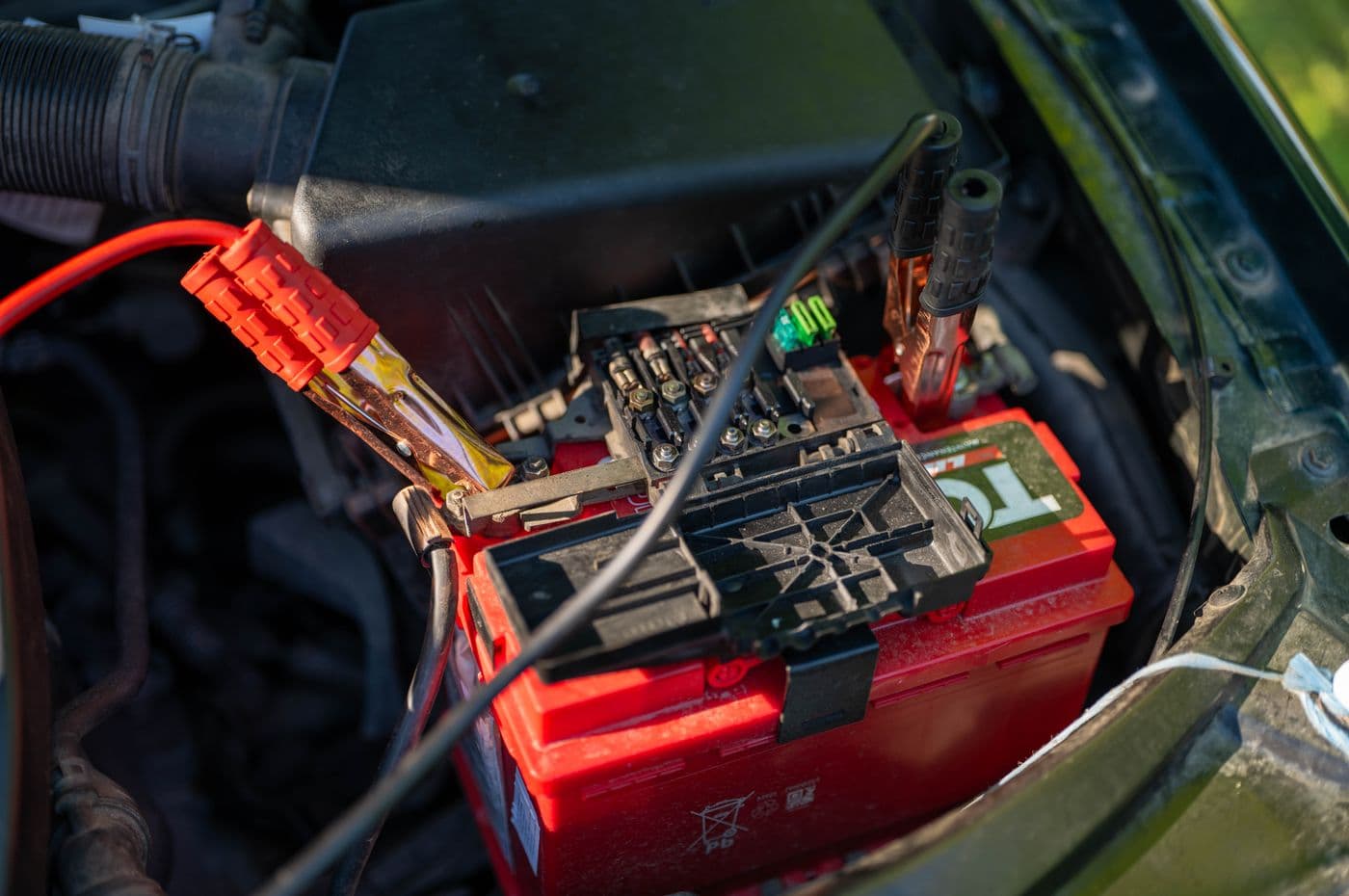
Nothing to get wrong. Undersized cable, missing or wrong-rated fusing, a controller whose voltage window does not match the panels, reversed polarity on a DC connection: every one of those is a real failure in DIY builds, and several are fire risks. A power station has none of them because the assembly decisions were made at the factory.
One warranty. Every unit we cover publishes five years. A DIY build has as many warranty relationships as it has components, and when a system misbehaves it is on you to work out which component is at fault.
Published, plannable specification. A power station tells you its continuous output, its surge, its solar ceiling, its switchover time and — on the best-documented units — its charging and discharging temperature limits. You can size against those numbers. In a DIY build you are responsible for establishing them yourself from five separate datasheets.
A real UPS, out of the box. The Anker publishes 10 ms and the EcoFlow under 10 ms. Getting that behavior from a DIY build means buying an inverter-charger specifically designed for it and configuring it correctly. Pass-through charging explained covers what that spec actually promises.
Where the DIY build wins
Cost per watt-hour at scale. This is the honest core of the DIY argument and we are not going to pretend otherwise. Raw LiFePO4 cells plus a separately bought inverter are generally cheaper per stored watt-hour than an integrated retail product, and the gap grows as capacity grows. At 500Wh the integration is worth paying for; at 10kWh the arithmetic shifts.
Serviceability. When a DIY inverter fails you replace the inverter. When a sealed power station's inverter fails outside warranty you usually replace the power station, battery and all. Over a ten-year horizon in a fixed installation that matters.
Specification exactly where you want it. You can pair a small battery with a large inverter, or a large battery with a tiny one, or a 3,000W solar array with 5kWh of storage. A power station's components come in fixed ratios: the C1000 Gen 2's 600W solar ceiling is not negotiable no matter how many panels you own.
Scaling without a proprietary path. Expansion batteries exist on several units — the DELTA 3 Plus to 5kWh, the DELTA 2 Max to 6kWh, the F3800 to 53.8 kWh — but they are brand-specific accessories, and the Anker C1000 Gen 2 has no expansion path at all. A DIY bank grows by adding cells.
The case nobody states plainly
For an RV or a van, the honest answer is often both. A permanently installed battery bank with its own inverter handles the fixed loads — lights, pump, fridge, sockets — and a power station handles everything that leaves the vehicle, charges from a mains hook-up on a site, and serves as a backup when the installed system is being worked on. Power station vs 12V house battery is the page for that specific decision, and it reaches the same conclusion from the other direction.
For a house, the comparison is usually a false one: the real alternatives for whole-house backup are a standby generator or a wired home battery, not a DIY inverter build. Power station vs gas generator is the comparison that actually matters there.
Buy a power station if
- The unit needs to move — between vehicle, campsite, house or job.
- Your requirement is under about 2kWh.
- You are not confident sizing cable and fusing for a 100A DC circuit.
- You want one warranty and one phone number when something fails.
- You need UPS behavior without configuring an inverter-charger.
Build it instead if
- The installation is permanent and the weight is irrelevant.
- You need well over 2kWh and cost per watt-hour is the binding constraint.
- You want to choose your own inverter, controller and array sizing independently.
- You value being able to replace a failed component rather than the whole system.
- You are already competent with DC wiring, fusing and MPPT voltage windows.
If the answer is a power station, what size power station do I need is the next page, and the main roundup ranks the units. Every specification quoted above was read from the manufacturer's own published page, linked at the foot.
The picks in full
1. The integrated answer
Anker SOLIX C1000 Gen 2

- 1,024Wh
- LiFePO4 (InfiniPower LFP)
- 2,000W continuous / 3,000W surge
- 24.9 lb
- 600W
- 80% capacity after 4,000 cycles
- Full in 49 min (UltraFast, 1,600W max input)
- 5 years
This is the clearest demonstration of what you are actually buying when you choose a power station over a build: 1,024Wh of LiFePO4, a 2,000W inverter with 3,000W of surge, a 600W MPPT controller with a published 60V window, a BMS that enforces a published 32°F to 104°F charging range, and a 10 ms transfer switch — in one 24.9 lb case with one five-year warranty.
Specify and assemble that from parts and you have five purchases, five datasheets, a fuse block, cable you have to size correctly and a weekend of work. The 49-minute full recharge at up to 1,600W input is also the kind of thing integration buys you: the charger is matched to the cells, so the manufacturer can publish a figure and stand behind it.
The limits are the ones integration always has. 1,024Wh is fixed with no expansion path, the 600W solar ceiling cannot be raised regardless of how many panels you own, there are only two AC sockets, and when it eventually fails outside warranty the whole unit goes rather than the failed part.
Reasons to buy
- Battery, 2,000W inverter, 600W MPPT, BMS and transfer switch in one 24.9 lb case
- 10 ms switchover without configuring an inverter-charger
- Published charging and discharging temperature ranges
- 49-minute full recharge at up to 1,600W input
- One five-year warranty covering the whole system
Reasons to avoid
- 1,024Wh fixed, with no expansion path at all
- 600W solar ceiling cannot be raised
- Two AC sockets only
- Sealed: a component failure out of warranty means replacing the unit
Buy it if: a portable requirement under about 1kWh where you want it to work without becoming a project.
Skip it if: the install is permanent and you need several kilowatt-hours.
2. The integrated answer that still scales
EcoFlow DELTA 3 Plus
- 1,024Wh
- LFP (LiFePO4)
- 1,800W continuous / 3,600W surge
- 27.6 lb
- 1000W
- 4,000 cycles to 80%+ capacity
- Full in 56 min (1,500W AC input)
- 5 years
If the thing that attracts you to a DIY build is being able to grow it, this is the power station that answers that most directly: 1,024Wh expandable to 5kWh, and a 1,000W solar ceiling across two 500W MPPT channels so a larger array is a real option rather than wasted panel.
It also brings the specs a DIY build has to assemble deliberately: 1,800W continuous with 3,600W of surge, an under-10 ms switchover, six AC sockets, two 140W USB-C ports, up to 800W of alternator charging and an IP65 rating for sitting outside with panels. A 56-minute wall recharge keeps it practical.
The DIY arguments it does not answer are cost per watt-hour and serviceability. Expansion batteries are brand-specific accessories bought separately, so the 5kWh figure is a path rather than a purchase, and EcoFlow publishes no temperature range for this model — which a DIY builder would simply read off the cell datasheet.
Reasons to buy
- Expandable from 1,024Wh to 5kWh without rewiring anything
- 1,000W solar input across two MPPT channels
- 1,800W continuous, 3,600W surge, under-10 ms switchover
- Six AC sockets, two 140W USB-C ports, up to 800W alternator charging
- IP65 rated; 4,000 cycles to 80%+; 56-minute wall recharge
Reasons to avoid
- Expansion batteries are separate brand-specific purchases
- No temperature range published for this model
- The 1,000W solar figure requires two separate arrays
- Still sealed, so component-level repair is not an option
Buy it if: a requirement that will grow, where you want the growth without the wiring.
Skip it if: you want to choose the inverter and controller independently of the battery.
Questions