Best Power Stations for a Food Truck or Market Stall
Silent, fume-free power for the pitches where a generator is banned. Ranked on the four specs that decide a trading day, with cooking left where it belongs.
At a glance
Quick picks
Tap any row to jump to the full write-up. Weight is a column here because it is the spec that decides whether you actually carry the thing.
| # | Product | Best for | Capacity · Weight | Price |
|---|---|---|---|---|
| 1 | 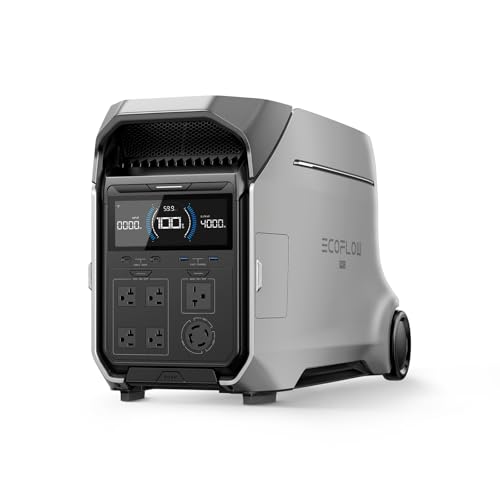 EcoFlow DELTA Pro 3 | Best for a full food truck | 4,096Wh Weight n/p | Check price on Amazon |
| 2 | 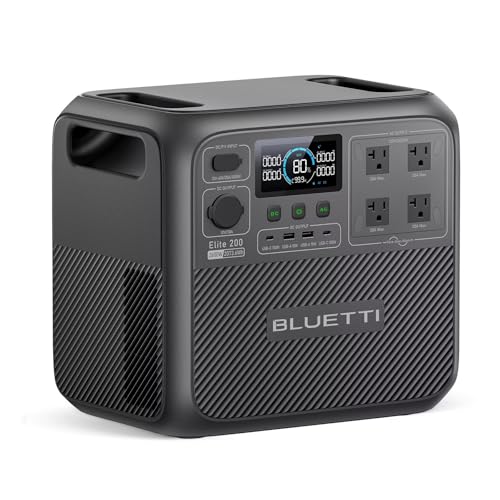 BLUETTI Elite 200 V2 | Best for a stall that trades every week | 2,074Wh 53.4 lb | $898.99 · View on Amazon |
| 3 | 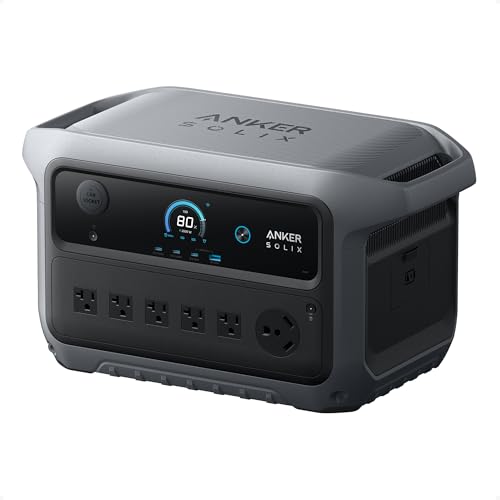 Anker SOLIX C2000 Gen 2 | Best balance of capacity and what you can lift | 2,048Wh 41.7 lb | $1,499.00 · View on Amazon |
| 4 | 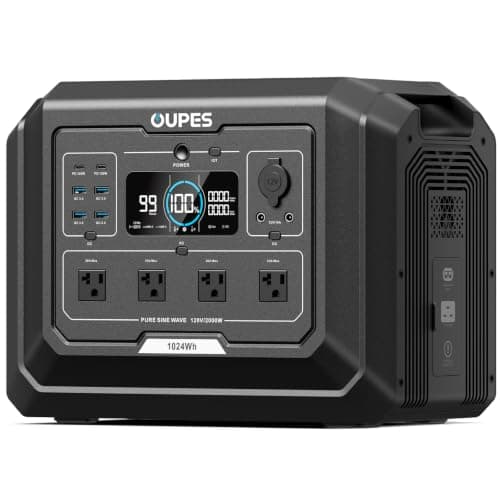 OUPES Mega 1 | Best socket panel for a market stall | 1,024Wh 27.8 lb | $529.00 · View on Amazon |
| 5 | 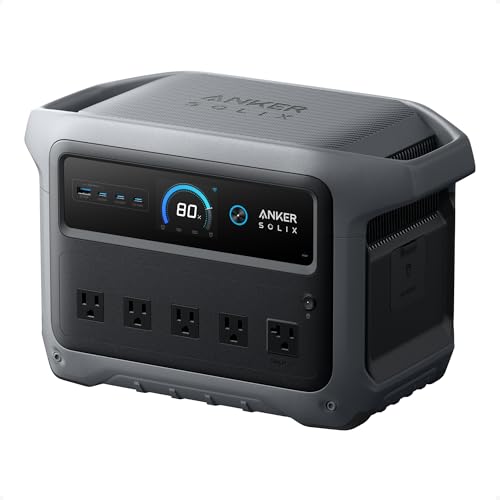 Anker SOLIX C1000 Gen 2 | Best for a coffee cart or single-product pitch | 1,024Wh 24.9 lb | $529.99 · View on Amazon |
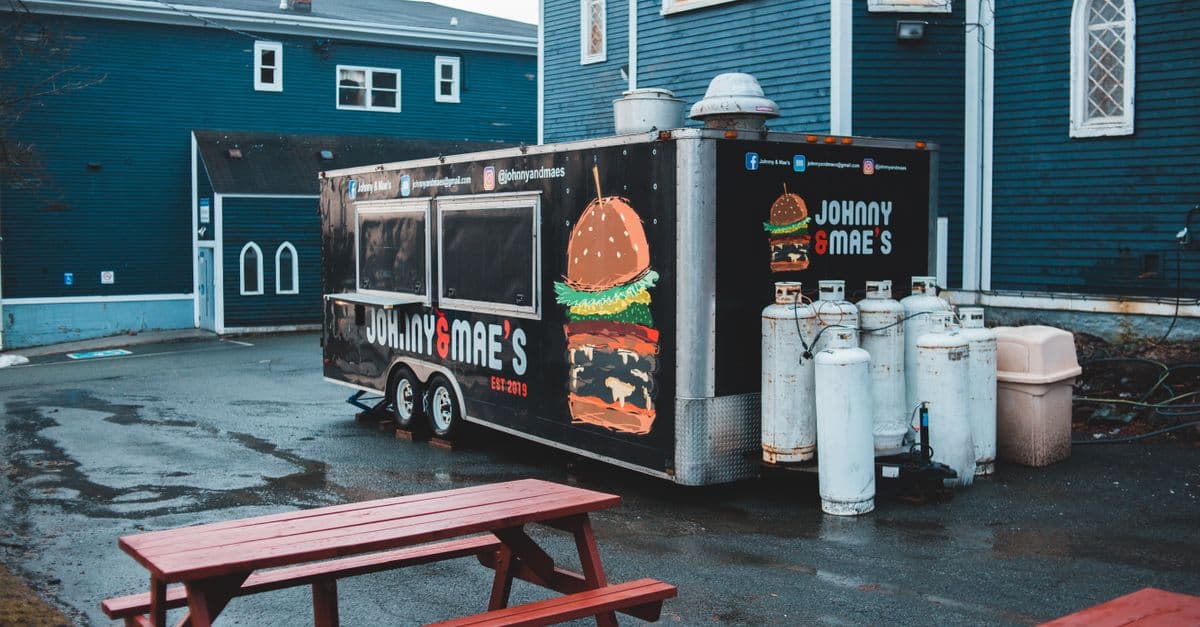
A power station will not cook for you, and any page that implies otherwise is wasting your money. A griddle, a deep fryer, a commercial espresso machine or a flat-top draws 3,000 to 8,000W continuously for hours, and no battery on this page - or in this category - delivers that for a trading day. Cooking on a truck is propane, and it stays propane. What a battery is genuinely good at is everything else: refrigeration, lighting, the point-of-sale system, the card reader, ventilation fans, water pumps, blenders, sound and signage. That list is the real electrical load of a food business, and it is a list a well-chosen power station covers silently, with no fumes, in places a generator is not allowed.
Why a battery instead of a generator
The reason most traders arrive at this page is not cost. It is that the pitch bans generators. Indoor expo halls, covered markets, school and hospital grounds, many city street-trading permits, farmers' markets held on grass, and most festival food courts after a certain hour all prohibit combustion, noise above a stated limit, or both. A battery has no exhaust and no engine, which makes it the only legal answer in those venues rather than the more pleasant one.
The second reason is the customer-facing one. A generator two feet from a service window is a conversation you have to shout over all day, and shouting is not a sales technique. The units on this page have fans rather than engines; they are audible under heavy load and close to silent under light load. Portable power station vs gas generator sets out the full trade, including the cases where a generator is simply the right answer - and a long trading day with heavy continuous draw is one of them.
How we ranked these, and in what order
Trading is a different sizing problem from camping or home backup, and the usual ranking criteria are in the wrong order for it. These are the four that decide a trading day, in the order they bite:
- Continuous watts, not watt-hours. The failure mode on a stall is not running out at 3pm, it is the inverter cutting out at 11am because the cooler compressor started while the blender was running. Add the nameplate watts of everything that can be on at once and buy above that number, not near it.
- Surge headroom. Refrigeration, pumps and blenders are motors, and a motor draws several times its running watts for the half-second it starts. This is the specification that decides whether the compressor starts at all. Surge watts vs running watts explains how to find both numbers on your own equipment.
- Outlet count. A stall is four or five plugs. Two sockets and a power strip works electrically and is a liability on a wet pitch with customers nearby. Count your plugs before you count your watt-hours.
- Cycle life. This is the criterion that separates a trading purchase from a camping one. A camping unit cycles twenty times a year. A stall cycles it every trading day - a hundred to three hundred times a year - so a 6,000-cycle rating against a 3,500-cycle one is a difference of years, and it is where the real cost per kilowatt-hour delivered is decided.
Capacity comes fifth, not first, because capacity is the one thing you can solve on the day with a second unit, an expansion pack or an alternator charge at lunchtime. Weight comes sixth, and it only matters at all if you set up single-handed - which, to be fair, most single-vehicle traders do.
Sizing a trading day, with your own numbers
Do not take load figures from an article, including this one. Every appliance has its draw printed on a plate or a label, usually on the back or underneath, and the arithmetic below only works with your figures in it. The example uses plausible nameplate ratings to show the method, not to tell you what your equipment draws.
Two refinements worth making to your own version of that sum. First, a cooler's duty cycle rises sharply in hot weather and when the door opens all day, so a 40% figure in a kitchen is closer to 60% on a summer pitch - size for the bad day. Second, if your pitch runs past dark, the lighting load roughly doubles while the cooler load stays high, which is the point where a six-hour calculation quietly becomes an eight-hour one. For the general version of this arithmetic, what size power station do I need is the page to work through.
The comparison table
| DELTA Pro 3 | Elite 200 V2 | C2000 Gen 2 | OUPES Mega 1 | C1000 Gen 2 | |
|---|---|---|---|---|---|
| Capacity | 4,096Wh | 2,074Wh | 2,048Wh | 1,024Wh | 1,024Wh |
| AC continuous | 4,000W | 2,600W | 2,400W | 2,000W | 2,000W |
| Surge | 6,000W | 3,900W resistive | 4,000W | 4,500W | 3,000W |
| AC outlets | 120V and 240V | 2,600W total | 4 incl. TT-30R | 4x NEMA 5-20R | 2 |
| Weight | Not published | 53.4 lb | 41.7 lb | 27.8 lb | 24.9 lb |
| Cycle rating | 4,000 to 80% | 6,000+ to 80% | 4,000 to 80% | 3,500+ to 80% | 4,000 to 80% |
| Max solar input | Not published | 1,000W | 800W | 800W | 600W |
| Full recharge | 80% in 50 min | 1.4 hr | 58 min | 58 min | 49 min |
| Switchover | Not published | 15 ms or less | 10 ms | Under 20 ms | 10 ms |
| Expansion | To 48 kWh | Unclear | To 4 kWh | To 5,120Wh | None |
| Warranty | 5 years | 5 years | 5 years | 5 yr, 6 registered | 5 years |
What we deliberately did not rank, and why
The Anker SOLIX F3800 is the unit that would otherwise top this page - 3,840Wh, 6,000W and a 53.8 kWh expansion ceiling is food-truck equipment by any measure. On the day we published this, its Amazon listing returned currently unavailable, and the only live listings in that family are F3800 Plus units, which are a different model with a different solar input ceiling. We do not rank a unit a reader cannot buy, so it is named here instead.
The EcoFlow DELTA 3 Plus - 1,024Wh with 1,000W of solar input across two MPPT inputs - would have been a strong pick for a solar-charged stall. At the time of writing it is listed on Amazon only as part of a solar-panel bundle rather than on its own. Buying the bundle is a legitimate choice if you want the panel anyway; it is not a like-for-like comparison with the bare units on this page, so we have left it out of the ranking and said so.
Nothing with a gas engine. This is a page about the venues where that is not an option. If your pitch permits a generator and you run heavy continuous loads all day, an inverter generator is cheaper per watt and refuels in a minute - portable power station vs inverter generator makes that case honestly rather than pretending batteries win everywhere.
Charging between pitches
A trading unit's real constraint is turnaround, not capacity. Four of the five units here refill in under an hour and a half from a wall socket, which means a unit that empties on Saturday is full for Sunday on a domestic outlet overnight with hours to spare. That is the single most useful property of this class for a trader, and it is worth checking against any unit you consider that is not on this page.
Solar is the other half of the answer for a multi-day pitch. BLUETTI's 1,000W ceiling on the Elite 200 V2 is the highest here, with 800W on both the Anker C2000 Gen 2 and the OUPES Mega 1. A 400W array on a van roof will not refill a 2 kWh unit during a trading day, but it meaningfully slows the drain - and on a weekend pitch that is the difference between finishing Sunday and not. Best portable solar panels for power stations matches panels to each unit's published ceiling, and charging a power station from your alternator covers the option most traders overlook, which is topping up on the drive between pitches.
If your pitch is a tailgate rather than a trade, best power stations for tailgating is the same problem with a smaller load list and no insurer. If it is a trailer or van build rather than a table, best power stations for van life covers the permanently-installed version. And if the load you keep coming back to is refrigeration, best power station for a freezer does the duty-cycle arithmetic properly for compressors.
The picks in full
1. Best for a full food truck
EcoFlow DELTA Pro 3
- 4,096Wh
- LFP (EV-grade)
- 4,000W continuous / 6,000W surge
- 80% capacity after 4,000 cycles
- 80% in 50 min
- 5 years (3-year standard plus 2-year extended)
EcoFlow publishes 4,096Wh, 4,000W of continuous AC with a 6,000W surge, EV-grade LFP cells, 120V and 240V output, seven charging methods, 0-80% in 50 minutes, 80% capacity after 4,000 cycles, a five-year term (three standard plus two extended) and expansion from 4 kWh to 48 kWh.
Those are the only numbers on this page that cover a truck rather than a stall. 4,000W continuous runs a commercial refrigerator, a chest freezer, a point-of-sale system, a ventilation fan, an LED sign and a blender simultaneously without arithmetic. The 240V output is the part nothing else here offers, and it is what lets the unit sit in front of equipment that expects a shore-power feed rather than a wall socket. The 48 kWh expansion ceiling means a long trading day becomes a sizing decision rather than a limit.
The honest drawbacks are real. EcoFlow publishes neither a weight nor a maximum solar input figure in the DELTA Pro 3's overview, and it publishes no UPS switchover time for this model either - three blank cells where the rest of this page has numbers. It is a wheeled unit rather than a carried one, and it is by a wide margin the most expensive thing on this page. Buy it because 4,000W and 240V are requirements, not because bigger feels safer.
Reasons to buy
- 4,000W continuous, 6,000W surge
- 120V and 240V output - the only unit here with it
- 4,096Wh, expandable from 4 kWh to 48 kWh
- 0-80% in 50 minutes; seven charging methods
- 4,000 cycles to 80%; 5-year term
Reasons to avoid
- No published weight or max solar input
- No published UPS switchover time
- Wheeled, not carried; costs the most here
Buy it if: a truck with refrigeration, ventilation and a 240V load.
Skip it if: you are running a folding table and a cash box.
2. Best for a stall that trades every week
BLUETTI Elite 200 V2
- 2,074Wh
- LiFePO4 (LFP), automotive-grade cells
- 2,600W continuous / 3,900W surge
- 53.4 lb
- 1000W
- 6,000+ cycles to 80% capacity
- Full in 1.4 hr (1,800W AC input)
- 5 years
BLUETTI publishes 6,000+ cycles to 80% capacity, which is the longest cycle rating in our entire registry and the one specification that should decide a trading purchase. A stall that trades two days a week cycles its battery roughly a hundred times a year; a daily pitch cycles it three hundred. At 6,000 cycles that is well over a decade of trading before the battery is down to 80%, against noticeably less from the 3,500 and 4,000-cycle units on this page.
The rest of the specification backs it up: 2,073.6Wh of automotive-grade LiFePO4, 2,600W of continuous output - the highest in the 2 kWh class - 1,000W of maximum solar input, a full charge in 1.4 hours at 1,800W, a switchover of 15 ms or less, a five-year warranty, and published dimensions of 13.78 x 9.84 x 12.74 in.
Three honest caveats. At 53.4 lb it is the heaviest non-wheeled unit here, which matters if the pitch is a walk from the van. BLUETTI's 3,900W figure is Power Lifting, which applies to purely resistive loads only - a heater or a kettle, not a compressor - so treat 2,600W as the real ceiling for motors. And its expansion story is contradictory: BLUETTI sells an Elite 200 V2 bundled with a B500K pack while its own FAQ for the model says it does not support the B80, B230 or B300. Confirm the pack before you count on it.
Reasons to buy
- 6,000+ cycles to 80% - longest in our registry
- 2,600W continuous, the highest at 2 kWh
- 1,000W maximum solar input
- Full charge in 1.4 hr; 15 ms or less switchover
- Automotive-grade LiFePO4; published dimensions
Reasons to avoid
- 53.4 lb
- 3,900W Power Lifting is resistive loads only
- Expansion compatibility contradicted by BLUETTI's own FAQ
Buy it if: a regular pitch where the battery cycles every trading day.
Skip it if: you trade twice a year and carry everything yourself.
3. Best balance of capacity and what you can lift
Anker SOLIX C2000 Gen 2
- 2,048Wh
- LFP (LiFePO4)
- 2,400W continuous / 4,000W surge
- 41.7 lb
- 800W
- 4,000 cycles to 80% capacity
- 100% in 58 min (2,600W AC + solar)
- 5 years
2,048Wh and 2,400W of continuous output at 41.7 lb - nearly twelve pounds lighter than the BLUETTI for effectively the same battery, which is the difference between a two-person lift and a one-person one at the end of a trading day. Anker publishes a 4,000W peak, 800W of maximum solar input, 4,000 cycles to 80% capacity, a 10 ms UPS switchover, 18.1 x 9.8 x 10.1 in, and a full recharge in 58 minutes when AC and solar run together at 2,600W.
The port panel is the trading-specific detail: four AC outlets including a TT-30R, the 30-amp RV socket. If your trailer or cart is already wired for shore power with a 30-amp cord, this unit feeds it directly without an adapter chain. It is worth saying plainly that the socket is a convenience and not a capability - a 30-amp cord on a 2,400W inverter still only carries 2,400W - but it removes a failure point from the setup.
Against it: four AC outlets is far fewer than a truck wants, the 800W solar ceiling is below BLUETTI's 1,000W, and the five-year warranty is Anker's line-wide term rather than something the C2000 Gen 2's own page restates. Expansion stops at 4 kWh with one BP2000 pack.
Reasons to buy
- 41.7 lb - the lightest full 2 kWh box here
- 2,400W continuous, 4,000W peak
- TT-30R socket for a 30-amp shore cord
- Full recharge in 58 minutes; 10 ms switchover
- 4,000 cycles to 80%; published dimensions
Reasons to avoid
- Four AC outlets
- 800W solar ceiling
- Expansion stops at 4 kWh
Buy it if: a cart or trailer you set up and break down single-handed.
Skip it if: the battery cycles daily for years - buy cycle life instead.
4. Best socket panel for a market stall
OUPES Mega 1
- 1,024Wh
- LFP (LiFePO4)
- 2,000W continuous / 4,500W surge
- 27.8 lb
- 800W
- Over 3,500 cycles to 80%
- 58 min at 1,400W (fast); 1.9 hr at 700W (slow)
- 5 years, extendable to 6 with registration
Four NEMA 5-20R outlets out of a 1,024Wh unit, each rated 120V/20A, with 2,000W of continuous output and a 4,500W surge that is larger than anything else at this capacity and larger even than the Anker C2000 Gen 2's 4,000W peak at twice the battery. A stall is four or five small things at once - a drinks cooler, a till, a card reader, string lights, a blender - and this is the only unit near this size with a socket for each of them.
OUPES publishes 800W of maximum solar input, a full recharge in 58 minutes at 1,400W, a switchover under 20 ms, 27.8 lb, 15.1 x 9.1 x 11.6 in, over 3,500 cycles to 80%, expansion to 5,120Wh with two B2 packs, and a five-year warranty extendable to six on registration. For a stall that trades a weekend at a time, 5,120Wh of expansion is a genuine answer to a long pitch.
The drawbacks: 3,500 cycles is the shortest rating on this page, which is exactly the wrong specification to be last on if you trade daily. 27.8 lb for one kilowatt-hour is the heaviest carry per watt-hour in the 1 kWh class. And OUPES is a much smaller company than the other three brands here, which is a fair thing to weigh against a six-year warranty term. Our OUPES Mega 1 review goes through all of it in detail.
Reasons to buy
- Four NEMA 5-20R AC outlets at 1 kWh
- 4,500W surge - the biggest per watt-hour here
- 800W maximum solar input
- Expandable to 5,120Wh
- 5-year warranty, 6 on registration
Reasons to avoid
- 3,500 cycles - the shortest rating here
- 27.8 lb for 1,024Wh
- Smallest brand here; thinner service network
Buy it if: a market stall or booth with four or five small loads.
Skip it if: refrigeration runs all day - buy capacity instead.
5. Best for a coffee cart or single-product pitch
Anker SOLIX C1000 Gen 2
- 1,024Wh
- LiFePO4 (InfiniPower LFP)
- 2,000W continuous / 3,000W surge
- 24.9 lb
- 600W
- 80% capacity after 4,000 cycles
- Full in 49 min (UltraFast, 1,600W max input)
- 5 years
2,000W of continuous output and a 3,000W surge from 24.9 lb, which is the lightest unit on this page by a wide margin and the one you can genuinely carry from a parked car to a pitch in one trip. Anker publishes 1,024Wh of InfiniPower LFP, 600W of maximum solar input, a full recharge in 49 minutes at 1,600W - the fastest here - a 10 ms switchover, 4,000 cycles to 80% and a five-year warranty.
2,000W is enough for one significant appliance and the small stuff around it. A 900W drip coffee maker with a hot plate, a till, a card reader and lights is comfortably inside it. A 1,500W kettle for a tea stall is inside it. What it is not is a unit for two large loads at once, and the trading-day question is almost always how many things run together rather than how big the biggest one is.
Two AC outlets is the obvious limit, and the honest consequence is a power strip on a stall where cables are already a hazard. There is no expansion battery for this model at all, so a longer pitch means a second unit rather than a bigger one. Our Anker SOLIX C1000 Gen 2 vs EcoFlow DELTA 3 comparison covers the socket trade-off in full.
Reasons to buy
- 24.9 lb - the lightest unit here
- 2,000W continuous from 1,024Wh
- Fastest recharge on this page at 49 minutes
- 10 ms switchover; 4,000 cycles to 80%
- 5-year warranty
Reasons to avoid
- Two AC outlets
- No expansion of any kind
- 600W solar ceiling
Buy it if: a cart, a pop-up, a single appliance and the small stuff.
Skip it if: you need refrigeration and a second large load together.
Questions