How to Power a Tailgate
Everything people plug in at a tailgate, costed in watt-hours — and the one item that eats more than everything else combined.
The short answer
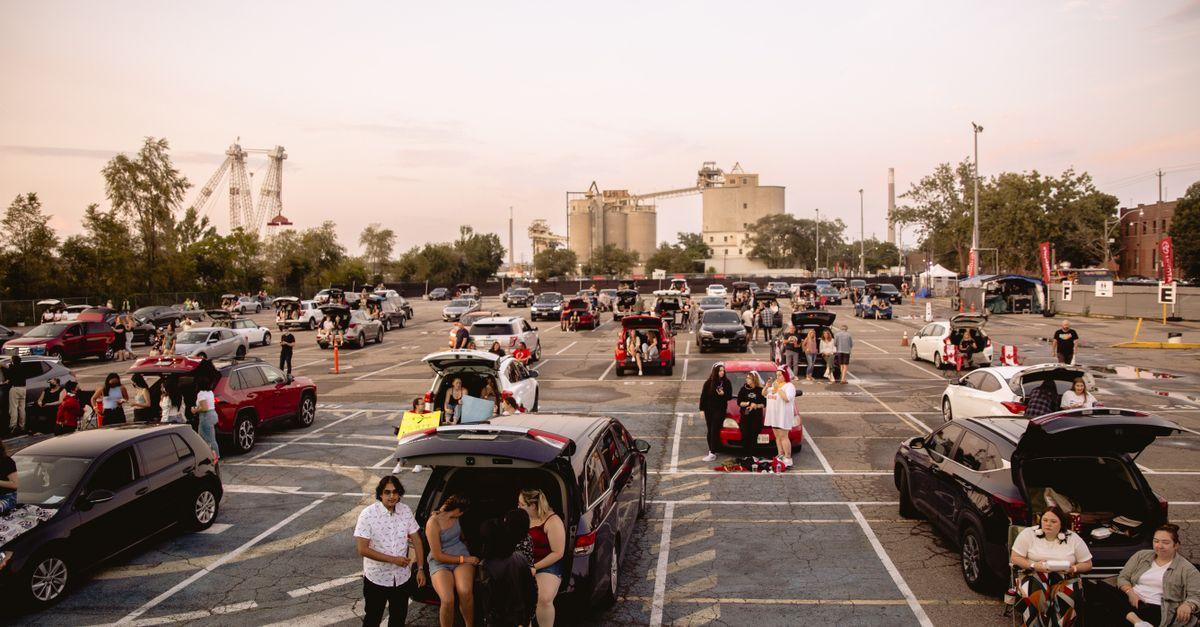
A normal four-hour tailgate — a 40-50 inch TV, powered speakers, a pellet grill, string lights and phone charging — costs somewhere between 400 and 900 watt-hours, which puts a 1,024Wh power station comfortably in range and a 288Wh unit at its limit. The number that breaks the budget is not any of those: it is a hot plate, an electric griddle or a deep fryer, each of which is a 1,200-1,800W heating load that will empty any portable unit in well under an hour. Cook with fuel, power everything else with a battery, and the arithmetic works.
At a glance
Quick picks
Tap any row to jump to the full write-up. Weight is a column here because it is the spec that decides whether you actually carry the thing.
| # | Product | Best for | Capacity · Weight | Price |
|---|---|---|---|---|
| 1 | 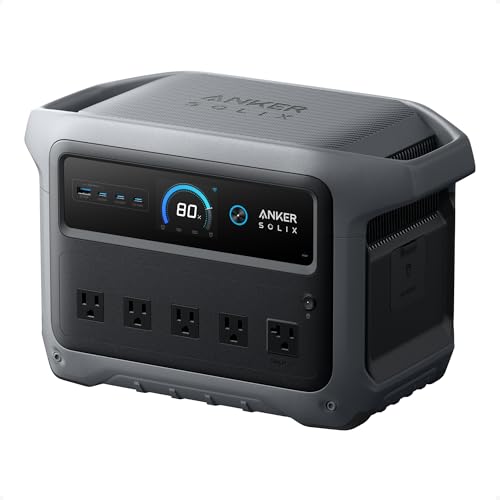 Anker SOLIX C1000 Gen 2 | Best for a full tailgate setup | 1,024Wh 24.9 lb | $529.99 · View on Amazon |
| 2 | 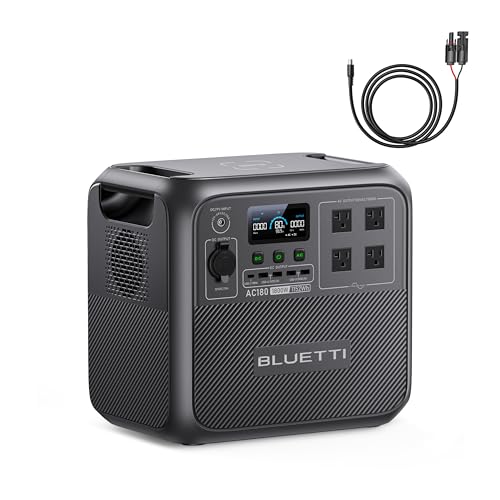 BLUETTI AC180 | Most capacity for a long day | 1,152Wh 35.27 lb | $499.00 · View on Amazon |
| 3 | 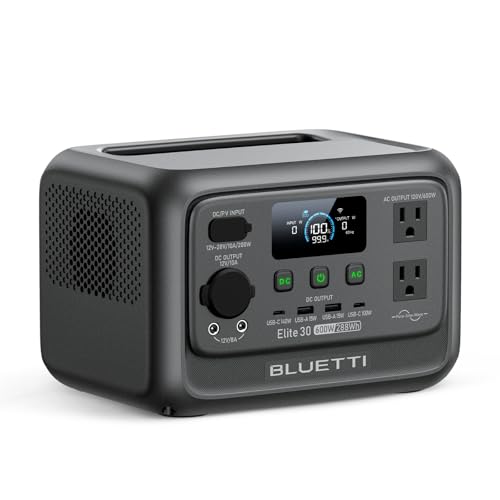 BLUETTI Elite 30 V2 | Best small unit that still runs real things | 288Wh 9.5 lb | $289.99 · View on Amazon |
Google suggests 'tailgate power supply' for a reason: most people arrive at this question with a list of things they want to plug in and no idea what any of them cost. So here is the list, costed. Every figure below is a nameplate band — read the plate on your own gear, because a 32 inch LED TV and a 65 inch one are not in the same conversation.
The full tailgate load list
| Item | Typical draw | Hours used | Watt-hours |
|---|---|---|---|
| 40-50 in LED TV | 60-120W | 4 | 240-480 |
| Satellite or streaming box | 15-30W | 4 | 60-120 |
| Powered PA speaker, moderate volume | 30-80W | 4 | 120-320 |
| Bluetooth speaker on its own battery | 0W from the unit | 4 | 0 |
| Pellet grill after ignition | 40-60W | 3 | 120-180 |
| Pellet grill ignition burst | 200-500W | 0.1 | 20-50 |
| String lights, LED | 10-20W | 3 | 30-60 |
| Blender, frozen drinks | 400-900W | 0.1 | 40-90 |
| Slow cooker, low | 150-250W | 4 | 600-1,000 |
| Phone charging, six people | 10-15W each | - | 60-90 |
| Electric griddle or hot plate | 1,200-1,800W | 1 | 1,200-1,800 |
| Deep fryer | 1,500W | 0.5 | 750 |
Two rows stand out and they are the two to make decisions about. A slow cooker looks harmless at 200W and is not, because it runs for the whole session — 600-1,000Wh from one appliance, which is most of a 1kWh battery. An electric griddle is worse still: it is a resistive heating element with no duty cycle, and it will take more in one hour than everything else on the list combined.
Four rules that make the budget work
- Cook with fuel, power with battery. Propane or pellets for heat, electricity for everything else. This single rule is the difference between a comfortable day and a dead battery at half time. Best power station for a pellet grill has the grill arithmetic in full.
- Let battery-powered things run on their own batteries. A Bluetooth speaker, a laptop and a phone are all perfectly happy running down their own packs and charging later. Plugging them in to 'keep them topped up' moves their consumption onto your power station for no benefit.
- Set the TV's backlight down. Screen brightness is most of a TV's draw and an outdoor lot in daylight tempts you to max it. A 40% backlight on an LED set can cut consumption by a third, which in the arithmetic above is 120Wh — half an hour of extra game.
- Bring a short, thick extension cord. 12- or 14-gauge, as short as reaches. A long thin cord drops voltage, which makes motors and igniters draw more current for longer and can trip an inverter that would otherwise be fine.
Why a generator is usually the wrong answer here
A lot of venues restrict or ban fuel generators in their parking lots outright, and the ones that permit them have rules about distance and placement that put the generator a long way from the tailgate. Add the noise into a crowd and the exhaust into a space with people eating, and the battery wins on practicality before you reach the specifications.
Best generator for tailgating is written for people searching the word 'generator' and covers the rules problem properly. Portable power station vs inverter generator is the fair head-to-head if you want both sides — and the honest finding there is that the generator wins on runtime and cost per watt-hour, and loses everywhere a crowd is involved.
Charging between games
This is the specification that quietly matters most over a season. Anker publishes a full recharge in 49 minutes on the C1000 Gen 2, BLUETTI 1.3-1.8 hours on the AC180, and BLUETTI 70 minutes on the Elite 30 V2. Any of those means the unit is ready again the same evening rather than overnight, which over a run of home games removes the only real friction in owning one.
If your lot gets sun and your tailgates run long, a panel is a genuine extension rather than a gimmick — the TV and the speaker together are inside what a couple of hundred watts of panel delivers in good conditions. Best portable solar panels for power stations has the picks and how much solar input do you need explains why the rating on the panel is not the number you get.
If it is cold
Late-season games change the arithmetic twice over. A lithium battery gives up some of its usable capacity below freezing, and the temptation is to plug in exactly the wrong appliance to fix it. Power stations in cold weather has the derate figures; what size power station to run a space heater explains why an electric heater is not the answer; and what size power station for an electric blanket is the warmth that actually fits inside a battery budget.
For the product shortlist rather than the arithmetic, best power stations for tailgating ranks the registry for this job, and what size power station to run a TV drills into the single biggest line item above.
The screen is the load people most often get wrong in that total, and usually in the generous direction: best power station for a tailgate TV costs out a 50-inch set for a full game at about 400 to 500 watt-hours and then ranks on outlet count, because four plugs is the real constraint. If the whole setup has to fit in one hand instead, best small generator for tailgating covers the sub-11 lb class and draws the line at a television.
The commercial version of this setup has a different answer. Best power station for a food truck covers market stalls, vendor booths and trucks: why outlet count beats capacity on a stall, why a 6,000-cycle rating is worth more than extra watt-hours when the battery cycles daily, and why cooking stays on propane no matter how large the battery gets.
The picks in full
1. Best for a full tailgate setup
Anker SOLIX C1000 Gen 2
- 1,024Wh
- LiFePO4 (InfiniPower LFP)
- 2,000W continuous / 3,000W surge
- 24.9 lb
- 600W
- 80% capacity after 4,000 cycles
- Full in 49 min (UltraFast, 1,600W max input)
- 5 years
1,024Wh behind a 2,000W inverter with a 3,000W surge. The output rating is what matters at a tailgate, because the moment someone plugs in a blender for frozen drinks or a pellet grill lights its igniter, a 1,000W unit is at its edge and this one is not noticing.
Anker publishes a full recharge in 49 minutes at 1,600W input, a 10 ms UPS switchover, 600W of solar input, 80% capacity after 4,000 cycles, a 5-year warranty and dimensions of 15.12 x 8.19 x 9.61 in. A 49-minute recharge means a Saturday game and a Sunday game need no planning at all.
Two AC outlets is the real constraint for this job, and a short power strip is the fix — the inverter cares about total draw, not socket count. 24.9 lb carries from the boot to the table in one trip.
Reasons to buy
- 2,000W continuous, 3,000W surge
- 1,024Wh — a full four-hour setup with margin
- Full recharge in 49 minutes
- 10 ms UPS switchover
- 24.9 lb; published dimensions
Reasons to avoid
- Only two AC outlets — bring a power strip
- Not expandable
- 600W solar input
Buy it if: the full setup: TV, grill, speakers, lights.
Skip it if: you only ever bring a speaker and a phone.
2. Most capacity for a long day
BLUETTI AC180
- 1,152Wh
- LiFePO4
- 1,800W continuous / 2,700W surge
- 35.27 lb
- 500W
- 3,500+ cycles to 80% original capacity
- 1.3-1.8 hr full (1,440W max AC input)
- 5 years
1,152Wh is the biggest battery in the 1kWh class, and at a double-header or an all-day lot it is the difference between watching the whole thing and rationing the TV in the fourth quarter. 1,800W continuous with a 2,700W surge covers everything on the list below except a heating appliance.
BLUETTI publishes four AC outlets — twice the Anker, and the right number for this job — plus a 15W wireless charging pad on the top panel, a 1.3-1.8 hour full recharge, a 20 ms switchover, 3,500+ cycles to 80% capacity, a 5-year warranty and dimensions of 13.39 x 9.72 x 12.48 in.
35.27 lb is the cost, which at a tailgate is more acceptable than almost anywhere else on this site — the unit travels in the vehicle and moves ten feet. 500W of solar input is the lowest in the class and it does not expand.
Reasons to buy
- 1,152Wh — the biggest battery in its class
- Four AC outlets plus a wireless pad
- 3,500+ cycles to 80% capacity
- Compact 13.39 x 9.72 in footprint
- 5-year warranty
Reasons to avoid
- 35.27 lb
- 500W solar input
- Not expandable
- 20 ms switchover
Buy it if: all-day lots and four things plugged in at once.
Skip it if: you are carrying it any distance.
3. Best small unit that still runs real things
BLUETTI Elite 30 V2
- 288Wh
- LiFePO4 (automotive-grade)
- 600W continuous / 1,500W surge
- 9.5 lb
- 200W
- Over 3,000 cycles; 10-year lifespan
- Full in 70 min
- 5 years
600W continuous with a 1,500W surge out of 288Wh and 9.5 lb — double the output of every other unit in its capacity class. For a stripped-back tailgate (speakers, lights, phones, a pellet grill) this does the job in a box you carry in one hand with the chairs.
BLUETTI publishes a 70-minute full recharge, a UPS switchover of 10 ms or less, 200W of solar input, nine output ports including USB-C PD 3.1 up to 140W, over 3,000 cycles with a stated 10-year lifespan and a 5-year warranty.
288Wh is the hard limit and it rules out a TV for a full game plus everything else. BLUETTI publishes no dimensions and no AC outlet count for this model, which for a job defined by how many things plug in is a real gap.
Reasons to buy
- 600W continuous, 1,500W surge from 288Wh
- 9.5 lb — one hand
- Full recharge in 70 minutes
- USB-C PD 3.1 up to 140W
- Over 3,000 cycles; 5-year warranty
Reasons to avoid
- 288Wh will not cover a TV plus everything else
- AC outlet count not published
- Not expandable
- 200W solar input
Buy it if: a light setup carried in with the chairs.
Skip it if: a TV is part of the plan.
Questions