What Size Power Station to Run a TV?
Of all the appliances people ask about, a television is the easy one. No surge, no compressor, no heating element — just a steady draw and simple division.
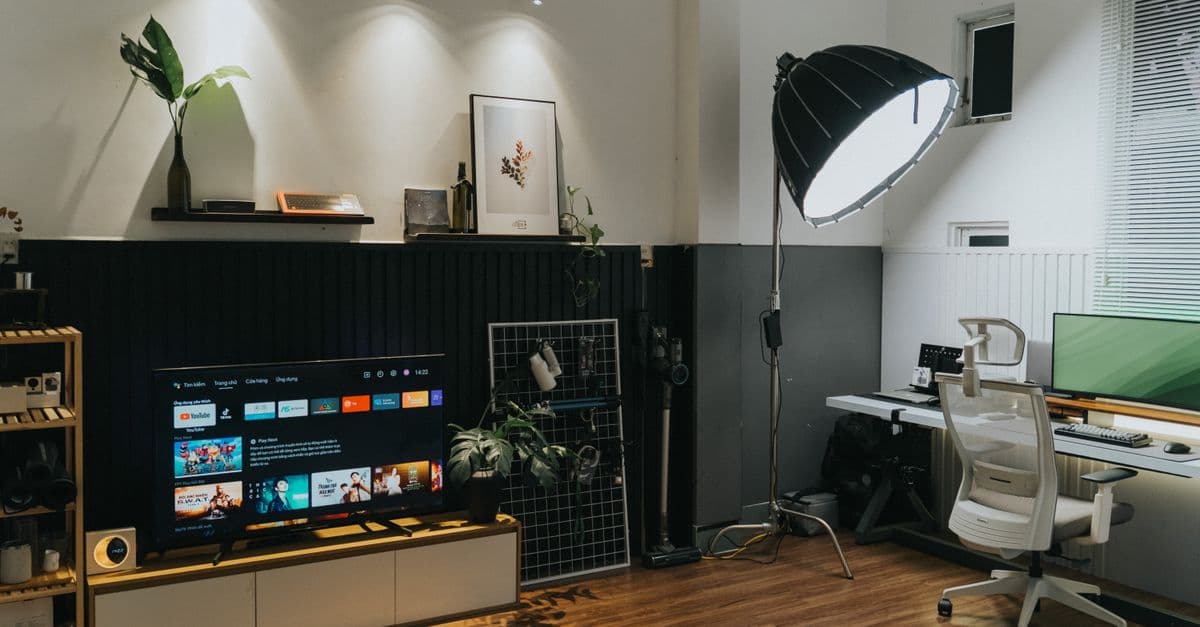
The short answer
Almost any power station will run a television; the question is only for how long. A modern LED set draws a steady 70-110W with no start-up surge, so even a 286Wh unit runs one for roughly two and a half hours after conversion losses, and a 1,000Wh unit runs it for 9-10 hours. Find your set's wattage, divide your battery's watt-hours by it, then take 15% off for the inverter.
Televisions are the friendliest appliance in this whole category and it is worth saying why. There is no compressor, so no surge spike to clear. There is no heating element, so no four-figure draw. The consumption is steady, modest and published. That makes the sizing question pure arithmetic rather than a gamble on headroom.
Find your television's real wattage
Do not use a number from a blog, including this one. Use yours. There are three reliable places to get it: the rating plate on the back of the set, the specification page in the manual, or — for any ENERGY STAR certified model sold in the US — the certified-television listings in ENERGY STAR's product finder, which publish an average on-mode power consumption figure per model.
For context on what you are likely to find: across current ENERGY STAR certified 55-inch models those on-mode figures commonly land somewhere between roughly 70W and 110W, with LED sets at the lower end and OLED panels higher. Very large or 8K panels run considerably above that band, and an older plasma or early LCD set can draw two or three times as much as a modern equivalent of the same size.
The arithmetic
| Unit | Capacity | At 70W | At 100W | At 150W |
|---|---|---|---|---|
| EcoFlow RIVER 3 Plus | 286Wh | 3.5 hr | 2.4 hr | 1.6 hr |
| Jackery Explorer 300 v2 | 288Wh | 3.5 hr | 2.4 hr | 1.6 hr |
| Anker SOLIX C1000 Gen 2 | 1,024Wh | 12.4 hr | 8.7 hr | 5.8 hr |
| Jackery Explorer 1000 v2 | 1,070Wh | 13.0 hr | 9.1 hr | 6.1 hr |
| BLUETTI AC180 | 1,152Wh | 14.0 hr | 9.8 hr | 6.5 hr |
| EcoFlow DELTA 2 Max | 2,048Wh | 24.9 hr | 17.4 hr | 11.6 hr |
The loads people forget to add
Nobody watches a television on its own. The actual load list is usually the set plus two or three other things, and they add up faster than the TV does:
- A soundbar or powered speakers — often 30-80W, which can be most of what the television itself draws.
- A games console — the biggest hidden load here by a wide margin, and far more than the set under load.
- A streaming stick or set-top box — small, 5-15W, but continuous.
- A modem and router, if you are streaming rather than playing local media — about 20W continuous, and they have to stay on.
- A projector instead of a television, which is a different product with a different draw — read its plate rather than assuming TV figures apply.
Add the real list before you divide. A 100W set, an 80W soundbar and a 20W router is 200W, which halves every number in the table above. What size power station do I need is the page for building a full load list properly.
Where a television actually gets powered off a battery
At a tailgate, which is the most common case and the reason this page exists on this site rather than a general electronics blog. A set, a speaker and a router for a four-hour window is well inside a 1kWh unit, and best power stations for tailgating sizes exactly that.
During an outage, where the television is a small load next to the fridge and rarely the thing that decides the purchase. What size power station for a power outage puts it in context — a fridge at 1,200Wh a day dwarfs a few hours of television.
In a van or an RV, where a television is a genuinely efficient entertainment choice compared to anything with a heating element. What size power station for van life has the full daily load picture.
What to buy
If a television is genuinely the biggest thing on your list, you do not need a big unit, and buying one is the mistake to avoid. A 286Wh box runs a film. A 1kWh box runs a full day of viewing or a whole tailgate with the sound system attached. Spend the difference on a solar panel instead and you can keep watching indefinitely — how much solar input do you need explains how little input it takes to keep pace with a 100W load.
If there is a fridge, a kettle or a microwave anywhere on the same list, the television stops being the deciding factor entirely. What size power station to run a microwave is where that conversation goes, because output rather than capacity becomes the constraint.
The picks in full
1. Enough for a film, light enough to forget
EcoFlow RIVER 3 Plus
- 286Wh
- LiFePO4
- 600W continuous / 1,200W surge
- 10.4 lb
- 220W
- 3,000 cycles to 80% capacity
- 0-100% in 60 min
- Not published on the US product page
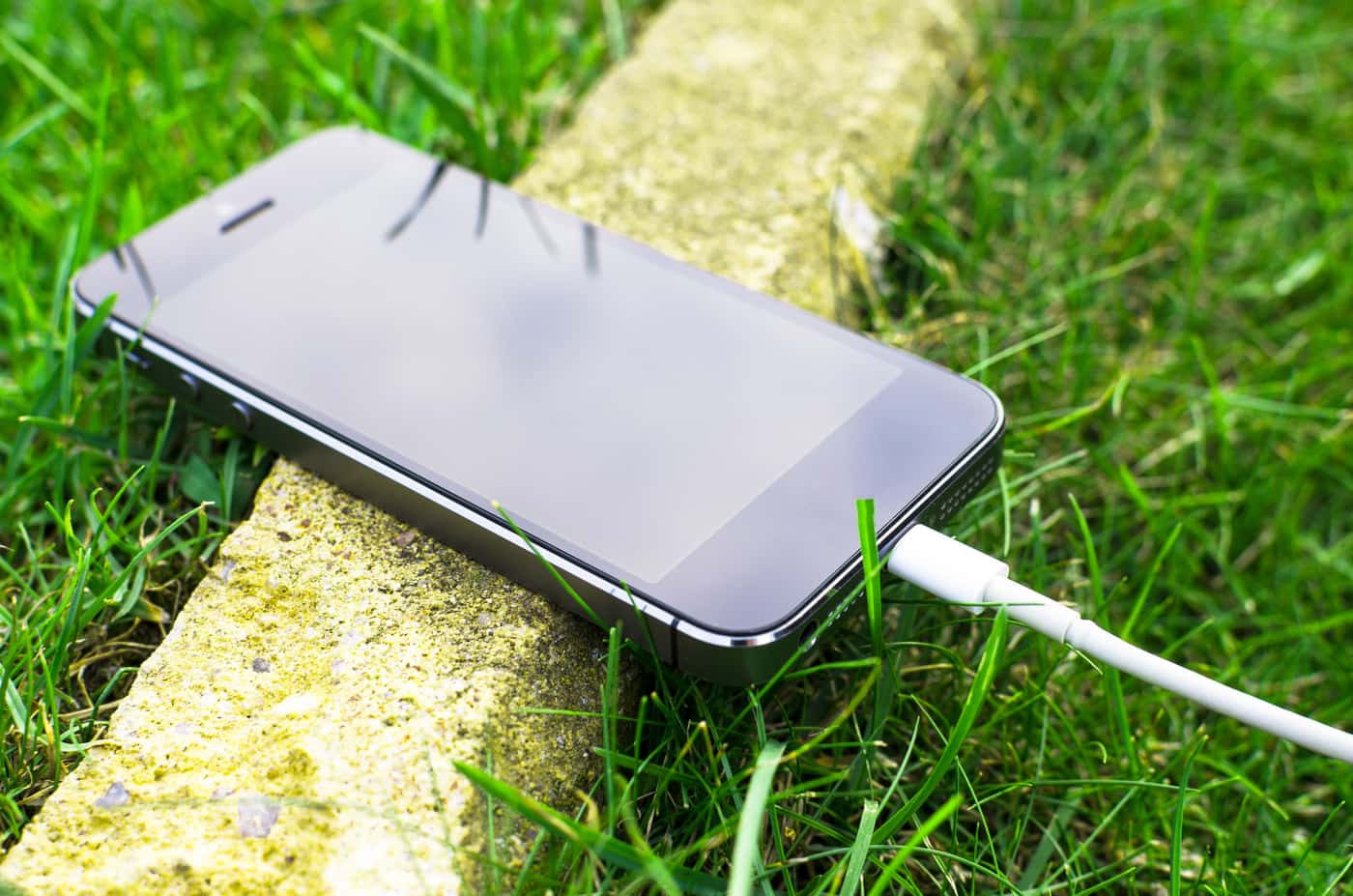
286Wh runs a 100W set for about 2.4 hours after inverter losses, or a 70W set for three and a half. At 10.4 lb with three AC outlets, it is the right size for the job rather than the biggest box available.
600W continuous is twice what most units this size manage, so a set, a soundbar and a streaming stick together are comfortably inside it.
It expands to 858Wh wire-free, which takes a 100W television to roughly seven hours. EcoFlow publishes no warranty term for it on the US page.
Reasons to buy
- 286Wh — about 2.4 hr at 100W
- 600W continuous covers set, soundbar and box
- 10.4 lb with three AC outlets
- Expands to 858Wh wire-free
- 0-100% in 60 minutes
Reasons to avoid
- No warranty term published on EcoFlow's US page
- Not enough for a full day of viewing
- 220W solar input
- 27.5Wh per pound
Buy it if: a film at camp, or a short tailgate.
Skip it if: you want television all day without recharging.
2. Best for a TV plus everything around it
BLUETTI AC180

- 1,152Wh
- LiFePO4
- 1,800W continuous / 2,700W surge
- 35.27 lb
- 500W
- 3,500+ cycles to 80% original capacity
- 1.3-1.8 hr full (1,440W max AC input)
- 5 years
1,152Wh is 9.8 hours at 100W, and four AC outlets plus four USB-A ports means the set, a soundbar, a console, a router and the phones all plug in without a power strip.
1,800W continuous with a 2,700W surge is far more than a television needs, which makes this the unit to buy when the television is one item on a longer list rather than the whole list.
35.27 lb and 32.7Wh per pound is the worst weight efficiency in its class, and it does not expand. For a tailgate that stays near the vehicle, neither matters much.
Reasons to buy
- 1,152Wh — 9.8 hr at 100W
- Four AC outlets plus four USB-A
- 1,800W continuous, 2,700W surge
- 3,500+ cycles to 80% original capacity
- 1.3-1.8 hr full recharge
Reasons to avoid
- 35.27 lb — 32.7Wh per pound
- Not expandable
- 500W solar input
- More unit than a television alone needs
Buy it if: a tailgate or an outage with several devices.
Skip it if: the television really is the only load.
Questions