What Size Power Station to Run a Space Heater?
This is the one sizing question where the honest answer is usually 'do not'. The arithmetic is short, and it is worth seeing before you spend.
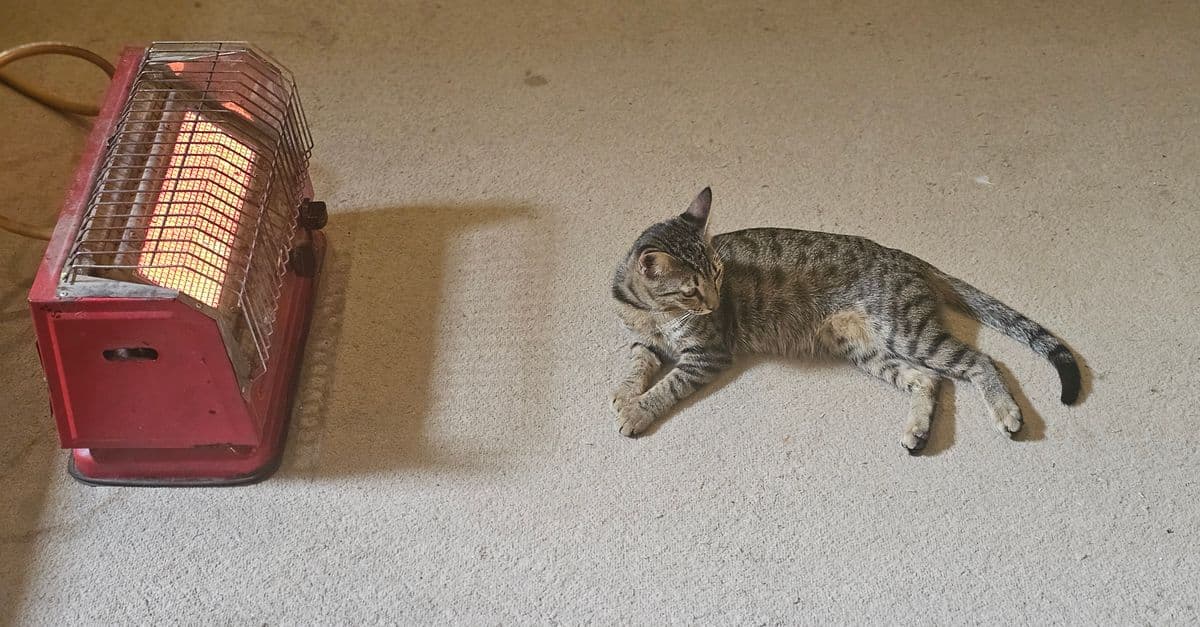
The short answer
A 1,500W space heater on high needs at least 2,000W of continuous output, and it will drain a 1,024Wh battery in roughly 35 minutes, a 2,048Wh battery in about 70 minutes, and a 3,840Wh battery in about two hours. For a full night of heat you would need somewhere between 12,000 and 18,000Wh, which no portable unit on this site reaches. If the heater has a 750W low setting, double every runtime above — and that is the only version of this that is practical.
At a glance
Quick picks
Tap any row to jump to the full write-up. Weight is a column here because it is the spec that decides whether you actually carry the thing.
| # | Product | Best for | Capacity · Weight | Price |
|---|---|---|---|---|
| 1 |  EcoFlow DELTA 2 Max EcoFlow DELTA 2 Max | Smallest unit that runs a heater for over an hour | 2,048Wh 50.7 lb | Check price |
| 2 |  Anker SOLIX F3800 Anker SOLIX F3800 | The only honest all-evening option | 3,840Wh 132.3 lb | Check price |
| 3 |  Anker SOLIX C300 Anker SOLIX C300 | The right answer instead: heat the person | 288Wh 9.1 lb | Check price |
Heat is the one thing batteries are genuinely bad at, and the reason is arithmetic rather than engineering. A space heater converts electricity into warmth at essentially 100% efficiency, which sounds good until you notice what that means: every watt of heat you feel is a watt drawn from the battery, continuously, with no duty cycle to hide behind.
Compare that with a refrigerator, which is the other big household load. A fridge's compressor runs 30-50% of the time, so a 150W fridge costs you roughly 1,260Wh across a day. A 1,500W heater running continuously costs you 1,500Wh in a single hour. How many watt-hours does a refrigerator use makes the duty-cycle point properly, and the contrast is the whole story here.
The arithmetic, with your own numbers
Read the plate on your own heater before you use any of the figures above. Space heaters are commonly sold at 1,500W high and 750W low on a 120V circuit, but ceramic, oil-filled, panel and fan heaters all differ, and a thermostat changes everything — see below.
The output ceiling comes first
Before runtime, check whether the unit will run the heater at all. A 1,500W load needs a published continuous rating above 1,500W with margin, because a heater is a sustained load rather than a brief one and running an inverter at 100% of its rating for an hour is not a plan.
| Unit | Capacity | AC continuous | 1,500W heater? |
|---|---|---|---|
| Jackery Explorer 300 v2 | 288Wh | 300W | No — will not start |
| Anker SOLIX C300 | 288Wh | 300W | No — will not start |
| BLUETTI Elite 30 V2 | 288Wh | 600W | No — will not start |
| EcoFlow RIVER 3 Plus | 286Wh | 600W | No — will not start |
| Jackery Explorer 1000 v2 | 1,070Wh | 1,500W | At its limit; about 36 min |
| BLUETTI AC180 | 1,152Wh | 1,800W | About 39 minutes |
| EcoFlow DELTA 3 / 3 Plus | 1,024Wh | 1,800W | About 35 minutes |
| Anker SOLIX C1000 Gen 2 | 1,024Wh | 2,000W | About 35 minutes |
| EcoFlow DELTA 2 Max | 2,048Wh | 2,400W | About 70 minutes |
| EcoFlow DELTA Pro 3 | 4,096Wh | 4,000W | About 2 hr 20 min |
| Anker SOLIX F3800 | 3,840Wh | 6,000W | About 2 hr 10 min |
Every unit under 1kWh is out on output alone — a 300W or 600W inverter will not start a 1,500W heater, and nothing about the capacity changes that. What can a 1000W power station run sets out where those ceilings land across the whole load list.
What a thermostat changes, and what it does not
A heater on a thermostat in a small, well-insulated room cycles, and cycling cuts consumption in exactly the way a fridge's duty cycle does. In a closed bedroom a 1,500W heater might run 40% of the time once the room is up to temperature, which turns 1,500Wh an hour into roughly 600Wh an hour and makes a 2kWh unit a two-to-three-hour proposition rather than a one-hour one.
What it does not change is the startup period or a draughty space. Bringing a cold room up to temperature is full-power running, and a tent, a van with a vent open, or a garage will never reach a setpoint at all — which means the heater runs flat out until the battery is empty. That is the case where the arithmetic above applies exactly as written.
What to do instead
- Heat with fuel, power with battery. This is the right answer in a van, a tent or an ice shelter. A diesel air heater burns fuel for heat and uses only a few watts of electricity for its fan and pump — best power station for a diesel heater shows how small that load really is, and it is the most useful page on the site for this problem.
- Heat the person, not the room. A 12V electric blanket at 40-60W is 25 to 35 times less demanding than a space heater, and it keeps you warm rather than the air around you. What size power station for an electric blanket runs those numbers.
- Use a heated vest, socks or a hot water bottle. None of these draw anything meaningful, and in a cold outage they are what actually works.
- Shrink the space. A closed bedroom with a door shut reaches a setpoint; a whole floor does not.
- If a heater really is mandatory, use a generator outdoors and extension cords in. Portable power station vs gas generator sets out that trade honestly — a generator wins on exactly this load.
Cold weather makes it worse
The situation in which you want a heater is also the situation in which the battery delivers less than its rating. Cold raises a lithium cell's internal resistance and shrinks the usable watt-hours, so a battery sitting in a 30F garage gives up noticeably less than the same battery at room temperature — and the heater's demand does not shrink to match. Power stations in cold weather covers the derate and the charging rules, which matter more than any sizing table here.
If you still want the biggest option
The honest top of the range is the Anker SOLIX F3800 at 3,840Wh with 6,000W continuous, expandable to 53.8kWh across six packs — and at six packs you are no longer shopping for a portable power station, you are shopping for a home battery system. Best power station for hurricane season and what size power station for a power outage cover that decision properly.
For an apartment, where a generator is not an option at all, the practical answer is to accept that heat is off the table and size for the fridge, the router and the lights instead. Best power station for an apartment sets out that priority list.
The picks in full
1. Smallest unit that runs a heater for over an hour
EcoFlow DELTA 2 Max
- 2,048Wh
- LFP (LiFePO4)
- 2,400W continuous
- 50.7 lb
- 1000W
- 3,000 cycles to 80% capacity
- 2.3 hr; 800W car/alternator charging
- 5 years
2,048Wh and 2,400W continuous is the entry point for this load: about 70 minutes of a 1,500W heater, or two to three hours if a thermostat in a closed room lets it cycle. It also expands from 2kWh to 6kWh with up to two extra batteries, which is the only honest way to turn this into several hours.
EcoFlow publishes 15 outputs including six AC, 1,000W of solar input, 800W of car and alternator charging, a 2.3-hour wall recharge, a sub-20 ms switchover and 3,000 cycles to 80%.
50.7 lb, and EcoFlow publishes no surge figure and no dimensions for this model. Even at 6kWh it is not an all-night heater — set expectations before you buy.
Reasons to buy
- 2,048Wh and 2,400W continuous
- Expands from 2kWh to 6kWh
- 1,000W solar input; 800W alternator charging
- Six AC outlets among 15 outputs
- 5-year warranty
Reasons to avoid
- About 70 minutes on a 1,500W heater
- 50.7 lb
- No surge figure or dimensions published
- 2.3 hours to recharge
Buy it if: an hour or two of heat in a room that holds temperature.
Skip it if: you want heat all night.
2. The only honest all-evening option
Anker SOLIX F3800
- 3,840Wh
- LiFePO4 (LFP)
- 6,000W continuous / 9,000W surge
- 132.3 lb
- 2400W
- 3,000+ cycles
- 1,800W max AC input
- 5 years
3,840Wh with 6,000W continuous and a 9,000W surge gives roughly two hours of a 1,500W heater, and expansion to 53.8kWh across six packs is the only path on this site to a genuinely long heating run.
Anker publishes true 240V receptacles, six NEMA 5-20 20A outlets, 2,400W of maximum solar input, 3,000+ cycles and a 5-year warranty. For a house with a transfer switch, this is the serious end of the category.
132.3 lb including wheels, no published recharge time, and a cycle rating with no stated retention threshold. And at six expansion packs this has stopped being a portable product.
Reasons to buy
- 3,840Wh — about two hours at 1,500W
- 6,000W continuous, 9,000W surge
- Expands to 53.8kWh
- True 240V output
- 2,400W maximum solar input
Reasons to avoid
- 132.3 lb including wheels
- Still only about two hours of a 1,500W heater
- No published recharge time
- No cycle retention threshold published
Buy it if: a house, a transfer switch and serious capacity.
Skip it if: you wanted something portable.
3. The right answer instead: heat the person
Anker SOLIX C300
- 288Wh
- LFP (LiFePO4)
- 300W continuous / 600W surge
- 9.1 lb
- 100W
- 80% in 50 min
- 5 years
288Wh at 9.1 lb will not run a space heater and is not trying to. What it will do is run a 12V heated blanket at 40-60W for four to six hours, charge every phone in the room, run lights and keep a router alive — which in a cold outage is the combination that actually helps.
Anker publishes 300W continuous with a 600W SurgePad, an 80% recharge in 50 minutes, a 10 ms UPS switchover, four USB-C ports up to 140W and 25dB at 3.3 ft.
Anker publishes no cycle-life rating and no dimensions for this model. And to be explicit: it cannot start a 1,500W heater, and no amount of capacity would change that.
Reasons to buy
- Runs a 12V heated blanket for hours, not minutes
- 9.1 lb; 80% recharge in 50 minutes
- 10 ms UPS switchover
- Four USB-C ports including 140W
- 5-year warranty
Reasons to avoid
- 300W continuous — cannot start a space heater
- No cycle-life rating published
- 288Wh total
- 100W maximum solar input
Buy it if: staying warm without trying to heat the air.
Skip it if: a room genuinely has to be warmed.
Questions