What Size Power Station for an Electric Blanket?
The cheapest way to stay warm off-grid, and the one heating load a small battery genuinely handles. Which blanket you buy matters more than which battery.

The short answer
A 12V heated blanket typically draws 40-60W on high and considerably less on low, so an 8-hour night is roughly 320-480Wh on high and often under 200Wh on low. A 288Wh power station covers a night on low comfortably; a 1,024Wh unit covers two to three nights on high. A 120V household electric blanket is a different appliance — commonly 60-200W — and through an inverter it costs you another 15-20% on top. Buy the 12V version if the battery is the supply.
At a glance
Quick picks
Tap any row to jump to the full write-up. Weight is a column here because it is the spec that decides whether you actually carry the thing.
| # | Product | Best for | Capacity · Weight | Price |
|---|---|---|---|---|
| 1 | 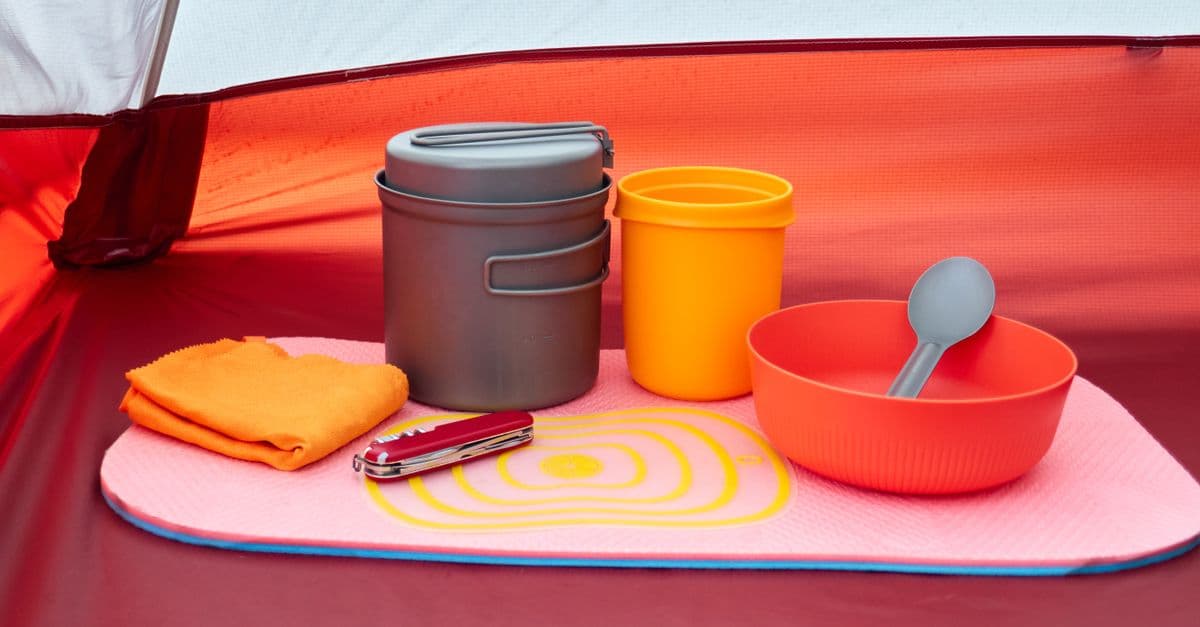 Anker SOLIX C300 Anker SOLIX C300 | Best for a night of blanket heat | 288Wh 9.1 lb | Check price |
| 2 |  Jackery Explorer 300 v2 Jackery Explorer 300 v2 | Lightest option, with published cycle life | 288Wh 8.2 lb | Check price |
| 3 |  Jackery Explorer 1000 v2 Jackery Explorer 1000 v2 | Best for several nights, or a 120V blanket | 1,070Wh 23.8 lb | Check price |
Heating a person is the one heating job a portable battery does well, and it is worth understanding why. A space heater warms the air in a room, loses most of it to the walls and the ceiling, and needs 1,500W to do it. A blanket warms you directly through conduction, with a few inches of travel and nothing in between, which is why it does the same subjective job for a fiftieth of the power. What size power station to run a space heater runs the other side of that comparison, and the gap is enormous.
The two kinds of blanket, and why it matters
- 12V heated blankets are designed for cars, vans and boats. They plug into a 12V socket, commonly draw 40-60W on high, and run from a power station's DC output with no inverter in the path. This is the right choice if a battery is powering it.
- 120V household electric blankets are mains appliances, commonly 60-200W depending on size and setting, and they have to go through the power station's AC inverter — which adds a 15-20% conversion loss. A king-size dual-control blanket on high is the worst case here.
- Heated throws and 12V heated vests sit at the bottom of the range and are the most efficient of all, because they heat the smallest area.
Read the plate or the manual on your own blanket. The bands above are categories, and the spread within the 120V category in particular is wide — a single-size blanket on low and a king-size dual-control on high are not the same load.
The arithmetic
Most heated blankets have a thermostat or a timer, and both cut the figures above substantially — a blanket that reaches temperature and cycles behaves like a fridge rather than like a space heater. The numbers above assume continuous running, which is the pessimistic case and the right one to size against.
The sizing table
| Capacity | 12V on low, ~25W | 12V on high, ~50W | 120V via inverter, ~100W |
|---|---|---|---|
| 286-288Wh | About 1.4 nights | Under 1 night | Under half a night |
| 1,024-1,152Wh | About 5 nights | 2.5 nights | About 1 night |
| 2,048Wh | About 10 nights | 5 nights | About 2 nights |
| 3,840Wh | About 19 nights | 9.5 nights | About 3.5 nights |
The practical conclusion: a 288Wh unit and a 12V blanket on low is a working combination for a weekend, and it weighs about 9 lb. The same unit with a 120V blanket on high will not see you through one night. The blanket decides this purchase far more than the battery does.
Where this fits in a real trip
A blanket is almost never the only load. In a van the 12V fridge is usually the biggest line at 400-550Wh a day — what size power station for a 12V fridge has that arithmetic — and a blanket on high can be the second biggest, ahead of lights, phones, a water pump and, surprisingly, a diesel heater.
That comparison is worth stating plainly, because it is counter-intuitive: a diesel air heater uses only a few watts of electricity for its fan and pump, so a 12V blanket on high can draw more electricity overnight than a heater that is warming the entire van. If your build has a fuel heater, use it for the space and skip the blanket.
Where a blanket wins outright is anywhere there is no heater: a tent, a car, a boat berth, an ice shelter, or a house during a cold outage. Best power station for ice fishing and best power station for tent camping both size for exactly that case.
Cold weather cuts into this
The night you want a blanket is the night the battery performs worst. A cold lithium cell has higher internal resistance and gives up fewer usable watt-hours than its rating, so plan for less than the table above in genuinely cold conditions, and keep the unit inside the tent, van or shelter rather than outside it. Charging below freezing is blocked by every unit here, which is protection rather than a fault. Power stations in cold weather covers both effects.
Four ways to make it cheaper
- Buy the 12V version. No inverter in the path, no 15-20% conversion loss, and the appliance itself is usually designed to draw less.
- Use the low setting with a timer. Pre-heating the bed for twenty minutes and then running on low is the standard trick, and it roughly halves the night's draw.
- Heat the bed, not the room. A blanket plus a good sleeping bag beats any battery-powered attempt to warm the air.
- Insulate the power station too. Keeping the unit warm is worth real watt-hours on a cold night, and it costs nothing.
What we have not done
We have not metered an electric blanket of either type. The 40-60W and 60-200W bands are appliance categories to be replaced by the figure on your own plate, and every calculation above is written out so you can substitute it. Every power-station figure is the manufacturer's published specification, linked below. How we choose.
The picks in full
1. Best for a night of blanket heat
Anker SOLIX C300
- 288Wh
- LFP (LiFePO4)
- 300W continuous / 600W surge
- 9.1 lb
- 100W
- 80% in 50 min
- 5 years
288Wh at 9.1 lb is the right size for a 12V blanket on low, and the 120W car socket is the port you will actually use — running the blanket on DC avoids the inverter loss entirely.
Anker publishes 300W continuous with a 600W SurgePad, four USB-C ports up to 140W, an 80% recharge in 50 minutes, a 10 ms UPS switchover and 25dB at 3.3 ft. The quiet figure matters for something running beside your head all night.
Anker publishes no cycle-life rating and no dimensions for this model. And 288Wh will not cover a 120V household blanket on high for a full night, which is the case where you want the 1kWh class.
Reasons to buy
- 288Wh covers a 12V blanket on low overnight
- 120W car socket for DC running
- 9.1 lb; 25dB at 3.3 ft
- 80% recharge in 50 minutes
- 5-year warranty
Reasons to avoid
- No cycle-life rating published
- Not enough for a 120V blanket on high
- 100W maximum solar input
- No published dimensions
Buy it if: a 12V blanket on low, plus phones and a light.
Skip it if: you are running a household blanket through the inverter.
2. Lightest option, with published cycle life
Jackery Explorer 300 v2
- 288Wh
- LiFePO4 (LFP)
- 300W continuous / 600W surge
- 8.2 lb
- 100W
- 4,000+ cycles
- 80% in about 1 hr
- 5 years (with registration)
About 8.2 lb for 288Wh is the lightest unit in this site's registry, and Jackery publishes 4,000+ cycles for it — a documented longevity figure where Anker publishes none at the same capacity.
Jackery publishes 300W continuous with a 600W surge, two AC outlets, a 100W USB-C, a 12V car socket, 80% charge in about an hour and a 5-year warranty with registration.
Jackery publishes no UPS switchover figure and no dimensions for this model, and the 8.2 lb weight comes from authorised-retailer listings rather than Jackery's own spec sheet. 100W of solar input is the ceiling.
Reasons to buy
- About 8.2 lb — lightest in the registry
- 4,000+ cycles published
- 80% charge in about an hour
- Two AC outlets plus a 12V socket
- 5-year warranty with registration
Reasons to avoid
- Weight figure is a retailer figure, not Jackery's spec sheet
- No UPS switchover published
- 100W solar input
- 288Wh total
Buy it if: the lightest thing that runs a blanket for a night.
Skip it if: you want a published switchover figure.
3. Best for several nights, or a 120V blanket
Jackery Explorer 1000 v2
- 1,070Wh
- LiFePO4 (LFP)
- 1,500W continuous / 3,000W surge
- 23.8 lb
- 400W
- 4,000 cycles to 70% capacity
- 1.7 hr wall; 1 hr emergency charge via app
- 5 years (with registration)
1,070Wh covers about five nights of a 12V blanket on low, two and a half on high, or roughly one full night of a 120V household blanket through the inverter. If the blanket is a mains appliance, this is the entry point.
23.8 lb at 45.0Wh per pound is the best weight efficiency on this site, and Jackery publishes 1,500W continuous, a 12V car port at 10A, 1.7 hours to full from the wall, a sub-20 ms switchover and below 22 decibels in silent mode.
400W of solar input is the lowest in its class, 4,000 cycles are quoted to 70% rather than 80%, and it does not expand.
Reasons to buy
- About five nights of a 12V blanket on low
- Runs a 120V blanket for a full night
- 45.0Wh per pound — best on this site
- 12V car port at 10A
- Below 22 dB in silent mode
Reasons to avoid
- 4,000 cycles quoted to 70%, not 80%
- 400W solar input
- Not expandable
- 23.8 lb is a lot for a blanket alone
Buy it if: a long trip, or a household blanket on battery.
Skip it if: a 12V blanket on low is the whole requirement.
Questions