Best Power Station for a Pellet Grill
The igniter is the only hard part. Get the surge rating right and a 288Wh battery will smoke a brisket overnight.

At a glance
Quick picks
Tap any row to jump to the full write-up. Weight is a column here because it is the spec that decides whether you actually carry the thing.
| # | Product | Best for | Capacity · Weight | Price |
|---|---|---|---|---|
| 1 | 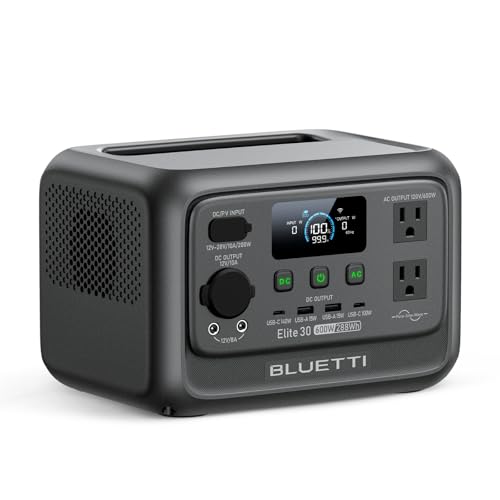 BLUETTI Elite 30 V2 | Best for a single cook | 288Wh 9.5 lb | $289.99 · View on Amazon |
| 2 | 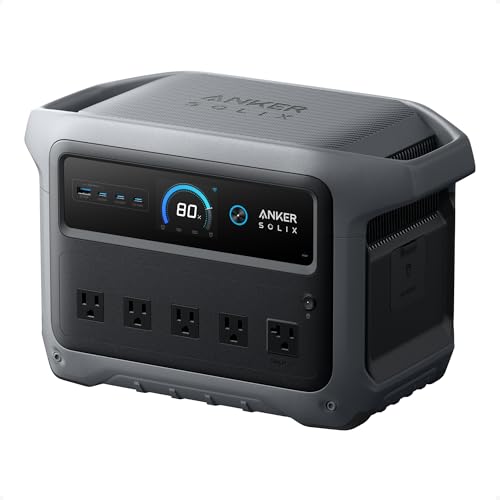 Anker SOLIX C1000 Gen 2 | Best for an overnight cook | 1,024Wh 24.9 lb | $529.99 · View on Amazon |
| 3 | 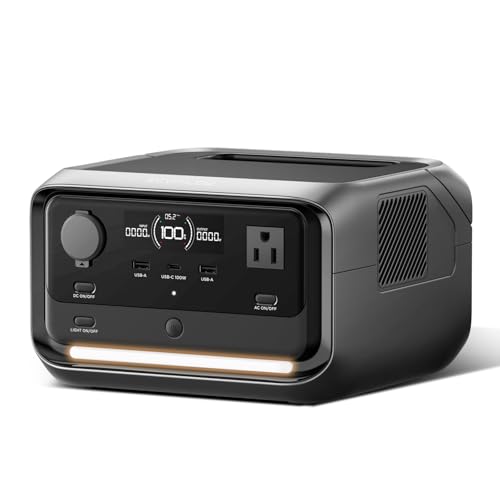 EcoFlow RIVER 3 Plus | Best outlet count for a crowded table | 286Wh 10.4 lb | Check price on Amazon |
| 4 | 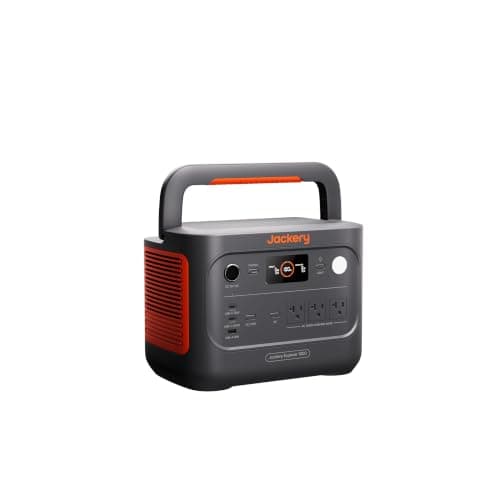 Jackery Explorer 1000 v2 | Best weight-to-cook-time ratio | 1,070Wh 23.8 lb | $559.00 · View on Amazon |
A pellet grill is an easy load with one difficult moment. For the first few minutes the hot rod igniter draws a burst — commonly in the 200-500W band, with some larger grills published higher — and then the grill drops to a fan, an auger motor and a controller, which together usually sit somewhere in the 40-60W band for the rest of the cook. That shape is unusual: it means the specification that decides your purchase is the surge rating, not the capacity, and a small unit with a big inverter beats a big unit with a small one.
Those are nameplate bands, not a figure for your grill. Read the plate — on a pellet grill it is usually on the back of the hopper or underneath the controller, and it will state the amps or watts the grill draws. Multiply amps by 120 to get watts. Every calculation on this page uses your number, not ours.
What a cook actually costs, in watt-hours
Substitute your own plate figure and your own cook length into those four lines. If the total comes out above about 80% of a unit's rated capacity, step up a size — the last 20% of any lithium battery is the part you should not be planning around.
The four, side by side
| Unit | Battery | Continuous | Surge | Weight | AC outlets | Approx. cook time |
|---|---|---|---|---|---|---|
| BLUETTI Elite 30 V2 | 288Wh | 600W | 1,500W | 9.5 lb | Not published | About 5 hr |
| EcoFlow RIVER 3 Plus | 286Wh | 600W | 1,200W | 10.4 lb | 3 | About 5 hr |
| Anker SOLIX C1000 Gen 2 | 1,024Wh | 2,000W | 3,000W | 24.9 lb | 2 | About 16 hr |
| Jackery Explorer 1000 v2 | 1,070Wh | 1,500W | 3,000W | 23.8 lb | 2 | About 17 hr |
Three mistakes that cost people a cook
- Sizing on capacity instead of surge. A 2,000Wh unit with a 1,000W inverter can fail to light a grill that a 288Wh unit with a 1,500W surge lights without noticing. Check the surge figure first, always.
- Forgetting the startup fan cycle. Most pellet grills run the fan hard for several minutes after ignition to establish the fire. That is a second, smaller spike, and a unit that is marginal on the igniter will often trip here instead.
- Using a long, thin extension cord. Voltage drop across a cheap 16-gauge cord at the end of a 50 ft run is a real effect, and it makes the igniter draw more current for longer. Keep the unit near the grill and use the shortest 12- or 14-gauge cord that reaches.
Pellet grills at a tailgate, specifically
This is the single best argument for a battery over a generator in a stadium lot. A lot of venues restrict or ban fuel generators outright, and the ones that allow them put them a long way from the tailgate. A power station has no exhaust, makes no noise and sits under the table — best generator for tailgating covers the rules problem in detail, and how to power a tailgate adds up a whole setup rather than just the grill.
One thing to rule out before you shop: a flat-top electric griddle is not a pellet grill and the arithmetic is nothing alike. A griddle is a 1,500W heating element with no duty cycle, and it will empty any unit on this page in well under an hour. If a griddle is on your list, read what size power station to run an air fryer — it is the same problem with a different box.
Running one on solar
A pellet grill is one of the few cooking loads a panel can genuinely keep up with, because the steady draw is smaller than a single panel's output in reasonable sun. A 200W panel in good conditions outpaces a 50W grill draw with room to spare, which in practice means an indefinite cook. How much solar input do you need covers the realistic-harvest arithmetic, and best portable solar panels for power stations has the panel picks.
The picks in full
1. Best for a single cook
BLUETTI Elite 30 V2
- 288Wh
- LiFePO4 (automotive-grade)
- 600W continuous / 1,500W surge
- 9.5 lb
- 200W
- Over 3,000 cycles; 10-year lifespan
- Full in 70 min
- 5 years
This is the unit that makes the point of the whole page. 288Wh is a small battery, but BLUETTI pairs it with 600W continuous and a 1,500W lifting figure — double the output of every other unit in its capacity class — and output is what a pellet grill actually tests. The igniter rod draws its burst for the first few minutes and then the grill settles to a fan, an auger and a controller.
BLUETTI publishes 288Wh, 600W continuous, a 1,500W surge, a 70-minute full recharge, a UPS switchover of 10 ms or less, 200W of solar input, over 3,000 cycles with a stated 10-year lifespan, nine output ports and a 5-year warranty. At 9.5 lb it goes in the same hand as the pellet bag.
288Wh is the honest limit. On a published 40-60W steady draw that is roughly 5-7 hours of cooking after ignition, which covers chicken, ribs and a tailgate but not an overnight brisket. BLUETTI publishes no dimensions and no cycle-retention threshold for this model, and it does not expand.
Reasons to buy
- 600W continuous, 1,500W surge from 288Wh
- 9.5 lb — carries with one hand
- Full recharge in 70 minutes
- 10 ms or less switchover
- Over 3,000 cycles; 5-year warranty
Reasons to avoid
- 288Wh is 5-7 hours of cooking, not overnight
- No published dimensions
- Not expandable
- 200W solar input
Buy it if: a tailgate or an afternoon cook, carried in one hand.
Skip it if: the cook runs past about six hours.
2. Best for an overnight cook
Anker SOLIX C1000 Gen 2
- 1,024Wh
- LiFePO4 (InfiniPower LFP)
- 2,000W continuous / 3,000W surge
- 24.9 lb
- 600W
- 80% capacity after 4,000 cycles
- Full in 49 min (UltraFast, 1,600W max input)
- 5 years
1,024Wh behind a 2,000W inverter with a 3,000W surge. The surge rating means no igniter on any consumer pellet grill is going to trouble it, and the capacity means a long cook is simply not a constraint: at a 40-60W steady draw you are looking at something in the region of 16-24 hours of smoking from one charge, which is the whole brisket and then breakfast.
Anker publishes a full recharge in 49 minutes at 1,600W input, a 10 ms switchover, 80% capacity after 4,000 cycles, a 5-year warranty and dimensions of 15.12 x 8.19 x 9.61 in. The 49-minute recharge is genuinely useful here — a grill-out on Saturday and another on Sunday needs no planning at all.
24.9 lb and two AC outlets. Two outlets is tight if the grill shares the unit with a slow cooker and a set of lights, which at a tailgate it usually does. 600W of solar input is mid-pack.
Reasons to buy
- 2,000W continuous, 3,000W surge
- 1,024Wh — a full overnight cook
- Full recharge in 49 minutes
- 80% capacity after 4,000 cycles
- 10 ms UPS switchover
Reasons to avoid
- 24.9 lb
- Only two AC outlets
- Not expandable
- 600W solar input
Buy it if: long cooks, or a grill that shares the unit with real appliances.
Skip it if: you want the lightest thing that will do the job.
3. Best outlet count for a crowded table
EcoFlow RIVER 3 Plus
- 286Wh
- LiFePO4
- 600W continuous / 1,200W surge
- 10.4 lb
- 220W
- 3,000 cycles to 80% capacity
- 0-100% in 60 min
- Not published on the US product page
286Wh and 600W continuous with a 1,200W surge, in a 10.4 lb box measuring 9.2 x 9.1 x 5.8 in — and critically, three AC outlets rather than the one or two that small units usually give you. At a tailgate the grill is never the only thing plugged in, and a third socket for a speaker or a string of lights is worth more than another 100Wh of battery.
EcoFlow publishes a 0-100% recharge in 60 minutes, 220W of solar input, a 100W USB-C port, 3,000 cycles to 80% capacity, and expansion to 858Wh with a wire-free extra battery. That expansion path is the only one in this capacity class, and it turns a 5-hour unit into a 15-hour one without a new purchase decision.
The 1,200W surge is the lowest of the four and the one figure to check against your grill's plate before buying. EcoFlow also publishes no warranty term for this model on its US product page, which is the real gap in the sheet.
Reasons to buy
- Three AC outlets from a 10.4 lb unit
- 600W continuous, 1,200W surge
- Expands to 858Wh wire-free
- 0-100% in 60 minutes
- 3,000 cycles to 80%
Reasons to avoid
- No warranty term published on EcoFlow's US page
- 1,200W surge — the lowest here
- 286Wh before expansion
- 27.5Wh per pound
Buy it if: the grill shares the unit with speakers and lights.
Skip it if: your grill's plate shows a big igniter draw.
4. Best weight-to-cook-time ratio
Jackery Explorer 1000 v2
- 1,070Wh
- LiFePO4 (LFP)
- 1,500W continuous / 3,000W surge
- 23.8 lb
- 400W
- 4,000 cycles to 70% capacity
- 1.7 hr wall; 1 hr emergency charge via app
- 5 years (with registration)
1,070Wh at 23.8 lb is 45.0Wh per pound, the best ratio in this site's registry, and it is the unit to take if the grill is going somewhere you have to walk. 1,500W continuous with a 3,000W surge clears any pellet grill igniter with room spare, and the capacity is the same overnight-cook territory as the Anker.
Jackery publishes 4,000 cycles to 70% capacity, a 1.7-hour wall recharge, an emergency one-hour charge via the app, below 22 decibels in silent mode, a switchover under 20 ms and a 5-year warranty with registration. Below 22 dB matters more than you would think at a campsite where the grill is already the loudest thing running.
400W of solar input is the lowest here, it does not expand, and the 4,000-cycle figure is quoted to 70% retention rather than the stricter 80% the others use. Two AC outlets again.
Reasons to buy
- 45.0Wh per pound — best on this site
- 1,070Wh for a full overnight cook
- Below 22 dB in silent mode
- 3,000W surge
- Full wall recharge in 1.7 hours
Reasons to avoid
- 400W solar input
- Cycle life quoted to 70%, not 80%
- Two AC outlets
- Not expandable
Buy it if: the grill and the battery both get carried.
Skip it if: you need a fast solar refill between cooks.
Questions