What Size Power Station to Run a Coffee Maker?
Coffee is the cheapest hot thing you can make off a battery and the one most likely to be defeated by an output rating. Two numbers settle it.
The short answer
You need 1,000-1,500W of continuous output, and capacity is barely a consideration: one brew is about 100Wh. A standard drip coffee maker draws 1,000-1,500W while heating but only for a few minutes, so a 1kWh unit makes roughly nine cups' worth of brews. The trap is output: a 300W or 600W unit will not run a drip machine at all, and a pod machine or espresso maker can draw more than a drip one.
Heating water is the single most energy-intensive thing most people do with a portable battery, and coffee is the version of it that people are least willing to give up. The good news is that a coffee maker only heats a very small amount of water for a very short time, which makes it one of the few heating appliances that is genuinely practical off a battery.
Output is the constraint, not capacity
A drip coffee maker's draw comes almost entirely from its heating element, and heating elements draw their full rating. A machine rated 1,200W draws 1,200W for the whole heating phase — there is no duty cycle to discount and no efficiency factor to apply. That figure has to be below your power station's continuous AC output, full stop.
That is worth comparing to the rest of the kitchen, because it reframes coffee as a cheap habit rather than an expensive one. An air fryer is roughly 583Wh per 20-minute cook. An electric kettle is about 100Wh per boil. A microwave is about 60Wh for three minutes. Coffee sits at the cheap end of the heating-appliance list.
Not all coffee makers are the same load
- Drip / filter machines — typically 1,000-1,500W while heating, a few minutes per pot. The friendliest type for a battery.
- Pod machines — heat a smaller volume but often at a comparable or higher wattage, for a shorter time. Check the plate; the draw can exceed a drip machine's.
- Pump espresso machines — a heating element plus a pump, and some models include a steam boiler. The highest draw of the group and the one to verify most carefully.
- Keep-warm hot plates — a continuous 50-100W for as long as they are on. This is where the real watt-hours go, and it is entirely avoidable.
- Electric kettle plus a pour-over or French press — 1,200-1,500W for one boil at about 100Wh, and the simplest answer if your machine is too much for your unit.
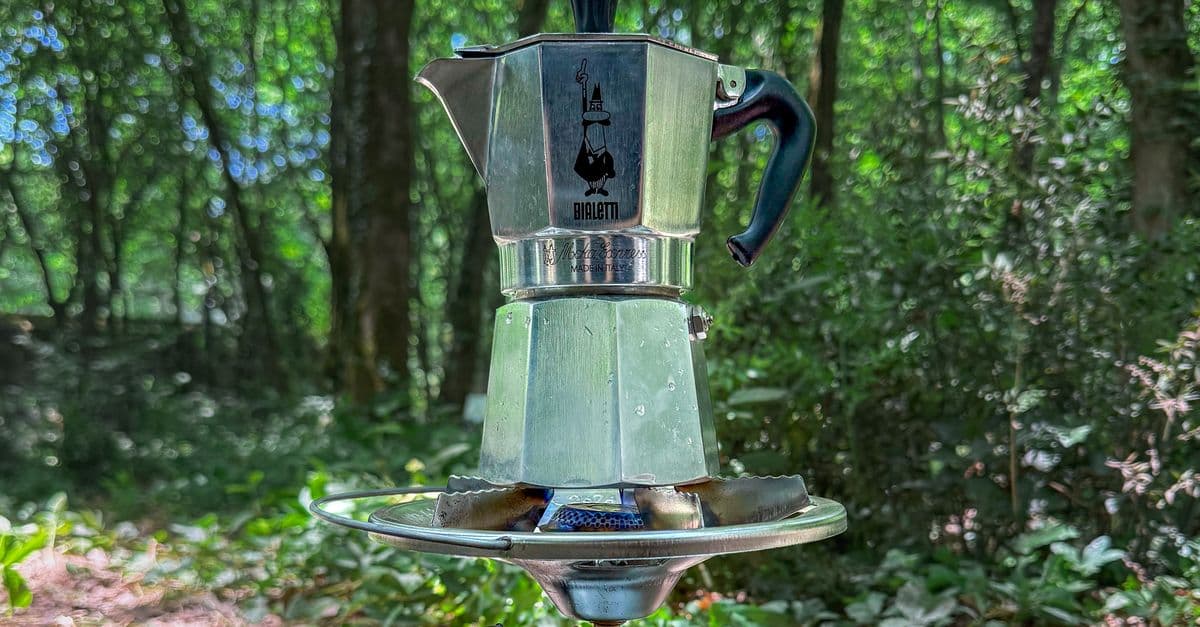
- A stovetop moka pot or percolator on gas — zero watt-hours, which is worth saying on a site that sells batteries.
Read the plate on the specific machine you own. This is the appliance where the category label tells you least, because a pod machine and a drip machine look like equivalent products and can differ by several hundred watts.
Which units make coffee
| Unit | AC continuous | 1,000W machine | 1,500W machine | Brews |
|---|---|---|---|---|
| Jackery Explorer 300 v2 | 300W | No | No | 0 |
| EcoFlow RIVER 3 Plus | 600W | No | No | 0 |
| Jackery Explorer 1000 v2 | 1,500W | Yes | At the limit | 9.1 |
| EcoFlow DELTA 3 / 3 Plus | 1,800W | Yes | Yes | 8.7 |
| Anker SOLIX C1000 | 1,800W | Yes | Yes | 9.0 |
| BLUETTI AC180 | 1,800W | Yes | Yes | 9.8 |
| Anker SOLIX C1000 Gen 2 | 2,000W | Yes | Yes | 8.7 |
| EcoFlow DELTA 2 Max | 2,400W | Yes | Yes | 17.4 |
The small units are out, and this is the honest limit of the lightweight class: a 286Wh or 288Wh box will charge your phone for a week and will not make you one cup of coffee. What can a 1000W power station run draws that boundary across the whole appliance list, and it is the single most useful thing to read before buying small.
The cheaper way to have coffee off a battery
If your machine's plate is above your unit's output, you do not need a bigger power station. You need a kettle and a pour-over cone, or a French press. An electric kettle at 1,200-1,500W is about 100Wh per boil — the same energy as the drip machine, through a simpler appliance, with no warming plate to forget about.
And if the unit you own is in the 300Wh class, the answer is gas. A moka pot or a percolator on a camping stove costs nothing electrically and weighs almost nothing. We would rather say that than sell you a 24.9 lb battery to make a cup of coffee you could make on a stove you already own.
What to buy if coffee is part of the plan
If coffee is the only heating appliance on your list, the Jackery Explorer 1000 v2 is the answer: 1,500W of output clears a standard drip machine, 1,070Wh is about nine brews, and 23.8 lb is the lightest unit on this site that can do it. If a 1,500W machine is involved, step up to an 1,800W unit for headroom.
If coffee is one item on a list that also includes a fryer, a microwave or a kettle, output stops being about coffee and what size power station do I need is the page that assembles the whole thing. For morning coffee specifically on a vehicle-based trip, best power station for car camping is the roundup that assumes exactly this use.
The picks in full
1. Lightest unit that makes coffee
Jackery Explorer 1000 v2
- 1,070Wh
- LiFePO4 (LFP)
- 1,500W continuous / 3,000W surge
- 23.8 lb
- 400W
- 4,000 cycles to 70% capacity
- 1.7 hr wall; 1 hr emergency charge via app
- 5 years (with registration)
1,500W of continuous output clears a standard 1,000-1,200W drip machine, and 1,070Wh is about nine brews after inverter losses. At 23.8 lb and 45.0Wh per pound, nothing lighter on this site can do it.
1.7 hours to full from the wall means a single overnight charge covers a long weekend of mornings, and below 22 decibels in silent mode matters at 6am on a campsite.
A 1,500W machine puts this unit at its rating with no headroom, and inverters derate as they warm. If your plate says 1,500W, buy 1,800W instead.
Reasons to buy
- 1,500W clears a standard drip machine
- 1,070Wh — about nine brews
- 23.8 lb, 45.0Wh per pound
- Below 22 dB in silent mode
- 1.7 hr wall charge; 5-year warranty with registration
Reasons to avoid
- At the limit on a 1,500W machine
- Two AC outlets
- Not expandable
- 400W solar input
Buy it if: morning coffee at the lightest workable weight.
Skip it if: your machine's plate reads 1,500W or more.
2. Best headroom for a pod or espresso machine
Anker SOLIX C1000 Gen 2
- 1,024Wh
- LiFePO4 (InfiniPower LFP)
- 2,000W continuous / 3,000W surge
- 24.9 lb
- 600W
- 80% capacity after 4,000 cycles
- Full in 49 min (UltraFast, 1,600W max input)
- 5 years
2,000W continuous with a 3,000W surge covers the high end of the coffee-maker range, including pod and pump espresso machines whose draw exceeds a drip model's.
1,024Wh is about 8.7 brews, and a 49-minute full recharge means a socket at lunchtime resets the whole day.
24.9 lb is 1.1 lb more than the Jackery for 46Wh less battery. You are paying that in weight purely for output headroom, which is the right trade only if your machine needs it.
Reasons to buy
- 2,000W continuous, 3,000W surge
- Handles pod and espresso machine draws
- 24.9 lb — 41.1Wh per pound
- Full recharge in 49 minutes
- 10 ms UPS switchover
Reasons to avoid
- 1,024Wh — 8.7 brews, slightly fewer than the Jackery
- Two AC outlets
- Not expandable
- Heavier than the Jackery for less capacity
Buy it if: a machine whose plate reads above 1,500W.
Skip it if: you run a simple drip machine and want minimum weight.
Questions