Best Power Station and Solar Panel Combo
Buying the pair is cheaper than buying twice, but only if the panel wattage matches the input the station publishes. Here is how the four combinations add up.
At a glance
Quick picks
Tap any row to jump to the full write-up. Weight is a column here because it is the spec that decides whether you actually carry the thing.
| # | Product | Best for | Capacity · Weight | Price |
|---|---|---|---|---|
| 1 | 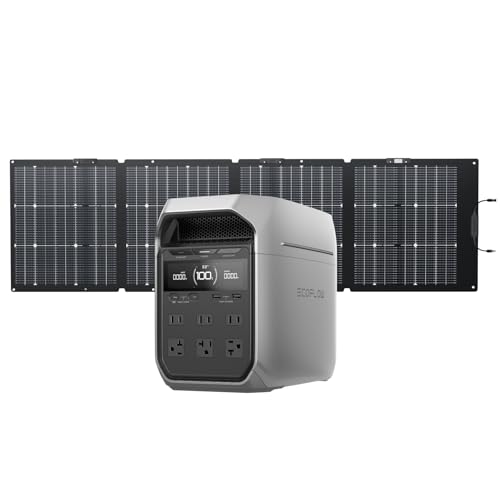 EcoFlow DELTA 3 Plus | Highest solar ceiling in its class | 1,024Wh 27.6 lb | Check price on Amazon |
| 2 | 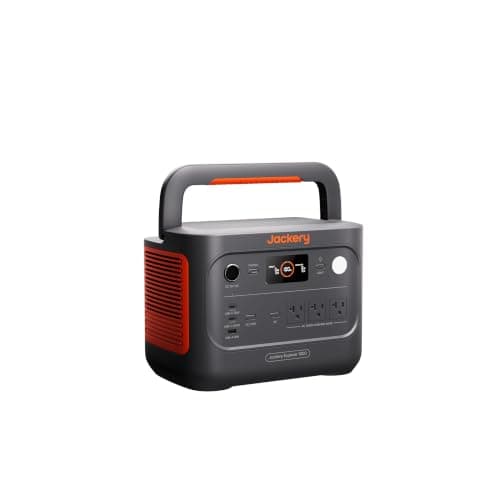 Jackery Explorer 1000 v2 | Cleanest exact-match pairing | 1,070Wh 23.8 lb | $559.00 · View on Amazon |
| 3 | 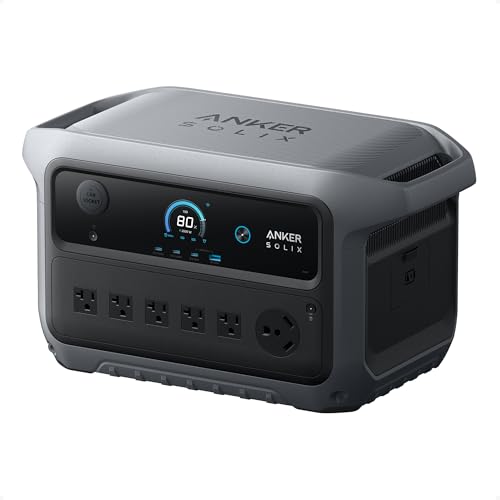 Anker SOLIX C2000 Gen 2 | Best capacity-to-input balance | 2,048Wh 41.7 lb | $1,499.00 · View on Amazon |
| 4 | 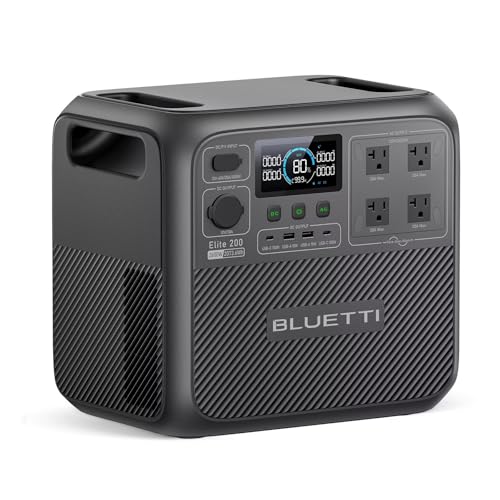 BLUETTI Elite 200 V2 | Most solar input per watt-hour stored | 2,074Wh 53.4 lb | $898.99 · View on Amazon |
A station-and-panel combination only works if three things line up: the panel's total wattage sits at or under the station's published maximum solar input, the connector matches, and the panel's voltage is inside the station's accepted range. Get the first wrong and you have paid for watts the station will refuse. Get the second or third wrong and nothing charges at all. Here is each pairing in our registry with the arithmetic done.
Match the panel to the published input, not to the battery
The instinct is to size the panel against the battery - a 1kWh battery, so a 1kW of panel. That is the wrong number. Every station publishes a maximum solar input, and that figure is set by its charge controller, not by its cells. The Jackery Explorer 1000 v2 publishes 400W. Point 800W of panel at it and 400W of that panel is doing nothing.
| Station | Capacity Wh | Max solar W | Fills with |
|---|---|---|---|
| EcoFlow DELTA 3 Plus | 1,024 | 1,000 | 4x EcoFlow 220W (880W) |
| BLUETTI Elite 200 V2 | 2,074 | 1,000 | Four 220-250W panels |
| EcoFlow DELTA 2 Max | 2,048 | 1,000 | 4x EcoFlow 220W (880W) |
| Anker SOLIX C2000 Gen 2 | 2,048 | 800 | Three 220-250W panels |
| Anker SOLIX C1000 Gen 2 | 1,024 | 600 | 2x 220W + 1x 100W (540W) |
| Anker SOLIX C1000 | 1,056 | 600 | 2x 220W + 1x 100W (540W) |
| EcoFlow DELTA 3 | 1,024 | 500 | 2x EcoFlow 220W (440W) |
| BLUETTI AC180 | 1,152 | 500 | 2x 220-250W panels |
| Jackery Explorer 1000 v2 | 1,070 | 400 | 2x SolarSaga 200W (400W) |
| EcoFlow RIVER 3 Plus | 286 | 220 | 1x EcoFlow 220W |
| BLUETTI Elite 30 V2 | 288 | 200 | 2x SolarSaga 100 Air (200W) |
| Anker SOLIX C300 | 288 | 100 | 1x SolarSaga 100 Air |
Two stations are missing from that table on purpose. Jackery publishes no maximum solar input for the Explorer 300 or for the Explorer 2000 v2, and EcoFlow publishes none for the DELTA Pro 3 in its overview. Those are blanks in the manufacturers' own specifications and we will not fill them in - which also means we cannot responsibly recommend a panel pairing for any of the three.
What a panel actually delivers
A panel's rating is measured under standard test conditions: a specific irradiance, a specific cell temperature, a specific spectrum. Outdoors, in real sun, at a real angle, on a real day, you get less - and the shortfall is not small. The convention this site uses is 75% of nameplate as a good-conditions working figure, which is deliberately conservative, and you should expect well below that in haze, through glass, in winter, or with the panel lying flat instead of aimed.
The connector is where combinations go wrong
Jackery panels terminate in Jackery's own DC connector. The EcoFlow 220W Bifacial uses photovoltaic MC4-style connectors. Anker publishes an XT60i solar input on the C1000 Gen 2 and the C2000 Gen 2. These are not interchangeable without an adapter lead, and an adapter has to be right about more than the plug shape - the station publishes an acceptable input voltage window, and a panel outside it will either not charge or charge at a fraction of its rating.
This is the practical argument for buying the pair from one brand even when a mixed set looks cheaper. It is also why our registry carries panels from two brands only: we will not recommend a pairing we cannot verify the connector on. Best portable solar panels for power stations covers the panels themselves in detail, and how much solar input do you need works the sizing from the other direction.
Is a bundle actually cheaper?
Often, and that is the honest reason the combination exists as a product: manufacturers discount the kit against the parts, and a kit arrives with the correct lead in the box. What a bundle also does is decide your panel wattage for you, frequently at the low end - a 1kWh station bundled with a single 100W panel will take most of two good days to fill, which is not what the buyer imagined.
So read the bundle's panel wattage against the station's published input ceiling before you treat the discount as a saving. A kit at half the input ceiling is fine if you plan to add panels; it is a disappointment if you expected the kit to be the finished system. And if the word 'solar generator' is what brought you here, portable power station vs solar generator clears up what is mostly a naming problem - a solar generator is a power station with a panel in the box.
The picks in full
1. Highest solar ceiling in its class
EcoFlow DELTA 3 Plus
- 1,024Wh
- LFP (LiFePO4)
- 1,800W continuous / 3,600W surge
- 27.6 lb
- 1000W
- 4,000 cycles to 80%+ capacity
- Full in 56 min (1,500W AC input)
- 5 years
1,000W of maximum solar input, published as two separate 500W MPPT inputs. In the 1kWh class nothing else is close, and the number matters in a specific way: a 1,024Wh battery behind a 1,000W input can go from empty to full inside a single good solar day with panels you can actually fold up and carry.
Pair it with two EcoFlow 220W Bifacial panels and you are at 440W of nameplate into a 1,000W ceiling - less than half committed, with room for two more panels later. EcoFlow publishes 220W on the front face and 175W on the rear, 25% cell efficiency, an IP68 rating, 15.4 lb per panel and unfolded dimensions of 24.2 x 84.8 x 1.0 in.
EcoFlow publishes 1,800W continuous with a 3,600W surge, 2,200W available through X-Boost, a 56-minute wall recharge at 1,500W, a switchover under 10 ms, 4,000 cycles to 80%+ capacity, a 5-year warranty, six AC outlets and expansion to 5 kWh. 27.6 lb. The plain DELTA 3 is the same box with a 500W solar ceiling, so if you will never run panels, buy that and save the difference.
Reasons to buy
- 1,000W solar input across two MPPT inputs
- 1,024Wh, expandable to 5 kWh
- 1,800W continuous, six AC outlets
- 4,000 cycles to 80%+; 5-year warranty
- Under 10 ms switchover
Reasons to avoid
- 27.6 lb
- Needs two or more panels to use the ceiling
- Panels are a separate purchase
Buy it if: a solar setup you intend to grow.
Skip it if: you charge from the wall - buy the plain DELTA 3.
2. Cleanest exact-match pairing
Jackery Explorer 1000 v2
- 1,070Wh
- LiFePO4 (LFP)
- 1,500W continuous / 3,000W surge
- 23.8 lb
- 400W
- 4,000 cycles to 70% capacity
- 1.7 hr wall; 1 hr emergency charge via app
- 5 years (with registration)
400W of published maximum solar input, which two Jackery SolarSaga 200W panels fill exactly. That is the tidiest arithmetic on this page: no wasted panel, no unused input, and one brand's connector on both ends so nothing needs an adapter.
Jackery publishes 1,070Wh of LiFePO4, 1,500W continuous with a 3,000W surge, 23.8 lb - the lightest 1kWh unit in our registry - a 1.7-hour wall recharge, a switchover under 20 ms, 4,000 cycles to 70% capacity, a 5-year warranty with registration, and dimensions of 12.87 x 8.82 x 9.72 in.
The SolarSaga 200W is bifacial with an IP68 rating. Jackery does not publish a weight or an efficiency figure for it on the current listing, which is a real gap on a panel you are going to carry, and we leave both blank rather than guess. If you want one lighter panel instead of two heavy ones, the SolarSaga 100 Air is 7.1 lb at 100W with 23% dual-sided PERC cells.
Reasons to buy
- 400W input, filled exactly by two 200W panels
- Same-brand connectors throughout
- 1,070Wh at 23.8 lb - lightest in its class
- 4,000 cycles; 5-year warranty with registration
- Published dimensions
Reasons to avoid
- 400W ceiling is the lowest here
- No published panel weight or efficiency
- Not expandable
Buy it if: one brand, one connector, no adapters.
Skip it if: you want to grow past 400W of panel.
3. Best capacity-to-input balance
Anker SOLIX C2000 Gen 2
- 2,048Wh
- LFP (LiFePO4)
- 2,400W continuous / 4,000W surge
- 41.7 lb
- 800W
- 4,000 cycles to 80% capacity
- 100% in 58 min (2,600W AC + solar)
- 5 years
800W of maximum solar input through an XT-60i port, behind 2,048Wh. The ratio is what recommends it: 800W into 2,048Wh refills the whole pack in a good day, which is the point at which a solar setup stops being a top-up and starts being your supply.
Anker publishes 2,400W continuous with a 4,000W peak, 41.7 lb, a full recharge in 58 minutes when AC and solar run together at 2,600W, a 10 ms UPS switchover, 4,000 cycles to 80% capacity, dimensions of 18.1 x 9.8 x 10.1 in, four AC outlets including a TT-30R, and expansion to 4 kWh with the BP2000 Gen 2.
The caveat is the connector. Anker publishes an XT-60i solar input and our registry carries no Anker panel, so a third-party panel needs the right lead - check the connector and the open-circuit voltage range before you buy, because a panel that is electrically fine can still be physically wrong.
Reasons to buy
- 800W solar input into 2,048Wh
- 2,400W continuous, 4,000W peak
- Full in 58 minutes; 10 ms switchover
- Four AC outlets including a TT-30R
- 4,000 cycles to 80%; expandable to 4 kWh
Reasons to avoid
- No Anker panel in our registry - check the lead
- 18.1 in wide
- 41.7 lb
Buy it if: a 2 kWh pack you intend to refill from the sun daily.
Skip it if: you want a single-brand kit out of one box.
4. Most solar input per watt-hour stored
BLUETTI Elite 200 V2
- 2,074Wh
- LiFePO4 (LFP), automotive-grade cells
- 2,600W continuous / 3,900W surge
- 53.4 lb
- 1000W
- 6,000+ cycles to 80% capacity
- Full in 1.4 hr (1,800W AC input)
- 5 years
1,000W of maximum solar input on 2,074Wh, which is the highest solar-to-capacity ratio in the 2 kWh class, and behind it the highest continuous output here at 2,600W with a 3,900W Power Lifting figure for purely resistive loads.
BLUETTI publishes 6,000+ cycles to 80% capacity - comfortably the longest cycle rating anywhere in our registry - a 1.4-hour full charge at 1,800W of AC input, a switchover of 15 ms or less, a 5-year warranty, 53.4 lb and dimensions of 13.78 x 9.84 x 12.74 in.
Two honest caveats. It is the heaviest 2 kWh unit we cover at 53.4 lb, and its expansion story is unclear: BLUETTI sells an Elite 200 V2 with a B500K pack, but its own FAQ for this model says it does not support the B80, B230 or B300. Confirm the pack with the seller before you count on expansion.
Reasons to buy
- 1,000W solar input on 2,074Wh
- 2,600W continuous - the highest here
- 6,000+ cycles to 80% capacity
- 1.4 hr full charge; 5-year warranty
- Published dimensions
Reasons to avoid
- 53.4 lb
- Expansion compatibility unclear
- 15 ms switchover rather than 10 ms
Buy it if: long-life cells and the most panel you can point at it.
Skip it if: weight is part of the decision.
Questions