Best Power Station for Home and Camping
The two jobs pull in opposite directions - capacity against weight - so a unit that does both is a compromise. These four make the compromise in the right place.

At a glance
Quick picks
Tap any row to jump to the full write-up. Weight is a column here because it is the spec that decides whether you actually carry the thing.
| # | Product | Best for | Capacity · Weight | Price |
|---|---|---|---|---|
| 1 | 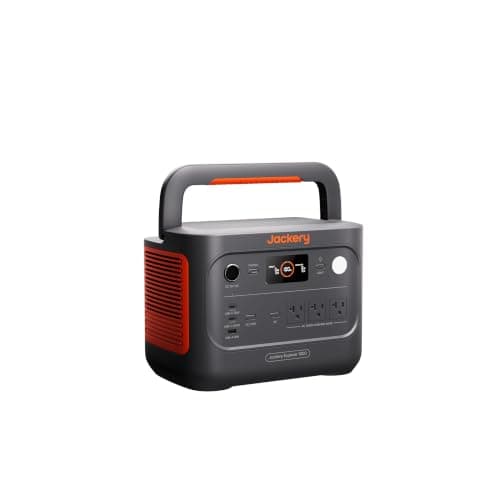 Jackery Explorer 1000 v2 | Best compromise overall | 1,070Wh 23.8 lb | $559.00 · View on Amazon |
| 2 | 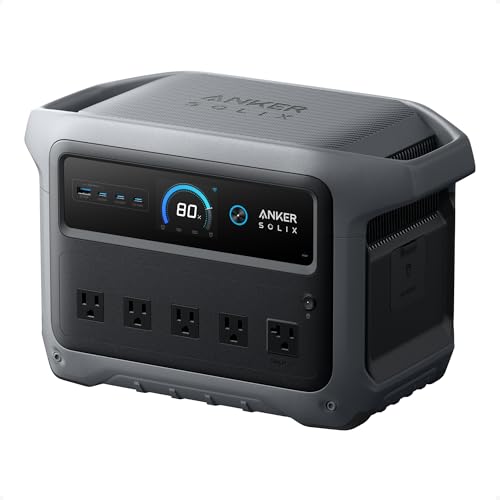 Anker SOLIX C1000 Gen 2 | Best if the home job comes first | 1,024Wh 24.9 lb | $529.99 · View on Amazon |
| 3 | 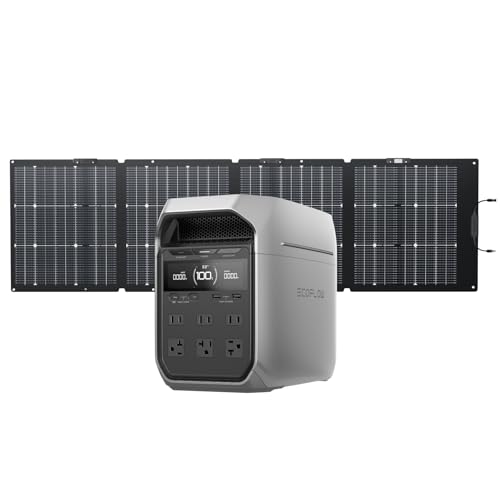 EcoFlow DELTA 3 Plus | Best if you will grow the system | 1,024Wh 27.6 lb | Check price on Amazon |
| 4 | 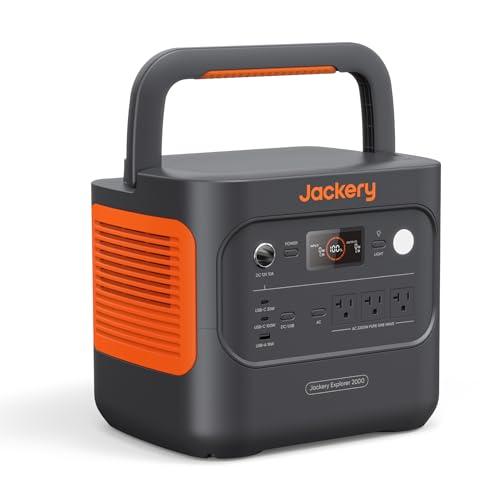 Jackery Explorer 2000 v2 | Best if the outage matters more than the carry | 2,042Wh 39.5 lb | $999.00 · View on Amazon |
The reason this is a hard purchase is that the two jobs want opposite things. Home backup wants watt-hours, a fast switchover and lots of sockets, and does not care what the box weighs. Camping wants the lightest thing that will do the job and does not care about switchover at all. So the right spec to shop on is watt-hours per pound, and the Jackery Explorer 1000 v2 leads the 1kWh class at 45Wh/lb while the Explorer 2000 v2 leads everything at 51.7Wh/lb.
Watt-hours per pound, across the registry
| Unit | Capacity Wh | Weight lb | Wh per lb |
|---|---|---|---|
| Jackery Explorer 2000 v2 | 2,042 | 39.5 | 51.7 |
| Anker SOLIX C2000 Gen 2 | 2,048 | 41.7 | 49.1 |
| Jackery Explorer 1000 v2 | 1,070 | 23.8 | 45.0 |
| Anker SOLIX C1000 | 1,056 | 28.44 | 37.1 |
| EcoFlow DELTA 2 Max | 2,048 | 50.7 | 40.4 |
| Anker SOLIX C1000 Gen 2 | 1,024 | 24.9 | 41.1 |
| BLUETTI Elite 200 V2 | 2,074 | 53.4 | 38.8 |
| EcoFlow DELTA 3 Plus | 1,024 | 27.6 | 37.1 |
| EcoFlow DELTA 3 | 1,024 | 27.6 | 37.1 |
| Jackery Explorer 300 | 293 | 7.1 | 41.3 |
| BLUETTI AC180 | 1,152 | 35.27 | 32.7 |
| Anker SOLIX C300 | 288 | 9.1 | 31.6 |
| BLUETTI Elite 30 V2 | 288 | 9.5 | 30.3 |
| EcoFlow RIVER 3 Plus | 286 | 10.4 | 27.5 |
| Anker SOLIX F3800 | 3,840 | 132.3 | 29.0 |
The column to read is the last one. It tells you which manufacturer is giving you the most energy for the weight you have to pick up, and it varies by a factor of nearly two across units people shop against each other. For a single-purpose buy it is a secondary consideration. For a dual-purpose buy it is the whole decision.
Where the two jobs genuinely conflict
- Switchover time. Only the home job needs it, and it costs nothing at a campsite - so prefer a published figure if you can get one, but do not pay a weight penalty for it.
- Outlet count. A desk wants four or more; a campsite wants two and a USB-C port. Six-outlet units are generally heavier, and a short power strip closes the gap for a few dollars.
- Expansion. Useful at home, pointless in a tent - an expansion battery is another box to carry. Buy the platform only if the home requirement is the one you expect to grow.
- Inverter size. A big inverter is what starts a fridge and what wastes energy idling on a campsite. Switch the AC output off when you are only charging devices; pass-through charging explained covers the standby question properly.
- Chemistry and cycle life. Both jobs want LiFePO4, and this is the one place the two agree completely. A 500-cycle unit used for camping twenty times a year and as a UPS every day will not last; LiFePO4 vs NMC explains why.
Sizing for both at once
The load that most often decides this is the cooler. A 12V compressor fridge running continuously is the single biggest draw most campers bring, and it is also what makes a 1kWh unit a one-night proposition rather than a two-night one. Best power station for a camping fridge has that arithmetic, and what size power station for a power outage has the home half.
When to buy two units instead
Worth saying plainly, because it is often the better answer: a 288Wh unit that lives in a camping box and a 2 kWh unit that lives under the desk is a more useful pair than one 1kWh unit trying to be both. You get a 9 lb box for trips where weight matters and a serious battery for the outage, and the small one is cheap enough that the pair is not an extravagance.
The case for one unit is simpler: one thing to charge, one thing to maintain, one thing that is always ready. If the camping is car camping - boot to picnic table - then one 1kWh unit genuinely does both jobs and the single-unit answer wins. If the camping involves carrying, buy two.
The picks in full
1. Best compromise overall
Jackery Explorer 1000 v2
- 1,070Wh
- LiFePO4 (LFP)
- 1,500W continuous / 3,000W surge
- 23.8 lb
- 400W
- 4,000 cycles to 70% capacity
- 1.7 hr wall; 1 hr emergency charge via app
- 5 years (with registration)
1,070Wh at 23.8 lb is 45 watt-hours per pound, the best ratio in the 1kWh class, and that single number is what a dual-purpose buyer should be shopping on. Home backup wants watt-hours; camping wants pounds. A unit that gives you the most of the first per unit of the second is by definition the best compromise available.
Jackery publishes 1,500W continuous with a 3,000W surge, a switchover under 20 ms, 400W of maximum solar input, a 1.7-hour wall recharge with a one-hour emergency charge through the app, 4,000 cycles to 70% capacity, a 5-year warranty with registration, below 22 decibels in quiet mode, and dimensions of 12.87 x 8.82 x 9.72 in. That is the smallest footprint in its class, which matters under a counter and in a boot.
The compromises are real and worth naming. Two AC outlets, which is thin for a home desk and fine for a campsite. 400W of solar input, the lowest in the class. Under 20 ms rather than 10 ms, which a fridge does not care about and a desktop PC might. And no expansion, so the capacity you buy is the capacity you keep.
Reasons to buy
- 1,070Wh at 23.8 lb - 45 Wh per pound
- Quiet mode published below 22 dB
- Smallest footprint in its class
- 4,000 cycles; 5-year warranty with registration
- 1.7 hr recharge, 1 hr emergency charge
Reasons to avoid
- Two AC outlets
- 400W solar input
- Under 20 ms switchover, not 10 ms
- Not expandable
Buy it if: one unit that camps often and backs up occasionally.
Skip it if: the home job involves a desktop PC that must not reboot.
2. Best if the home job comes first
Anker SOLIX C1000 Gen 2
- 1,024Wh
- LiFePO4 (InfiniPower LFP)
- 2,000W continuous / 3,000W surge
- 24.9 lb
- 600W
- 80% capacity after 4,000 cycles
- Full in 49 min (UltraFast, 1,600W max input)
- 5 years
2,000W continuous, a 3,000W surge and a published 10 ms switchover from 24.9 lb. For a household whose main reason to buy is the outage - a fridge restart, a desk that stays up, a kettle in the morning - this is the unit on this page with the output and the switchover to do it properly, and it still only weighs a pound more than the Jackery.
Anker publishes 1,024Wh of LFP, a full recharge in 49 minutes at 1,600W input, 600W of maximum solar input, 80% capacity after 4,000 cycles, a 5-year warranty and dimensions of 15.12 x 8.19 x 9.61 in. The 49-minute recharge is the fastest in the class and it is genuinely useful in both roles: back from a trip on Sunday, ready for Monday.
Two AC outlets again, and the inverter is the thing to watch on a camping trip - a 2,000W inverter idling has a higher standby draw than a 300W one, so switch the AC output off when you are only charging phones. Not expandable, and 15.12 inches wide is the longest footprint of the four.
Reasons to buy
- 2,000W continuous, 3,000W surge
- 10 ms published switchover
- Full recharge in 49 minutes
- 4,000 cycles to 80%; 5-year warranty
- 24.9 lb; published dimensions
Reasons to avoid
- Two AC outlets
- Not expandable
- Switch the inverter off when camping
Buy it if: a home-first buyer who also wants to take it away.
Skip it if: most of the use is a tent pad and a long carry.
3. Best if you will grow the system
EcoFlow DELTA 3 Plus
- 1,024Wh
- LFP (LiFePO4)
- 1,800W continuous / 3,600W surge
- 27.6 lb
- 1000W
- 4,000 cycles to 80%+ capacity
- Full in 56 min (1,500W AC input)
- 5 years
1,024Wh that expands to 5 kWh, with 1,000W of solar input across two MPPT inputs and six AC outlets. This is the unit for someone who suspects their requirement is going to grow - a bigger outage plan, a van conversion, panels on the roof - and would rather buy a platform than a box.
EcoFlow publishes 1,800W continuous with a 3,600W surge, 2,200W available through X-Boost, a switchover under 10 ms, a 56-minute wall recharge at 1,500W, 4,000 cycles to 80%+ capacity, a 5-year warranty and 27.6 lb. Six AC outlets is three times what the two Anker and Jackery units above offer, and for a home desk that ends the power-strip conversation.
27.6 lb is the heaviest of the three 1kWh units here, and the expansion path is a second purchase rather than a feature you get for free. If you are certain you will never add a panel, the plain DELTA 3 is the same box at a 500W solar ceiling.
Reasons to buy
- Expandable from 1 kWh to 5 kWh
- Six AC outlets
- 1,000W solar input; under 10 ms switchover
- 4,000 cycles to 80%+; 5-year warranty
- 1,800W continuous, 3,600W surge
Reasons to avoid
- 27.6 lb
- Expansion batteries cost extra
- Solar ceiling wasted if you never add panels
Buy it if: a requirement you expect to outgrow.
Skip it if: you want the cheapest honest version of this purchase.
4. Best if the outage matters more than the carry
Jackery Explorer 2000 v2
- 2,042Wh
- LiFePO4 (LFP)
- 2,200W continuous / 4,400W surge
- 39.5 lb
- 4,000 cycles to 70%+ capacity
- 1.33 hr full with Emergency Super Charge
- 3 years, extendable to 5
2,042Wh at 39.5 lb - 51.7 watt-hours per pound, which is the best capacity-to-weight ratio anywhere in our registry, including the 1kWh units. If you can live with 39.5 lb, this is the most efficient way to own 2 kWh and still put it in a car.
Jackery publishes 2,200W continuous with a 4,400W surge, 4,000 cycles to 70%+ capacity, a 1.33-hour full recharge with Emergency Super Charge, dimensions of 13.2 x 10.4 x 11.5 in and a 3-year warranty extendable to 5. The 4,400W surge is the highest on this page and it will start a compressor the 1kWh units will not.
Two blanks matter for a dual-purpose buyer: Jackery publishes no maximum solar input figure and no UPS switchover time for this model. So you cannot plan a solar refill around a published number, and you should not count on it protecting a desktop PC. Two AC outlets, and 39.5 lb is a two-handed lift.
Reasons to buy
- 2,042Wh at 39.5 lb - best Wh per pound here
- 4,400W surge, 2,200W continuous
- Full recharge in 1.33 hr
- 4,000 cycles to 70%+ capacity
- Published dimensions
Reasons to avoid
- No published solar input or switchover figure
- 39.5 lb - a two-handed lift
- Two AC outlets; 3-year base warranty
Buy it if: a serious outage plan that still travels by car.
Skip it if: you carry it further than the boot to the table.
Questions