Best Power Station for Astrophotography
The load is small and the session is long, which inverts the usual advice: capacity per pound matters less than DC output, quiet running and cold-weather behaviour.
At a glance
Quick picks
Tap any row to jump to the full write-up. Weight is a column here because it is the spec that decides whether you actually carry the thing.
| # | Product | Best for | Capacity · Weight | Price |
|---|---|---|---|---|
| 1 | 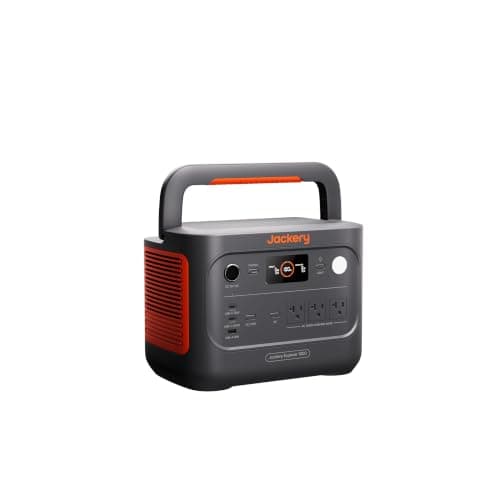 Jackery Explorer 1000 v2 | Best for a full night with dew heaters | 1,070Wh 23.8 lb | $559.00 · View on Amazon |
| 2 |  Anker SOLIX C300 | Best for a camera-and-tracker setup | 288Wh 9.1 lb | Check price on Amazon |
| 3 | 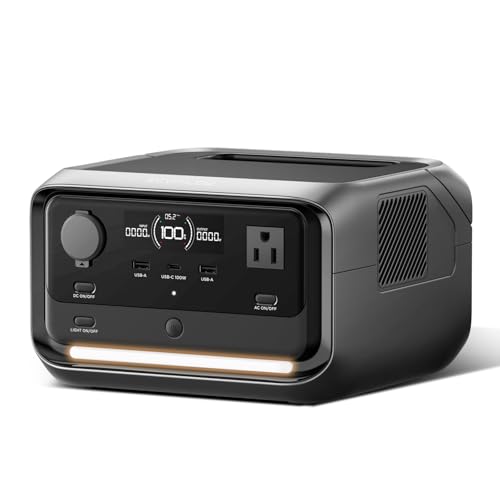 EcoFlow RIVER 3 Plus | Best small unit that grows into a long session | 286Wh 10.4 lb | Check price on Amazon |
| 4 | 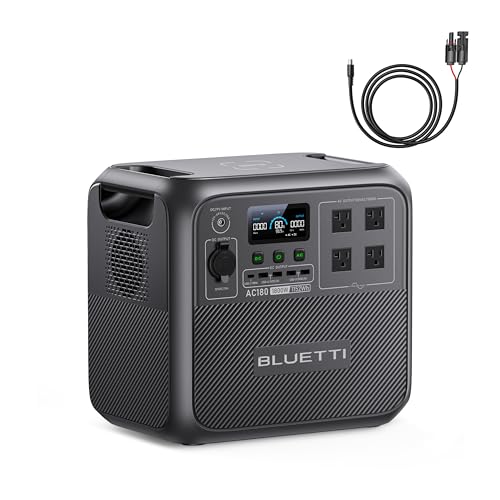 BLUETTI AC180 | Most capacity for a multi-night site | 1,152Wh 35.27 lb | $499.00 · View on Amazon |
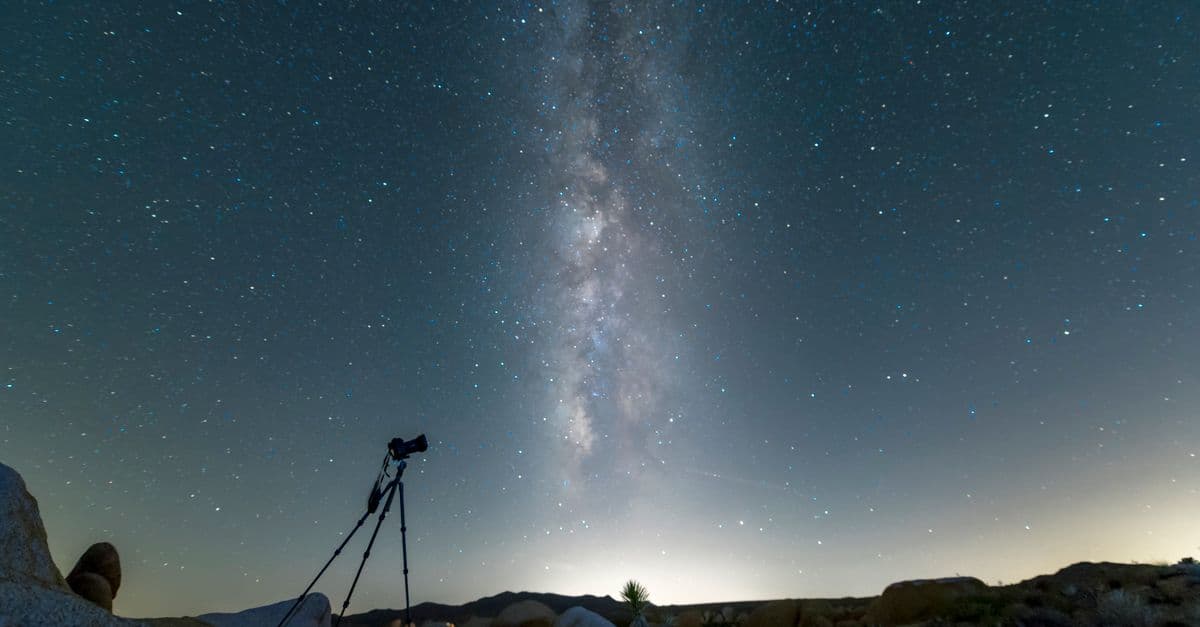
Astrophotography is an unusual load for a power station: small, continuous, and running for eight to ten hours in the cold. Nothing in the rig needs much output - a tracking mount, a cooled camera, a laptop and two dew heaters together sit in the 50 to 120W band - so the inverter rating that dominates every other page on this site is close to irrelevant here. What matters instead is capacity for a full night, DC output so the inverter can stay off, quiet running, and how the pack behaves below freezing.
The four things that decide it
- All-night capacity. A session is as long as the dark is. Work out your own draw and multiply by the hours; 1kWh covers almost any rig, and 288Wh covers a camera-and-tracker setup.
- DC output. Mounts, dew heaters and cooled cameras are mostly 12V devices. Run them from the car socket and you skip the inverter, which saves the conversion loss and keeps the fan off.
- Noise. A cooling fan next to a quiet group on a dark site is antisocial, and a fan running at 2am wakes people in tents. Only two units in our registry publish a decibel figure at all.
- Cold. Lithium cells lose usable capacity in the cold and must never be charged below freezing. Power stations in cold weather covers what to expect and what not to do.
Working out your own draw
Every piece of astro gear publishes its own consumption, usually on the manufacturer's specification page or the power supply's label, and the spread across equipment is wide enough that a figure from a web page is worth very little. Read your own, then do this sum. The worked example below states its assumptions explicitly so you can substitute yours.
The variable that moves most in that sum is the dew heaters. They are resistive, they are thermostatically cycled on better controllers and not at all on cheap ones, and on a damp night they can double a rig's average draw. If your site is humid, size for the heaters rather than for the camera.
Run the 12V gear from DC, not through the inverter
Every unit here has a 12V car socket, and most astro gear is happiest on it. Two reasons. First, running a 12V device through an inverter means converting DC to AC and then back to DC in the device's own supply, and you pay a conversion loss twice - this site's guides put inverter losses around 12% on AC-run loads. Second, the inverter is usually what turns the fan on. A unit running pure DC loads frequently stays silent.
Check the car socket's current rating against your load. Jackery publishes 10A on the Explorer 1000 v2's 12V port, which is 120W. Anker publishes a 120W car socket on the C300. That is enough for a mount plus heaters, and not enough for a 12V compressor fridge at the same time.
What the cold does
Two separate effects, and the second one matters more. Usable capacity falls at low temperature, so a pack that gives you nine hours in August gives you less in February; plan margin rather than exact fit. And charging a lithium pack below freezing damages it - LiFePO4 cells are specific about this - so if you are refilling from a panel at a cold site, charge during the warm part of the day and not at dawn.
In practice: keep the unit off frozen ground, inside a bag or a crate, with the cables run out rather than the unit left exposed. Power stations in cold weather has the full set of rules. If the trip is a winter one, best power station for ice fishing is the same cold problem with a different load list.
If the trip is a general camping one with imaging attached, best power station for car camping sizes for the whole weekend rather than for the session, and what size power station for camping is the arithmetic from first principles.
The picks in full
1. Best for a full night with dew heaters
Jackery Explorer 1000 v2
- 1,070Wh
- LiFePO4 (LFP)
- 1,500W continuous / 3,000W surge
- 23.8 lb
- 400W
- 4,000 cycles to 70% capacity
- 1.7 hr wall; 1 hr emergency charge via app
- 5 years (with registration)
1,070Wh is the capacity that makes an all-night imaging session uneventful. At 85% usable that is about 910Wh, and a typical rig - tracking mount, cooled camera, laptop or mini PC, two dew heaters - sits in the 50 to 120W band depending on how hard the heaters are working. 910Wh covers the top of that band for seven and a half hours and the bottom of it for eighteen.
Jackery publishes a quiet mode below 22 decibels on this model, which on a dark site next to other imagers is a social specification as much as a technical one. It also publishes 1,500W continuous with a 3,000W surge, 23.8 lb - the lightest 1kWh unit in our registry - a 1.7-hour wall recharge, 400W of maximum solar input, 4,000 cycles to 70% capacity, a switchover under 20 ms, and a 5-year warranty with registration.
Two AC outlets and a 12V car port at 10A. Dew heaters and most mounts run on 12V, so the car port is the one you will actually use - and running them from DC skips the inverter and its fan entirely. Jackery notes 23.8 lb on its specification page against 24.2 lb on some US listings; we use the specification figure and flag the discrepancy.
Reasons to buy
- 1,070Wh - a full night with heaters running
- Quiet mode published below 22 dB
- 23.8 lb; 12V car port at 10A
- 4,000 cycles; 5-year warranty with registration
- 1.7 hr wall recharge
Reasons to avoid
- Two AC outlets only
- Not expandable
- 400W solar input - lowest in its class
Buy it if: all-night sessions with dew heaters in the load.
Skip it if: you are hiking the gear in and want 10 lb.
2. Best for a camera-and-tracker setup
Anker SOLIX C300
- 288Wh
- LFP (LiFePO4)
- 300W continuous / 600W surge
- 9.1 lb
- 100W
- 80% in 50 min
- 5 years
288Wh at 9.1 lb, and the quietest published figure in our registry: Anker states 25dB at 3.3 ft. For a star-tracker rig - a small tracking head, a DSLR or mirrorless body, an intervalometer, a phone - this is both enough energy and the right shape of unit, because almost nothing in that list needs AC at all.
Seven device ports: four USB-C at 140W, 100W, 20W and 15W, two 12W USB-A, and a 120W car socket. A 140W USB-C port runs a laptop at full speed with no inverter in the chain. Anker also publishes 300W of AC with a 600W SurgePad peak, a 10 ms switchover, 80% charge in 50 minutes and a 5-year warranty.
288Wh is the limit and dew heaters are what will find it - two resistive straps working hard can double a small rig's draw. Anker publishes no cycle-life rating, no dimensions and no AC outlet count for this model, which is three blanks on an otherwise unusually well-specified unit.
Reasons to buy
- 25dB at 3.3 ft - quietest published figure here
- 9.1 lb; four USB-C ports including 140W
- 80% charge in 50 minutes
- 10 ms switchover; 5-year warranty
- 120W car socket for 12V gear
Reasons to avoid
- 288Wh - tight with dew heaters
- 300W AC output
- No published cycle life or dimensions
Buy it if: a star tracker, a camera and a phone.
Skip it if: a cooled astro camera plus heaters all night.
3. Best small unit that grows into a long session
EcoFlow RIVER 3 Plus
- 286Wh
- LiFePO4
- 600W continuous / 1,200W surge
- 10.4 lb
- 220W
- 3,000 cycles to 80% capacity
- 0-100% in 60 min
- Not published on the US product page
286Wh at 10.4 lb that expands to 858Wh with a wire-free second battery - the only unit under eleven pounds in our registry that does. For imaging that is a genuinely useful shape, because the honest answer to 'how much do I need' depends on how many heaters you end up running, and you usually learn that in the field.
EcoFlow publishes three AC outlets, 600W continuous with a 1,200W surge, a 0-100% recharge in 60 minutes, 220W of maximum solar input, a 100W USB-C port, two 12W USB-A, 3,000 cycles to 80% capacity, and dimensions of 9.2 x 9.1 x 5.8 in. Three AC outlets at this size is more than most 1kWh units offer.
EcoFlow publishes no warranty term for this model on its US page and no UPS switchover figure, and no noise figure either - which on a page about imaging next to other people is the specification we would most like to have.
Reasons to buy
- Expands to 858Wh for longer sessions
- Three AC outlets at 10.4 lb
- Full in 60 minutes; 220W solar input
- 3,000 cycles to 80%
- Published dimensions
Reasons to avoid
- 286Wh as a single box
- No published warranty or noise figure
- Second battery is a separate purchase
Buy it if: working out your real draw before committing.
Skip it if: you already know you need a full kilowatt-hour.
4. Most capacity for a multi-night site
BLUETTI AC180
- 1,152Wh
- LiFePO4
- 1,800W continuous / 2,700W surge
- 35.27 lb
- 500W
- 3,500+ cycles to 80% original capacity
- 1.3-1.8 hr full (1,440W max AC input)
- 5 years
1,152Wh, the biggest battery in the 1kWh class, with four AC outlets and a 15W wireless charging pad. On a two-night dark-sky trip where there is no mains and the sun may or may not cooperate, the extra 80 to 130 watt-hours over its class rivals is the difference between rationing the second night and not thinking about it.
BLUETTI publishes 1,800W continuous with a 2,700W surge, a 1.3-1.8 hour full recharge at up to 1,440W of AC input, 500W of maximum solar input, a 20 ms switchover, 3,500+ cycles to 80% original capacity - the longest cycle rating in its class - a 5-year warranty, and dimensions of 13.39 x 9.72 x 12.48 in.
35.27 lb, which for a setup you drive to and then move twenty feet is acceptable and for anything you carry is not. BLUETTI publishes no noise figure for this model, and the 500W solar ceiling is the lowest in its class for anyone planning to refill between nights.
Reasons to buy
- 1,152Wh - biggest in its class
- Four AC outlets plus a wireless pad
- 3,500+ cycles to 80%; 5-year warranty
- 1.3-1.8 hr full recharge
- Published dimensions
Reasons to avoid
- 35.27 lb
- No published noise figure
- 500W solar input; not expandable
Buy it if: two nights out with no mains and no guarantee of sun.
Skip it if: the gear has to be carried any distance.
Questions