Portable Power Station vs DIY Build
Cells and an inverter in a box will beat a bought unit on cost per watt-hour. What it will not beat it on is everything that makes a power station portable.
At a glance
Quick picks
Tap any row to jump to the full write-up. Weight is a column here because it is the spec that decides whether you actually carry the thing.
| # | Product | Best for | Capacity · Weight | Price |
|---|---|---|---|---|
| 1 | 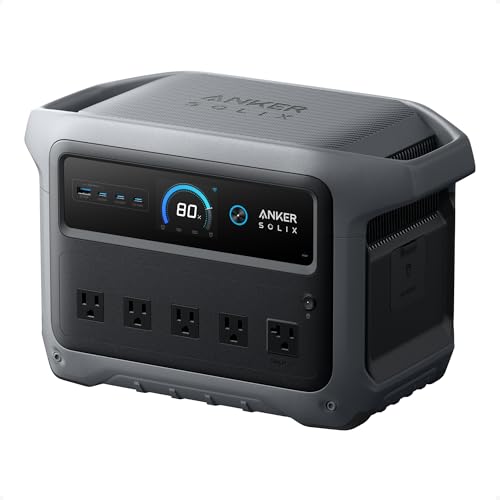 Anker SOLIX C1000 Gen 2 | The hardest unit for a build to beat | 1,024Wh 24.9 lb | $529.99 · View on Amazon |
| 2 | 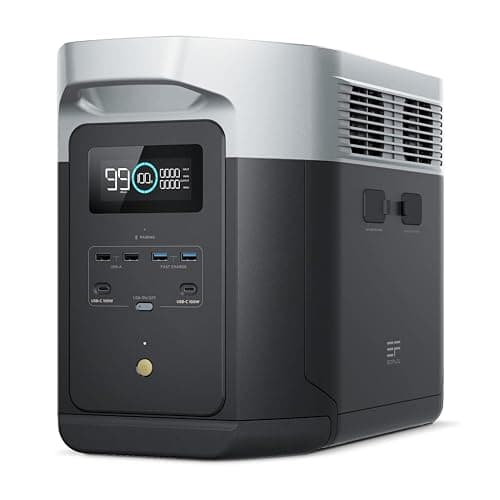 EcoFlow DELTA 2 Max | The one that competes on capacity | 2,048Wh 50.7 lb | $1,028.99 · View on Amazon |
| 3 | 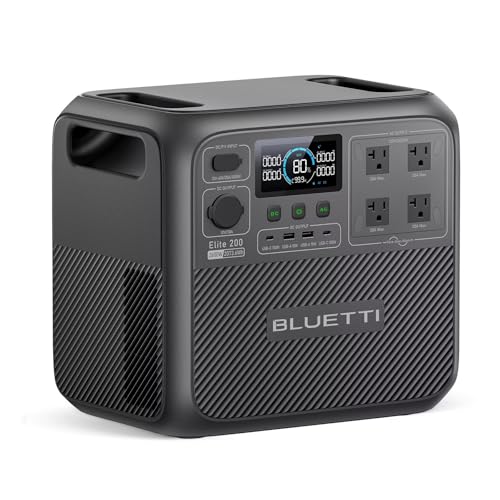 BLUETTI Elite 200 V2 | The cycle rating a build has to match | 2,074Wh 53.4 lb | $898.99 · View on Amazon |
A DIY build will beat a bought power station on cost per watt-hour, and the gap widens as the system gets bigger - above roughly 3 kWh, a stationary build with drop-in LiFePO4 packs and a separate inverter is simply the cheaper way to own energy. Below that, and for anything that has to be carried, a bought unit wins on almost every axis that is not price. The real dividing line is not skill. It is whether the finished thing has to move.
What 'DIY build' actually means here
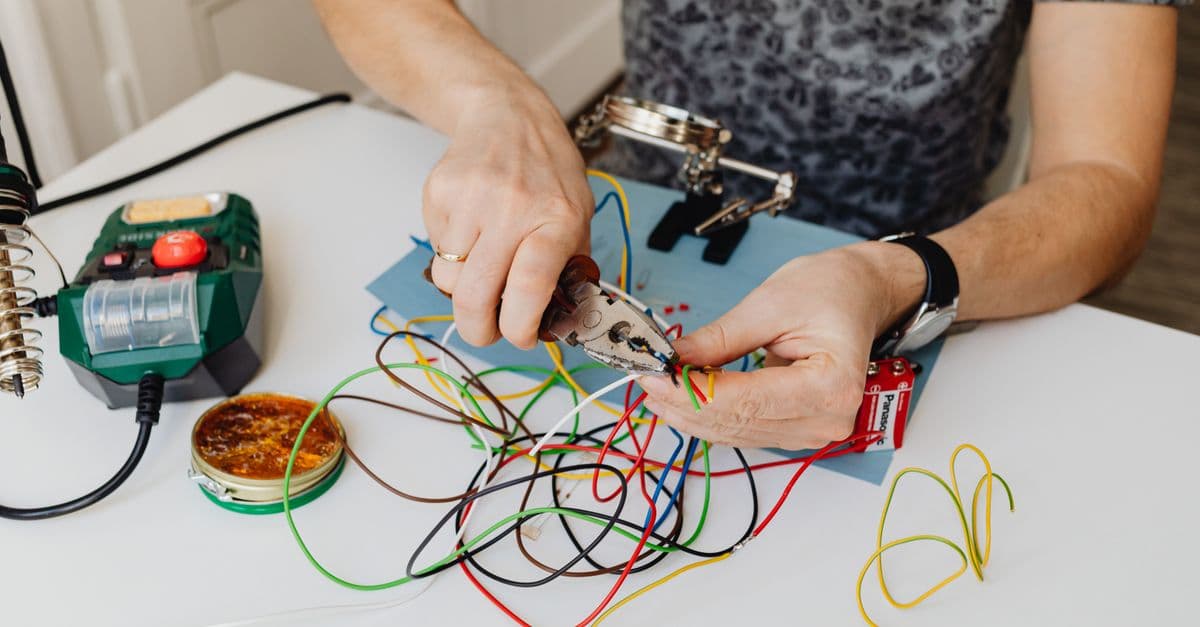
There are two versions and they are not the same project. The first is a drop-in build: a commercially made LiFePO4 battery with its own internal BMS, a separate inverter or inverter-charger, a fuse and a disconnect, and some wiring. That is an afternoon's work with a crimper and is the version most people mean.
The second is a cell-level build: prismatic cells bought individually, compressed into a pack, top-balanced, wired to an external BMS you configure yourself, with busbars sized to the current and an inverter sized to the pack. That is a real electrical project with a real failure mode, and nothing on this page should be read as encouragement to attempt it without the knowledge to do it safely.
This page compares a power station against either. If what you actually want is to compare it against a bought inverter and a bought battery used as a pair, portable power station vs inverter and battery is the closer page - it covers the two-finished-products version without the build.
The comparison, axis by axis
| Portable power station | DIY build | |
|---|---|---|
| Cost per watt-hour | Higher | Lower, and falls with size |
| Portability | 23.8-53.4 lb with a handle | Heavy, usually fixed in place |
| Setup time | Out of the box | Hours to days |
| UPS switchover | 10-20 ms where published | Needs a transfer switch or an inverter-charger |
| Fast AC recharge | 49 min to 2.3 hr, built in | Limited by the charger you buy |
| Solar MPPT | Integrated, 100-2,400W published | A separate controller, sized by you |
| Alternator charging | Up to 800W published | A DC-DC charger, wired in |
| Certification | The whole unit is certified | Components only; the assembly is not |
| Warranty | 2-5 years on the unit | Per component, voided by the build |
| Repairability | Usually not user-serviceable | Every part replaceable |
| Capacity ceiling | Up to 53.8 kWh with expansion | Effectively unlimited |
| Insurance and code | A consumer appliance | Your responsibility to get right |
| Resale | A known product with a market | Hard to sell, hard to value |
| App and metering | Included | Add a shunt and a display |
Where DIY genuinely wins
Cost per watt-hour at scale. This is the honest and decisive advantage. The further past about 3 kWh you go, the more the fixed cost of a bought unit's inverter, case, screen and charger gets amortised in your favour by building instead - and at 10 kWh or more there is no comparison to be had. Our largest registry unit reaches 53.8 kWh through six expansion batteries, and a build reaches the same place for substantially less.
Repairability. A power station is a sealed appliance. When its inverter fails outside warranty, that is usually the end of the unit even though the cells are fine. In a build, the inverter is a box with four terminals and you replace it. Over fifteen years that difference is worth more than it looks on day one.
Exact sizing. You choose the inverter, the charger, the solar controller and the pack independently, so you can put a 3,000W inverter on 2 kWh of cells for hard-start loads, or a 600W inverter on 10 kWh for a long quiet drawdown. No bought unit lets you make that trade - the ratio is fixed when you buy. Our best power station for high-surge loads page exists precisely because those ratios are fixed and you have to shop for the one you need.
No compromise on outlet count. Every socket on a build is one you decided to fit. Two of the three units above publish two AC outlets, which is a limitation you pay a power strip to work around.
Where a power station wins
- Anything that moves. A 24.9 lb box with a handle, a screen and a 12V socket is a camping unit, a tailgate supply and a desk UPS. A build in a plywood case with a shunt and a bus bar is none of those things.
- Switchover. Ten milliseconds is a transfer relay plus firmware, not a battery. On the DIY side you need an inverter-charger designed for it, which is a different and more expensive product than a plain inverter.
- Recharge speed. Anker publishes a 49-minute full recharge at 1,600W input. Matching that means a 1,600W charger with its own thermal management, which few builds have, and which no build has for free.
- Certification of the assembled thing. Buying certified components does not make the assembly certified. That matters for insurance, for rental agreements, and for anything that lives in a vehicle you take to a campsite.
- One warranty. When a bought unit fails, one company owes you a unit. When a build fails, you own the diagnosis - and the components' own warranties generally do not survive being wired into somebody's project.
- It is finished. The most honest argument. A bought unit works on the day it arrives, and the most common outcome of a half-finished DIY build is no power at all.
The decision, stated plainly
One more consideration that decides it for a lot of people: a build has no second life. A power station that turns out to be the wrong size gets sold, or demoted to the camping box while a bigger one takes over at home. A half-finished build in a crate is worth the components minus the holes you drilled in them.
If this comparison has pushed you toward the bought side, best portable power stations is the shortlist and are portable power stations worth it works through the frequency question - including the cases where the right answer is to buy nothing. If it has pushed you toward a build, the honest next step is a battery forum rather than an affiliate site, and we would rather say that than pretend otherwise.
The picks in full
1. The hardest unit for a build to beat
Anker SOLIX C1000 Gen 2
- 1,024Wh
- LiFePO4 (InfiniPower LFP)
- 2,000W continuous / 3,000W surge
- 24.9 lb
- 600W
- 80% capacity after 4,000 cycles
- Full in 49 min (UltraFast, 1,600W max input)
- 5 years
2,000W continuous and a 3,000W surge from 24.9 lb, with a 49-minute full recharge at 1,600W input and a published 10 ms UPS switchover. Those four figures together are the ones a home build does not get close to: the recharge rate requires a 1,600W charger with its own thermal management, and the 10 ms switchover requires a transfer relay and firmware rather than a battery.
Anker publishes 1,024Wh of LFP, 600W of maximum solar input through an XT60i port, 80% capacity after 4,000 cycles, a 5-year warranty and dimensions of 15.12 x 8.19 x 9.61 in. The warranty is the part that does not exist on the DIY side of this page in any form, on any component, once you have assembled them yourself.
Two AC outlets and no expansion. In cost-per-watt-hour terms a build will beat this unit, and that is not in dispute - what you are buying here is 1,024Wh that you can pick up with one hand, that charges in under an hour, and that someone else is liable for.
Reasons to buy
- 2,000W continuous, 3,000W surge
- Full recharge in 49 minutes
- 10 ms published switchover
- 24.9 lb; 4,000 cycles to 80%
- 5-year warranty on the whole unit
Reasons to avoid
- Two AC outlets
- Not expandable
- Costs more per watt-hour than cells
Buy it if: portability, speed and a single warranty.
Skip it if: you want the most watt-hours per dollar, stationary.
2. The one that competes on capacity
EcoFlow DELTA 2 Max
- 2,048Wh
- LFP (LiFePO4)
- 2,400W continuous
- 50.7 lb
- 1000W
- 3,000 cycles to 80% capacity
- 2.3 hr; 800W car/alternator charging
- 5 years
2,048Wh with 1,000W of solar input and 800W of car and alternator charging, expandable to 6 kWh with up to two extra batteries. This is the bought unit that reaches into the capacity band where DIY normally wins outright, and it does it with integrated MPPT, integrated alternator charging and an app.
EcoFlow publishes 2,400W continuous, fifteen outputs including six AC, a 2.3-hour wall recharge, a switchover under 20 ms, 3,000 cycles to 80% capacity and a 5-year warranty. Six AC outlets is a detail a build rarely gets right, because every socket on a DIY box is a hole, a fuse and a run of cable you have to do properly.
50.7 lb, and EcoFlow publishes neither a surge figure nor dimensions for this model. At 6 kWh with two expansion batteries it is a three-box system that is no longer portable in any meaningful sense - which is precisely the point at which a stationary build starts to look sensible.
Reasons to buy
- 2,048Wh, expandable to 6 kWh
- 1,000W solar and 800W alternator input
- Six AC outlets; 2,400W continuous
- 3,000 cycles to 80%; 5-year warranty
- 2.3 hr full recharge
Reasons to avoid
- No published surge figure or dimensions
- 50.7 lb
- Expansion batteries are extra boxes
Buy it if: DIY capacity with none of the DIY work.
Skip it if: the install is permanent and you can wire.
3. The cycle rating a build has to match
BLUETTI Elite 200 V2
- 2,074Wh
- LiFePO4 (LFP), automotive-grade cells
- 2,600W continuous / 3,900W surge
- 53.4 lb
- 1000W
- 6,000+ cycles to 80% capacity
- Full in 1.4 hr (1,800W AC input)
- 5 years
6,000+ cycles to 80% capacity, which is the longest cycle rating in our entire registry and the specification most DIY cost comparisons quietly skip. Cost per watt-hour is not the right metric for a battery; cost per watt-hour delivered over its life is, and a 6,000-cycle rating changes that arithmetic substantially.
BLUETTI publishes 2,074Wh of automotive-grade LiFePO4, 2,600W continuous - the highest in the 2 kWh class - a 3,900W Power Lifting figure for purely resistive loads, 1,000W of maximum solar input, a 1.4-hour full charge at 1,800W, a switchover of 15 ms or less, a 5-year warranty, 53.4 lb and dimensions of 13.78 x 9.84 x 12.74 in.
53.4 lb, a 15 ms switchover rather than 10 ms, and an expansion story BLUETTI's own documentation contradicts: it sells an Elite 200 V2 with a B500K pack while its FAQ for the model says it does not support the B80, B230 or B300. Confirm the pack before you count on it.
Reasons to buy
- 6,000+ cycles to 80% - longest here
- 2,600W continuous, 2,074Wh
- 1,000W solar input; 1.4 hr full charge
- 5-year warranty; published dimensions
- Automotive-grade LiFePO4 cells
Reasons to avoid
- 53.4 lb
- Expansion compatibility unclear
- 15 ms switchover
Buy it if: daily cycling where life, not price, is the metric.
Skip it if: you need it to be light.
Questions