Best Power Stations Under $300
This budget buys one tier, and it is a good tier. What it does not buy is a fridge through an outage — here is the line, and the three units worth your money on the right side of it.

At a glance
Quick picks
Tap any row to jump to the full write-up. Weight is a column here because it is the spec that decides whether you actually carry the thing.
| # | Product | Best for | Capacity · Weight | Price |
|---|---|---|---|---|
| 1 | 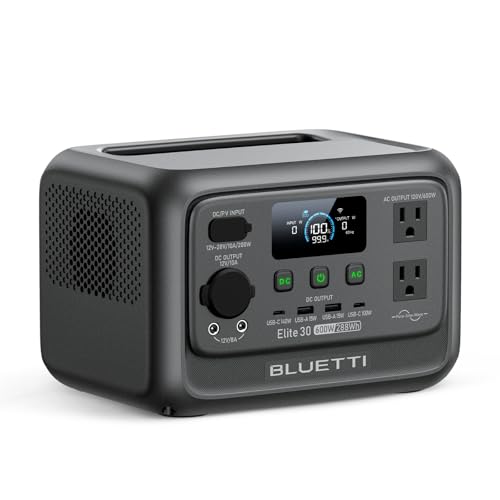 BLUETTI Elite 30 V2 | Best under $300 overall | 288Wh 9.5 lb | $289.99 · View on Amazon |
| 2 | 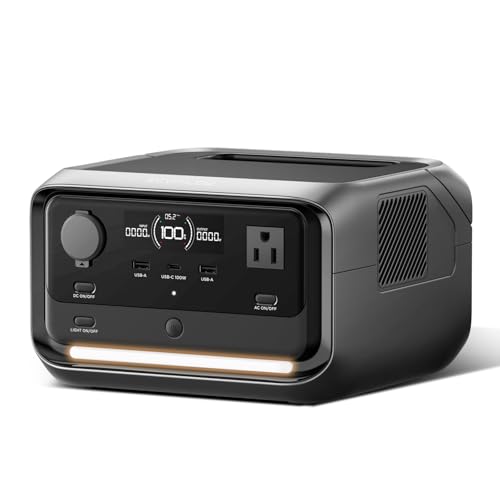 EcoFlow RIVER 3 Plus | Best if you might need more later | 286Wh 10.4 lb | Check price on Amazon |
| 3 | 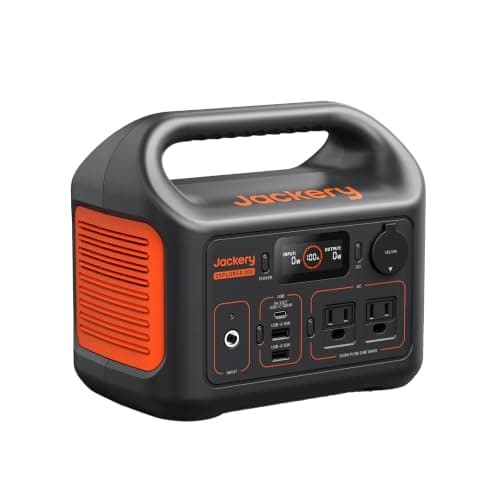 Jackery Explorer 300 | Lightest real AC outlet | 293Wh 7.1 lb | $289.00 · View on Amazon |
What $300 actually buys, stated plainly
Under $300 is a single tier, and it is roughly 300 watt-hours of battery. Not 500, not 768. Every unit worth buying at this budget sits between 286Wh and 293Wh, which is close enough to identical that capacity is not a deciding factor — the contest is entirely about inverter output, weight, cycle life and how fast the thing refills. When we checked this band on 2026-10-19, the next capacity step up, a 512Wh unit, sat meaningfully above $300, and a 768Wh unit further above that again. The cliff is real and it is steep.
So the honest framing of this page is: 300Wh is a genuinely useful amount of electricity for a particular set of jobs, and completely inadequate for a different set. It will keep phones, lights, a laptop, a router, a camera kit and a CPAP going for a night or two. It will not keep a refrigerator cold through an outage, run a space heater, or power a kettle more than a couple of times. If your actual requirement is the second list, the right move is to spend more rather than to buy at this budget and be disappointed — best budget power stations under $500 is the next band up and it buys about three times the battery.
How we ranked these
Four criteria, applied in this order, and every figure is the manufacturer's own published number read from the pages listed at the foot of this page. We have not bench-tested these units and we do not claim to have — how we choose sets out exactly what our method can and cannot tell you.
- Continuous AC output. At this capacity every unit holds roughly the same battery, so output is what separates them, and the spread is 2x — 300W at one end and 600W at the other. Output decides *what* plugs in at all; capacity only decides how long it runs.
- Cycle life and chemistry. The difference between 500 cycles and 3,000 cycles is the difference between a unit that fades inside two years of regular use and one that outlasts the car you keep it in. At a low budget this is the specification most likely to cost you money twice.
- Weight. This is the tier people actually carry, so the pounds matter more here than anywhere else on the site. The spread across these three is 3.3 lb on a 7 lb base — proportionally enormous.
- Recharge speed and solar ceiling. A small battery you can refill in an hour behaves like a bigger one. The published solar ceiling also matters more here than it looks, because a 200W input into a 290Wh battery is a genuinely fast solar refill, unlike the same figure on a large unit.
The three units, side by side
| BLUETTI Elite 30 V2 | EcoFlow RIVER 3 Plus | Jackery Explorer 300 | |
|---|---|---|---|
| Capacity | 288Wh | 286Wh | 293Wh |
| AC continuous | 600W | 600W | 300W |
| Surge / lifting | 1,500W (resistive) | 1,200W | 500W |
| Weight | 9.5 lb | 10.4 lb | 7.1 lb |
| Wh per pound | 30.3 | 27.5 | 41.3 |
| Chemistry | LiFePO4 | LiFePO4 | Not published |
| Cycle rating | 3,000+ | 3,000 to 80% | 500 to 80%+ |
| Max solar input | 200W | 220W | Not published |
| Full AC recharge | 70 min | 60 min | About 2.5 hr |
| UPS switchover | 10 ms or less | Not published | Not published |
| Expandable | No | To 858Wh | No |
| Warranty | 5 years | Not published | 2 years |
Two rows decide this page. The AC continuous row splits the group in half — 600W or 300W, with nothing in between — and 600W is the difference between a unit that runs your television and one that does not. The cycle rating row splits it the same way: 3,000 against 500. The Jackery wins the weight column outright and wins it by enough to matter if you walk with the thing, but it loses both of the rows that decide how much use you get out of the purchase.
What 300 watt-hours runs
The figures below are nameplate bands. Read the plate on your own equipment, because the spread inside a product category is wider than the spread between these three units. Runtimes allow for inverter conversion losses, so they assume you never get the full rated capacity out to an AC socket.
| Load | Typical draw | Runtime |
|---|---|---|
| Phone charge, full | 15-20Wh each | 12-15 charges |
| Router and modem | 10-20W | 14-24 hours |
| CPAP, humidifier off | 30-60W | About 1 night |
| Laptop, working | 50-65W | 4-5 hours |
| Camera batteries | 10-16Wh each | 15-20 batteries |
| String lights | 10-20W | 15-25 hours |
| Starlink Mini | 20-40W continuous | 7-12 hours |
| 12V camping fridge | 45W cycling at 40% | 12-14 hours |
| Television, 50 in | 80-120W | 2-3 hours |
| Full-size refrigerator | 150W cycling at 35% | 4-5 hours |
| Electric kettle | 1,500W nameplate | Will not run on any unit here |
Read that table top to bottom and the shape of this tier is obvious: 300Wh is days of small DC loads, one night of a CPAP, an evening of a television, and a few hours of anything with a compressor. The kettle row is the honest bottom line — no 300Wh unit will boil water in any meaningful way, whatever the surge figure says, because even if the inverter copes the battery is gone in minutes. Can a power station run a refrigerator and what size power station do I need both work through this arithmetic with your own numbers.
The near-misses, named
We also checked two units that Amazon still stocks and left both out. The plain EcoFlow RIVER 2 at 256Wh sits comfortably inside this budget, but EcoFlow no longer publishes a product page for it in the US, so there is no manufacturer specification to quote. The same applies to the older EcoFlow DELTA 2. Featuring a unit whose maker has stopped documenting it means publishing numbers from a retailer listing, and that is not a standard this site keeps.
How to choose between the three
- Will you carry it on foot? If yes, the Jackery's 7.1 lb settles it and the cycle-life compromise is the price. If it rides in a car, weight is almost irrelevant at this scale and the other two are better units.
- Will you plug in anything over 300W? A television, a games console, a blender, a coffee maker, a desktop computer. If yes, the Jackery is out and you are choosing between the BLUETTI and the EcoFlow.
- Might 300Wh stop being enough? If there is any chance of that, the EcoFlow's path to 858Wh is the only upgrade route on this page. Everything else here is permanent at 290Wh.
- Do you want it to carry a router through a cut? Only BLUETTI publishes a switchover time in this group, at 10 ms or less. The others may well do it; they do not publish it, and we will not guess on their behalf. Power station as a UPS for wifi and router covers whether that job is worth a power station at all.
- Is solar part of the plan? 200W into 288Wh, or 220W into 286Wh, is a fast refill — roughly two good hours. That is the one place where this tier genuinely outperforms the big units, which take all day. Best portable solar panels for power stations matches panels to these input ceilings.
When to spend more instead
Three jobs sit outside this budget entirely, and buying here for any of them ends in a second purchase. Keeping a refrigerator cold through an outage needs about a kilowatt-hour a day, so 300Wh is a few hours — best portable power stations for home backup starts where this page stops. Anything that makes heat — a kettle, a toaster, a space heater, a hair dryer — is out of reach on both output and capacity. And a long trip with a fridge running needs the 700Wh-and-up class: our EcoFlow RIVER 2 Pro review covers the unit that holds 768Wh and still weighs under 20 lb, which is the natural next step from this page.
If this tier is smaller than your problem, the next ceiling worth knowing about is a long way up. The best power stations under $1,000 covers the band where the 2 kWh class landed this year: fifteen units in our registry sit under it, and the real decision there is whether to spend the whole ceiling on battery or keep half of it for outlets, solar input and cycle life.
The picks in full
1. Best under $300 overall
BLUETTI Elite 30 V2
- 288Wh
- LiFePO4 (automotive-grade)
- 600W continuous / 1,500W surge
- 9.5 lb
- 200W
- Over 3,000 cycles; 10-year lifespan
- Full in 70 min
- 5 years
Twice the inverter of most units at this budget, in the same 288Wh box. BLUETTI publishes 600W continuous with a 1,500W Power Lifting figure, against the 300W and 500W that the traditional small-unit specification gives you. That difference is not academic: 600W covers a television, a desktop computer, a blender, a slow cooker and most coffee makers, and 300W covers none of them. At this budget it is the single biggest capability gap between units, and it costs nothing in weight — 9.5 lb is within half a pound of the smallest unit here.
The rest of the sheet is current-generation throughout. Automotive-grade LiFePO4 cells, over 3,000 cycles and a ten-year stated lifespan, a full recharge in 70 minutes, 200W of solar input, a UPS switchover of 10 ms or less, nine output ports including USB-C PD at up to 140W, and a five-year warranty. The 140W USB-C port matters more than it looks: it charges a modern laptop directly on DC without waking the inverter, which skips the conversion loss and keeps the fan off.
The honest limits. BLUETTI states plainly that this model does not support battery expansion, so 288Wh is permanent. The 1,500W Power Lifting figure is a lifting mode for resistive loads rather than a surge rating for motors — do not read it as headroom for a compressor. And BLUETTI publishes no dimensions, no full port breakdown and no retention threshold on its cycle claim, so three fields in our spec table stay blank rather than get filled from a retailer listing.
Reasons to buy
- 600W continuous — double the usual output at this budget
- 1,500W Power Lifting for resistive loads
- 10 ms or less UPS switchover
- Full recharge in 70 minutes; 200W solar input
- LiFePO4, 3,000+ cycles, 5-year warranty
Reasons to avoid
- No battery expansion — BLUETTI states the model does not support it
- Power Lifting is a resistive-load figure, not a motor surge rating
- No published dimensions or full port breakdown
- Cycle claim carries no published retention threshold
Buy it if: you want the widest appliance envelope this budget can buy.
Skip it if: you expect to grow the battery later.
2. Best if you might need more later
EcoFlow RIVER 3 Plus
- 286Wh
- LiFePO4
- 600W continuous / 1,200W surge
- 10.4 lb
- 220W
- 3,000 cycles to 80% capacity
- 0-100% in 60 min
- Not published on the US product page
The only unit at this budget that can be grown. EcoFlow publishes an expansion battery that takes the RIVER 3 Plus from 286Wh to 858Wh — a tripling, with no cable between the two units. That is the cheap insurance against sizing this purchase wrong, and at a budget where a mistake means buying a whole second power station, it is worth real money. Everything else on the sheet is competitive rather than outstanding: 600W continuous with a 1,200W surge, 10.4 lb, 220W of solar input and a full recharge in 60 minutes, the fastest here.
It is also the best-documented small unit in this group for ports. Three AC outlets, a 100W USB-C and two 12W USB-A ports, in a 9.2 x 9.1 x 5.8 inch footprint that is the only published dimension set among these three. If the unit has to fit a specific gap — a cabinet, a trunk well, a shelf above a desk — this is the one you can measure before you buy. LiFePO4 cells at 3,000 cycles to 80% capacity match the class.
Two things to know. EcoFlow does not publish a warranty term for this model on its US product page, which is unusual and is the one field we would most like filled in — check the term on the listing you buy from. And it does not publish a UPS switchover time either, so if you want this unit to carry a router through a cut, you are buying an unstated specification. The expansion battery is also a second purchase at close to the price of the unit itself; the capability is real, the upgrade is not cheap.
Reasons to buy
- Expands from 286Wh to 858Wh with a wire-free extra battery
- 600W continuous, 1,200W surge
- Fastest full recharge here at 60 minutes
- 220W solar input — the highest in this group
- Published dimensions: 9.2 x 9.1 x 5.8 in
Reasons to avoid
- No warranty term published on EcoFlow's US product page
- No published UPS switchover time
- The expansion battery costs close to the unit itself
- 10.4 lb — the heaviest of these three
Buy it if: you suspect 300Wh may not be enough in a year.
Skip it if: you want a stated warranty and switchover before you buy.
3. Lightest real AC outlet
Jackery Explorer 300
- 293Wh
- Lithium-ion (Jackery does not publish the cell type)
- 300W continuous / 500W surge
- 7.1 lb
- 500 cycles to 80%+ capacity
- About 2.5 hr full, using the 90W wall charger and a 60W USB-C PD charger together
- 2 years
7.1 lb with two proper AC sockets is the lightest genuine mains power you can carry at this budget, and for a specific kind of buyer that is the only specification that matters. A photographer charging batteries at a trailhead, a camper who walks in from the car, somebody who wants a unit that lives in a daypack rather than a trunk — this is two and a half pounds lighter than the BLUETTI and 3.3 pounds lighter than the EcoFlow, which is a real difference when you are carrying it rather than driving it.
293Wh, 300W continuous with a 500W peak, and a 60W USB-C port that works in both directions. Jackery publishes a full recharge of about 2.5 hours using the 90W wall charger alongside a 60W USB-C PD charger. Within its envelope it does the job well: phones, cameras, lights, a laptop, a CPAP without its heated humidifier, a small fan.
This is also the unit with the most caveats here, and they are worth stating plainly. Jackery does not publish the cell chemistry for the Explorer 300, and it rates the unit at 500 cycles to 80%+ capacity — one sixth of the 3,000-cycle ratings the LiFePO4 units here carry. The warranty is two years rather than five. 300W of output rules out the television, the coffee maker and the blender the other two will run. And Jackery publishes no maximum solar input figure and no dimensions for this model. Buy it for the weight, knowing you are buying an older design.
Reasons to buy
- 7.1 lb — the lightest unit here with real AC sockets
- Two AC outlets at 300W, 500W peak
- 60W USB-C that charges the unit and your laptop
- Simple, proven and the longest-selling design in this group
Reasons to avoid
- 500 cycles to 80% — one sixth of the LiFePO4 units here
- Jackery does not publish the cell chemistry
- 2-year warranty against 5 years elsewhere
- 300W output rules out televisions, blenders and coffee makers
- No published solar input ceiling or dimensions
Buy it if: the unit gets carried on foot and the loads are small.
Skip it if: you will charge it often enough for cycle life to matter.
Questions