The Best Power Stations Under $1,000
The band where a thousand dollars stopped buying one kilowatt-hour and started buying two. Six units ranked on what each one trades away to get there.

At a glance
Quick picks
Tap any row to jump to the full write-up. Weight is a column here because it is the spec that decides whether you actually carry the thing.
| # | Product | Best for | Capacity · Weight | Price |
|---|---|---|---|---|
| 1 | 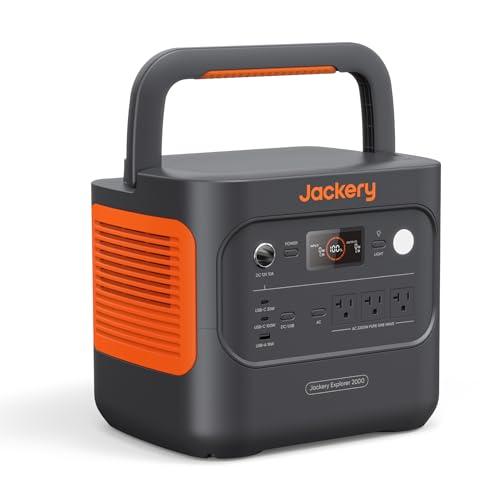 Jackery Explorer 2000 v2 | Most capacity under the ceiling | 2,042Wh 39.5 lb | $999.00 · View on Amazon |
| 2 | 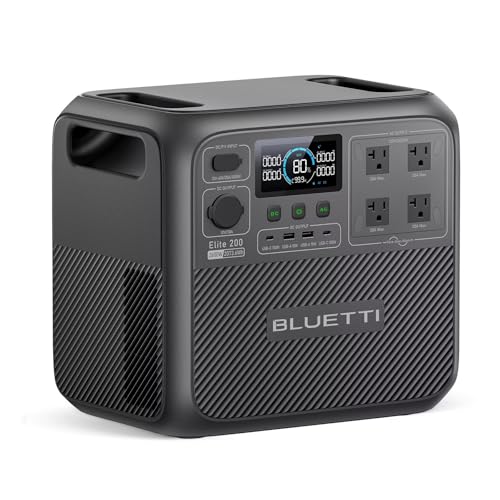 BLUETTI Elite 200 V2 | Longest life under the ceiling | 2,074Wh 53.4 lb | $898.99 · View on Amazon |
| 3 | 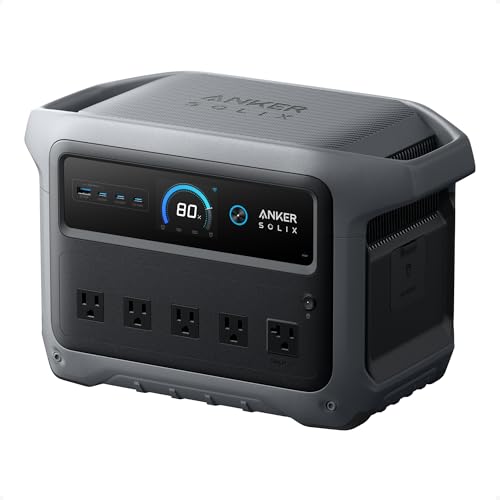 Anker SOLIX C1000 Gen 2 | Best all-round 1 kWh in the band | 1,024Wh 24.9 lb | $529.99 · View on Amazon |
| 4 | 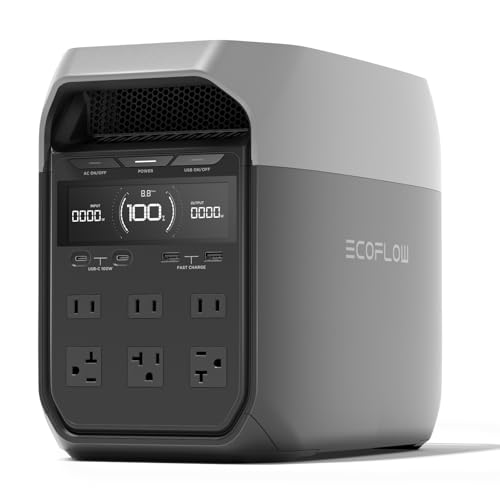 EcoFlow DELTA 3 | Most outlets, and room to grow | 1,024Wh 27.6 lb | $579.00 · View on Amazon |
| 5 | 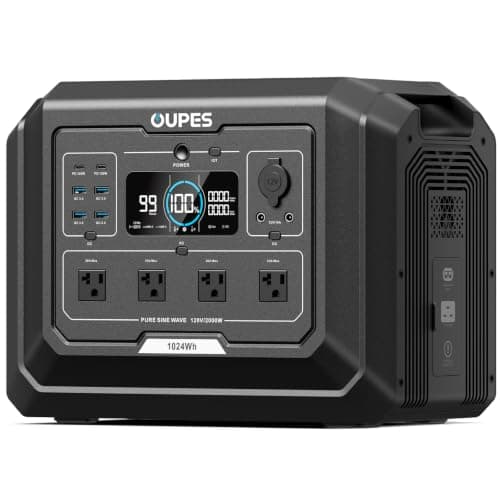 OUPES Mega 1 | Most surge for the money | 1,024Wh 27.8 lb | $529.00 · View on Amazon |
| 6 | 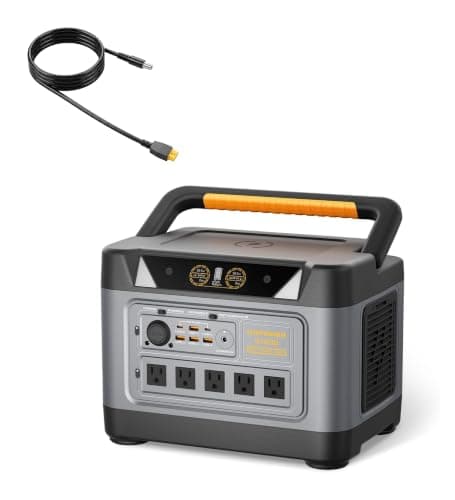 UDPOWER S1200 | Budget pick: most watt-hours per dollar | 1,191Wh 26 lb | $499.00 · View on Amazon |
A thousand dollars buys a different machine than it did two years ago. The useful thing about this ceiling in 2026 is that the 2 kWh class crossed under it: you can now choose between two kilowatt-hours of battery and one kilowatt-hour plus a lot of other advantages, at the same money. That is a real decision rather than a shopping list, and it is what this page is organized around.
Fifteen units in our registry sit under this ceiling with a live price. The six below are the ones worth your attention, and they deliberately span the band rather than clustering at the top of it - because spending the whole ceiling is frequently the wrong move.
How we ranked these
Watt-hours per dollar first, but never alone. Capacity is the cheapest specification to buy and the easiest to over-buy. A unit with 2,000Wh behind a weak inverter will run a short list of things for a very long time, which suits some buyers perfectly and makes others furious. So every pick below is ranked on what it gives you per dollar *and* on the specification it sacrificed to get there - stated in the cons, on every single pick.
Continuous output decides what runs at all. The spread on this page is enormous: 1,200W at the bottom and 2,600W at the top. That is the difference between a unit that cannot boil a kettle and one that will run a hair dryer. Work your load list before your budget - what size power station do I need does it in the right order, and surge watts vs running watts explains which of your appliance's two numbers to check against which figure.
Cycle life decides what a kilowatt-hour actually costs you. A unit rated for 6,000 cycles to 80% delivers twice as much energy over its life as one rated for 3,000, at the same purchase price. If you cycle daily, that is the single most important number on this page. If you use it twenty weekends a year, it is close to irrelevant. How long do portable power stations last does that arithmetic properly.
Every unit was confirmed purchasable on 2026-11-09, with a listing title matching the brand and model exactly. Prices in this band move constantly, which is why no price appears anywhere in this page's prose - the live figure sits inside each buy button, read from Amazon's API with the date it was read. If a unit has drifted above the ceiling by the time you read this, the button will tell you before we can.
What the ceiling buys, stated plainly
| Capacity | AC continuous | Surge / max | Weight | Wh/lb | Cycles | AC outlets | |
|---|---|---|---|---|---|---|---|
| Jackery Explorer 2000 v2 | 2,042Wh | 2,200W | 4,400W | 39.5 lb | 51.7 | 4,000 to 70%+ | 2 |
| BLUETTI Elite 200 V2 | 2,074Wh | 2,600W | 3,900W | 53.4 lb | 38.8 | 6,000+ to 80% | 4 |
| Anker SOLIX C1000 Gen 2 | 1,024Wh | 2,000W | 3,000W | 24.9 lb | 41.1 | 4,000 to 80% | 2 |
| EcoFlow DELTA 3 | 1,024Wh | 1,800W | 3,600W | 27.6 lb | 37.1 | 4,000 to 80%+ | 6 |
| OUPES Mega 1 | 1,024Wh | 2,000W | 4,500W | 27.8 lb | 36.8 | 3,500+ to 80% | 4 |
| UDPOWER S1200 | 1,191Wh | 1,200W | 1,800W | 26.0 lb | 45.8 | 3,000 to 80%+ | 5 |
No row on that table wins outright, which is the honest summary of this band. The Jackery has the most battery in the smallest box and the softest cycle threshold. The BLUETTI has the strongest inverter and the longest life and is 27 lb heavier than the lightest unit here. The UDPOWER has the best watt-hours per dollar and an inverter that rules out a whole category of appliance. Pick the row whose weakness you can live with.
One kilowatt-hour or two?
That is the whole decision in this band, and it is worth sitting with before you spend. What size power station for a power outage sizes capacity against how long the power is actually out where you live, which is a better input than a round-number budget.
The near-misses, named
Anker SOLIX C2000 Gen 2. 2,048Wh at 2,400W with expansion to 4 kWh, and for most of this year it sat right under the ceiling. On 2026-11-09 its listing returned a price with an empty availability string and a title that had drifted to a "Solar Powered Generator" well above $1,000; the one bare-unit listing we found was blank too. We do not rank a unit a reader may not be able to buy. The Anker SOLIX C2000 Gen 2 review covers it if it comes back.
Anker SOLIX S2000 and EcoFlow DELTA 2 Max. Both in stock, both currently above the ceiling. The S2000 is the lightest 2 kWh unit we list at 56.3 watt-hours per pound and the DELTA 2 Max expands to 6 kWh - if your budget has any flex in it, both are worth a look, and the Anker SOLIX S2000 review covers the first in full.
BLUETTI AC180. 1,152Wh at 1,800W with four AC outlets, and it would have been a strong value pick. Its listing also returned a blank availability string on 2026-11-09, on both the four-outlet and two-outlet versions. Not ranked.
When to spend less, and when to spend more
Spend less if your list is phones, lights, a laptop, a fan and a CPAP. That is a 300Wh problem, not a 2,000Wh one, and best power stations under $300 covers the tier properly. The entry band also has genuinely good units now - best budget power stations under $500 ranks them.
Spend more only for a specific reason: 120V/240V output for a well pump or a dryer circuit, a NEMA TT-30R for an RV, or more than about 4 kWh of capacity. Best 2000W power stations is the next tier up, and best portable power stations for home backup covers the whole-house conversation.
If you want this band framed by model year rather than by price, the best portable power stations of 2026 ranks the current generation on what changed this year. And if you are cross-shopping a specific brand, Jackery alternatives works through the most-shopped brand on this site and what beats it where.
The picks in full
1. Most capacity under the ceiling
Jackery Explorer 2000 v2
- 2,042Wh
- LiFePO4 (LFP)
- 2,200W continuous / 4,400W surge
- 39.5 lb
- 4,000 cycles to 70%+ capacity
- 1.33 hr full with Emergency Super Charge
- 3 years, extendable to 5
2,042Wh of LiFePO4, 2,200W of rated AC with a 4,400W surge peak, 39.5 lb, 4,000 cycles to 70%+ capacity, a full charge in 1.33 hours with Emergency Super Charge, dimensions of 13.2 x 10.4 x 11.5 in and a three-year warranty extendable to five.
This is the most stored energy anyone sells under this ceiling, and it arrives in the smallest box in the 2 kWh class - a 13.2 in longest side against 18.1 in for Anker's C2000 Gen 2. At 51.7 watt-hours per pound it is also the second-best carry in our entire registry. If your question is simply "how much battery can I get for a thousand dollars", this is the answer, and the 4,400W surge peak is the largest figure on this page.
Two caveats are worth knowing before you buy. Jackery measures its 4,000 cycles to a 70% retention threshold where Anker, EcoFlow and BLUETTI measure to 80% - an easier test, and the two ratings are not directly comparable. And Jackery does not publish a maximum solar input figure or a UPS switchover time for this model, so if either decides your purchase, you are buying blind on it.
Reasons to buy
- 2,042Wh - the most capacity under the ceiling
- 4,400W surge peak, the largest on this page
- 51.7 watt-hours per pound; smallest 2 kWh box here
- Full charge in 1.33 hr with Emergency Super Charge
Reasons to avoid
- Cycle rating measured to 70%, not 80% - an easier test
- No published maximum solar input
- No published UPS switchover time
- Three-year standard warranty; five needs registration
Buy it if: the most watt-hours a thousand dollars buys, in the smallest box.
Skip it if: you need a published solar ceiling or switchover figure.
2. Longest life under the ceiling
BLUETTI Elite 200 V2
- 2,074Wh
- LiFePO4 (LFP), automotive-grade cells
- 2,600W continuous / 3,900W surge
- 53.4 lb
- 1000W
- 6,000+ cycles to 80% capacity
- Full in 1.4 hr (1,800W AC input)
- 5 years
2,073.6Wh of automotive-grade LiFePO4, 2,600W of continuous AC with a 3,900W Power Lifting figure for purely resistive loads, 53.4 lb, 1,000W of maximum solar input, a full recharge in 1.4 hours from an 1,800W input, a switchover of 15 ms or less, 6,000+ cycles to 80% capacity and a five-year warranty.
Three numbers here are the best on the page and they are the three that cost a manufacturer the most money. 2,600W of continuous output is 400W clear of anything else here and the only inverter on this page that will run an 1,800W hair dryer or a full-size coffee maker without argument. 1,000W of solar input is double what most of this band accepts. And 6,000+ cycles to 80% is twice the rating of the OUPES and the UDPOWER below.
You pay for it in pounds. 53.4 lb is 38.8 watt-hours per pound - the worst carry on this page, 14 lb heavier than the Jackery for 32Wh more battery. BLUETTI's expansion guidance also contradicts itself: it sells this unit bundled with a B500K pack while the model FAQ says it does not support B80, B230 or B300 batteries. We report both rather than resolve it.
Reasons to buy
- 2,600W continuous - the strongest inverter under the ceiling
- 6,000+ cycles to 80%, double most of this band
- 1,000W maximum solar input
- Switchover of 15 ms or less; 5-year warranty
Reasons to avoid
- 53.4 lb; 38.8 watt-hours per pound is last here
- Expansion guidance contradicts itself on BLUETTI's own site
- Power Lifting figure applies only to resistive loads
Buy it if: daily cycling and high-draw appliances, in a spot it rarely leaves.
Skip it if: you move it often, or at all.
3. Best all-round 1 kWh in the band
Anker SOLIX C1000 Gen 2
- 1,024Wh
- LiFePO4 (InfiniPower LFP)
- 2,000W continuous / 3,000W surge
- 24.9 lb
- 600W
- 80% capacity after 4,000 cycles
- Full in 49 min (UltraFast, 1,600W max input)
- 5 years
1,024Wh of InfiniPower LFP, 2,000W of continuous AC with a 3,000W surge, 24.9 lb, 600W of maximum solar input, a full recharge in 49 minutes at a 1,600W input, a 10 ms switchover, 80% capacity after 4,000 cycles and a five-year warranty.
This sits at roughly half the ceiling and it is the easiest recommendation on the page for anyone who does not need two kilowatt-hours. 2,000W of continuous output at 24.9 lb is the widest appliance envelope per pound in the 1 kWh class, the 49-minute recharge is the fastest in our registry, and 10 ms is the fast tier for a UPS. Spending the rest of the band's budget on a 2 kWh unit buys duration, not capability - and plenty of buyers need neither.
The limits are the socket panel and the ceiling. Two AC outlets, against six on the EcoFlow below and four on the OUPES, and no expansion battery of any kind. If either of those is a problem, there are better uses of the same money on this page.
Reasons to buy
- 2,000W continuous at 24.9 lb - 41.1 watt-hours per pound
- 49-minute full recharge, fastest in our registry
- 600W maximum solar input; 10 ms switchover
- 4,000 cycles to 80%; 5-year warranty
Reasons to avoid
- Two AC outlets only
- No expansion battery exists for it
- 1,024Wh is half what the top of this band buys
Buy it if: a first serious unit, with budget left over.
Skip it if: you want every dollar of the ceiling spent on battery.
4. Most outlets, and room to grow
EcoFlow DELTA 3
- 1,024Wh
- LFP (LiFePO4)
- 1,800W continuous / 3,600W surge
- 27.6 lb
- 500W
- 4,000 cycles to 80%+ capacity
- 56 min at 1,500W
- 5 years
1,024Wh of LFP, 1,800W of continuous AC with a 3,600W surge, 27.6 lb, 500W of maximum solar input, a full recharge in 56 minutes at 1,500W, a switchover under 10 ms, 4,000 cycles to 80%+, a five-year warranty, thirteen outputs including six AC outlets, and expansion to 5 kWh.
Buying at the bottom of a band and keeping the growth path is a genuinely different strategy from spending the whole ceiling at once, and this is the unit that offers it. 1,024Wh now and up to 5 kWh later, without replacing the box - more future capacity than anything else on this page can reach, including both 2 kWh units above it.
Six AC outlets is the other reason to pick it. The two-socket limit is the first wall most people hit, and a power strip only half solves it. Against that: 27.6 lb for 1,024Wh is 37.1 watt-hours per pound, 200W less continuous output than the Anker above, and a 500W solar ceiling that is the lowest of the 1 kWh units here.
Reasons to buy
- Six AC outlets across thirteen outputs
- Expandable to 5 kWh - the deepest path on this page
- 3,600W surge; switchover under 10 ms
- 4,000 cycles to 80%+; 5-year warranty
Reasons to avoid
- 37.1 watt-hours per pound
- 1,800W continuous, below the Anker's 2,000W
- 500W solar ceiling, lowest of the 1 kWh units here
Buy it if: starting small with a plan to grow, and plugging in several things.
Skip it if: you want the capacity today rather than the option later.
5. Most surge for the money
OUPES Mega 1
- 1,024Wh
- LFP (LiFePO4)
- 2,000W continuous / 4,500W surge
- 27.8 lb
- 800W
- Over 3,500 cycles to 80%
- 58 min at 1,400W (fast); 1.9 hr at 700W (slow)
- 5 years, extendable to 6 with registration
1,024Wh of LFP, 2,000W of continuous pure sine wave with a 4,500W surge, four NEMA 5-20R outlets rated 120V/20A each, 800W of maximum solar input, a full recharge in 58 minutes at 1,400W, a switchover under 20 ms, over 3,500 cycles to 80%, 27.8 lb and a five-year warranty extendable to six on registration.
4,500W of surge from a 1 kWh battery is a figure the 2 kWh class usually publishes, and it costs less here than anywhere else in the band. If what you need is for a fridge compressor, a sump pump or a shop vacuum to start - rather than to run for a long time - this is the most starting headroom per dollar on the page. 800W of solar input is also the highest of the 1 kWh units, which makes it the one you can realistically live off panels.
The costs are consistent with everything else OUPES does. 27.8 lb is 36.8 watt-hours per pound, the worst carry of the 1 kWh units here; 3,500 cycles is the shortest rating on the page; the switchover is under 20 ms rather than under 10; and OUPES is a far smaller company than the brands it is priced beside, which is worth weighing against a five-year warranty.
Reasons to buy
- 4,500W surge - the largest in the 1 kWh class
- Four NEMA 5-20R outlets at 1,024Wh
- 800W maximum solar input
- Expandable to 5,120Wh; 5 yr warranty, 6 on registration
Reasons to avoid
- 36.8 watt-hours per pound
- 3,500+ cycles to 80% is the shortest rating here
- Switchover under 20 ms
- Smaller company; thinner service network and resale market
Buy it if: motors and compressors on a 1 kWh budget.
Skip it if: you want the brand safety of the big four.
6. Budget pick: most watt-hours per dollar
UDPOWER S1200
- 1,191Wh
- LiFePO4
- 1,200W continuous / 1,800W surge
- 26 lb
- 400W
- 80%+ capacity after 3,000 cycles
- About 1.5 hr with the fast AC charger (800W maximum AC input)
- 5 years
1191Wh of LiFePO4, 1200W of rated pure sine wave at 120V/60Hz with an 1800W maximum, 26.0 lb, 400W of maximum solar input through a DC7909 socket, an 800W AC input giving about 1.5 hours to full, 80%+ capacity after 3,000 cycles, a response time of 10 ms or less, a five-year warranty and fourteen ports including five AC outlets.
This is the cheapest unit on the page and it carries the largest battery in the 1 kWh class - more than the 1,152Wh BLUETTI AC180, the 1,070Wh Jackery Explorer 1000 v2 and the 1,024Wh units from Anker, EcoFlow and OUPES. At 45.8 watt-hours per pound it is the best carry in that class as well, and five AC outlets is beaten only by six on the EcoFlow. For pure watt-hours per dollar, nothing else here is close.
The trade is the inverter and it is the whole decision. 1,200W of continuous output is 300W below the weakest big-brand unit in the class, and the 1,800W maximum is the lowest surge figure on this page by 1,200W. A 1,500W kettle, a 1,500W space heater on high, an 1,800W hair dryer and most microwaves will not run. A modern efficient fridge will usually start; an older one may not. UDPOWER is also a small company with no resale market, and it publishes its own weight and cycle life two ways on the same page - we quote the conservative figure in both cases.
Reasons to buy
- 1,191Wh - the largest battery in the 1 kWh class
- 45.8 watt-hours per pound, best in that class
- Five AC outlets across fourteen ports
- 10 ms or less switchover; 5-year warranty
Reasons to avoid
- 1,200W continuous - lowest in the class by 300W
- 1,800W maximum surge - lowest on this page by 1,200W
- 800W AC input; about 1.5 hr to full
- 3,000 cycles to 80%; no expansion and no pairing
- A small brand: thin service network, no resale market
Buy it if: the most stored energy per dollar, with nothing heavy plugged in.
Skip it if: anything on your list has a motor or a heating element.
Questions