The Best Portable Power Stations of 2026
Not a list of everything we like - a list of what this model year actually changed, and the six current-generation units that show it.

At a glance
Quick picks
Tap any row to jump to the full write-up. Weight is a column here because it is the spec that decides whether you actually carry the thing.
| # | Product | Best for | Capacity · Weight | Price |
|---|---|---|---|---|
| 1 | 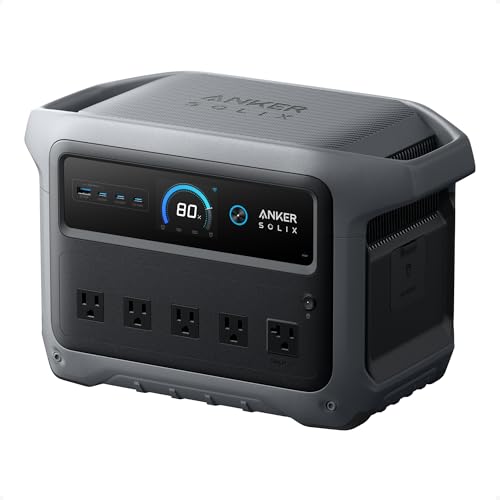 Anker SOLIX C1000 Gen 2 | Best overall this model year | 1,024Wh 24.9 lb | $529.99 · View on Amazon |
| 2 | 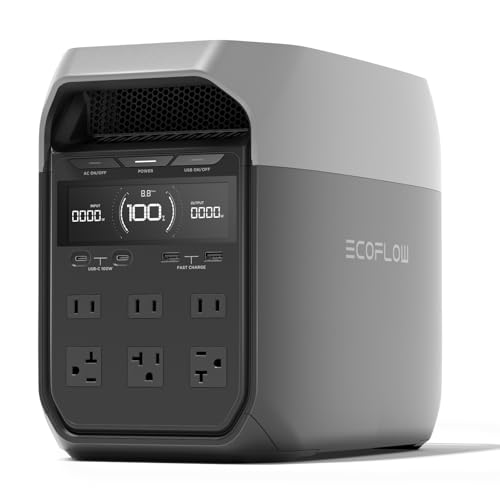 EcoFlow DELTA 3 | Best socket panel, and the expansion path | 1,024Wh 27.6 lb | $579.00 · View on Amazon |
| 3 | 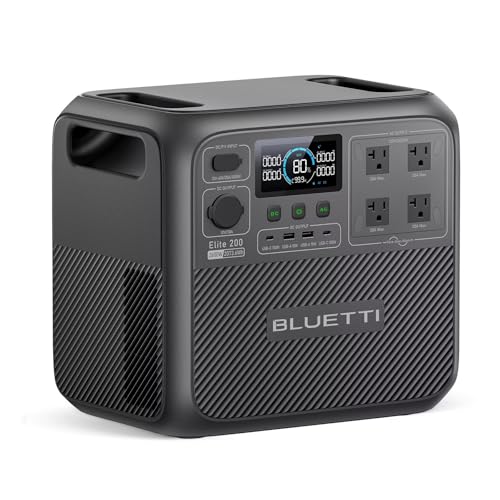 BLUETTI Elite 200 V2 | Longest-lived battery of the model year | 2,074Wh 53.4 lb | $898.99 · View on Amazon |
| 4 | 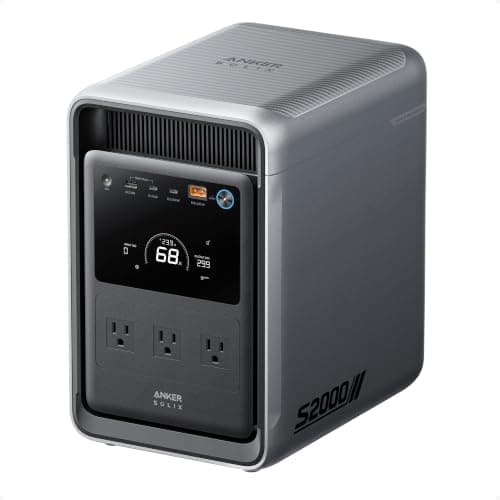 Anker SOLIX S2000 | Most battery you can actually carry | 2,010Wh 35.7 lb | $699.99 · View on Amazon |
| 5 | 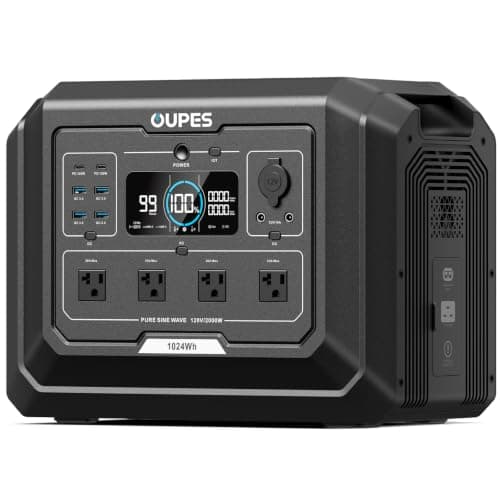 OUPES Mega 1 | Most starting headroom | 1,024Wh 27.8 lb | $529.00 · View on Amazon |
| 6 | 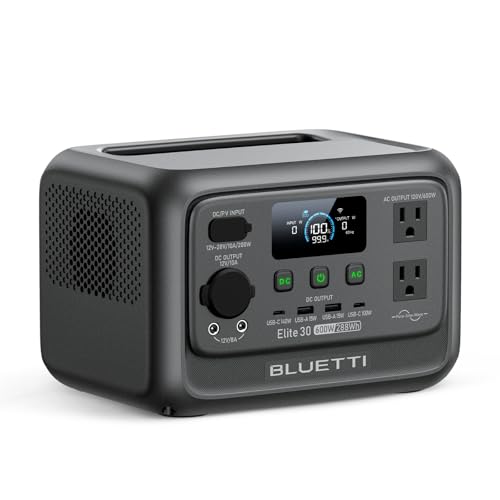 BLUETTI Elite 30 V2 | Budget pick | 288Wh 9.5 lb | $289.99 · View on Amazon |
This is not the same list as the best portable power stations. That page ranks by trip - a tent pitch, a three-day outage, a week off-grid - and it includes units that have been excellent for two or three years. This page asks a narrower question: what did the 2026 hardware actually change, and which current-generation units show it? If you want the best unit for your situation regardless of vintage, read that page. If you are deciding whether this year's models are worth waiting for or trading up to, read this one.
What actually changed this model year
Cycle ratings doubled. Two generations ago, 3,000 cycles to 80% capacity was a good number and plenty of units published nothing at all. This year BLUETTI publishes 6,000+ to 80% on the Elite 200 V2 and Anker publishes 6,000 to 80% - plus 10,000 to 60% - on the S2000. That is not a marketing refresh; it is roughly sixteen years of charging a unit every single day before it drops to 80% of its original capacity. On a unit you cycle daily it changes the cost per kilowatt-hour delivered more than any price cut would. How long do portable power stations last works that arithmetic through.
Sub-hour recharging became normal at 1 kWh. The Anker SOLIX C1000 Gen 2 fills in 49 minutes, the EcoFlow DELTA 3 in 56, the OUPES Mega 1 in 58. Three years ago an hour and a half was a good figure. This matters less than the spec sheets imply if you charge overnight, and it matters enormously between two trips, or in the ninety-minute gap between the power coming back and the next outage. Note the asterisk on every one of them: the headline figure needs the unit's fast-charge mode switched on, which is usually an app setting and sometimes off by default.
Expansion became the dividing line, and the answers got stranger. The EcoFlow DELTA 3 reaches 5 kWh and the OUPES Mega 1 reaches 5,120Wh. The Anker SOLIX C1000 Gen 2 and S2000 expand by exactly nothing - and in the C1000's case, the *previous* generation took an expansion battery and the new one does not. BLUETTI's Elite 200 V2 guidance contradicts itself. If you expect to grow, this is now the first specification to check rather than the last, because two units with identical batteries can differ by 4 kWh of future capacity. Best expandable power stations covers which paths are worth paying for.
What did not change: chemistry. Lithium iron phosphate is now effectively universal at every capacity above 200Wh, which was not true three years ago. Every unit on this page is LFP. If you are comparing against an older listing that still uses NMC cells, LiFePO4 vs NMC power station batteries explains what the difference is worth over a decade of ownership.
How these six were selected
Every unit here had to be a current generation - the model a manufacturer is actively selling and specifying today, not a previous-generation box still clearing stock. That rule alone removed several units we rate highly elsewhere on this site.
Every unit also had to be confirmed purchasable on the day this page was published, with a listing title that matches the brand and model exactly. That is not a formality: three products we considered for this page returned a price with an empty availability string on 2026-11-09, which is Amazon's way of saying the listing exists but the unit is not reliably in stock. They are named below rather than quietly dropped.
And every specification quoted is a figure the manufacturer publishes on its own page. We do not run instrumented tests, we do not measure delivered capacity, and we do not claim first-hand use - how we choose sets out exactly what our method can and cannot tell you. Watt-hours per pound is our own arithmetic on published weights and capacities, and it is labeled as ours wherever it appears.
The six, side by side
| Capacity | AC continuous | Surge | Weight | Wh/lb | Cycles | Expansion | |
|---|---|---|---|---|---|---|---|
| Anker SOLIX C1000 Gen 2 | 1,024Wh | 2,000W | 3,000W | 24.9 lb | 41.1 | 4,000 to 80% | None |
| EcoFlow DELTA 3 | 1,024Wh | 1,800W | 3,600W | 27.6 lb | 37.1 | 4,000 to 80%+ | To 5 kWh |
| BLUETTI Elite 200 V2 | 2,074Wh | 2,600W | 3,900W | 53.4 lb | 38.8 | 6,000+ to 80% | Contradictory |
| Anker SOLIX S2000 | 2,010Wh | 1,500W | 3,000W | 35.7 lb | 56.3 | 6,000 to 80% | None |
| OUPES Mega 1 | 1,024Wh | 2,000W | 4,500W | 27.8 lb | 36.8 | 3,500+ to 80% | To 5,120Wh |
| BLUETTI Elite 30 V2 | 288Wh | 600W | 1,500W | 9.5 lb | 30.3 | 3,000+, no threshold | None |
Read down the surge column and the cycles column together and you have the shape of the model year: the cheap specification to improve is surge, the expensive one is cycle life, and this year two manufacturers spent money on the expensive one. Surge watts vs running watts explains which of your appliance's two numbers belongs in which column.
What each capacity tier runs
If your list has a kettle, a microwave or a space heater on it, work the output figure first and the capacity second - what size power station do I need does that in order, and what a 1000W power station runs has the full appliance list for the tier most people land in.
The near-misses, named
Anker SOLIX C2000 Gen 2. A unit we rate highly and review in full. On 2026-11-09 its listing returned a price with an empty availability string, its title had drifted to a "Solar Powered Generator" at a bundle price, and the one bare-unit listing we found was blank too. We do not rank a unit a reader may not be able to buy, so it is named here instead. The Anker SOLIX C2000 Gen 2 review still covers it in full.
BLUETTI AC180. Same problem, same day: a price and a blank availability string on both the four-outlet and the two-outlet listings. Not ranked.
Jackery Explorer 2000 v2. In stock and excellent, and the only reason it is not here is the rule this page runs on: its headline figures - 2,042Wh, 2,200W, a 4,400W surge and the best watt-hours per pound of any Jackery we list - are the same ones the previous generation published. It is a superb unit and a poor illustration of what 2026 changed. It leads the best power stations under $1,000 instead.
UDPOWER S1200. 1,191Wh is the largest battery in the 1 kWh class and 45.8 watt-hours per pound the best in it, but a 1,200W inverter and an 1,800W maximum are the lowest output figures in that class and not a story about this model year. The UDPOWER S1200 review covers it properly.
Where to go from here
If a price ceiling is the real constraint rather than a model year, the best power stations under $1,000 ranks the whole band on watt-hours per dollar, and best power stations under $300 covers the entry tier. If you have settled on a brand and want to sanity-check it, Jackery alternatives is the page for the most-shopped brand on this site. And if weight is the deciding factor, best lightweight power stations ranks the registry on exactly that.
The picks in full
1. Best overall this model year
Anker SOLIX C1000 Gen 2
- 1,024Wh
- LiFePO4 (InfiniPower LFP)
- 2,000W continuous / 3,000W surge
- 24.9 lb
- 600W
- 80% capacity after 4,000 cycles
- Full in 49 min (UltraFast, 1,600W max input)
- 5 years
1,024Wh of LFP, 2,000W of continuous AC with a 3,000W surge, 24.9 lb, 600W of maximum solar input, a full recharge in 49 minutes at a 1,600W input, a 10 ms switchover, 80% capacity after 4,000 cycles and a five-year warranty.
The 49-minute figure is the fastest full recharge in our registry and it is the single clearest example of what changed this year. The previous C1000 took most of an hour from a 1,300W ceiling; this one takes 1,600W and finishes in under 50 minutes. Combined with 2,000W of continuous output at 41.1 watt-hours per pound, it is the unit that asks the fewest compromises of a general buyer.
The honest cost is the socket panel and the ceiling. Two AC outlets, against six on the EcoFlow DELTA 3 and four on the OUPES Mega 1, and no expansion battery of any kind - the previous-generation C1000 took a BP1000 pack and this one takes nothing. What you buy is what you own.
Reasons to buy
- 49-minute full recharge - fastest in our registry
- 2,000W continuous, 3,000W surge at 24.9 lb
- 41.1 watt-hours per pound
- 600W maximum solar input
- 10 ms switchover; 4,000 cycles to 80%; 5-year warranty
Reasons to avoid
- Two AC outlets only
- No expansion battery exists for it
- 3,000W surge is beaten by three units on this page
Buy it if: a first serious unit, or a replacement for an older 1 kWh box.
Skip it if: you need more than two plugs or room to grow later.
2. Best socket panel, and the expansion path
EcoFlow DELTA 3
- 1,024Wh
- LFP (LiFePO4)
- 1,800W continuous / 3,600W surge
- 27.6 lb
- 500W
- 4,000 cycles to 80%+ capacity
- 56 min at 1,500W
- 5 years
1,024Wh of LFP, 1,800W of continuous AC with a 3,600W surge, 27.6 lb, 500W of maximum solar input, a full recharge in 56 minutes at 1,500W, a switchover under 10 ms, 4,000 cycles to 80%+ capacity, a five-year warranty, thirteen outputs including six AC outlets, and expansion to 5 kWh.
Six sockets is the specification people underestimate until they are three plugs into a four-plug problem. A desk during an outage is a computer, a monitor, a router, a lamp and a phone charger before you have thought about it. Every power strip you avoid is a loose connection and a trip hazard you avoid with it.
The expansion path is the other half. 1,024Wh now and up to 5 kWh later without replacing the unit - a growth ceiling nothing else at this capacity matches except the OUPES Mega 1. Against that, it is 2.7 lb heavier than the Anker for the same battery, 200W weaker on continuous output, and its 500W solar ceiling is the lowest of the three 1 kWh units here.
Reasons to buy
- Six AC outlets; thirteen outputs in total
- Expandable to 5 kWh
- 3,600W surge; switchover under 10 ms
- 4,000 cycles to 80%+; 5-year warranty
Reasons to avoid
- 27.6 lb for 1,024Wh - 37.1 watt-hours per pound
- 1,800W continuous, 200W below the Anker
- 500W solar ceiling, the lowest of the 1 kWh units here
Buy it if: a desk, a van, a cabin - anywhere with several things plugged in.
Skip it if: weight is the deciding factor.
3. Longest-lived battery of the model year
BLUETTI Elite 200 V2
- 2,074Wh
- LiFePO4 (LFP), automotive-grade cells
- 2,600W continuous / 3,900W surge
- 53.4 lb
- 1000W
- 6,000+ cycles to 80% capacity
- Full in 1.4 hr (1,800W AC input)
- 5 years
2,073.6Wh of automotive-grade LiFePO4, 2,600W of continuous AC with a 3,900W Power Lifting figure for purely resistive loads, 53.4 lb, 1,000W of maximum solar input, a full recharge in 1.4 hours from an 1,800W input, a switchover of 15 ms or less, 6,000+ cycles to 80% capacity and a five-year warranty.
6,000 cycles is the number that defines this model year. Two generations ago 3,000 cycles to 80% was a good rating; BLUETTI now publishes double that, and 2,600W of continuous output is the strongest inverter on this page. If you are buying a unit to cycle daily for a decade rather than twenty weekends a year, cycle life is the specification that sets what a kilowatt-hour from it actually costs you.
It is also, by a wide margin, the heaviest thing here. 53.4 lb is 38.8 watt-hours per pound, the worst carry on this page, and BLUETTI's own expansion guidance is contradictory - it sells an Elite 200 V2 bundled with a B500K pack while the model FAQ says the unit does not support its B80, B230 or B300 batteries. We state that rather than resolve it.
Reasons to buy
- 6,000+ cycles to 80% - double the old class standard
- 2,600W continuous, the strongest inverter here
- 1,000W maximum solar input
- Full recharge in 1.4 hr; 5-year warranty
Reasons to avoid
- 53.4 lb; 38.8 watt-hours per pound is last on this page
- Expansion guidance is contradictory on BLUETTI's own site
- Switchover of 15 ms or less, not 10
Buy it if: daily cycling - a van you live in, a stall, a house that loses power often.
Skip it if: you carry it any distance.
4. Most battery you can actually carry
Anker SOLIX S2000
- 2,010Wh
- LFP (314Ah LFP cells)
- 1,500W continuous / 3,000W surge
- 35.7 lb
- 400W
- 6,000 cycles to 80% capacity; 10,000 cycles to 60%
- Full in 2.3 hr in UltraFast Mode (max 1,600W input; 1,150W default)
- 5 years
2,010Wh of 314Ah LFP cells, 1,500W of rated AC with a 3,000W peak, 35.7 lb, 400W of maximum solar input, 6,000 cycles to 80% capacity and 10,000 to 60%, a 10 ms switchover, a five-year warranty and a 2.3-hour full charge once UltraFast Mode is enabled in the app.
56.3 watt-hours per pound is the best carrying efficiency of anything in our registry at any capacity - better than the 51.7 of Jackery's Explorer 2000 v2 and far better than the 38.8 of the BLUETTI above. Two kilowatt-hours that one person moves without resenting it is a genuinely new thing, and it is the other half of what 2026 changed.
The compromises are large and specific. 1,500W of continuous output is the weakest inverter on this page by 300W and 1,100W behind the BLUETTI, which puts a 1,500W kettle at the limit and an 1,800W hair dryer out of reach. There is no 12V car port at all - Anker states this outright - so every piece of 12V gear runs through an AC adapter. And the 400W solar ceiling on a 2,010Wh battery is the weakest capacity-to-solar ratio here.
Reasons to buy
- 56.3 watt-hours per pound - best in our registry
- 6,000 cycles to 80%, 10,000 to 60%
- 35.7 lb for 2,010Wh; a genuine one-person carry
- 10 ms switchover; 5-year warranty
Reasons to avoid
- 1,500W continuous - weakest inverter on this page
- No 12V car port, which Anker states explicitly
- 400W solar on a 2,010Wh battery
- No expansion battery exists for it
Buy it if: long, low-draw jobs you carry: outages, a CPAP, a desk, a camp.
Skip it if: anything on your list draws more than 1,500W.
5. Most starting headroom
OUPES Mega 1
- 1,024Wh
- LFP (LiFePO4)
- 2,000W continuous / 4,500W surge
- 27.8 lb
- 800W
- Over 3,500 cycles to 80%
- 58 min at 1,400W (fast); 1.9 hr at 700W (slow)
- 5 years, extendable to 6 with registration
1,024Wh of LFP, 2,000W of continuous pure sine wave with a 4,500W surge, four NEMA 5-20R outlets, 800W of maximum solar input, a full recharge in 58 minutes at 1,400W, a switchover under 20 ms, over 3,500 cycles to 80%, 27.8 lb and a five-year warranty extendable to six on registration.
4,500W of surge from a one-kilowatt-hour battery is the largest figure in the class by 900W, and surge is what decides whether a fridge compressor, a sump pump or a circular saw starts at all rather than how long it runs. 800W of maximum solar input is also the highest here, which turns this into a unit you can genuinely live off panels rather than one you charge before you leave.
The costs are weight, cycles and company size. 27.8 lb is 36.8 watt-hours per pound, the worst carry of the 1 kWh units on this page; 3,500 cycles is the shortest rating here; the switchover is under 20 ms rather than under 10; and OUPES does not have the service network or resale market of the brands it is priced against.
Reasons to buy
- 4,500W surge - the largest in the 1 kWh class
- Four NEMA 5-20R AC outlets at 1,024Wh
- 800W maximum solar input, highest on this page
- Expandable to 5,120Wh; 5-year warranty, 6 on registration
Reasons to avoid
- 27.8 lb; 36.8 watt-hours per pound
- 3,500+ cycles to 80% is the shortest rating here
- Switchover under 20 ms, not under 10
- Smaller company; thinner service network and resale market
Buy it if: motors - a fridge, a pump, a tool, a stall with four things running.
Skip it if: brand service matters more to you than specification.
6. Budget pick
BLUETTI Elite 30 V2
- 288Wh
- LiFePO4 (automotive-grade)
- 600W continuous / 1,500W surge
- 9.5 lb
- 200W
- Over 3,000 cycles; 10-year lifespan
- Full in 70 min
- 5 years
288Wh of automotive-grade LiFePO4, 600W of continuous AC with a 1,500W Power Lifting figure, 9.5 lb, 200W of maximum solar input, over 3,000 cycles with a stated ten-year lifespan, a full recharge in 70 minutes, a switchover of 10 ms or less, nine output ports including USB-C PD 3.1 at up to 140W, and a five-year warranty.
This is the cheapest unit on the page by a wide margin and it is here because 600W of continuous output from 288Wh is double what every other unit in its capacity class offers. A 288Wh box that runs a 500W appliance is a different tool from a 288Wh box that tops out at 300W, and that gap is the whole reason to choose it.
Be clear about what 288Wh is, though. It is roughly 245Wh of usable energy - a laptop and phones for a weekend, a CPAP for most of one night, lights and a fan at a pitch. It is not a refrigerator unit and it is not an outage unit. BLUETTI also publishes "over 3,000 cycles" with no stated retention threshold, which makes that rating incomparable to the 80%-measured figures elsewhere on this page rather than merely generous, and it does not support expansion.
Reasons to buy
- 600W continuous, 1,500W lifting - double its capacity class
- 9.5 lb; switchover of 10 ms or less
- USB-C PD 3.1 up to 140W across nine ports
- 5-year warranty on the cheapest unit here
Reasons to avoid
- 288Wh is about 245Wh usable - a weekend, not an outage
- Cycle rating published with no retention threshold
- 200W solar ceiling; no expansion
- 30.3 watt-hours per pound - small units always lose this
Buy it if: phones, lights, a laptop, a fan, a CPAP for a night.
Skip it if: anything with a compressor or a heating element.
Questions