Anker SOLIX C2000 Gen 2 Review
The 2 kWh unit that does not make you choose between output and weight. The compromises are a solar ceiling and a footprint, not a spec sheet.
The short answer
Buy it if you want a full two kilowatt-hours and a 2,400W inverter without carrying 53 lb to get them. Anker publishes 2,048Wh of LFP, 2,400W continuous with a 4,000W peak, 41.7 lb, a full recharge in 58 minutes with AC and solar together, a 10 ms UPS switchover, 4,000 cycles to 80% capacity and expansion to 4 kWh. The two real compromises are an 800W solar ceiling — the lowest of its direct rivals that publish one — and an 18.1-inch width that makes it the bulkiest box in its class despite being near the lightest.
What it is good at
It breaks the weight-versus-output trade-off that defines this class. The 2 kWh tier normally asks you to pick: carry less, or plug in more. The BLUETTI Elite 200 V2 gives you 2,600W for 53.4 lb. The EcoFlow DELTA 2 Max gives you 2,400W for 50.7 lb. Anker gives you 2,400W for 41.7 lb, which is 49.1 watt-hours per pound — second only to the Jackery in the class, and the best ratio attached to a full 2,400W inverter. Nine to twelve pounds is the difference between a box two people move and a box one person moves.
58 minutes to full is the fastest recharge in the class. Anker's figure is for AC and solar running together at a combined 2,600W, and it is worth reading literally: the headline needs sunshine as well as a socket. Even so, the wall-only input is high enough that this unit comes back faster than the EcoFlow's published 2.3 hours by a wide margin. On a trip that is not a convenience, it is capacity — a battery you can refill over lunch is effectively a bigger battery than one you have to plan an afternoon around.
The 4,000W peak covers motors and compressors. Continuous output tells you what runs; peak tells you what can start. A domestic refrigerator or a chest freezer pulls several times its running wattage for a fraction of a second when the compressor kicks in, and 4,000W is comfortable headroom for that. Can a power station run a refrigerator explains why the surge figure, not the capacity, is the spec that decides whether a fridge works at all.
A 10 ms switchover and 4,000 cycles to 80%. Ten milliseconds is fast enough that a modem, a router, a TV or a desktop computer rides through a cut without noticing, which makes this unit a genuine whole-desk UPS rather than a battery you plug in after the lights go out. The cycle rating is measured to 80% of original capacity, which is the stricter of the two thresholds manufacturers use — worth noting against Jackery's 4,000 cycles to 70%, which is the same headline number against an easier test. Power station vs UPS covers where that overlap genuinely works.
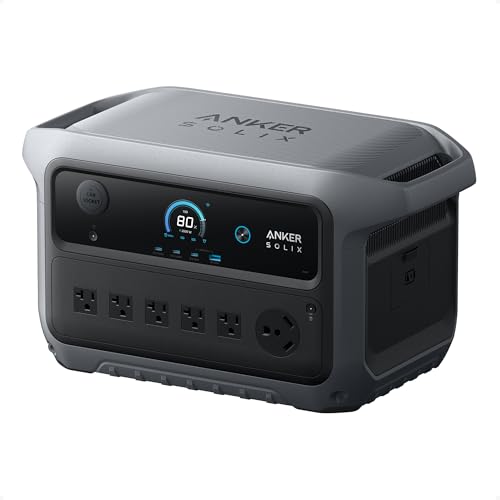
Four AC outlets, a TT-30R, and two 140W USB-C ports. The TT-30R is the 30-amp RV socket, which means this unit can feed a travel trailer's shore-power cord directly without an adapter chain — a real convenience that most 2 kWh boxes leave out. Two 140W USB-C ports will fast-charge a modern laptop without the inverter running at all, which skips the 10-15% conversion penalty and keeps the fan off.
It expands to 4 kWh. One BP2000 (Gen 2) battery doubles the capacity, which is the cheap insurance against sizing this purchase wrong. If you suspect you might need more later, buying into an expandable architecture now costs nothing today — best expandable power stations ranks that axis across the whole registry.
Where it falls short
800W is the lowest solar ceiling among its publishing rivals. The BLUETTI Elite 200 V2 and the EcoFlow DELTA 2 Max both accept 1,000W. On a 2 kWh battery that 200W gap is roughly an extra hour of charging on a good day, and it compounds if you are also running a load while charging. If solar is how you intend to live with this unit rather than a backup plan, the gap matters. How much solar input do you need explains why the input ceiling, not the panel you buy, is what governs.
18.1 inches wide is the biggest footprint in the class. Anker got the weight down partly by changing the proportions, and the result is a long, low box rather than a cube. The Jackery Explorer 2000 v2 is 13.2 inches on its longest side. In a van cabinet, a trunk well or a closet shelf, five inches of width is often the specification that actually decides the purchase — and it is the one nobody checks until the box arrives. Measure the space first.
Four AC outlets is adequate, not generous. The EcoFlow DELTA 2 Max gives you six AC sockets out of fifteen outputs. At a campsite or a tailgate with a cooler, a light string, a speaker and two chargers going, four fills up fast and you end up adding a power strip — which works, but it is worth knowing before you buy. How to power a tailgate adds up a realistic setup.
The warranty is a line term, not a model claim. Anker states five years for its SOLIX power-station range, but the C2000 Gen 2 product page does not restate it. We record it as the line warranty rather than a model-specific promise, because that is what the published evidence supports. If the warranty is decisive for you, confirm the term on the listing you buy from.
The 58-minute figure needs sun. It is published for AC and solar together at 2,600W. That is an honest specification and Anker labels it clearly, but a reader skimming the headline will assume it is a wall-socket number. It is not. Plan on longer if the unit is charging indoors in winter.
How it compares
| Anker C2000 Gen 2 | Jackery 2000 v2 | BLUETTI Elite 200 V2 | EcoFlow DELTA 2 Max | |
|---|---|---|---|---|
| Capacity | 2,048Wh | 2,042Wh | 2,073.6Wh | 2,048Wh |
| AC continuous | 2,400W | 2,200W | 2,600W | 2,400W |
| Peak / surge | 4,000W | 4,400W | 3,900W (resistive) | Not published |
| Weight | 41.7 lb | 39.5 lb | 53.4 lb | 50.7 lb |
| Wh per pound | 49.1 | 51.7 | 38.8 | 40.4 |
| Longest dimension | 18.1 in | 13.2 in | 13.78 in | Not published |
| Max solar input | 800W | Not published | 1,000W | 1,000W |
| Full AC recharge | 58 min (AC + solar) | 1.33 hr | 1.4 hr | 2.3 hr |
| Cycle rating | 4,000 to 80% | 4,000 to 70%+ | 6,000+ to 80% | 3,000 to 80% |
| UPS switchover | 10 ms | Not published | 15 ms or less | Under 20 ms |
| Expandable to | 4 kWh | 4 kWh kit | Unclear | 6 kWh |
Against the Jackery Explorer 2000 v2: the Jackery is 2.2 lb lighter, nearly five inches shorter on its longest side and publishes a higher 4,400W peak. The Anker answers with 200W more continuous output, a published solar ceiling, a published switchover, a cycle rating against the stricter 80% threshold and a longer base warranty. It is the closest contest in the class and we gave it its own page — Jackery Explorer 2000 v2 vs Anker SOLIX C2000 Gen 2 works through it row by row.
Against the BLUETTI Elite 200 V2: BLUETTI wins on raw output (2,600W against 2,400W), on solar input (1,000W against 800W) and on the longest cycle rating on this site, 6,000+ to 80%. It loses 11.7 lb and a faster recharge. If the unit is going to live in one place, the BLUETTI is arguably the better buy; if it moves, the Anker is.
Against the EcoFlow DELTA 2 Max: the EcoFlow gives you six AC outlets out of fifteen outputs, 1,000W of solar, 800W of car and alternator charging and expansion all the way to 6 kWh. The Anker is 9 lb lighter, recharges in under half the time and carries a longer cycle rating. Outlet count and the 6 kWh ceiling are the EcoFlow's whole argument, and they are good ones if the unit is the first step of a bigger backup plan.
Against Anker's own SOLIX C1000 Gen 2: the C1000 Gen 2 is half the battery and 16.8 lb lighter for the same 2,000W-class output. If nothing on your list needs more than a day of runtime, the smaller unit is the better purchase and the money saved buys a panel. Best 1000W power stations covers that tier properly.
Who should buy it
Someone who needs two kilowatt-hours and still has to move the thing. A van build where the battery comes out for a tailgate. A home office that wants a real UPS during the week and a camping battery at the weekend. An RV, because of the TT-30R. In every one of those cases the Anker's combination of 2,400W, 41.7 lb and a 58-minute refill is the best balance in its class, and the 4 kWh expansion path means a sizing mistake is recoverable.
Who should not: anyone whose charging plan is mostly solar — 800W is a real ceiling and two rivals do better. Anyone fitting it into a tight cabinet, because 18.1 inches is a lot of width. Anyone who needs more than four AC sockets at once. And anyone who does not actually need 2 kWh: what size power station do I need will settle that in about five minutes, and most people land a tier lower.
Anker sells a second two-kilowatt-hour unit that is a genuinely different machine, and the model numbers do not make that obvious. The Anker SOLIX S2000 review covers 2,010Wh at 1,500W continuous, 35.7 lb, 400W of solar input, 6,000 cycles to 80% and no expansion - against this unit's 2,048Wh at 2,400W, 41.7 lb, 800W of solar and a path to 4 kWh. The S2000 is the one to carry; this is the one to plug things into.
The picks in full
1. Best 2 kWh unit overall
Anker SOLIX C2000 Gen 2
- 2,048Wh
- LFP (LiFePO4)
- 2,400W continuous / 4,000W surge
- 41.7 lb
- 800W
- 4,000 cycles to 80% capacity
- 100% in 58 min (2,600W AC + solar)
- 5 years
2,048Wh of LFP behind a 2,400W inverter with a published 4,000W peak, in 41.7 lb. That is 49.1 watt-hours per pound, the best ratio in the class attached to a full 2,400W output, and it is what makes this the unit that does not force a choice between carrying it and plugging things into it.
Anker publishes a full recharge in 58 minutes with AC and solar together at 2,600W, a 10 ms UPS switchover, 4,000 cycles to 80% capacity, four AC outlets including a NEMA TT-30R for an RV, two 140W USB-C ports and expansion to 4 kWh with the BP2000 (Gen 2) battery.
The honest limits are an 800W solar ceiling — the lowest of its rivals that publish one — an 18.1-inch width that makes it the bulkiest box in the class, and four AC sockets where EcoFlow gives you six. Anker also does not restate a warranty term on the model page.
Reasons to buy
- 2,400W continuous, 4,000W peak
- 41.7 lb for 2,048Wh — 49.1Wh per pound
- Full recharge in 58 minutes (AC + solar)
- 10 ms switchover; 4,000 cycles to 80%
- TT-30R RV outlet; two 140W USB-C ports
- Expands to 4 kWh
Reasons to avoid
- 800W solar ceiling, lowest among publishing rivals
- 18.1 in wide — the biggest footprint in its class
- Four AC outlets, against EcoFlow's six
- The 58-minute figure requires solar as well as AC
- Warranty stated for the line, not the model
Buy it if: 2 kWh and 2,400W in a box one person can still move.
Skip it if: solar is the main charging plan, or the space is tight.
Questions