Best 1000W Portable Power Stations
The most mis-sold number in the category. Here is what 1000W actually buys you, which spec you probably meant, and the four units worth the money either way.
At a glance
Quick picks
Tap any row to jump to the full write-up. Weight is a column here because it is the spec that decides whether you actually carry the thing.
| # | Product | Best for | Capacity · Weight | Price |
|---|---|---|---|---|
| 1 | 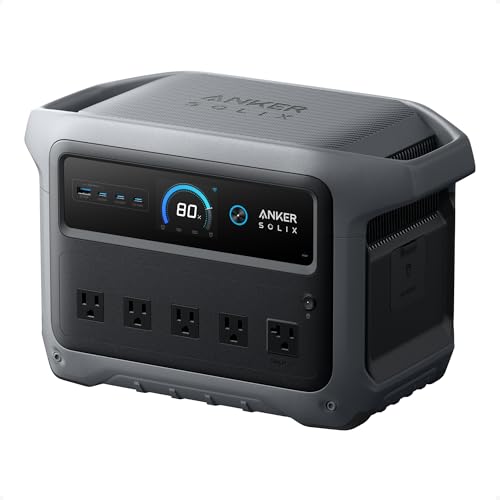 Anker SOLIX C1000 Gen 2 | Best 1kWh unit overall | 1,024Wh 24.9 lb | $529.99 · View on Amazon |
| 2 | 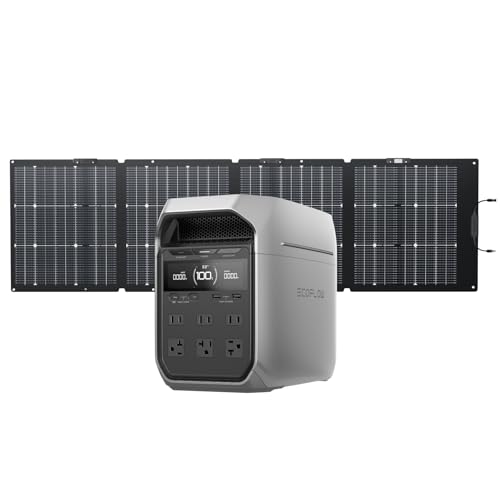 EcoFlow DELTA 3 Plus | Best if panels are part of the plan | 1,024Wh 27.6 lb | Check price on Amazon |
| 3 | 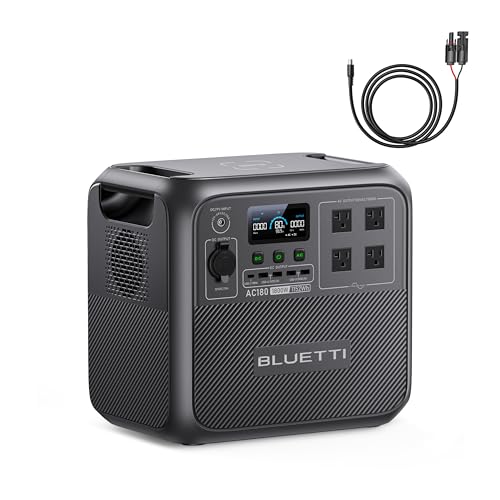 BLUETTI AC180 | Biggest battery in the class | 1,152Wh 35.27 lb | $499.00 · View on Amazon |
| 4 | 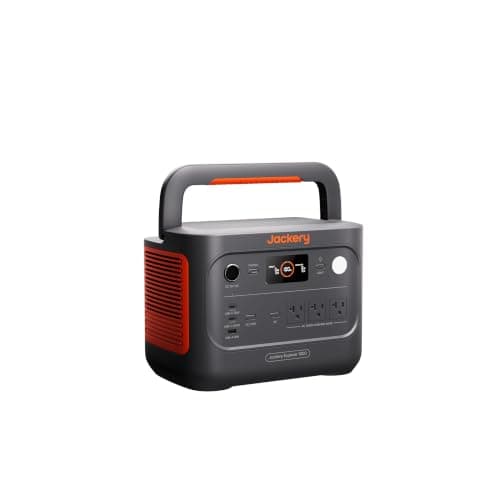 Jackery Explorer 1000 v2 | Best if you have to carry it | 1,070Wh 23.8 lb | $559.00 · View on Amazon |
Start here, because the term is broken. '1000W' is an inverter rating — the maximum the unit can deliver at any instant. '1000Wh' is a battery capacity — how long it can deliver anything. They are different specifications, they are not interchangeable, and a listing that says '1000W Portable Power Station' in its title is usually describing a unit with around 1,000 watt-hours of battery and an inverter somewhere between 1,000W and 2,000W. If you are shopping on this phrase, the number you almost certainly care about is the watt-hours.
The four units below are the 1kWh class as it actually sells in the US right now: 1,024Wh to 1,152Wh of LiFePO4 battery, 1,500W to 2,000W of continuous output, and 23.8 lb to 35.27 lb to carry. Every figure here is read from the manufacturer's own specification page, linked at the bottom. We do not run a test lab and will not pretend to — how we choose sets out exactly what that means.
The class, side by side
| Unit | Battery | Continuous | Surge | Weight | Wh/lb | Solar in | Wall recharge |
|---|---|---|---|---|---|---|---|
| Anker SOLIX C1000 Gen 2 | 1,024Wh | 2,000W | 3,000W | 24.9 lb | 41.1 | 600W | 49 min |
| EcoFlow DELTA 3 Plus | 1,024Wh | 1,800W | 3,600W | 27.6 lb | 37.1 | 1,000W | 56 min |
| BLUETTI AC180 | 1,152Wh | 1,800W | 2,700W | 35.27 lb | 32.7 | 500W | 1.3-1.8 hr |
| Jackery Explorer 1000 v2 | 1,070Wh | 1,500W | 3,000W | 23.8 lb | 45.0 | 400W | 1.7 hr |
Read down the Wh/lb column and the spread is 38% between the lightest and the heaviest for roughly the same battery. Read down the solar column and the spread is 2.5x. Those are the two specifications that actually separate these units; capacity barely moves.
What 1,000 watt-hours runs
Appliance figures below are nameplate bands. Read the plate on your own equipment — the sticker on the back or the base — because the spread inside a product category is wider than the spread between these units.
| Load | Typical draw | Runtime |
|---|---|---|
| Router and modem | 10-20W | 2-3 days |
| Phone charging | 10-15W | 40-60 full charges |
| LED camp lights | 5-15W | Several days |
| CPAP, humidifier off | 30-60W | 2-3 nights |
| Laptop | 45-65W | 13-18 hours |
| 12V camping fridge | 45W cycling at 40% | About 2 days |
| Full-size refrigerator | 150W cycling at 35% | Under a day |
| Starlink Mini | 20-40W continuous | About a day |
| Pellet grill after ignition | 40-60W | 16-24 hours |
| Electric kettle | 1,500W | About 8 boils |
| Microwave | 1,200W | About 40 min of cooking |
| Space heater | 1,500W | About 35 min |
The bottom three rows are why we keep saying the same thing: a kilowatt-hour is days of electronics and minutes of heat. What can a 1000W power station run has the full version of that list, and what size power station do I need is the five-minute exercise that usually moves people a whole size band before they spend anything.
How to pick between the four
- Will anything that heats go into it? A kettle, a microwave, an electric griddle, a circular saw. If yes, take the 2,000W Anker and accept the two outlets. 1,500W is a hard ceiling, not a suggestion.
- Will you buy panels? If yes, the EcoFlow's 1,000W of solar input is worth more than any other difference on the table, because it halves the time to refill. If no, you are paying for an input you will never use.
- Will you carry it? If the unit goes from the car to a tent pad, 23.8 lb versus 35.27 lb is the whole decision and the Jackery wins it outright.
- Does it live in a vehicle? Then weight stops mattering and the BLUETTI's extra 128Wh and 3,500-cycle rating become the argument.
- How many things plug in at once? Two AC outlets is genuinely limiting at a campsite or a tailgate. The EcoFlow's six and the BLUETTI's four are not a luxury.
Where the class runs out
A kilowatt-hour is the sweet spot of the category and it is also a ceiling. Three jobs sit outside it entirely, and buying a 1kWh unit for any of them ends in a second purchase.
- Anything that heats a room. What size power station to run a space heater does the arithmetic; the answer is about 35 minutes.
- An air conditioner. Even a small window unit empties this class in a couple of hours at best. What size power station to run a window air conditioner sets out what it actually takes.
- Multi-day home backup. A full-size fridge alone is most of a kilowatt-hour a day. If an outage is the reason you are shopping, read what size power station for a power outage first and expect to be looking at 2kWh and up.
If this class turns out to be more than you need, best budget power stations under $500 and best lightweight power stations cover the tier below. If it is not enough, best expandable power stations ranks the units that take a second battery, which is the cheap insurance against sizing this wrong.
If this class turns out to be a size too small, the tier above now has its own page. Best 2000W power stations ranks the 2 kWh units on the same four criteria and finds the same pattern one step up: capacity barely moves between them, while weight spreads 33% and recharge time spreads 2.4x. It is also where the output-versus-weight trade-off gets sharp - 2,600W costs you 53 lb, and the unit that avoids that bill is the subject of our Anker SOLIX C2000 Gen 2 review.
The two output figures on those spec sheets are not the same specification, and the difference decides whether a motor-driven appliance starts at all: surge watts vs running watts covers what each measures and where to read the matching pair off your own nameplate. For the units with the widest starting margin in the registry, best power station for high-surge loads ranks on peak rating alone.
The two units at the top of this class are worth looking at head to head rather than one after the other. Anker SOLIX C1000 Gen 2 vs EcoFlow DELTA 3 works through the only four specifications that actually separate them - continuous watts, outlet count, weight and whether the unit can be expanded later - and says plainly which way each one should push you.
There is a newer value entry in this class worth knowing about before you commit. The UDPOWER S1200 review covers 1,191Wh - the largest battery anyone sells at this size - at 26.0 lb, which is 45.8 watt-hours per pound and the best in the class. The catch is the inverter: 1,200W continuous and an 1,800W maximum are both the lowest figures here, so it runs fridges, fans, laptops and CPAPs for longer than anything on this page and will not boil a kettle at all.
This class now sits in the middle of a price band rather than at the top of one. The best power stations under $1,000 puts these units against the 2 kWh machines that crossed under the same ceiling, and works through the only question that matters between them: the second kilowatt-hour doubles every runtime and changes nothing about what will start, so it is worth buying for a three-day outage and wasted on a one-night one.
The picks in full
1. Best 1kWh unit overall
Anker SOLIX C1000 Gen 2
- 1,024Wh
- LiFePO4 (InfiniPower LFP)
- 2,000W continuous / 3,000W surge
- 24.9 lb
- 600W
- 80% capacity after 4,000 cycles
- Full in 49 min (UltraFast, 1,600W max input)
- 5 years
1,024Wh of battery behind a 2,000W inverter, which is the combination the term '1000W power station' is usually reaching for and almost never delivers. Most units sold on that phrase pair a kilowatt-hour battery with a 1,000-1,500W inverter; this one gives you a full 2,000W continuous with a 3,000W surge, so a kettle, a microwave, a griddle or a circular saw is inside the envelope rather than right at the edge of it.
Anker publishes a full recharge in 49 minutes at 1,600W input, a 10 ms UPS switchover, 80% capacity after 4,000 cycles, a 5-year warranty and dimensions of 15.12 x 8.19 x 9.61 in. The 49-minute figure is the one that changes how you use the thing: you can top it up over lunch rather than planning a charge overnight.
24.9 lb works out at 41.1Wh per pound, a little behind the Jackery below. The real limits are two AC outlets and no expansion — if you want six outlets and a second battery, Anker's own previous generation still sells, and C1000 vs C1000 Gen 2 is the page that settles which one you want.
Reasons to buy
- 2,000W continuous, 3,000W surge
- Full recharge in 49 minutes
- 80% capacity after 4,000 cycles
- 10 ms UPS switchover
- 5-year warranty
Reasons to avoid
- Only two AC outlets
- Not expandable
- 600W solar input, behind EcoFlow
- 41.1Wh per pound, behind the Jackery
Buy it if: you want the widest appliance envelope a 1kWh box can give you.
Skip it if: you need more than two things plugged in at once.
2. Best if panels are part of the plan
EcoFlow DELTA 3 Plus
- 1,024Wh
- LFP (LiFePO4)
- 1,800W continuous / 3,600W surge
- 27.6 lb
- 1000W
- 4,000 cycles to 80%+ capacity
- Full in 56 min (1,500W AC input)
- 5 years
1,024Wh and 1,800W continuous with a 3,600W surge, six AC outlets, and the specification that separates it from everything else in the class: 1,000W of solar input across two 500W MPPT inputs. That is twice the Anker and twice the BLUETTI, and on a sunny day it is the difference between a unit that refills itself by lunchtime and one that is still working on it at dusk.
EcoFlow publishes a full wall recharge in 56 minutes at 1,500W, a switchover under 10 ms, 4,000 cycles to 80%+ capacity, a 5-year warranty and expansion to 5 kWh with extra batteries. Six AC outlets plus two 140W USB-C ports is the most generous port count here.
27.6 lb is 37.1Wh per pound, the joint-worst figure of the four, and it is 2.7 lb heavier than the Anker for the same battery. If you only ever charge from a wall socket, the plain EcoFlow DELTA 3 is the same box with half the solar input and no reason to pay for the Plus.
Reasons to buy
- 1,000W solar input across two MPPT inputs
- Six AC outlets, two 140W USB-C
- Expands to 5 kWh
- Full wall recharge in 56 minutes
- Switchover under 10 ms
Reasons to avoid
- 27.6 lb — 37.1Wh per pound
- 1,800W continuous, not 2,000W
- The solar input is wasted if you never buy panels
Buy it if: solar is part of the purchase, now or later.
Skip it if: you charge from a wall socket and nothing else.
3. Biggest battery in the class
BLUETTI AC180
- 1,152Wh
- LiFePO4
- 1,800W continuous / 2,700W surge
- 35.27 lb
- 500W
- 3,500+ cycles to 80% original capacity
- 1.3-1.8 hr full (1,440W max AC input)
- 5 years
1,152Wh is 12.5% more battery than the 1,024Wh units everyone else sells at this tier, and BLUETTI pairs it with 1,800W continuous, a 2,700W surge, four AC outlets and a cycle rating of 3,500+ to 80% of original capacity. On a camping trip that extra 128Wh is roughly another night of a 12V fridge, which is a real difference rather than a spec-sheet one.
BLUETTI publishes a 1.3-1.8 hour full recharge at up to 1,440W input, a 20 ms switchover, a 5-year warranty, dimensions of 13.39 x 9.72 x 12.48 in and a 15W wireless charging pad on the top panel. It is also the most compact of the four by footprint, because the extra capacity went into height rather than width.
35.27 lb is the cost, and it is a big one: 32.7Wh per pound is the worst ratio in the class and 10.5 lb more than the Anker. 500W of solar input and no expansion are the other two limits. Our full BLUETTI AC180 review has the whole sheet.
Reasons to buy
- 1,152Wh — the largest battery in the class
- 3,500+ cycles to 80% capacity
- Four AC outlets plus a wireless charging pad
- Compact footprint: 13.39 x 9.72 in
- 5-year warranty
Reasons to avoid
- 35.27 lb — 32.7Wh per pound, worst here
- 500W solar input
- Not expandable
- 20 ms switchover, slower than the others
Buy it if: the unit lives in a vehicle and capacity beats carry weight.
Skip it if: you will be carrying it any distance.
4. Best if you have to carry it
Jackery Explorer 1000 v2
- 1,070Wh
- LiFePO4 (LFP)
- 1,500W continuous / 3,000W surge
- 23.8 lb
- 400W
- 4,000 cycles to 70% capacity
- 1.7 hr wall; 1 hr emergency charge via app
- 5 years (with registration)
1,070Wh at 23.8 lb is 45.0Wh per pound — the best weight efficiency anywhere in this site's registry, and the spec that most reliably predicts whether a power station gets used or stored. 1,500W continuous with a 3,000W surge covers everything on a camping list and stops short of a 1,500W heater, which no unit at this capacity should be running anyway.
Jackery publishes 4,000 cycles to 70% capacity, a 1.7-hour wall recharge, a one-hour emergency charge through the app, below 22 decibels in silent mode, a switchover under 20 ms and a 5-year warranty with registration. Below 22 dB is quieter than every other unit here publishes, which matters inside a tent.
400W of solar input is the lowest of the four and it does not expand. Jackery also quotes its cycle life to 70% capacity rather than the 80% threshold everyone else uses, so the headline 4,000 is measured against a more forgiving bar. Our review covers the discrepancy in the published weight figures too.
Reasons to buy
- 45.0Wh per pound — best on this site
- 1,070Wh, the most of the 1kWh trio
- Below 22 dB in silent mode
- Full wall recharge in 1.7 hours
- 5-year warranty with registration
Reasons to avoid
- 400W solar input — lowest here
- Cycle life quoted to 70%, not 80%
- Not expandable
- Two AC outlets
Buy it if: the unit gets carried from the car to a pitch.
Skip it if: you want 2,000W or a fast solar refill.
Questions