Jackery Alternatives
Jackery is the default for good reasons, and it is beaten on specific specifications by specific units. This is which ones, and when the swap is worth making.

At a glance
Quick picks
Tap any row to jump to the full write-up. Weight is a column here because it is the spec that decides whether you actually carry the thing.
| # | Product | Best for | Capacity · Weight | Price |
|---|---|---|---|---|
| 1 | 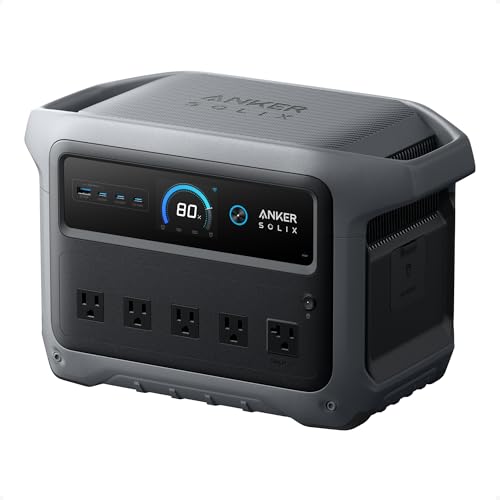 Anker SOLIX C1000 Gen 2 | The closest swap for an Explorer 1000 v2 | 1,024Wh 24.9 lb | $529.99 · View on Amazon |
| 2 | 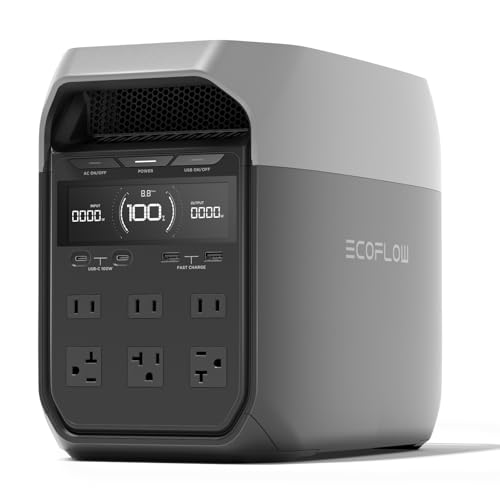 EcoFlow DELTA 3 | If you want sockets and an expansion path | 1,024Wh 27.6 lb | $579.00 · View on Amazon |
| 3 | 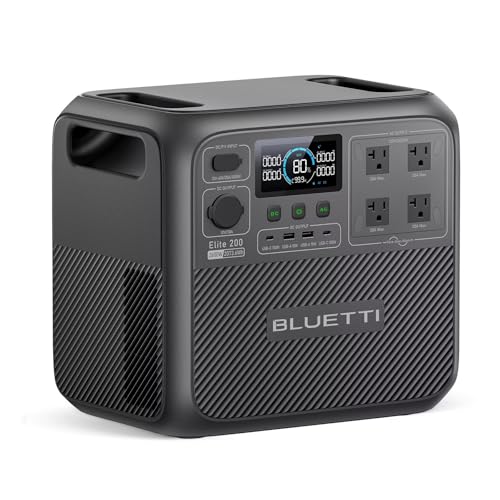 BLUETTI Elite 200 V2 | If you want the longest-lived battery | 2,074Wh 53.4 lb | $898.99 · View on Amazon |
| 4 | 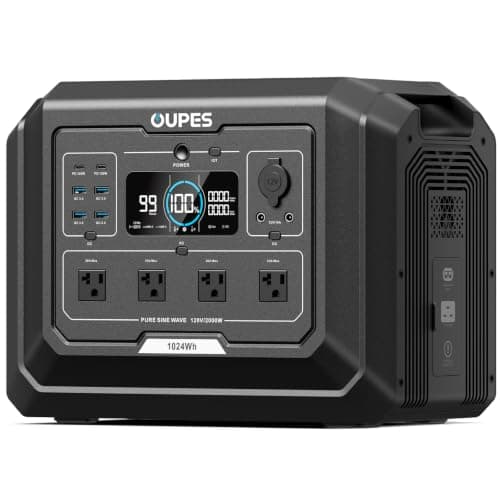 OUPES Mega 1 | If you need starting headroom | 1,024Wh 27.8 lb | $529.00 · View on Amazon |
| 5 | 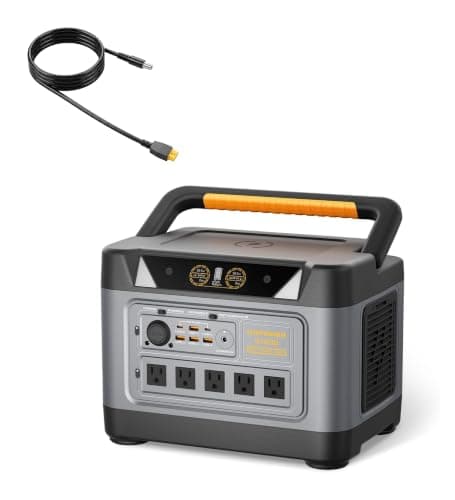 UDPOWER S1200 | Budget pick: the cheaper alternative | 1,191Wh 26 lb | $499.00 · View on Amazon |
Start with what Jackery is genuinely best at, because it is a short list and a strong one. Jackery builds the lightest units per watt-hour in two separate capacity classes: the Explorer 1000 v2 at 45.0 watt-hours per pound and the Explorer 2000 v2 at 51.7, which is second-best in our entire registry at any capacity. The Explorer 2000 v2 is also the smallest 2 kWh box we list, with a 13.2 in longest side against 18.1 in for Anker's equivalent. Jackery's interface is the simplest in the category - one screen, no app required for normal use - and it has the widest retail availability of any brand here, which matters when something goes wrong in year three.
None of that is faint praise and none of it is disputed below. If weight, size, simplicity or retail presence is your deciding factor, buy the Jackery - our Jackery Explorer 1000 v2 review and Jackery vs EcoFlow both land there for exactly those buyers.
This page is for the other case: you have identified one specification Jackery does not prioritize, and you want to know precisely what to buy instead. There are five such specifications, and each one has a different answer.
The five reasons people look elsewhere
1. Outlet count. Jackery publishes two AC outlets on both the Explorer 1000 v2 and the Explorer 2000 v2. EcoFlow's DELTA 3 publishes six, the UDPOWER S1200 five, and the OUPES Mega 1 four. The two-socket limit is the first wall most people hit with a power station, and a power strip only half solves it: every strip is another connection to work loose and another thing to trip over in a tent at night. If this is your complaint, the answer is the EcoFlow.
2. Expansion. Neither Jackery unit we cover expands from the box you own - the Explorer 2000 v2 pairs with a separate 4 kWh kit, and the Explorer 1000 v2 has no expansion path at all. EcoFlow's DELTA 3 reaches 5 kWh and the OUPES Mega 1 reaches 5,120Wh, both from the unit you already bought. Best expandable power stations covers which of those paths is worth the money.
3. Continuous output at 1 kWh. The Explorer 1000 v2 publishes 1,500W continuous. The Anker SOLIX C1000 Gen 2 and the OUPES Mega 1 both publish 2,000W at the same capacity. That 500W is the gap between running a 1,500W kettle and not, and no amount of battery closes it. Surge watts vs running watts explains which of your appliance's two numbers to check against it.
4. The cycle threshold, which is the subtle one. Jackery publishes 4,000 cycles measured to 70% remaining capacity. Anker, EcoFlow and BLUETTI measure to 80%. The cycle counts look identical on a comparison chart and the tests are not comparable - 4,000-to-70% is the easier one. BLUETTI's Elite 200 V2 publishes 6,000+ to 80%, which is a bigger number measured the harder way. How long do portable power stations last sets out what that difference is worth over a decade.
5. Published solar input and switchover. Jackery publishes 400W of maximum solar input on the Explorer 1000 v2 and no solar figure at all on the Explorer 2000 v2, where BLUETTI and EcoFlow publish 1,000W on comparable units. It also publishes no UPS switchover time for the Explorer 2000 v2. Those are absences rather than weaknesses, but if solar charging or an uninterrupted desk is the job, buying on an unpublished figure is buying blind. How much solar input do you need sizes an array against a published ceiling.
Jackery against the five alternatives
| Capacity | AC continuous | Surge / max | Wh/lb | AC outlets | Cycles | Expansion | |
|---|---|---|---|---|---|---|---|
| Jackery Explorer 1000 v2 | 1,070Wh | 1,500W | 3,000W | 45.0 | 2 | 4,000 to 70% | None |
| Jackery Explorer 2000 v2 | 2,042Wh | 2,200W | 4,400W | 51.7 | 2 | 4,000 to 70%+ | 4 kWh kit |
| Anker SOLIX C1000 Gen 2 | 1,024Wh | 2,000W | 3,000W | 41.1 | 2 | 4,000 to 80% | None |
| EcoFlow DELTA 3 | 1,024Wh | 1,800W | 3,600W | 37.1 | 6 | 4,000 to 80%+ | To 5 kWh |
| BLUETTI Elite 200 V2 | 2,074Wh | 2,600W | 3,900W | 38.8 | 4 | 6,000+ to 80% | Contradictory |
| OUPES Mega 1 | 1,024Wh | 2,000W | 4,500W | 36.8 | 4 | 3,500+ to 80% | To 5,120Wh |
| UDPOWER S1200 | 1,191Wh | 1,200W | 1,800W | 45.8 | 5 | 3,000 to 80%+ | None |
Read the watt-hours-per-pound column and Jackery's case makes itself: it holds first and second place among the 2 kWh units and is beaten at 1 kWh only by the UDPOWER, by 0.8. Read the outlets and expansion columns and the case against it is just as clear. Nothing here is a knockout in either direction, which is why "what should I buy instead of a Jackery" has five answers rather than one.
Which swap suits which buyer
- You were buying an Explorer 1000 v2 and want more capability for the same size box. Take the Anker SOLIX C1000 Gen 2: 500W more continuous output, a 49-minute recharge against 1.7 hours, 200W more solar input, and a cycle rating measured the harder way. You give up 1.1 lb and 46Wh.
- You keep running out of sockets. Take the EcoFlow DELTA 3: six AC outlets against two, thirteen outputs in total, and a path to 5 kWh that no Jackery offers from the box you own.
- You cycle the unit daily and intend to keep it a decade. Take the BLUETTI Elite 200 V2: 6,000+ cycles to 80% against 4,000 to 70%, and 400W more continuous output. You give up 13.9 lb against the Explorer 2000 v2, which is a lot.
- You need a motor to start. Take the OUPES Mega 1: a 4,500W surge against Jackery's 3,000W at the same capacity, four outlets, and 800W of solar input against 400W.
- You want a Jackery-shaped unit for less money. Take the UDPOWER S1200: more battery than the Explorer 1000 v2, slightly better watt-hours per pound, five outlets and a five-year standard warranty - as long as nothing on your list needs more than 1,200W.
What this page does not claim
We have not tested any of these units side by side, we do not measure delivered capacity, and nothing here is based on first-hand use - how we choose states exactly what our method can and cannot tell you. Every specification above is a figure the manufacturer publishes on its own page, cited in Sources; watt-hours per pound is our arithmetic on those published figures and is labeled as ours.
We have also not tried to tell you Jackery is a bad buy, because the specification sheet does not support that and plenty of people should buy one. If you are still weighing the brand itself rather than a single specification, Jackery vs Anker SOLIX and Jackery vs EcoFlow work through the brands head to head, and best portable power stations ranks the whole registry by situation.
If budget rather than brand is your real constraint, the best power stations under $1,000 ranks that whole band on watt-hours per dollar. And for the current-generation view, the best portable power stations of 2026 covers what changed in this model year.
The picks in full
1. The closest swap for an Explorer 1000 v2
Anker SOLIX C1000 Gen 2
- 1,024Wh
- LiFePO4 (InfiniPower LFP)
- 2,000W continuous / 3,000W surge
- 24.9 lb
- 600W
- 80% capacity after 4,000 cycles
- Full in 49 min (UltraFast, 1,600W max input)
- 5 years
1,024Wh of LFP, 2,000W of continuous AC with a 3,000W surge, 24.9 lb, 600W of maximum solar input, a full recharge in 49 minutes at a 1,600W input, a 10 ms switchover, 80% capacity after 4,000 cycles and a five-year warranty.
Set against the Jackery Explorer 1000 v2 - 1,070Wh, 1,500W continuous, 23.8 lb, 400W solar, 1.7 hours to full, a switchover under 20 ms and 4,000 cycles to 70% - the Anker wins on the four specifications most buyers care about. 500W more continuous output is the gap between running a 1,500W kettle and not. A 49-minute recharge against 1.7 hours. 200W more solar input. And a cycle rating measured to 80% rather than 70%, which is a harder test on the same cycle count.
Jackery keeps two things in this matchup, and they are not nothing. It is 1.1 lb lighter for 46Wh more battery - 45.0 watt-hours per pound against 41.1 - and it has the simpler interface of the two. Neither unit expands, so that argument is a draw. If you were buying an Explorer 1000 v2 and weight is not your deciding factor, this is the swap.
Reasons to buy
- 2,000W continuous - 500W more than the Explorer 1000 v2
- 49-minute full recharge against Jackery's 1.7 hours
- 600W solar input against 400W
- 4,000 cycles measured to 80%, not 70%
- 10 ms switchover; 5-year warranty
Reasons to avoid
- Two AC outlets, same as the Jackery
- 41.1 watt-hours per pound, behind Jackery's 45.0
- No expansion battery exists for it
Buy it if: an Explorer 1000 v2 shopper who wants more watts and a faster refill.
Skip it if: the last pound matters more than the extra 500W.
2. If you want sockets and an expansion path
EcoFlow DELTA 3
- 1,024Wh
- LFP (LiFePO4)
- 1,800W continuous / 3,600W surge
- 27.6 lb
- 500W
- 4,000 cycles to 80%+ capacity
- 56 min at 1,500W
- 5 years
1,024Wh of LFP, 1,800W of continuous AC with a 3,600W surge, 27.6 lb, 500W of maximum solar input, a 56-minute full recharge, a switchover under 10 ms, 4,000 cycles to 80%+, a five-year warranty, thirteen outputs including six AC outlets, and expansion to 5 kWh.
This is the alternative for the two things Jackery consistently does not prioritize. Jackery publishes two AC outlets on both the Explorer 1000 v2 and the Explorer 2000 v2; this gives you six. And Jackery's expansion answer at 1 kWh is no expansion at all, while its 2 kWh answer is a separate 4 kWh kit - against a unit that grows to 5 kWh from the box you already own.
Jackery wins the weight argument again: 23.8 lb against 27.6 for slightly more battery, which is 45.0 watt-hours per pound against 37.1. It also beats this unit on surge at the 2 kWh end. But if your frustration with Jackery is that you are three plugs into a four-plug problem, this is the specific fix.
Reasons to buy
- Six AC outlets against Jackery's two
- Expandable to 5 kWh; Jackery's 1 kWh units do not expand
- 3,600W surge; switchover under 10 ms
- 4,000 cycles to 80%+, a harder threshold than Jackery's 70%
Reasons to avoid
- 37.1 watt-hours per pound against Jackery's 45.0
- 1,800W continuous - more than the Explorer 1000 v2, less than the Anker
- 500W solar ceiling
Buy it if: several things plugged in at once, and room to grow later.
Skip it if: you carry the unit a long way.
3. If you want the longest-lived battery
BLUETTI Elite 200 V2
- 2,074Wh
- LiFePO4 (LFP), automotive-grade cells
- 2,600W continuous / 3,900W surge
- 53.4 lb
- 1000W
- 6,000+ cycles to 80% capacity
- Full in 1.4 hr (1,800W AC input)
- 5 years
2,073.6Wh of automotive-grade LiFePO4, 2,600W of continuous AC with a 3,900W Power Lifting figure for resistive loads, 53.4 lb, 1,000W of maximum solar input, a 1.4-hour full recharge from an 1,800W input, a switchover of 15 ms or less, 6,000+ cycles to 80% capacity and a five-year warranty.
Against the Jackery Explorer 2000 v2 this is the cycle-life alternative, and the gap is larger than the numbers first suggest. Jackery publishes 4,000 cycles to 70% retention; BLUETTI publishes 6,000+ to 80% - a bigger cycle count measured to a harder threshold. It also gives you 400W more continuous output, a published 1,000W solar ceiling where Jackery publishes no solar figure for that model, and a published switchover time where Jackery publishes none.
What you give up is substantial and physical. 53.4 lb against Jackery's 39.5 for 32Wh more battery - 38.8 watt-hours per pound against 51.7, which is the single widest gap on this page. Jackery also wins on surge, 4,400W against 3,900W, and on box size, with a 13.2 in longest side against BLUETTI's 13.78. And BLUETTI's own expansion guidance contradicts itself on this model, which we report rather than resolve.
Reasons to buy
- 6,000+ cycles to 80% against Jackery's 4,000 to 70%
- 2,600W continuous against 2,200W
- 1,000W published solar input; Jackery publishes none for this model
- Published switchover of 15 ms or less
Reasons to avoid
- 53.4 lb against Jackery's 39.5 - 38.8 Wh/lb against 51.7
- 3,900W Power Lifting, below Jackery's 4,400W surge peak
- Expansion guidance contradicts itself on BLUETTI's own site
Buy it if: daily cycling, where the retention threshold is the real number.
Skip it if: you move the unit, ever.
4. If you need starting headroom
OUPES Mega 1
- 1,024Wh
- LFP (LiFePO4)
- 2,000W continuous / 4,500W surge
- 27.8 lb
- 800W
- Over 3,500 cycles to 80%
- 58 min at 1,400W (fast); 1.9 hr at 700W (slow)
- 5 years, extendable to 6 with registration
1,024Wh of LFP, 2,000W of continuous pure sine wave with a 4,500W surge, four NEMA 5-20R outlets, 800W of maximum solar input, a 58-minute full recharge at 1,400W, a switchover under 20 ms, over 3,500 cycles to 80%, 27.8 lb and a five-year warranty extendable to six on registration.
Jackery publishes a 3,000W surge peak on the Explorer 1000 v2. This publishes 4,500W from the same size battery - 1,500W more starting headroom for a fridge compressor, a sump pump or a circular saw. 800W of solar input against Jackery's 400W is the other large gap, and it is the difference between a unit you charge before you leave and one you genuinely run off panels. Four AC outlets against two, and a growth path to 5,120Wh that Jackery's 1 kWh line does not offer at all.
The honest costs: 27.8 lb is 36.8 watt-hours per pound against Jackery's 45.0, the worst carry here; a 3,500-cycle rating that is shorter than Jackery's 4,000 even before you account for the threshold difference; a switchover under 20 ms, matching Jackery rather than beating it; and a far smaller company behind the warranty, with no meaningful resale market.
Reasons to buy
- 4,500W surge against Jackery's 3,000W at this capacity
- 800W solar input against Jackery's 400W
- Four AC outlets against two; expands to 5,120Wh
- 5-year warranty, six on registration
Reasons to avoid
- 36.8 watt-hours per pound against Jackery's 45.0
- 3,500+ cycles, fewer than Jackery's 4,000
- Switchover under 20 ms - a tie, not a win
- Smaller company; thin service network and no resale market
Buy it if: motors, compressors and real solar charging at 1 kWh.
Skip it if: brand service and resale value matter to you.
5. Budget pick: the cheaper alternative
UDPOWER S1200
- 1,191Wh
- LiFePO4
- 1,200W continuous / 1,800W surge
- 26 lb
- 400W
- 80%+ capacity after 3,000 cycles
- About 1.5 hr with the fast AC charger (800W maximum AC input)
- 5 years
1191Wh of LiFePO4, 1200W of rated pure sine wave at 120V/60Hz with an 1800W maximum, 26.0 lb, 400W of maximum solar input, an 800W AC input giving about 1.5 hours to full, 80%+ capacity after 3,000 cycles, a response time of 10 ms or less, a five-year warranty and fourteen ports including five AC outlets.
"Cheaper alternative to Jackery" is one of the most-typed versions of this search, and this is the honest answer to it. 1,191Wh is more battery than the Explorer 1000 v2's 1,070Wh, 45.8 watt-hours per pound is better than Jackery's 45.0, five AC outlets beat Jackery's two, the switchover figure is faster, and the warranty is five years as standard where Jackery's is three plus two on registration - all at a materially lower price.
The catch is one number and it is decisive. 1,200W of continuous output against Jackery's 1,500W, and an 1,800W maximum against Jackery's 3,000W surge peak. That rules out a 1,500W kettle, a 1,500W space heater on high and an 1,800W hair dryer, and it makes an older refrigerator's compressor start a genuine question. UDPOWER is also a small company with no resale market, and it publishes its own weight and cycle figures two ways on one page - we quote the conservative version of each.
Reasons to buy
- 1,191Wh - more battery than the Explorer 1000 v2
- 45.8 watt-hours per pound, narrowly ahead of Jackery
- Five AC outlets against two; fourteen ports
- 10 ms or less switchover; 5-year standard warranty
Reasons to avoid
- 1,200W continuous against Jackery's 1,500W
- 1,800W maximum against Jackery's 3,000W surge peak
- About 1.5 hr to full from an 800W input
- 3,000 cycles; no expansion and no pairing
- Small brand: thin service network, no resale market
Buy it if: a Jackery shopper on a tighter budget with only small loads.
Skip it if: anything on your list has a motor or a heating element.
Questions