How Long Will a Power Station Run a Fan?
The cheapest cooling a battery can give you, and the one load where a small unit genuinely lasts all night. The arithmetic, by fan type.

The short answer
A full-size box fan draws 45 to 60W on low and 75 to 100W on high, so a 1,070Wh unit at 85% usable - 910Wh - runs one for roughly 15 to 20 hours on low or 9 to 12 on high. A 288Wh unit gives you about 4 to 5 hours on low. A 12V DC fan sold for camping draws 5 to 25W, which turns the same 288Wh unit into two or three nights. Fans are the single best value cooling a battery can deliver, because they move air rather than removing heat - and that is why they cost a fraction of what any air conditioner does.
At a glance
Quick picks
Tap any row to jump to the full write-up. Weight is a column here because it is the spec that decides whether you actually carry the thing.
| # | Product | Best for | Capacity · Weight | Price |
|---|---|---|---|---|
| 1 | 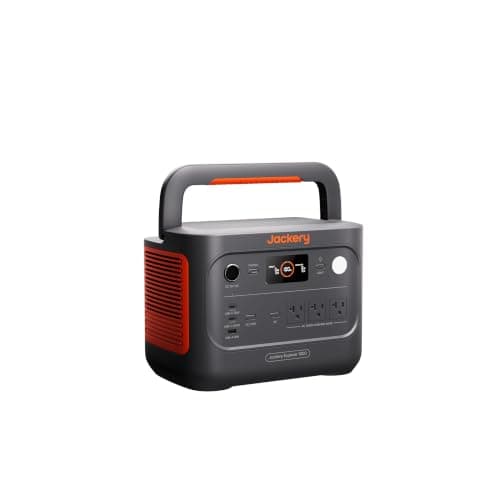 Jackery Explorer 1000 v2 | Best for multiple nights of a mains fan | 1,070Wh 23.8 lb | $559.00 · View on Amazon |
| 2 | 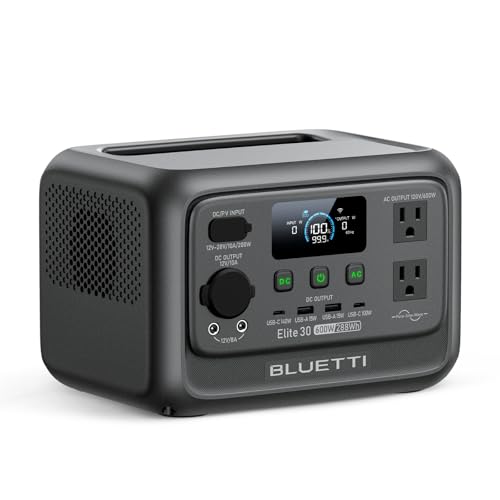 BLUETTI Elite 30 V2 | Best small unit for a DC fan | 288Wh 9.5 lb | $289.99 · View on Amazon |
| 3 | 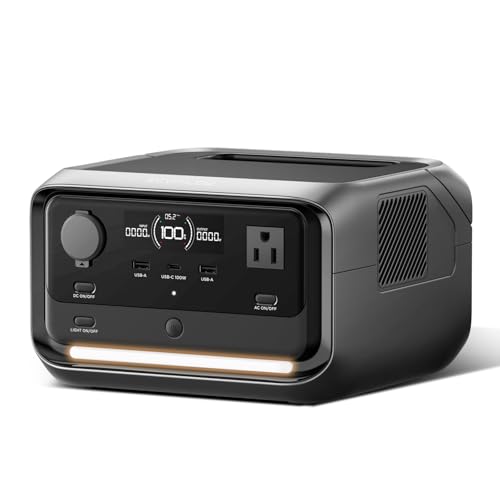 EcoFlow RIVER 3 Plus | Best if one night is not enough | 286Wh 10.4 lb | Check price on Amazon |
Runtime by fan type
The variable is the fan, not the battery. Fan power draw spans more than an order of magnitude between a 12V tent fan and a pedestal fan on high, so the first job is to read the plate on yours - it is usually on the base, the rear housing or inside the grille. The bands below are the ranges nameplates tend to fall in.
| Fan | Typical draw | 288Wh unit | 1,070Wh unit | 2,048Wh unit |
|---|---|---|---|---|
| 12V DC tent fan | 5-10W | 33-49 h | 91-182 h | 174-348 h |
| USB desk or clip fan | 2-5W | 49-122 h | 182-455 h | 348-870 h |
| 12V vehicle fan | 15-25W | 10-16 h | 36-61 h | 70-116 h |
| Box fan, low | 45-60W | 4-5 h | 15-20 h | 29-39 h |
| Box fan, high | 75-100W | 2.5-3 h | 9-12 h | 17-23 h |
| Pedestal fan, high | 50-80W | 3-5 h | 11-18 h | 22-35 h |
| Tower fan | 40-70W | 3.5-6 h | 13-23 h | 25-44 h |
| Whole-room high-velocity fan | 100-200W | 1-2.5 h | 4.5-9 h | 9-17 h |
Run a DC fan from the car socket, not an AC fan from the inverter
This is the single biggest saving available on this page and it has two parts. The obvious part is that a 12V fan sold for camping draws a fraction of what a mains fan does - 5 to 25W against 45 to 100W - because it is a smaller fan designed for a tent rather than a living room.
The less obvious part is the inverter. Running a mains fan means converting DC to AC, which costs around 12% on this site's figures, and it means the inverter is switched on all night drawing its own standby power. Running a 12V fan from the car socket avoids both. On a small unit over a long night, the inverter overhead alone can be a meaningful fraction of the budget.
It also keeps the power station's own cooling fan off, which matters if the reason you want air moving is that you are trying to sleep. Are portable power stations loud covers which manufacturers publish a noise figure at all - most do not.
What makes the runtime longer
- Use the lowest useful setting. A box fan on low rather than high roughly doubles the runtime for a difference in airflow most people stop noticing after ten minutes.
- Point it at a person, not at a room. Air moving across skin is what produces the cooling sensation. Circulating a whole room costs several times as much for less effect on the person who wanted it.
- Put it on a timer or a thermostat. The hours after midnight are when a room cools anyway. A fan that runs four hours instead of eight halves the draw and often costs nothing in comfort.
- Add solar if the heat is daytime. Even 100-200W of panel in strong sun covers a box fan's entire draw while the sun is on it, so the battery only pays for the night.
- Switch the AC inverter off when the fan is the only thing running and the fan is DC. The standby draw is small per hour and not small across a week.
Why a fan is such good value compared with cooling
A fan moves air. An air conditioner removes heat, which takes a compressor, a refrigerant circuit and an order of magnitude more power. That is why a 1kWh unit runs a fan for most of a day and a window air conditioner for about two hours - and why, if the plan is to sleep through a hot outage on battery, a fan is the plan and an air conditioner is a wish.
What size power station to run a window air conditioner does that comparison properly, and can a power station run a mini split covers the one air conditioning product where a battery is genuinely viable. For the camping version of the fan question, best power station for tent camping sizes a whole night's load list rather than one appliance.
The picks in full
1. Best for multiple nights of a mains fan
Jackery Explorer 1000 v2
- 1,070Wh
- LiFePO4 (LFP)
- 1,500W continuous / 3,000W surge
- 23.8 lb
- 400W
- 4,000 cycles to 70% capacity
- 1.7 hr wall; 1 hr emergency charge via app
- 5 years (with registration)
1,070Wh at 85% usable is 910Wh, which is 15 to 20 hours of a box fan on low. Across a hot week that is two full nights of sleeping with air moving, or three if the fan is on a timer - and it is the capacity at which a mains fan stops needing to be rationed.
Jackery publishes 1,500W continuous with a 3,000W surge, 23.8 lb - the lightest 1kWh unit in our registry - a 1.7-hour wall recharge, 400W of maximum solar input, 4,000 cycles to 70% capacity, a switchover under 20 ms, below 22 decibels in quiet mode, and dimensions of 12.87 x 8.82 x 9.72 in.
That published quiet mode matters more on this page than on most. A unit running a 50W fan is barely working, so its own fan should stay off - and if you are running a fan to sleep, a power station whistling beside the bed defeats the purpose. Two AC outlets, 400W solar ceiling, no expansion.
Reasons to buy
- 910Wh usable - 15 to 20 hours on low
- Quiet mode published below 22 dB
- 23.8 lb; 12V car port at 10A
- 4,000 cycles; 5-year warranty with registration
- 1.7 hr recharge
Reasons to avoid
- Two AC outlets
- 400W solar input
- Not expandable
Buy it if: a mains fan for more than one night.
Skip it if: a single evening - this is more than you need.
2. Best small unit for a DC fan
BLUETTI Elite 30 V2
- 288Wh
- LiFePO4 (automotive-grade)
- 600W continuous / 1,500W surge
- 9.5 lb
- 200W
- Over 3,000 cycles; 10-year lifespan
- Full in 70 min
- 5 years
288Wh at 9.5 lb, which is about 245Wh usable - roughly four to five hours of a box fan on low, or two to three nights of a 12V camping fan drawing 10 to 15W. For the tent use case, which is where this question usually comes from, the small unit is the right answer and the maths is comfortable.
BLUETTI publishes 600W continuous with a 1,500W surge, a 70-minute full recharge, a UPS switchover of 10 ms or less, 200W of maximum solar input, nine output ports including USB-C PD 3.1 up to 140W, over 3,000 cycles with a stated 10-year lifespan and a 5-year warranty.
600W of output is ample for any fan ever made, so this unit is capacity-limited rather than output-limited - which is the honest shape of the fan question. BLUETTI publishes no dimensions, no AC outlet count and no noise figure for this model.
Reasons to buy
- 245Wh usable - two to three nights of a DC fan
- 9.5 lb; nine output ports
- Full recharge in 70 minutes
- 600W continuous, 1,500W surge
- Over 3,000 cycles; 5-year warranty
Reasons to avoid
- About four hours of a mains box fan
- No published dimensions or noise figure
- 200W solar input
Buy it if: a 12V fan in a tent, for several nights.
Skip it if: a full-size box fan running all night.
3. Best if one night is not enough
EcoFlow RIVER 3 Plus
- 286Wh
- LiFePO4
- 600W continuous / 1,200W surge
- 10.4 lb
- 220W
- 3,000 cycles to 80% capacity
- 0-100% in 60 min
- Not published on the US product page
286Wh that expands to 858Wh with a wire-free second battery, at 10.4 lb for the base unit. For a fan specifically that expansion is well matched to the problem: 858Wh at 85% is about 729Wh, which is twelve hours of a box fan on low or a week of a small DC fan.
EcoFlow publishes 600W continuous with a 1,200W surge, three AC outlets, a 0-100% recharge in 60 minutes, 220W of maximum solar input, a 100W USB-C port, 3,000 cycles to 80% capacity and dimensions of 9.2 x 9.1 x 5.8 in.
EcoFlow publishes no warranty term for this model on its US page, no UPS switchover figure and no noise figure. The second battery is a separate purchase, so the 858Wh number is a two-box total rather than what arrives first.
Reasons to buy
- Expands to 858Wh - twelve hours on low
- Three AC outlets at 10.4 lb
- Full in 60 minutes; 220W solar input
- 3,000 cycles to 80%
- Published dimensions
Reasons to avoid
- 286Wh as one box
- No published warranty or noise figure
- Expansion costs extra
Buy it if: working out how many nights you actually need.
Skip it if: you already know a kilowatt-hour is the answer.
Questions