Can a Power Station Run a Mini Split?
Of all the air conditioning a portable battery might attempt, a small inverter mini split is the most achievable - because its compressor does not slam on.
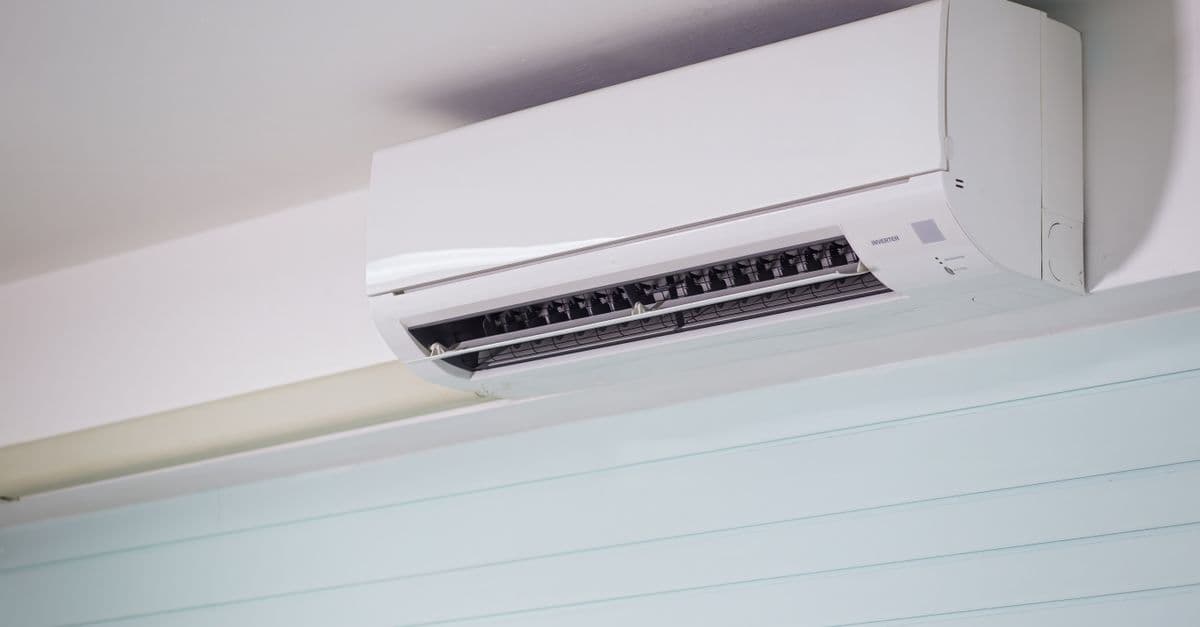
The short answer
Yes, if it is a 115V inverter-driven mini split of around 9,000 BTU and you accept a few hours rather than a night. That size of head typically draws 400 to 900W once it has settled, which a 2,048Wh unit runs for roughly two to four hours. A 230V mini split needs a power station with true 240V output, which in our registry means the Anker SOLIX F3800 or the EcoFlow DELTA Pro 3 and nothing else. The good news is specific to this appliance: an inverter compressor ramps up rather than switching on, so its starting demand is far gentler than a window air conditioner's - which is why this is the one air conditioning question where the answer is not simply no.
At a glance
Quick picks
Tap any row to jump to the full write-up. Weight is a column here because it is the spec that decides whether you actually carry the thing.
| # | Product | Best for | Capacity · Weight | Price |
|---|---|---|---|---|
| 1 | 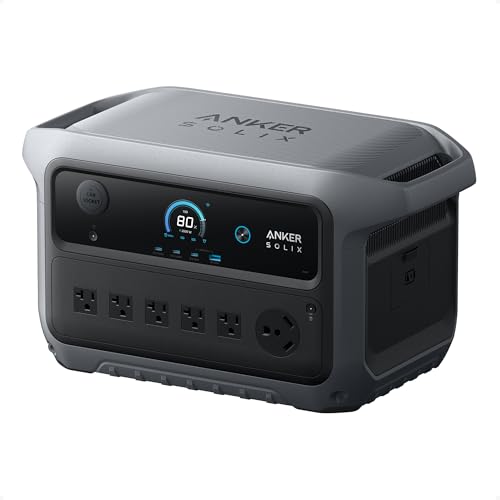 Anker SOLIX C2000 Gen 2 | Best 120V option | 2,048Wh 41.7 lb | $1,499.00 · View on Amazon |
| 2 | 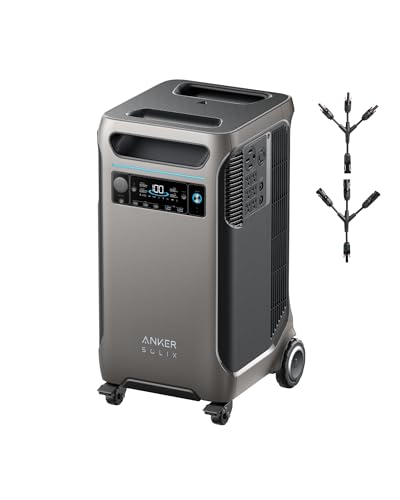 Anker SOLIX F3800 | The one for a 230V mini split | 3,840Wh 132.3 lb | Check price on Amazon |
| 3 | 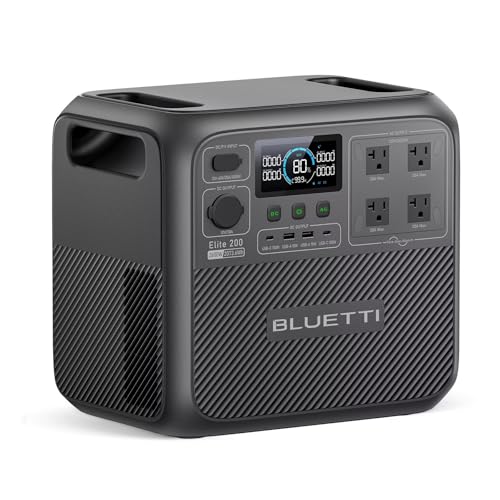 BLUETTI Elite 200 V2 | Best runtime per pound on 120V | 2,074Wh 53.4 lb | $898.99 · View on Amazon |
Why a mini split is the achievable one
Almost every mini split sold today uses an inverter-driven compressor. Instead of switching the compressor on at full speed and off again, the drive varies its speed continuously - fast when the room is warm, slowly to hold temperature. That has two consequences that matter enormously for a battery.
First, the starting demand is gentle. A conventional compressor - the kind in a window air conditioner or a fridge - has a locked-rotor inrush of several times its running current, and that spike is what trips inverters. An inverter-driven compressor ramps from zero, so there is no equivalent slam. This is the single reason a mini split is a realistic battery load and a window unit is a difficult one.
Second, the steady-state draw is much lower than the nameplate maximum. Once the room is at temperature, the compressor may be running at a fraction of full speed, and the power draw follows. A head that pulls 900W pulling a hot room down can settle to 300-400W holding it. That is a large difference across an afternoon.
The numbers, by size and voltage
| Head size | Voltage | Running band | From our registry |
|---|---|---|---|
| 9,000 BTU | 115V | 400-900W | Any 2 kWh unit |
| 12,000 BTU | 115V | 600-1,200W | Any 2 kWh unit |
| 12,000 BTU | 230V | 600-1,200W | F3800 or DELTA Pro 3 only |
| 18,000 BTU | 230V | 1,000-1,800W | F3800 or DELTA Pro 3 only |
| 24,000 BTU | 230V | 1,400-2,400W | F3800 or DELTA Pro 3 only |
| Multi-zone outdoor unit | 230V | 2,000-4,000W+ | F3800, and not for long |
The voltage question decides everything
Mini splits are sold in two electrical flavours and the data plate tells you which you have. A 115V single-zone head runs from an ordinary circuit and therefore from any power station with enough output. A 230V head needs two 120V legs, and no amount of 120V output substitutes - the unit simply will not run.
In our registry, true 240V output is published by the Anker SOLIX F3800 and the EcoFlow DELTA Pro 3. That is the whole list. If your head is 230V and you were hoping a 2 kWh portable unit would do, the answer is no at any capacity, and the reason is voltage rather than energy.
How it has to be connected
A mini split is normally hard-wired to a dedicated circuit with a disconnect, not plugged into a socket. That means feeding one from a power station is either a transfer-switch arrangement - the F3800's NEMA L14-30 exists for this - or, on some 115V models supplied with a cord and plug, a straightforward matter of unplugging it from the wall and plugging it into the unit.
Which one applies to you is a question for your installation, not for this page. If it is hard-wired, this is electrician work and a permitted job in most jurisdictions. What it is never is a double-ended cord into the appliance disconnect - can a power station power a house covers why backfeeding is the one thing not to improvise.
For the air conditioning questions where the answer is less friendly: what size power station to run a window air conditioner works through a 5,000-6,000 BTU unit, and best power station for an RV air conditioner covers the rooftop case where a soft-start kit is usually the deciding factor. If the real question is heating rather than cooling, what size power station to run a space heater explains why resistance heat is the worst load a battery can be given.
The picks in full
1. Best 120V option
Anker SOLIX C2000 Gen 2
- 2,048Wh
- LFP (LiFePO4)
- 2,400W continuous / 4,000W surge
- 41.7 lb
- 800W
- 4,000 cycles to 80% capacity
- 100% in 58 min (2,600W AC + solar)
- 5 years
2,400W continuous with a 4,000W peak, which comfortably covers a 115V mini split's running draw and its gentler inverter-compressor ramp. 2,048Wh at 85% usable is 1,741Wh - two to four hours of a small head depending on how hard it is working.
Anker publishes 41.7 lb, a full recharge in 58 minutes at 2,600W with AC and solar together, 800W of maximum solar input, a 10 ms UPS switchover, 4,000 cycles to 80% capacity, dimensions of 18.1 x 9.8 x 10.1 in, four AC outlets including a NEMA 5-20R and a TT-30R, and expansion to 4 kWh with the BP2000 Gen 2.
The NEMA 5-20R matters here: many 115V mini splits are specified on a dedicated 15 or 20 amp circuit, and a 20A receptacle is the right one to present. Expansion to 4 kWh roughly doubles the runtime, which is the difference between an afternoon and an evening.
Reasons to buy
- 2,400W continuous, 4,000W peak
- NEMA 5-20R for a 20A appliance
- 2,048Wh, expandable to 4 kWh
- 800W solar input; full in 58 min
- 10 ms switchover; 4,000 cycles
Reasons to avoid
- No 240V output
- Two to four hours of runtime
- 18.1 in wide; 41.7 lb
Buy it if: a 115V 9,000 BTU head for part of a day.
Skip it if: the unit is 230V.
2. The one for a 230V mini split
Anker SOLIX F3800
- 3,840Wh
- LiFePO4 (LFP)
- 6,000W continuous / 9,000W surge
- 132.3 lb
- 2400W
- 3,000+ cycles
- 1,800W max AC input
- 5 years
6,000W continuous, a 9,000W peak, and 240V through a NEMA 14-50 and a NEMA L14-30 both rated at 6,000W. A 230V mini split cannot run from anything that does not produce 240V, and in our registry that is this unit and the DELTA Pro 3. This one publishes the receptacles as well as the voltage.
Anker publishes 3,840Wh, 2,400W of maximum solar input, 1,800W of AC input, 3,000+ cycles, a 5-year warranty and expansion to 53.8 kWh across six extra batteries. 3,840Wh at 85% is 3,264Wh - roughly four to eight hours of a 12,000 BTU head, and with expansion batteries a genuine overnight.
132.3 lb on wheels, and no published UPS switchover. This is the unit you buy because you want air conditioning through an outage and have decided to spend accordingly, not because you want something portable.
Reasons to buy
- 240V through 14-50 and L14-30, both at 6,000W
- 6,000W continuous, 9,000W surge
- 3,840Wh, expandable to 53.8 kWh
- 2,400W maximum solar input
- 3,000+ cycles; 5-year warranty
Reasons to avoid
- 132.3 lb
- No published switchover time
- Far more unit than one head needs
Buy it if: a 230V head, or several hours of a large one.
Skip it if: you want to carry it anywhere.
3. Best runtime per pound on 120V
BLUETTI Elite 200 V2
- 2,074Wh
- LiFePO4 (LFP), automotive-grade cells
- 2,600W continuous / 3,900W surge
- 53.4 lb
- 1000W
- 6,000+ cycles to 80% capacity
- Full in 1.4 hr (1,800W AC input)
- 5 years
2,074Wh behind 2,600W continuous - the highest continuous output in the 2 kWh class - with a 3,900W Power Lifting figure for purely resistive loads, which is not the relevant figure for a compressor but tells you the inverter is not marginal.
BLUETTI publishes 6,000+ cycles to 80% capacity, the longest cycle rating in our registry, which matters for an appliance you will run every hot afternoon rather than twice a year. Also 1,000W of maximum solar input, a 1.4-hour full charge at 1,800W, a switchover of 15 ms or less, a 5-year warranty, 53.4 lb and dimensions of 13.78 x 9.84 x 12.74 in.
1,000W of solar input is the figure that makes this interesting for daytime cooling specifically: in strong sun a panel array is contributing while the head is running, which extends a two-hour budget considerably. No 240V output, and its expansion compatibility is contradicted by BLUETTI's own FAQ for the model.
Reasons to buy
- 2,600W continuous - highest in its class
- 6,000+ cycles to 80% capacity
- 1,000W solar input while running
- 1.4 hr full charge; 5-year warranty
- Published dimensions
Reasons to avoid
- No 240V output
- 53.4 lb
- Expansion compatibility unclear
Buy it if: daytime cooling with panels feeding it.
Skip it if: the head is 230V.
Questions