Best Power Station for a Projector
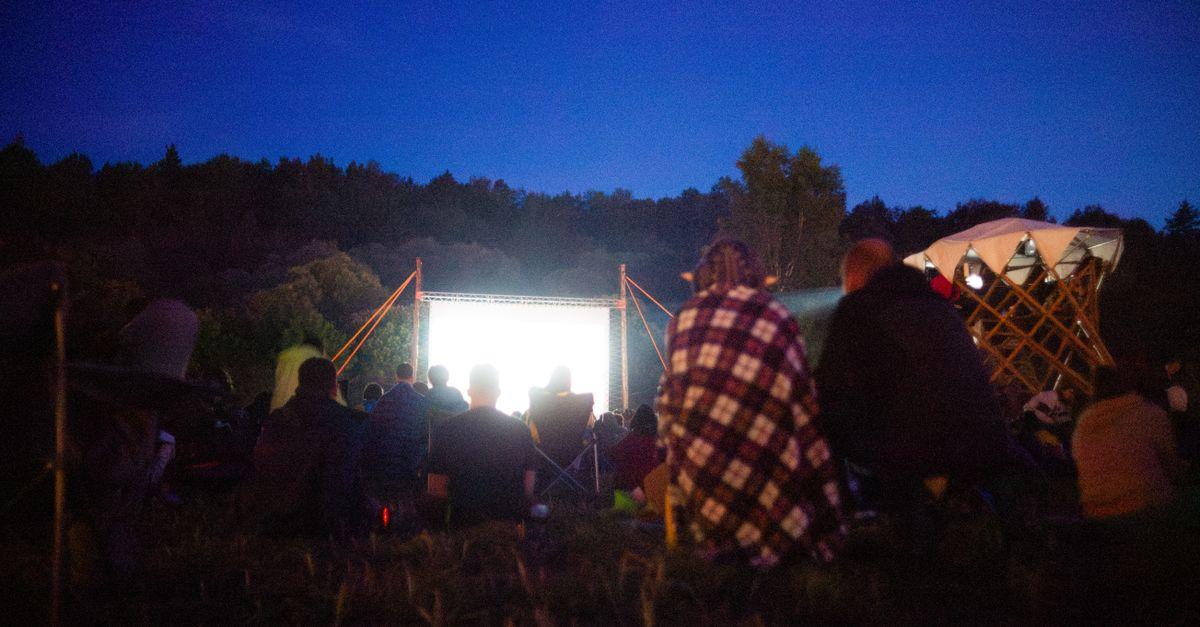
An outdoor movie needs three things plugged in at once and less energy than a laptop evening. The constraint is sockets, not watt-hours.
At a glance
Quick picks
Tap any row to jump to the full write-up. Weight is a column here because it is the spec that decides whether you actually carry the thing.
| # | Product | Best for | Capacity · Weight | Price |
|---|---|---|---|---|
| 1 | 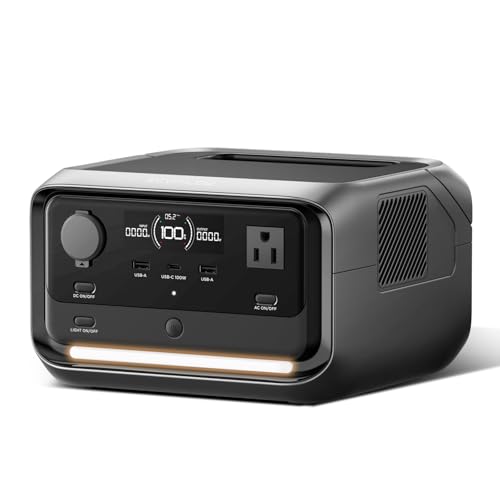 EcoFlow RIVER 3 Plus | Best for a backyard movie night | 286Wh 10.4 lb | Check price on Amazon |
| 2 | 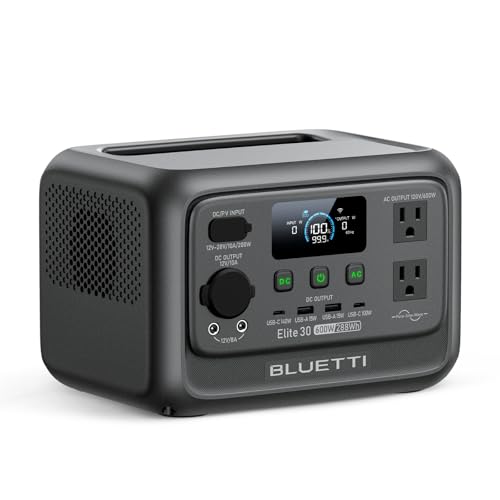 BLUETTI Elite 30 V2 | Best for a lamp-based projector | 288Wh 9.5 lb | $289.99 · View on Amazon |
| 3 |  Anker SOLIX C300 | Lightest for a projector that travels | 288Wh 9.1 lb | Check price on Amazon |
| 4 | 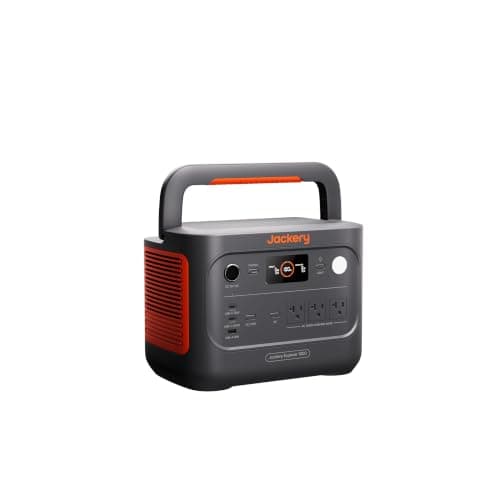 Jackery Explorer 1000 v2 | Best for a full weekend of films | 1,070Wh 23.8 lb | $559.00 · View on Amazon |
An outdoor movie is one of the cheapest loads in this whole category, and almost everyone over-buys for it. A modern LED or laser projector sits in the 30-90W band. Add a powered Bluetooth speaker at 10-30W and a streaming stick at 5-10W and a two-hour film costs you somewhere between 90 and 260 watt-hours. A 288Wh battery does that twice. What actually goes wrong is not capacity — it is that you arrive with three plugs and two sockets.
Projector figures below are nameplate bands and the spread inside the category is enormous, because the technology changed. Read the plate on the back of your own projector, or the power-supply brick, and use that number.
What a film night actually costs
| Setup | Projector draw | Plus speaker and stick | Two-hour film | Films from 288Wh |
|---|---|---|---|---|
| Mini LED, 480p-720p | 20-40W | 35-80W | 70-160Wh | 2-3 |
| Portable 1080p LED or laser | 40-90W | 55-130W | 110-260Wh | 1-2 |
| Home 1080p LED, brighter | 90-150W | 105-190W | 210-380Wh | Under 1 |
| Older lamp-based 1080p | 150-300W | 165-340W | 330-680Wh | Under 1 |
| 4K laser home projector | 200-400W | 215-440W | 430-880Wh | Under 1 |
The top two rows are the ones most outdoor-movie buyers are actually in, and they are comfortably inside a small battery. The bottom two rows are home-theatre equipment that happens to have a handle, and they need the 1kWh class.
The thing to check before capacity: sockets
Count what plugs in. A projector, a powered speaker, a streaming stick's USB brick, string lights, and perhaps a popcorn machine if the evening has got out of hand. On the units here that is three AC outlets on the EcoFlow RIVER 3 Plus, two on the Jackery, and a figure neither Anker nor BLUETTI publish for their small units at all.
- Use USB-C where you can. A modern streaming stick, a speaker and a phone all charge over USB, which frees the AC sockets for the things that need them. The Anker C300's four USB-C ports up to 140W are genuinely the right shape for this.
- A short power strip is fine and is not cheating. Total draw is what the inverter cares about, not socket count. A 60W projector and a 20W speaker through one socket is a 80W load.
- Keep the unit out of the projector's airflow. Both have fans; stacking them means each one breathes the other's hot air.
- Check the speaker's charging behaviour. A Bluetooth speaker running on its own battery draws nothing from the power station. Plugged in and charging while playing, it can draw more than the projector.
Noise, which decides whether it was worth it
This is the one use case on the site where the power station's own fan noise is part of the product. You are trying to hear dialogue outdoors. Jackery publishes below 22 decibels in silent mode on the Explorer 1000 v2 and Anker publishes 25dB at 3.3 ft on the C300 — both quieter than a typical projector's own cooling fan, which is the point. BLUETTI and EcoFlow do not publish a noise figure for the units here.
A fuel generator is a non-starter for exactly this reason, before you even get to the exhaust. If somebody has suggested one for a backyard film, portable power station vs gas generator and portable power station vs inverter generator both cover why the battery wins outdoors at this scale.
Taking it further from the house
A campsite screening is the same load with a longer tail, because the lights and the fridge are already running off the same unit. What size power station for camping adds up a full camp list, and best portable power stations for camping is the broader shortlist if the projector is one load among several.
At a tailgate, the projector is usually the last thing to go on and the first thing to get squeezed out by the grill and the TV. How to power a tailgate totals a realistic setup, and best power stations for tailgating ranks for that whole-day job rather than this single one.
The picks in full
1. Best for a backyard movie night
EcoFlow RIVER 3 Plus
- 286Wh
- LiFePO4
- 600W continuous / 1,200W surge
- 10.4 lb
- 220W
- 3,000 cycles to 80% capacity
- 0-100% in 60 min
- Not published on the US product page
Three AC outlets is the reason this is the top pick, and it is not a small thing. An outdoor film needs the projector, a powered speaker and usually a streaming stick or a phone charger, and most units in this size class give you one or two sockets. 286Wh and 600W continuous with a 1,200W surge covers all three comfortably.
EcoFlow publishes a 0-100% recharge in 60 minutes, 220W of solar input, a 100W USB-C port, two USB-A ports, 3,000 cycles to 80% capacity, expansion to 858Wh with a wire-free extra battery, and a footprint of 9.2 x 9.1 x 5.8 in at 10.4 lb. It fits in the bag with the screen.
286Wh is two to four films depending on the projector — fine for one night, tight for a weekend without a recharge. EcoFlow publishes no warranty term for this model on its US product page, which is the one real gap, and 27.5Wh per pound is the weakest ratio of the four.
Reasons to buy
- Three AC outlets — projector, speaker, stick
- 600W continuous, 1,200W surge
- 0-100% in 60 minutes
- Expands to 858Wh wire-free
- 10.4 lb and small enough for the gear bag
Reasons to avoid
- No warranty term published on EcoFlow's US page
- 286Wh is one night, not a weekend
- 27.5Wh per pound
- 220W solar input
Buy it if: a backyard or campsite film with a full setup plugged in.
Skip it if: the projector is a big lamp-based home unit.
2. Best for a lamp-based projector
BLUETTI Elite 30 V2
- 288Wh
- LiFePO4 (automotive-grade)
- 600W continuous / 1,500W surge
- 9.5 lb
- 200W
- Over 3,000 cycles; 10-year lifespan
- Full in 70 min
- 5 years
600W continuous with a 1,500W lifting figure out of 288Wh is double the output of every other unit in its capacity class, and it is the pick if your projector is an older lamp-based model rather than a modern LED or laser one. Lamp projectors draw harder at warm-up, and this is the small unit with the headroom for it.
BLUETTI publishes 288Wh, a 70-minute full recharge, a UPS switchover of 10 ms or less, 200W of solar input, nine output ports including USB-C PD 3.1 up to 140W, over 3,000 cycles with a stated 10-year lifespan, a 5-year warranty and 9.5 lb.
BLUETTI does not publish dimensions, a full port breakdown or an AC outlet count for this model, so you cannot confirm the number of sockets from the spec sheet — a real gap for this use case specifically. It also does not expand, and 288Wh is one evening.
Reasons to buy
- 600W continuous, 1,500W surge from 288Wh
- 9.5 lb
- Full recharge in 70 minutes
- 10 ms or less switchover
- Over 3,000 cycles; 5-year warranty
Reasons to avoid
- AC outlet count not published
- No published dimensions
- Not expandable
- 288Wh is a single evening
Buy it if: an older lamp-based projector that needs output headroom.
Skip it if: you need to know the socket count before you buy.
3. Lightest for a projector that travels
Anker SOLIX C300
- 288Wh
- LFP (LiFePO4)
- 300W continuous / 600W surge
- 9.1 lb
- 100W
- 80% in 50 min
- 5 years
9.1 lb for 288Wh is 31.6Wh per pound, and it is the unit to take if the movie night happens somewhere you walk to — a campsite, a beach, a rooftop. 300W continuous with a 600W SurgePad is enough for any modern LED or laser projector plus a speaker, and Anker publishes 25dB at 3.3 ft, which is quieter than most projectors' own fans.
Anker publishes an 80% recharge in 50 minutes, a 10 ms UPS switchover, LFP chemistry, a 5-year warranty and seven device ports including four USB-C up to 140W. For a modern setup where the projector and the speaker both charge over USB-C, that port array does more work than the AC outlets.
300W continuous rules out lamp-based projectors with a high warm-up draw. Anker publishes no cycle-life rating, no dimensions and no AC outlet count for this model. 100W maximum solar input is the lowest here.
Reasons to buy
- 9.1 lb — the lightest here
- Four USB-C ports up to 140W
- 80% recharge in 50 minutes
- 25dB at 3.3 ft
- 10 ms UPS switchover; 5-year warranty
Reasons to avoid
- 300W continuous — modern projectors only
- No cycle-life rating published
- 100W maximum solar input
- AC outlet count not published
Buy it if: the whole kit gets carried to the spot.
Skip it if: your projector is an older high-draw model.
4. Best for a full weekend of films
Jackery Explorer 1000 v2
- 1,070Wh
- LiFePO4 (LFP)
- 1,500W continuous / 3,000W surge
- 23.8 lb
- 400W
- 4,000 cycles to 70% capacity
- 1.7 hr wall; 1 hr emergency charge via app
- 5 years (with registration)
1,070Wh is the step change: ten to twenty films on a modern projector, or a whole festival weekend of evening screenings without thinking about it. 1,500W continuous with a 3,000W surge takes any projector ever sold, and at 23.8 lb it is 45.0Wh per pound — the best ratio in this site's registry.
Jackery publishes 4,000 cycles to 70% capacity, a 1.7-hour wall recharge, a one-hour emergency charge via the app, below 22 decibels in silent mode, a switchover under 20 ms and a 5-year warranty with registration. Below 22 dB is the quietest published figure here, which matters a lot when the whole point is listening to something.
Two AC outlets is the problem for this specific job — with a projector and a speaker you are already full, and a streaming stick or a phone has to go on USB. 400W of solar input is the lowest of the four and it does not expand.
Reasons to buy
- 1,070Wh — a weekend of screenings
- 45.0Wh per pound at 23.8 lb
- Below 22 dB in silent mode
- 1,500W continuous, 3,000W surge
- 5-year warranty with registration
Reasons to avoid
- Only two AC outlets
- 400W solar input
- Not expandable
- Cycle life quoted to 70%, not 80%
Buy it if: repeat screenings, or a projector plus a real sound system.
Skip it if: you want the smallest thing that works for one film.
Questions