Anker SOLIX C1000 Expansion Battery
One of these two power stations doubles with a second pack. The other cannot be expanded at any price, and they are sold side by side under almost the same name.
The short answer
It depends which C1000 you own, and the answer is the opposite of what the names suggest. The original Anker SOLIX C1000 takes an expansion battery: the BP1000 adds 1,056Wh and Anker publishes a combined ceiling of 2,112Wh. The newer Anker SOLIX C1000 Gen 2 takes no expansion battery at all - Anker lists Expandable Battery as No, and no pack exists for it at any price. So the older model is the expandable one. One thing holds for both: an expansion battery adds watt-hours, not watts. Doubling a C1000's capacity leaves its 1,800W inverter exactly where it was, so if your problem is that an appliance will not start, a second battery will not fix it.
At a glance
Quick picks
Tap any row to jump to the full write-up. Weight is a column here because it is the spec that decides whether you actually carry the thing.
| # | Product | Best for | Capacity · Weight | Price |
|---|---|---|---|---|
| 1 | 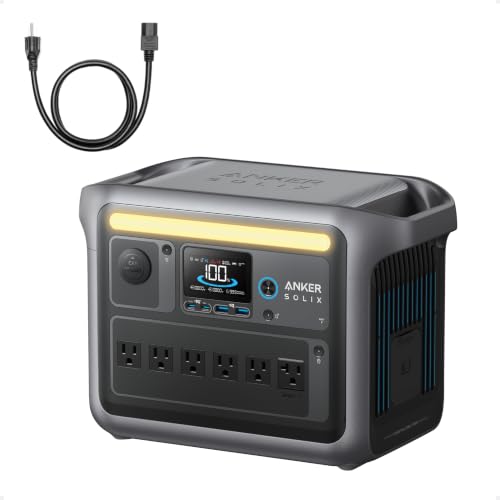 Anker SOLIX C1000 | The C1000 that actually takes a pack | 1,056Wh 28.44 lb | $479.99 · View on Amazon |
| 2 | 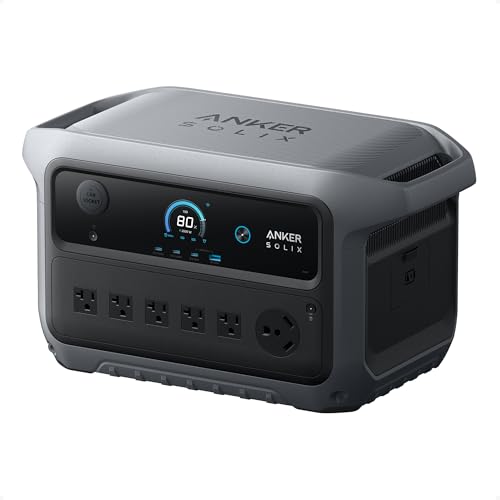 Anker SOLIX C2000 Gen 2 | Better than a C1000 plus a pack, if you are starting fresh | 2,048Wh 41.7 lb | $1,499.00 · View on Amazon |
| 3 | 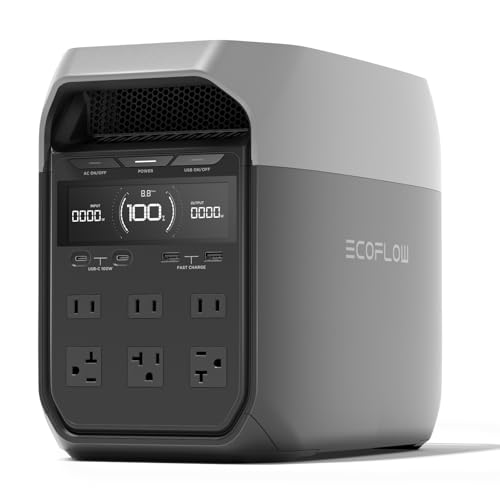 EcoFlow DELTA 3 | If you own a Gen 2 and want a real expansion path | 1,024Wh 27.6 lb | $579.00 · View on Amazon |
What the BP1000 actually is
It is a battery and nothing else. The Anker SOLIX BP1000 is a 1,056Wh LiFePO4 pack with no AC outlets, no USB ports and no screen of its own. It cables to a host C1000 and the power station manages it - charging, discharging, cell balancing and the display all stay with the unit you already own. That is the normal shape for expansion packs across the industry and it has one important consequence: the pack is worthless without its host, and it inherits every limit the host has.
One pack, and one pack only. Anker publishes the C1000's ceiling as "Up to Max. 2112Wh Capacity with Expansion Battery" - 1,056Wh in the unit plus 1,056Wh in the pack. There is no second-pack path on this model, unlike the C2000 Gen 2 which reaches 4 kWh or EcoFlow's DELTA 2 Max which reaches 6 kWh with two extra batteries. 2,112Wh is the end of the road for a C1000 system.
Expansion adds watt-hours, not watts
This is the part that disappoints people, so it is worth being blunt about. A power station has two independent ceilings. Its battery decides how long it runs; its inverter decides what it can run at all. An expansion battery raises the first and leaves the second untouched. A C1000 with a BP1000 attached is still an 1,800W machine with a 2,400W surge - the same 1,800W it was before, now with twice as much fuel behind it.
So if the reason you are reading this is that your C1000 trips when you plug in a 2,000W appliance, a second battery is the wrong purchase. You need a bigger inverter, which means a different unit. Surge watts vs running watts sets out the two numbers on your appliance and which of them to compare against which ceiling, and what size power station do I need works the whole sizing problem from the load list up.
If instead your C1000 runs everything you own but goes flat before the outage ends or before the weekend does, then expansion is exactly the right answer and the arithmetic below is yours.
What 2,112Wh runs that 1,056Wh does not
Is a second battery the right buy, or a bigger unit?
If you already own a C1000, the pack is usually the cheaper route to 2 kWh - you are buying cells, not a second inverter, a second screen and a second set of sockets. You also get a genuinely useful side benefit: two separate boxes are easier to carry one at a time than one 2 kWh box is to carry at all, and you can leave the pack at home on a trip where 1,056Wh is plenty.
If you are buying from scratch, think hard before you plan to expand. A 2,048Wh Anker SOLIX C2000 Gen 2 is 2,400W continuous with a 4,000W surge, 800W of solar input and its own path to 4 kWh - a stronger machine in every dimension than a C1000 plus a BP1000, which is 2,112Wh behind an 1,800W inverter with a 600W solar ceiling. The pair wins on carrying flexibility and loses on everything else. Best 2000W power stations ranks the class, and the Anker SOLIX C2000 Gen 2 review covers that unit in full.
And if you own a Gen 2, your options are a second unit or a different unit. Anker built no pack for it. Running two C1000 Gen 2 units side by side works - they are independent machines sharing nothing - and it gives you 2,048Wh and four AC outlets with full redundancy, which has its own appeal for outages. The alternative is to move to something expandable: EcoFlow's DELTA 3 holds the same 1,024Wh and reaches 5 kWh, and the OUPES Mega 1 reaches 5,120Wh. Best expandable power stations covers which expansion paths are worth the money, and the Anker SOLIX C1000 vs C1000 Gen 2 comparison explains what else changed between the two generations.
What to check before you order a pack
- Count the AC outlets on your unit. Six means the original C1000 and the BP1000 fits. Two means the Gen 2 and nothing fits.
- Read the watt-hours on your own label. 1,056Wh is the original; 1,024Wh is the Gen 2.
- Check the pack listing names the C1000. Anker has used both BP1000 and BP1000X naming for 1,056Wh packs, and sells a separate BP2000 for the C2000 family. A C2000 pack will not drive a C1000.
- Decide whether your problem is duration or capability. A pack fixes the first and nothing about the second.
- Check the warranty term on the listing. Anker's own US specification page for this pack was unreachable when we checked, so the listing is your source for the term.
One more thing worth knowing: both of these units are LFP, which is why a decade-long expansion plan is reasonable in the first place. A pack you buy in three years still has a host worth attaching it to. LiFePO4 vs NMC power station batteries covers why that chemistry choice matters over a long ownership, and how long do portable power stations last puts numbers on it.
The picks in full
1. The C1000 that actually takes a pack
Anker SOLIX C1000
- 1,056Wh
- LiFePO4
- 1,800W continuous / 2,400W surge
- 28.44 lb
- 600W
- 3,000 cycles to 80% capacity
- 80% in 43 min; full under 1 hr (1,300W max input)
- 5 years
1,056Wh of LiFePO4 behind an 1,800W inverter with a 2,400W surge, six AC outlets, 600W of maximum solar input, 3,000 cycles to 80% capacity, a five-year warranty, a full charge in under an hour from a 1,300W input, and 28.44 lb. This is the older of the two C1000 generations, still sold, and the only one of the two that accepts an expansion battery - up to 2,112Wh with one BP1000 pack.
If you want a 1 kWh unit today with a path to 2 kWh later, this is the Anker that offers it, and the six-outlet panel is a real advantage over the Gen 2's two. The costs against the newer model are a 200W smaller inverter, 3.5 more pounds and a 3,000-cycle rating against 4,000.
Reasons to buy
- Expandable to 2,112Wh with one BP1000 pack
- Six AC outlets - three times the Gen 2's panel
- 600W maximum solar input; full charge under 1 hr
- 5-year warranty; LFP chemistry
Reasons to avoid
- 1,800W continuous, 200W below the Gen 2
- 28.44 lb - 3.5 lb heavier than the Gen 2
- 3,000 cycles to 80%, against 4,000 on the Gen 2
- One pack only; 2,112Wh is the ceiling
Buy it if: you want 1 kWh now and 2 kWh later, with plenty of sockets.
Skip it if: you need the strongest inverter or the lightest box at 1 kWh.
2. Better than a C1000 plus a pack, if you are starting fresh
Anker SOLIX C2000 Gen 2
- 2,048Wh
- LFP (LiFePO4)
- 2,400W continuous / 4,000W surge
- 41.7 lb
- 800W
- 4,000 cycles to 80% capacity
- 100% in 58 min (2,600W AC + solar)
- 5 years
2,048Wh of LFP at 2,400W continuous with a 4,000W surge, 800W of maximum solar input, 4,000 cycles to 80%, a 10 ms switchover, a full charge in 58 minutes, a five-year warranty, 41.7 lb, and its own expansion path to 4 kWh with a BP2000 pack.
Set against a C1000 with a BP1000 attached - 2,112Wh behind an 1,800W inverter with a 600W solar ceiling - this is the better machine on output, surge, solar input, recharge speed, cycle life and future ceiling. It loses on exactly one thing, and it is not a small one: 41.7 lb in a single box against two boxes you can carry separately.
Reasons to buy
- 2,400W continuous, 4,000W surge
- 800W solar input; full charge in 58 min
- 4,000 cycles to 80%; 10 ms switchover
- Expands to 4 kWh with a BP2000 pack
Reasons to avoid
- 41.7 lb in one box, with no way to split the load
- Costs more than adding a pack to a C1000 you own
- Still needs its own expansion pack to pass 2 kWh
Buy it if: buying from scratch and wanting 2 kWh done properly.
Skip it if: you already own a C1000, or you carry the unit far.
3. If you own a Gen 2 and want a real expansion path
EcoFlow DELTA 3
- 1,024Wh
- LFP (LiFePO4)
- 1,800W continuous / 3,600W surge
- 27.6 lb
- 500W
- 4,000 cycles to 80%+ capacity
- 56 min at 1,500W
- 5 years
1,024Wh of LFP at 1,800W continuous with a 3,600W surge, six AC outlets across thirteen outputs, 500W of maximum solar input, 4,000 cycles to 80%+, a switchover under 10 ms, a 56-minute full recharge, a five-year warranty, 27.6 lb - and expansion to 5 kWh, which is more than double what a C1000 system can reach.
This is the unit to look at if you own a C1000 Gen 2, have discovered it does not expand, and want a growth path rather than a second identical box. It holds the same capacity the Gen 2 does, gives you four more AC outlets, and keeps going to 5 kWh. The trade is 2.7 more pounds than the Gen 2 and 200W less continuous output.
Reasons to buy
- Expandable to 5 kWh - the deepest path at 1 kWh
- Six AC outlets; thirteen outputs in total
- 3,600W surge; switchover under 10 ms
- 4,000 cycles to 80%+; 5-year warranty
Reasons to avoid
- 27.6 lb for 1,024Wh - 37.1 watt-hours per pound
- 1,800W continuous, below the C1000 Gen 2's 2,000W
- 500W solar ceiling, below Anker's 600W
Buy it if: a C1000 Gen 2 owner who wanted expansion and did not get it.
Skip it if: weight is the deciding factor at this capacity.
Questions