Are Portable Power Stations Safe Indoors?
The honest answer is yes, and it is the single biggest reason this category exists. Here is what to be careful about instead.

The short answer
Yes. A portable power station has no engine, no fuel and no exhaust, so it produces no carbon monoxide and can be used indoors — on a kitchen counter, under a desk, in a bedroom, in a van with the doors shut, inside a tent. That is the defining difference between this category and a fuel generator, which can never be run in any enclosed or partly enclosed space. The real precautions are different in kind: give the cooling fan air, do not charge or run the unit in extreme heat, keep it dry, and stop using any unit that has been damaged, dropped hard, or swollen.
At a glance
Quick picks
Tap any row to jump to the full write-up. Weight is a column here because it is the spec that decides whether you actually carry the thing.
| # | Product | Best for | Capacity · Weight | Price |
|---|---|---|---|---|
| 1 | 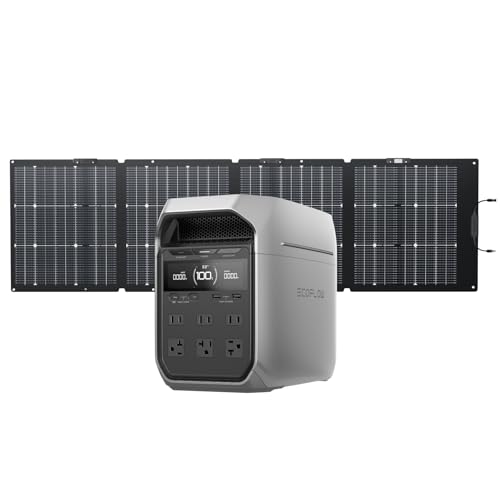 EcoFlow DELTA 3 Plus | Best for living indoors full time | 1,024Wh 27.6 lb | Check price on Amazon |
| 2 | 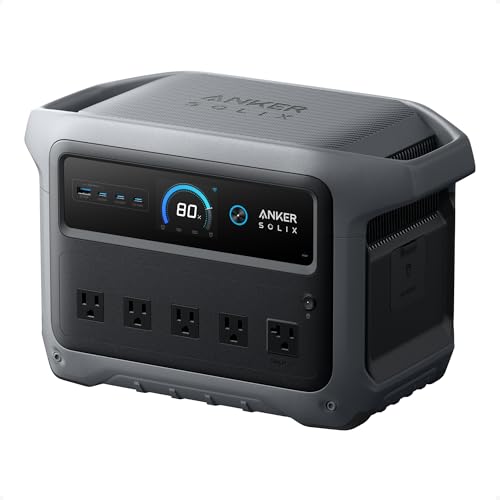 Anker SOLIX C1000 Gen 2 | Quietest-running output for a home office | 1,024Wh 24.9 lb | $529.99 · View on Amazon |
| 3 | 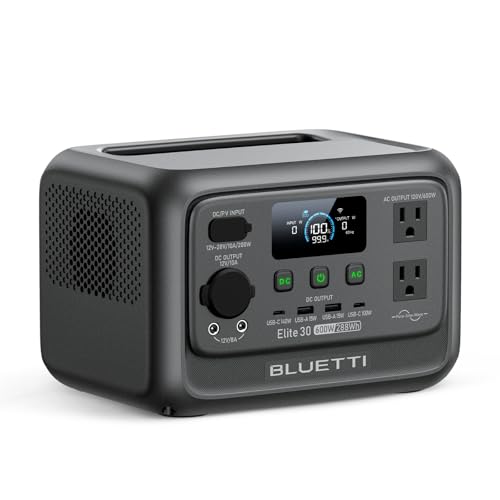 BLUETTI Elite 30 V2 | Best small unit for a bedside or a desk corner | 288Wh 9.5 lb | $289.99 · View on Amazon |
People ask this question because they have been told — correctly and repeatedly — never to run a generator indoors, and the two products sit next to each other in search results. The warning is real and it does not transfer. A generator kills people because it burns fuel and produces carbon monoxide; the US Consumer Product Safety Commission publishes on this every storm season and the pattern is always the same. A power station has nothing to burn.
That is not the end of the subject, though. A large lithium battery is still a large lithium battery, and there are sensible precautions. They are just different precautions from the ones a generator needs.
Why the chemistry matters here
Every unit in this site's registry except one uses lithium iron phosphate — LiFePO4, also written LFP. That is the most thermally stable lithium chemistry in common consumer use: it tolerates abuse better than the nickel-manganese-cobalt cells in phones and laptops, and its failure mode is less energetic. For a battery that is going to live in your house, it is the chemistry to want.
| Unit | Chemistry as published | Cycle rating |
|---|---|---|
| EcoFlow DELTA 3 Plus | LFP (LiFePO4) | 4,000 cycles to 80%+ |
| Anker SOLIX C1000 Gen 2 | LiFePO4 (InfiniPower LFP) | 80% after 4,000 cycles |
| BLUETTI AC180 | LiFePO4 | 3,500+ cycles to 80% |
| Jackery Explorer 1000 v2 | LiFePO4 (LFP) | 4,000 cycles to 70% |
| BLUETTI Elite 30 V2 | LiFePO4 (automotive-grade) | Over 3,000 cycles |
| Anker SOLIX C300 | LFP (LiFePO4) | Not published |
| Jackery Explorer 300 | Jackery does not publish the cell type | 500 cycles to 80%+ |
That last row is the exception and it is worth knowing about: Jackery does not publish a cell chemistry for the Explorer 300, and its 500-cycle rating is consistent with an older lithium-ion pack rather than LiFePO4. LiFePO4 vs NMC power station batteries explains what actually differs between the two and why it matters for indoor use.
The five rules that cover indoor use
- Give the fan air. Every unit here has a cooling fan and an intake. Do not run one inside a sealed cupboard, under a blanket, in a drawer, or boxed in behind furniture. A few inches of clearance on every vented side is enough.
- Keep it off soft surfaces while it works hard. A carpet or a bed blocks the underside and holds heat. A hard floor, a shelf or a desk is right.
- Watch the temperature, both ways. Lithium cells charge slowly or refuse to charge when hot, and the same below freezing. Room temperature is ideal; a sunny conservatory in August and an unheated garage in January are both worse than a hallway. Power stations in cold weather covers the cold end.
- Keep it dry. No unit in this site's registry publishes an ingress-protection rating, which means none of them is rated against water. A bathroom, a laundry room floor or a damp basement are poor homes for one.
- Stop using a damaged unit. A case that has been cracked, a pack that has been dropped from height, swelling, a hot spot, a smell, or a unit that has been submerged — stop, move it somewhere non-combustible, and contact the manufacturer. This is the one genuine lithium risk and it is managed by retiring the unit, not by being careful with it.
What the manufacturers' own protections do
Every unit here runs a battery management system, and it is doing more than reporting the percentage. It prevents over-charge and over-discharge, cuts output on over-current and short circuit, blocks charging outside the cell temperature window, and balances the cells. In practice this is why these units are unexciting to own: the failure modes that make lithium batteries dangerous are the ones a BMS is designed to prevent.
It is also why the published switchover figures are safe to rely on indoors. When the grid drops, the inverter picks up in 10-20 ms depending on the model, and the equipment plugged into it does not restart. Power station as a UPS for wifi and router sets that up in practice, and pass-through charging explained covers what running in that mode costs the battery.
Can you use one in a tent, or in a van?
Yes to both, and these are among the best reasons to own one. A tent is an enclosed space with a person asleep in it, which is exactly where a generator is lethal and a battery is unremarkable — and the published noise figures matter here: Jackery states below 22 decibels in silent mode on the Explorer 1000 v2 and Anker states 25dB at 3.3 ft on the C300.
In a van the same logic applies with one addition: give the unit somewhere it will not slide around, and keep it out of direct sun through the windows. Best power stations for van life and best power station for overlanding both cover mounting, dust and heat for vehicle use.
What you must not do in either is run a fuel-burning appliance to make up the difference. A propane heater or stove inside a tent or van carries the same carbon monoxide risk a generator does, and the battery does nothing to change that.
The comparison, stated plainly
| Place | Power station | Fuel generator |
|---|---|---|
| Kitchen counter | Yes | Never |
| Bedroom | Yes | Never |
| Attached garage, door open | Yes | Never |
| Balcony or covered porch | Yes | Never |
| Van or RV interior | Yes | Never |
| Tent | Yes | Never |
| Basement | Yes, if dry | Never |
| Open yard, 20+ ft from the house | Yes | Yes — the only option |
Portable power station vs gas generator and portable power station vs inverter generator both go further into the trade-offs — including the ones where the generator genuinely wins, which are runtime and cost per watt-hour. Indoor use is not one of them and never will be.
The picks in full
1. Best for living indoors full time
EcoFlow DELTA 3 Plus
- 1,024Wh
- LFP (LiFePO4)
- 1,800W continuous / 3,600W surge
- 27.6 lb
- 1000W
- 4,000 cycles to 80%+ capacity
- Full in 56 min (1,500W AC input)
- 5 years
A unit that spends its life under a desk rather than in a shed is really a UPS most of the time, and EcoFlow publishes a switchover under 10 ms on this one — fast enough that a desktop computer, a router or a modem does not register the grid failing. Six AC outlets means it can genuinely be the power strip for a desk.
EcoFlow publishes 1,024Wh of LFP chemistry, 1,800W continuous, a 3,600W surge, two 140W USB-C ports, a 56-minute full recharge, 4,000 cycles to 80%+ capacity, expansion to 5 kWh and a 5-year warranty. LiFePO4 is the chemistry you want for something that lives in the house: it is the most thermally stable of the lithium families in common use.
27.6 lb and 37.1Wh per pound is unremarkable, and the 1,000W solar input is wasted indoors unless you have a balcony or a window array. Consider the plain DELTA 3 if that is you.
Reasons to buy
- Switchover under 10 ms — invisible to a PC
- LFP (LiFePO4) chemistry
- Six AC outlets — a real desk power strip
- 4,000 cycles to 80%+ capacity
- Expands to 5 kWh; 5-year warranty
Reasons to avoid
- 1,000W solar input is wasted indoors
- 27.6 lb
- 1,024Wh alone is not multi-day backup
Buy it if: a unit that lives in the house and rides through cuts.
Skip it if: it is really a camping battery you store in a garage.
2. Quietest-running output for a home office
Anker SOLIX C1000 Gen 2
- 1,024Wh
- LiFePO4 (InfiniPower LFP)
- 2,000W continuous / 3,000W surge
- 24.9 lb
- 600W
- 80% capacity after 4,000 cycles
- Full in 49 min (UltraFast, 1,600W max input)
- 5 years
2,000W continuous with a 3,000W surge, a 10 ms UPS switchover and 1,024Wh in a box measuring 15.12 x 8.19 x 9.61 in. For a home office that is the full envelope: a desktop, two monitors, a router, a desk lamp and a phone charger all at once, with the surge headroom for a laser printer's warm-up.
Anker publishes LiFePO4 InfiniPower cells, a full recharge in 49 minutes at 1,600W input, 80% capacity after 4,000 cycles and a 5-year warranty. The 49-minute recharge is a real indoor advantage: the unit is back to full before the next cut is likely.
Two AC outlets is the limitation and a short power strip is the answer. Not expandable, and 600W of solar input is behind EcoFlow — neither matters much for a unit that sits beside a wall socket.
Reasons to buy
- 2,000W continuous, 3,000W surge
- 10 ms UPS switchover
- LiFePO4 cells; 80% after 4,000 cycles
- Full recharge in 49 minutes
- Published dimensions for planning a spot
Reasons to avoid
- Only two AC outlets
- Not expandable
- 600W solar input
Buy it if: a home office that must not go down.
Skip it if: you want more than two mains sockets.
3. Best small unit for a bedside or a desk corner
BLUETTI Elite 30 V2
- 288Wh
- LiFePO4 (automotive-grade)
- 600W continuous / 1,500W surge
- 9.5 lb
- 200W
- Over 3,000 cycles; 10-year lifespan
- Full in 70 min
- 5 years
288Wh and 9.5 lb with 600W continuous, a 1,500W surge and a switchover of 10 ms or less. For the loads people actually want protected indoors — a router, a modem, a CPAP, a lamp, a phone — this is enough, and it takes up the space of a shoebox rather than a filing drawer.
BLUETTI publishes automotive-grade LiFePO4 cells, over 3,000 cycles with a stated 10-year lifespan, a 70-minute full recharge, nine output ports including USB-C PD 3.1 up to 140W, 200W of solar input and a 5-year warranty.
BLUETTI publishes no dimensions, no AC outlet count and no cycle-retention threshold for this model. 288Wh will not run anything that heats, and it does not expand.
Reasons to buy
- 9.5 lb — fits anywhere indoors
- 600W continuous, 1,500W surge
- 10 ms or less switchover
- Over 3,000 cycles; 5-year warranty
- Full recharge in 70 minutes
Reasons to avoid
- 288Wh — small continuous loads only
- No dimensions or outlet count published
- Not expandable
- 200W solar input
Buy it if: a router, a CPAP or a desk corner.
Skip it if: you need to run an appliance.
Questions